Matthew Katz had a useful analogy for a credit card statement: a vanity license plate. It means something to its owner. Everyone else squints. In his telling, a merchant trying to identify a purchase in a few abbreviated characters could create much the same experience. Somewhere behind that cryptic entry sat an actual order, an actual customer and a perfectly ordinary explanation. The explanation, unfortunately, did not always travel with the money.
Katz made a business out of that separation. He founded Verifi in Los Angeles in 2005, working from his apartment. Over time, the company connected merchants and card issuers so they could address problems earlier in the life of a disputed purchase. Visa completed its acquisition of Verifi in September 2019. The distance between those dates contains a founder’s education in a deceptively simple question: who needs to speak to whom, and when?
The apartment came before the network
Verifi was part of a longer entrepreneurial life. Katz studied economics at Washington University in St. Louis and had already started an online gambling business while in college. His work also included BK Global, where his responsibilities ranged from commercial partnerships to operations and dealings with gaming boards. These were businesses in which moving money involved considerably more than putting a payment button on a screen.
In 2012, he independently financed and founded CAMS. Its work included payment connectivity, identity checks and geolocation for online gaming operators. By 2014, he was explaining payment and verification technology to a Nevada legislative committee. The committee’s account captures a recurring difficulty: an activity could be permitted within a state while the systems handling its payments struggled with those geographical distinctions. Rules needed a working connection to the transaction.
That background helps make sense of Verifi’s subject matter. Katz worked where a commercial intention encountered an institutional process. Someone wanted to buy, sell or participate. Other parties needed enough information to decide whether and how the activity should proceed. A failure in the middle could become somebody’s lost revenue.
When Katz later looked back on Verifi’s beginnings, he put the initial expenditure at $3,600. The sum belongs to his account of starting the business, rather than a tidy explanation of everything that followed. A modest opening budget says little about the years of work required afterward. It does, however, locate the beginning somewhere more recognizable than a conference stage.
The vanity plate on your bank statement
The early service helped merchants recover money after a chargeback. Listening to merchants and issuing banks pushed the business toward earlier intervention. Instead of waiting for the dispute machinery to finish its work, Verifi could help connect parties while there was still an opportunity to clarify or resolve the problem. Its Cardholder Dispute Resolution Network was operating by 2007.
Order Insight extended the information-sharing idea. In 2016, Katz described how fuller purchase details could reach the cardholder through the bank. A recognizable order could replace the puzzle of an abbreviated merchant description. His license-plate comparison worked because it gave a familiar face to an obscure payment problem. The driver understands the joke. The queue behind him has other things to do.
The technical record also places Katz among the people developing that approach. He is named alongside Jeff Sawitke, Manav Gupta and Chris Derossi on the Order Insights System and Method patent application published in 2017. The application describes giving financial institutions access to purchase information when a customer questions a charge. The application is listed as abandoned.
Katz’s own writing treated disputes as a problem shared by consumers, merchants and issuers. In his 2018 discussion of the “chargeback triangle,” he distinguished purchase confusion, deliberate misuse and genuine fraud. Those distinctions matter. Someone who cannot recognize a transaction presents a different problem from someone attempting to avoid paying for it. A service needs room for the difference.
He also argued that the relationship could suffer beyond the immediate transaction. A disputed payment carries an account of the merchant into the customer’s next buying decision. That made the work about more than retrieving a particular sum. The company was dealing with the point at which a purchase could become a reason to stop shopping somewhere.
A room where the founder can be wrong
Katz spoke about building without outside investment and being profitable from the second week. That account of the business explains the importance he placed on remaining useful to paying customers. An unanswered practical need could support the next product; an attractive idea without a customer attached was harder to justify.
“It is persistent, ongoing work.”
Matthew Katz, on fraud prevention, 2017
His account of the office made room for disagreement. In 2013, he described an elected employee representative from each department participating in a Culture Club. He also discussed the care required in hiring people who contributed to the working atmosphere. Technical competence alone did not settle the question of whether someone would help the group function.
Elsewhere, he described offices and meeting rooms equipped with whiteboards, accessible executives and ideas arriving from people working directly with the services. Employee feedback could produce action. These details are useful precisely because they are ordinary. The grand announcement of an open door is easy; a place to sketch an objection and someone willing to consider it make the idea more concrete.
There is a connection between that management philosophy and the product. Verifi operated among participants with different incentives and incomplete pictures of the same event. Internally, Katz wanted people to surface problems and possible solutions. The founder who depends on hearing what others know has a practical reason to tolerate being corrected.
Visa buys the connection
When Visa completed the acquisition on September 12, 2019, it described Verifi as serving more than 25,000 accounts worldwide. Visa’s explanation centered on connecting participants in dispute management and resolving issues before they became chargebacks.
Accounts worldwide reported by Visa.
For Katz, the work continued after the ownership change. Discussing Rapid Dispute Resolution, he explained how merchants could configure rules governing refunds. The service could resolve eligible disputes earlier, using those choices. A case that could not be resolved would continue through the dispute process. There was still a decision to make, and sometimes still an argument to have.
The examples remained pleasingly specific. Katz suggested that return information could reveal trouble with a supplier’s shirt buttons. A payment complaint might therefore tell a merchant something about the product itself. That observation carries his approach beyond the payments department: information becomes more valuable when it reaches someone who can act on it.
Fifteen tons of snow, then a wall of plants
Verifi’s calendar also contained regular service projects. In December 2014, the company brought a winter carnival to Hillsides in Pasadena. About 100 employees helped plan and staff it. The attractions included a sledding hill, an inflatable obstacle course and a petting zoo. Fifteen tons of snow supplied the winter. A white goat named Princess supplied purple wings, an accessory no payments department had apparently forbidden.
Katz linked giving to the example his parents had set and to the example he wanted to set for his son. He established the Katz Foundation in 2017. Its charitable work included addressing food scarcity, with support extending to Cambodia and Malawi. In 2018, Hope Street recognized his philanthropic leadership. The company’s community activities included home building, river cleanup and preparing meals.
There were outings as well as formal programs. In 2017, Hope Street students and staff joined Verifi volunteers for a day at the Los Angeles Zoo hosted by Katz. The itinerary included animals, games and a carousel. A company devoted to disputed purchases had found an afternoon’s work with rather fewer acronyms.

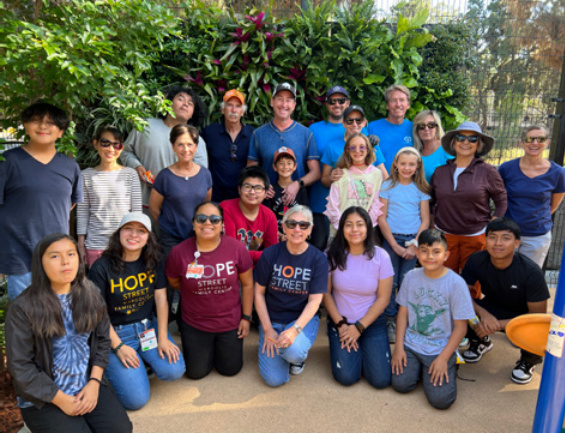
The family example became particularly visible in 2022 at The Nest, Hope Street’s early education center. Katz funded a living wall: 14 panels covering 375 square feet, planted with a mixture of ornamental and edible plants. He and his son Tyler helped install plants alongside the project’s participants. The wall gave children something to tend, study and eventually harvest.
A farewell with other people in it
In January 2022, Katz announced his last day as Verifi’s CEO. His farewell moved through the people who had occupied the story with him: customers, partners, colleagues at Visa, his own team and his family. He thanked customers for helping the company work through its flaws and pushing it to provide more value.
That is a fitting detail to leave in view. The customer in this career keeps returning as a person with useful information, sometimes delivered in the inconvenient form of a complaint. Katz’s business grew around making that information arrive sooner. His departure message gave those people a place in the account of what had been built. Behind the network, the software and the sale were years of conversations that somebody had bothered to hear.