At NASA headquarters, Steve Sliwa had a problem with rocks. The rocks were presentations, position papers, and other assignments for senior managers. Each submission seemed to invite another round of revisions. A finished piece of work could apparently become unfinished simply by entering the right office. For an engineer, this was an intriguing malfunction.
In his account, the breakthrough came while playing with a friend's three-year-old. He kept asking the child to fetch a different rock, inventing fresh objections to each specimen. Back at work, he recognized the game. The acceptance criteria seemed to change until the deadline arrived. He tested the idea by completing an assignment, locking it in a drawer, and delaying its review until shortly before it was due.
The work passed. Eventually, a boss asked him to teach his colleagues how he produced acceptable work with so few revisions. Sliwa calls the episode his “Rock Theory of Management.” The joke contains a useful warning: an organization can consume a capable person's time without improving the result. Across his later career, he would keep encountering versions of that problem.
An engineer takes the president’s chair
Sliwa's training began in mechanical and aerospace engineering at Princeton, where he graduated in 1977. Further study took him to George Washington University and Stanford, with engineering and management both entering the picture. His early working life included NASA's Langley Research Center, an educational software venture, and product development at Integrated Systems in Silicon Valley. His résumé was accumulating institutions that did very different things with clever people.
He would later collect lessons from government, startups, and teaching on his Sliwa Insights website. The range matters because his career never settled neatly into one professional tribe. A research center must answer to a different set of obligations from a software company. A university has students whose ambitions cannot be reduced to a quarterly sales target. Moving between those settings gave him plenty of opportunities to see management habits travel badly.
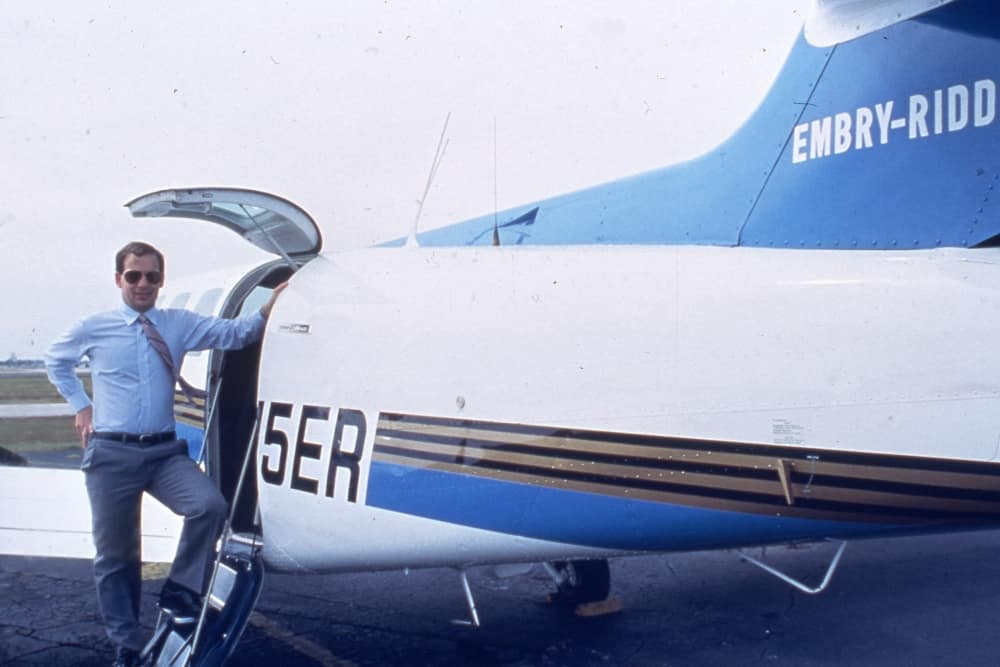
In 1991, at 36, he became Embry-Riddle Aeronautical University's third president. He stayed until 1998. Here was an aerospace engineer with startup experience taking responsibility for an institution devoted to aviation. The connection was obvious; the job itself was a substantial change. Aircraft might have engineering specifications. A university also has dormitories, donors, faculty, parents, and a basketball schedule.
His presidency included partnerships with FlightSafety International, Cessna, IBM, and the Aircraft Owners and Pilots Association. Buildings went up on the residential campuses. He wanted a stronger collegiate atmosphere, with athletics helping bring students together. He also taught leadership and entrepreneurship each spring. The president was therefore obliged to encounter students somewhere other than a ceremonial photograph.
A small aircraft, a very large audience
By the early 2000s, Sliwa was running Insitu in Bingen, Washington, beside the Columbia River. The company had been founded by Tad McGeer. Its circle included fellow Stanford aerospace graduate Andy von Flotow, whose Hood Technology operated across the river. This was an engineering business with serious ambitions in a place better associated with wind than with venture capital conference rooms.
Insitu already had an unusual calling card. In 1998, before Sliwa joined, its small unmanned aircraft Laima crossed the Atlantic from Newfoundland to Scotland. The flight covered 2,031 miles on roughly a gallon and a half of gasoline. That earlier achievement helped establish the technical possibility behind a business Sliwa would subsequently help expand. Giving the sequence its proper order matters: he joined a company with an inventor's history of its own.
ScanEagle, developed with Boeing, grew out of work on Seascan, an aircraft conceived for finding tuna. The idea of a small flying camera had more than one customer. Commercial fishing and military reconnaissance make an unlikely pair on a sales slide, but both place value on seeing something beyond the horizon. Insitu's technology could move between those uses because the underlying capability was useful.
In April 2009, that usefulness became visible far beyond the aerospace trade. A ScanEagle supplied overhead video during the rescue of Captain Richard Phillips from pirates off Somalia. Sliwa was receiving updates as the standoff unfolded. For a company building small aircraft in rural Washington, the connection between workshop work and events at sea had become startlingly immediate.
He recruited people he knew, including his Princeton roommate Steve Heppe. The business grew from a handful of employees into hundreds, and Boeing acquired it in 2008. One small detail survived the transaction: McGeer's dog-friendly office culture. Growth eventually reduced the dogs' visiting privileges to one day a week. Even a robotic-aircraft company must occasionally negotiate with the mammals.
at Embry-Riddle
Insitu
for industrial users
The retirement that produced Seeq
After leaving Insitu, Sliwa considered staying semi-retired. An advisory assignment at Ice Energy Technologies brought him together with Brian Parsonnet and another organizational puzzle. Industrial businesses were gathering substantial amounts of operating data. Extracting useful answers from those records remained awkward. Equipment could report what was happening more readily than people could investigate why.
The records lived in systems known as process historians: archives of measurements over time. Sliwa and Parsonnet saw room for software that would help engineers examine that history. A temperature reading is just a reading until someone can connect it to a batch, an operating condition, or a change in output. The commercial opportunity lay in making those connections easier to investigate.
Seeq took shape in 2012 and launched in 2013. Sliwa's launch announcement named Parsonnet, co-founders Mark Derbecker and Jon Peterson, and a group of founding partners. Early money came from angels associated with Insitu and their wider circles. His next chapter began with relationships carried forward from the previous one, rather than an entirely new cast assembled for the occasion.
The initial public glimpse was suitably modest. In May 2013, a securities filing showed $2 million raised toward a $6 million round; the startup had previously operated as Nebula 12. There was little public product detail. A person who had already helped sell an aircraft company was back explaining an unfamiliar software business. Experience offered a starting point, while customers still had to supply the verdict.
operating conditions
patterns over time
to improve a process
The engineer stays in the picture
A 2016 example makes Seeq's proposition less abstract. A coal plant used lime to control sulfur dioxide emissions. Its engineers needed to determine whether they were using more lime than necessary. That is a question with operating costs attached, and answering it requires context. Simply finding a correlation among thousands of measurements would leave much of the useful work undone.
Seeq's approach kept the engineer or subject expert directing the investigation. At the time, its 25 employees were distributed around the United States in a virtual organization. Sliwa, a founding member of the Gorge Technology Alliance, had already made a case for building technology businesses outside the usual metropolitan addresses. His software company could draw people together without gathering every desk in one building.
He also took recruiting personally. In a 2020 interview, he described becoming closely involved in hiring a startup's first hundred people because they shape the hiring that follows. The analytics engineers mattered alongside the software: customers needed people who understood both the tools and the industrial questions. A product demonstration could begin a relationship; helping someone solve an actual problem gave it somewhere to go.
By the end of his CEO tenure in November 2021, Seeq had grown beyond 200 employees, served 250 process manufacturing customers, and raised more than $110 million. Lisa Graham succeeded him, moving up from chief operating officer. Sliwa became vice chairman in an advisory role. The business had reached a point where continuing its development included changing the person in charge.
CEO tenure ended November 2021
The work after the corner office
Graham and Sliwa had also served together in university governance. Oregon Tech's inaugural board elected her chair and him vice chair in 2015. That connection sits comfortably in a career where education and enterprise repeatedly overlap. A software founder could help oversee a technical university; an engineering leader in university governance could later become a software CEO.
Today, IOTA Software lists Sliwa as its chairman, alongside a board that also includes Parsonnet and Pete Higgins. The company works in industrial data visualization, another part of the problem of helping people understand what their operations are doing. The familiar names suggest continuity in his professional relationships. The published role is a board position, following the years when running a company was his daily assignment.
He has continued writing, too. A May 2025 essay presents the PURE framework: performance, utility, reliability, and economics. Its argument asks founders to make deliberate trade-offs among those demands. Customers may value ease of use more than another increment of speed, or dependable operation more than a lower purchase price. The framework gives engineers permission to discuss the compromises their customers already live with.
In May 2026, he returned to organizational bureaucracy in an essay about artificial intelligence. He argued that automating coordination and reporting could flatten management structures while increasing the value of judgment and creativity. It is a contemporary subject with an old preoccupation underneath it. The former NASA program manager is still interested in how much effort gets spent moving work around rather than making it useful.
A startup’s early hires help shape the people who come next.
On Sliwa’s approach to recruitment
Still close to the runway
Aviation continues outside the boardroom. Sliwa is a pilot and flight instructor, and his family journal records trips with Nancy, also a pilot. In October 2025, they brought home a new Vision Jet named Morgan. Posts in 2026 describe a Cirrus owners' gathering, a trip to Oshkosh, and a presentation on the early days of building Insitu. Flying remains an activity with friends and destinations, as well as a professional history.
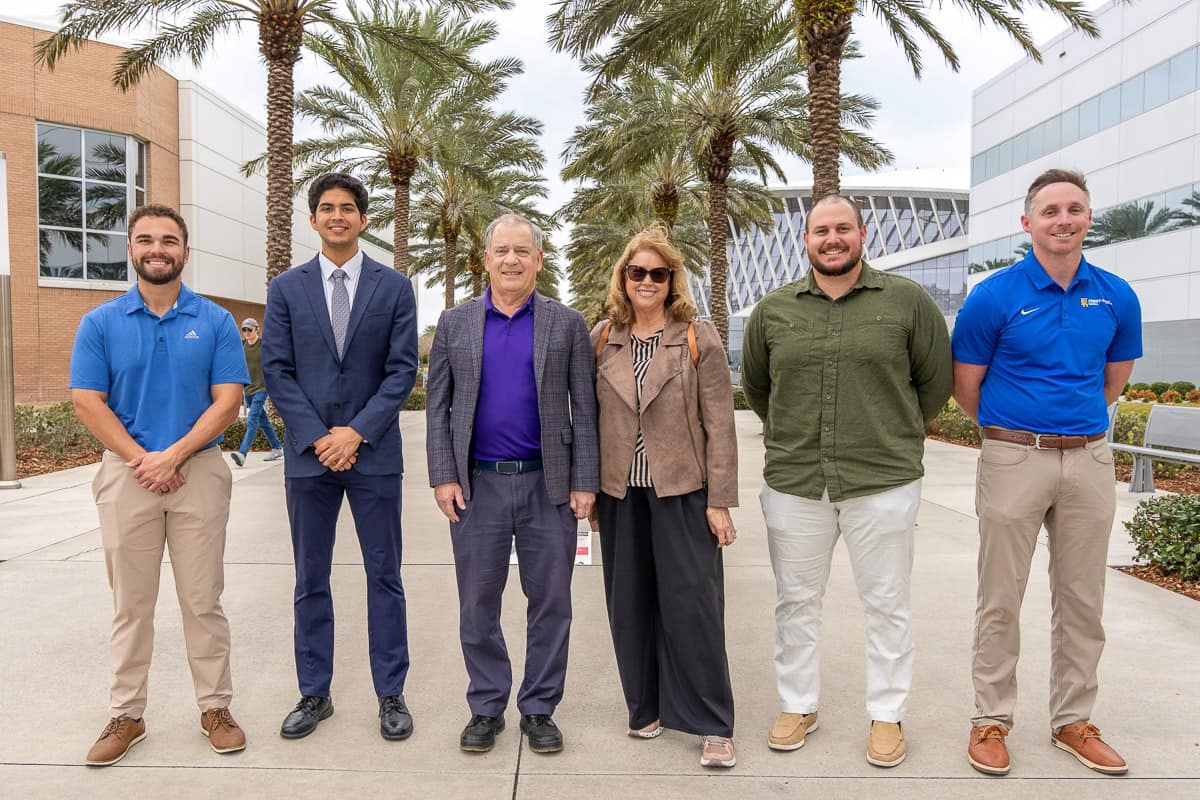
The university connection has lasted as well. Steve and Nancy support three endowed funds at Embry-Riddle. Looking back in 2026, he emphasized students and the institution's ability to help them achieve their ambitions. “Embry-Riddle is one of our kids,” he said of their attachment. For someone whose working life involved several departures, this has proved a durable relationship.
The desk-drawer anecdote offers a tempting final joke, but the rest of his career gives it weight. Building an aircraft company requires the aircraft to work. Analytics software needs to help an engineer answer a question. A university has to make something possible for its students. Sliwa has spent decades moving among those obligations. They provide a fairly demanding test of whether the rock is any good.
Follow the flight plan
Read more from Sliwa and explore the people and organizations in his story.