A screwdriver is an unlikely place to look for a semiconductor founder’s point of view. Yet in 2012, Steve Nasiri was pictured holding a Black & Decker tool whose direction changed with a turn of the wrist. A gyroscope translated the gesture into an instruction. Your hand already knew how to turn a screw; the electronics had learned to take the hint. For an engineer selling motion sensing, it was a pleasingly ordinary demonstration. No one needed a lecture to understand the point.
Nasiri’s work at InvenSense concerned that small interval between an action and a machine’s response. A camera needed to detect shake. A game controller needed to register rotation. A phone needed useful information about movement. Each application imposed a less romantic requirement: the sensor had to fit, and someone had to afford it. Nasiri approached those demands through manufacturing. He had spent enough years around sensors to know that a clever design could become an expensive object.
A kitchen table with a long apprenticeship
He arrived in San Francisco from Iran in December 1972. He worked restaurant jobs while attending university and graduated from Berkeley in December 1977 with a mechanical engineering degree. His first job after graduation was at National Semiconductor. Later came a master’s in mechanical engineering at San Jose State and an MBA at Santa Clara. The combination placed physical design, production and business in the same education.
By the time he founded InvenSense in 2003, Nasiri had worked across several young sensor businesses. His earlier career included SenSym, NovaSensor, Integrated Sensor Solutions and ISS-Nagano. He also held management and operations roles at established semiconductor companies. The kitchen table was a new company’s address, with an experienced engineer sitting at it. The modest furniture can distract from the years of preparation.
At Transparent Networks, his work on optical devices had helped him develop a mirror design. He carried ideas from that work into a dual-axis gyroscope. This is one of the revealing details of his career: an answer to one engineering problem could become useful in another. The move depended on understanding fabrication and packaging, subjects that continue to matter after the elegant drawing is finished.
He skipped the polite first step
InvenSense initially targeted image stabilization in digital still cameras. Nasiri later described camera makers using two separate gyroscopes, placed at right angles, to detect jitter in two directions. A young supplier could have started with a compatible single-axis part and pursued integration afterward. His team went directly to a dual-axis device. He believed the cautious sequence would cost another two or three years, giving competitors time to respond.
“We were not patient and did not believe in me-too products.”
Steve Nasiri, 2014
The impatience was attached to a specific development choice. He wanted a product with a reason for customers to change suppliers. In a later comment on his own essay, he qualified the argument: founders should identify a credible path and take the necessary risks, rather than simply pursue extravagant goals. His case for speed rested on knowing which destination mattered. There was little value in arriving promptly at a product the market already had.
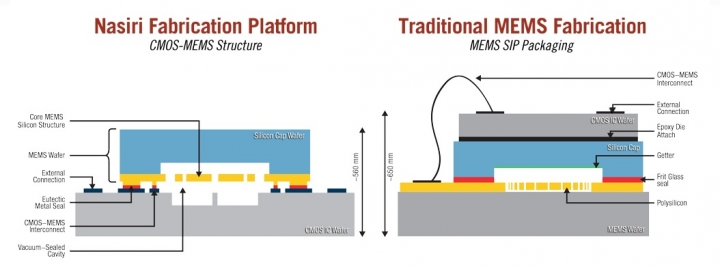
The manufacturing platform addressed the same problem from below. A motion sensor contains tiny mechanical structures and electronics that drive them and interpret their signals. Nasiri-Fabrication brought separately manufactured MEMS and CMOS wafers together in a bonding step. The integration helped with packaging and testing as well as size. A process decision could therefore change several parts of the product’s economics at once.
InvenSense used outside foundries rather than owning a wafer factory. It retained its proprietary process and worked with manufacturing partners to put that process on their equipment. Nasiri could pursue a specialized technology without building the entire industrial plant around it. The distinction is central to his story: outsourcing production still required close attention to how production worked.
Nintendo asks for proof
The first production gyroscopes shipped in 2006 for digital cameras. The company had received an $8 million investment round in April 2004, after a self-funded first year. Its early technical work included core patents and a blueprint for the dual-axis device. Cameras gave that work an immediate purpose. The sensor’s success would be visible in the steadier picture, while the sensor itself remained concealed.
Nintendo’s Wii MotionPlus brought a different kind of test. The controller business demanded substantial volumes, giving InvenSense a chance to demonstrate that its manufacturing approach could support a large customer. Qualcomm Ventures had invested in January 2007. For that investor, the Nintendo orders became evidence that the company could deliver, a useful credential when approaching other electronics manufacturers.
Nasiri had been thinking about mobile devices before their motion-sensing functions became familiar. The technical opportunity and the purchasing decision moved at different speeds. Apple initially chose a gyroscope from STMicroelectronics. InvenSense found business with Android manufacturers. A competitor’s acceptance could help establish a feature that Nasiri was also trying to sell. Markets occasionally offer this awkward courtesy.
By July 2012, smartphones and tablets represented 75 percent of InvenSense’s quarterly revenue. The company reported $39.2 million in revenue for that quarter. A business that began with digital-camera shake had become closely tied to mobile computing. The direction of travel mattered to Nasiri because it made movement part of the interface: users could do something with their hands and expect the device to understand.
Eight years to the exchange. One year to the exit.
InvenSense listed on the New York Stock Exchange in November 2011 under the ticker INVN. Nasiri had led it from a 2003 founding into the public markets. The milestone made an eight-year journey easy to summarize. It also created a tempting place to end the story, with the founder still running the company and the difficult work apparently rewarded.
Less than a year later, the leadership changed. Nasiri stepped down as CEO and president effective October 24, 2012, and Behrooz Abdi succeeded him. The announcement also described Nasiri stepping down as chairman, while remaining a director and helping with the transition through year-end. The company’s next phase would have a different chief executive.
Nasiri described a disagreement over board members’ involvement in everyday direction. His verdict was brief: “I disagreed.” Abdi spoke about the increasing complexity of a growing organization and the need for another phase of leadership. Those accounts leave the tension intact. An engineer’s close involvement can help build a business; a larger organization brings other expectations about who decides what.
Nasiri continued writing about the departure. In a 2015 essay, he criticized the board’s judgment and the company’s subsequent performance. He made his dissatisfaction public rather than smoothing it into a comfortable retirement story. That candor gives his later advice a particular context. The lessons came from someone who had achieved a public listing and then discovered how little that achievement settled about control.
- 2003Nasiri founds InvenSense
- 2011NYSE listing
- 2012Nasiri steps down as CEO
- 2017TDK acquisition
TDK completed its acquisition of InvenSense in May 2017 for approximately $1.3 billion. Abdi remained CEO at the time. Nasiri’s founding work belongs in that company history, but the transaction occurred well into his next chapter. Keeping the dates together makes the distinction clear without diminishing the engineering that had helped the business grow.
Backing the next kitchen table
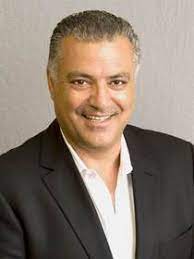
Nasiri founded Nasiri Ventures in 2013 and became an active investor and mentor associated with Band of Angels. His published investor profile sought early-stage hardware and consumer electronics companies with a substantial market, technical differentiation, a working team and customers. The requirements have the sound of someone who has had to make a device work, persuade a buyer and deliver an order.
He also stayed connected with people from the sensor industry. In 2015, he was on NextInput’s board when Ali Foughi became its CEO. Foughi had previously worked at InvenSense. Nasiri’s later role placed him beside another team developing a physical interface, this time based on force sensing. Experience and relationships carried forward into a different company.
Even before leaving InvenSense, he had supported broader access to its fabrication platform. The company’s NF-Shuttle program let developers share mask costs and test designs through a common process. Early participants included researchers from Berkeley, UC Davis and Stanford. Nasiri’s concern was the time and resources consumed by fabrication development before an idea could be tested in silicon.
A second kind of seed capital
The Nasiri Foundation extends that interest in early teams to nonprofit work. Its funding model describes an approach resembling angel investing, with unrestricted annual grants generally ranging from $10,000 to $50,000 and a stated lifetime cap of $250,000 per organization. It is willing to co-fund and match grants. Shanna Nasiri has managed its daily operations since its inception in 2013.
The foundation supports work on poverty, food insecurity and education, among other causes. Its portfolio includes Food Connect, New Classrooms and Moms Against Poverty. In 2018, it contributed $10,000 to an SF State documentary about the Bay Area’s Iranian community. That project returned attention to the immigrant lives behind careers such as Nasiri’s, making room for stories beyond a company’s financial milestones.
His later work gives the kitchen-table beginning a practical sequel. He now helps other organizations reach the point where their ideas can be tried, funded and used. InvenSense required a sensor to work within the price and dimensions of a consumer product. A young nonprofit has its own constraints. Nasiri’s continuing interest lies with the people willing to build inside them, then put something useful into someone else’s hands.