A vending machine makes an unlikely family heirloom. In the Bofill household, it became a joint engineering project. Steve Bofill and his father, Brian, built Vengo’s first prototype in the basement of their Bethpage home. Brian had worked in aerospace. So had Steve. Between them, they were applying a substantial amount of aircraft experience to the problem of getting small objects out of a small box.
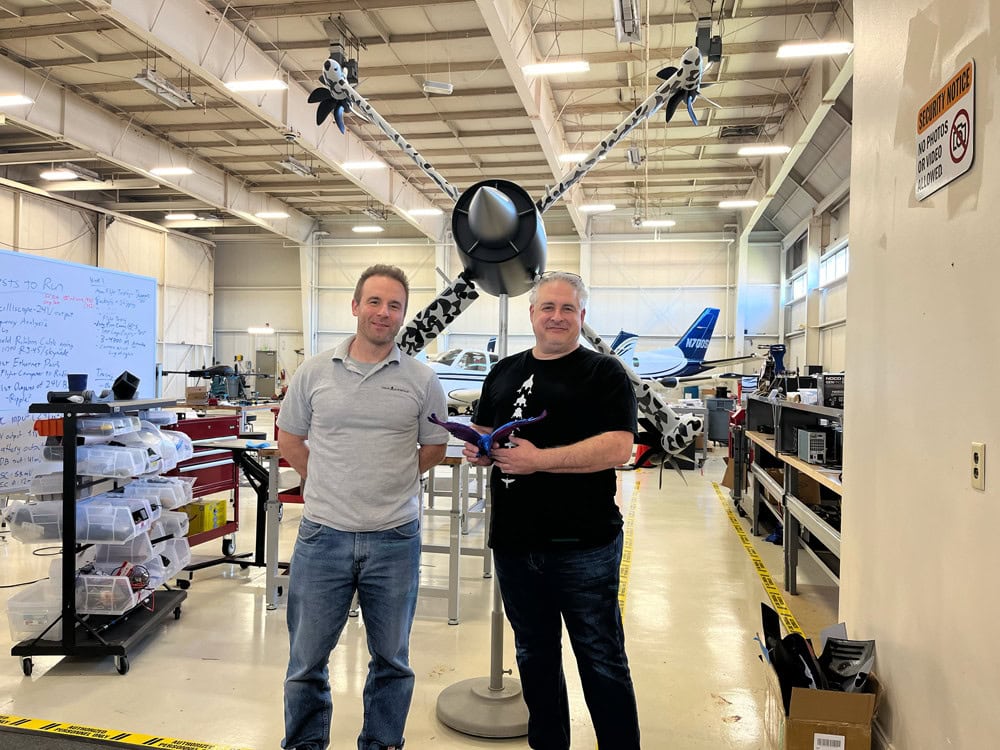
The result would eventually put Steve on Shark Tank beside co-founder Brian Shimmerlik. It would also help bring a growing business back to the Long Island town where he grew up. Later, another company would take him into a Connecticut airport hangar, working with Mark Strauss on unmanned aircraft intended to fly through weather that can keep other aircraft on the ground.
Gum, television, jet propulsion. The résumé invites a double take. Yet Bofill has supplied a useful explanation for its direction: he has deliberately sought smaller and smaller companies throughout his career. The interesting measure is the distance between the person designing something and the thing that finally works. At a small company, that distance can become uncomfortably short. There is less room to hide behind the org chart.
A basement with aerospace experience
Bofill grew up in Bethpage and earned a mechanical engineering degree at the University of Massachusetts Amherst. His professional background includes Lockheed Martin, Northrop Grumman, General Atomics and Sikorsky. Those names place him inside an American aircraft industry of large programs, specialized components and long chains of responsibility.
At General Atomics, his work included the MQ-1 Predator. At Sikorsky, he worked as a mechanical design engineer. His public professional profile lists composite design, composite tooling and CATIA V5 among his specialties. These are the working tools of someone who has to decide how a shape will be made, assembled and accommodated inside a larger machine.
One detail is particularly revealing. He lists a patent filing for a sleeve rod used to hang a fuel bladder between structural keels, motivated by access to the S-97 Raider’s fuel bladder. It is an almost aggressively unglamorous description. Accessibility rarely makes the aircraft poster. It matters very much to the person who must reach the component.
That concern with packaging reappears at Vengo. Bofill’s professional record describes a cartridge-based vending design that separates the drive mechanism from the cartridge. Different cargo, different stakes, familiar questions: where does it fit, how does it move, and how does somebody get at it?
The taxi declined the invitation
Vengo’s early proposition was called TaxiTreats. The idea was to put vending machines into New York taxis, offering passengers little conveniences within arm’s reach. It had the pleasing logic of a business plan drawn on a map: put the product where the customer already is, preferably while the customer is sitting still.
Taxi companies were less enchanted. The venture moved toward stationary settings, including hotels, gyms and college campuses. A wall could offer something a taxi could not: a place for the product without requiring a fleet operator to embrace an unfamiliar piece of hardware.
Shimmerlik credited Bofill with leading the product work. His description of an early version was wonderfully economical: “It looked really good, barely worked.” Anyone contemplating a hardware startup should consider putting that sentence above the workbench. It distinguishes the satisfaction of having made an object from the considerably more expensive business of making it behave.
Vengo’s compact form was central to the proposition. The machines could inhabit spaces that a conventional vending cabinet would consume. Their screens also gave the business a second purpose, combining physical product sales with digital advertising. The box had to dispense merchandise, accommodate payment and give brands a reason to appear on its display.
Two Bofills, one return address
The first prototype was a collaboration across generations. Steve’s father became Vengo’s chief engineer, bringing his own Northrop Grumman background to the company. In a business surrounded by talk of disruption, the arrangement had an older character: a parent and child making something together, then finding out whether strangers would pay for it.
By October 2016, Bofill was discussing a return to Long Island for Vengo’s headquarters, prototyping and engineering work. This was the less televised portion of entrepreneurship. The questions concerned warehouse space, operations and where to put the people who would turn a working design into repeatable production.
The move became a particularly neat family circle. Vengo established its Bethpage operation in a former Navy facility where Brian Bofill had worked during his aerospace career. The son’s company was moving onto ground familiar to the father. A new business had found an address inside an old industrial story.
The coincidence makes a better career marker than a ceremonial photograph. Bofill had left the town, accumulated engineering experience and returned with a business that needed room. His father’s earlier workplace could accommodate its next chapter. For once, the metaphor came with usable floor space.
The television deal had fine print
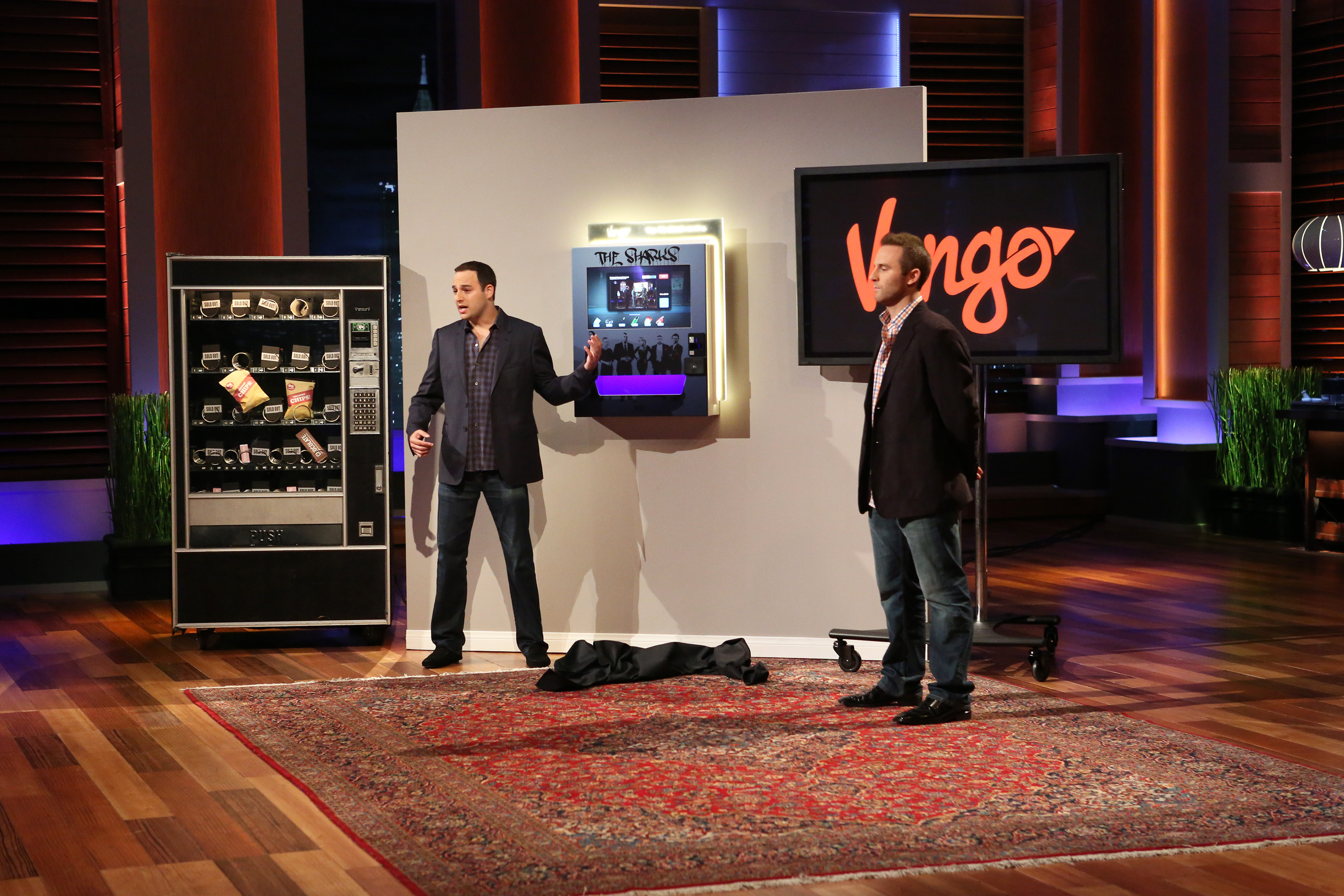
In March 2016, viewers saw Bofill and Shimmerlik pitch Vengo on Shark Tank. They arrived asking for $2 million in exchange for 12.5 percent equity. Kevin O’Leary and Lori Greiner offered a structure involving $2 million in venture debt and a 3 percent equity stake.
Those details matter because a televised dollar amount has a habit of flattening everything beneath it. Borrowing carries obligations. Equity changes ownership. An accepted offer on a television set also belongs to a particular moment in a company’s life. The scene remains part of Bofill’s history without having to stand in for every subsequent financing decision.
The photograph from the pitch provides a concise product explanation. A traditional vending machine stands beside Vengo’s compact wall-mounted unit. Bofill and Shimmerlik could talk about a new retail experience, but the two cabinets had already supplied the visual argument. One occupied the floor. The other left most of it available.
Bofill’s career would soon offer a different version of the same question: what becomes possible when the machine’s familiar arrangement stops being treated as compulsory?
A smaller company, a less cooperative sky
With WaveAerospace, Bofill’s engineering experience returned to aircraft. His co-founder Mark Strauss brought a chemistry degree from Yale and a background that included flying, marketing and analytics. The partnership joined a designer familiar with aerospace hardware to a pilot interested in what small aircraft could do differently.
WaveAerospace’s public team page identifies Bofill as co-founder. His contribution sits within a company building uncrewed aircraft for reconnaissance, communications, logistics and search and rescue. Weather is the organizing problem. A mission may be most urgent precisely when flying becomes least convenient.
The UConn Technology Incubation Program became part of that development. Bofill described its early help in a sentence that sounds considerably more like a startup than an aerospace brochure: “TIP helped us when we were two guys in an office.” Design, computational modeling and flight-data analysis could happen in the office, while testing and prototyping took place elsewhere.
Another project with Strauss, SkySqueegee, applied aircraft technology to working near tall building façades. The proposed uses included washing and inspection. Their granted robotic-cleaning patent describes opposing sets of rotors and distance sensing to position a machine near a surface. It is another close-quarters problem, with a rather longer drop beneath it.
“TIP helped us when we were two guys in an office.”
Steve Bofill · 2023
Wind belongs in the design brief
For an aircraft developer, saying that bad weather matters is the easy part. The harder part is deciding which capabilities to build around it. WaveAerospace has worked on the Falcon, MULE and Huntress families, spanning electric and hybrid configurations and different combinations of speed, endurance and payload.
In 2023, the Falcon II’s stated operating wind capability was 60 knots, compared with a roughly 30-knot limit described as typical of conventional quadcopters. Those figures describe the proposition at that time. They also explain why wind deserves a place beside speed in the conversation. Getting somewhere quickly is useful only if the aircraft can operate on arrival.
The Huntress adds jet propulsion to the picture. WaveAerospace has described a hybrid concept combining rapid travel with the ability to hover. Its approximately 300-mph design ambition should be read as an aircraft-development target, rather than a personal trophy or an assumption that every proposed configuration has entered service.
For Bofill, the technical questions now extend well beyond dispensing a product. The recurring practical demand remains recognizable: make the hardware useful in the circumstances where a customer actually needs it. The sky has the discourtesy to make those circumstances move.
When the forecast becomes the brief
A hangar is only the beginning
By May 2024, WaveAerospace had established itself in a Three Wing Aviation hangar at the airport in Stratford. The location offered room for testing and proximity to an existing aerospace community. Bofill was once again working near the Sikorsky name, this time inside a company he had helped create.
In September 2024, Amentum announced a partnership covering integration and support for WaveAerospace aircraft. The intended work included software deployment, upgrades, operations, maintenance, remote pilot services and logistics after a sale. It was a reminder that an aircraft becomes useful through an organization as well as through its engineering. Somebody must support the machine after the demonstration ends.
In March 2025, WaveAerospace demonstrated its MULE at the US Army’s Project Convergence in California. That spring, the company’s Stratford operation included Falcon aircraft under assembly and a Huntress in a test rig. Development was visibly a collection of machines at different stages, each asking for its own kind of patience.
Bofill’s stated aspiration was more restrained than the imagery of a jet-powered drone might suggest: “That’s the hope, doing something we can be proud of.” Pride is a demanding standard for a hardware designer. A screen can show the intention. A machine eventually has to carry it. Between the Bethpage basement and the Stratford hangar, Bofill has kept choosing work where the answer can be inspected.