In 2005, David Madié started coaching small businesses and encountered a problem that will sound familiar to anyone paid to be helpful. Every client needed something different. Different industries, different stages, different emergencies. Experience supplied plenty of advice. It did not supply an orderly way to decide which advice belonged in which meeting.
- GrowthWheel equips the people who advise small businesses.
- The package combines training, visual tools, and client software.
- Its central habit: assess the business, choose a priority, agree on action.
Madié’s diagnosis was unusually personal: “my real problem was that I was not organized.” He built a system for himself. That system became GrowthWheel, the business founded in Copenhagen under the name Startup Company. The interesting thing is who eventually bought it.
The advisor was the bottleneck
In 2008, GrowthWheel changed its business model. Instead of concentrating on training and coaching entrepreneurs, it began supplying certification, a business tool library, and software to their advisors. Its customer became the person already sitting across the table from the founder. One coach’s working method could now travel through other coaches.
That switch explains GrowthWheel’s place in the market. It serves small-business advisors, incubator managers, entrepreneurship educators, and support organizations. Its competition includes the familiar assembly of a business-plan template, a spreadsheet, a client database, and the advisor’s memory. GrowthWheel bundles a method with the machinery for carrying it out.

A map before the meeting ends
The framework divides business into four challenges: an attractive concept, a strong organization, lasting customer relations, and profitable operations. Those break into 20 focus areas. The breadth matters. A founder who arrives wanting marketing advice may also need to look at delivery capacity or financial practices. The map makes room for that conversation.
20 focus areas.
concept
relations
A business is bigger than its loudest problem.
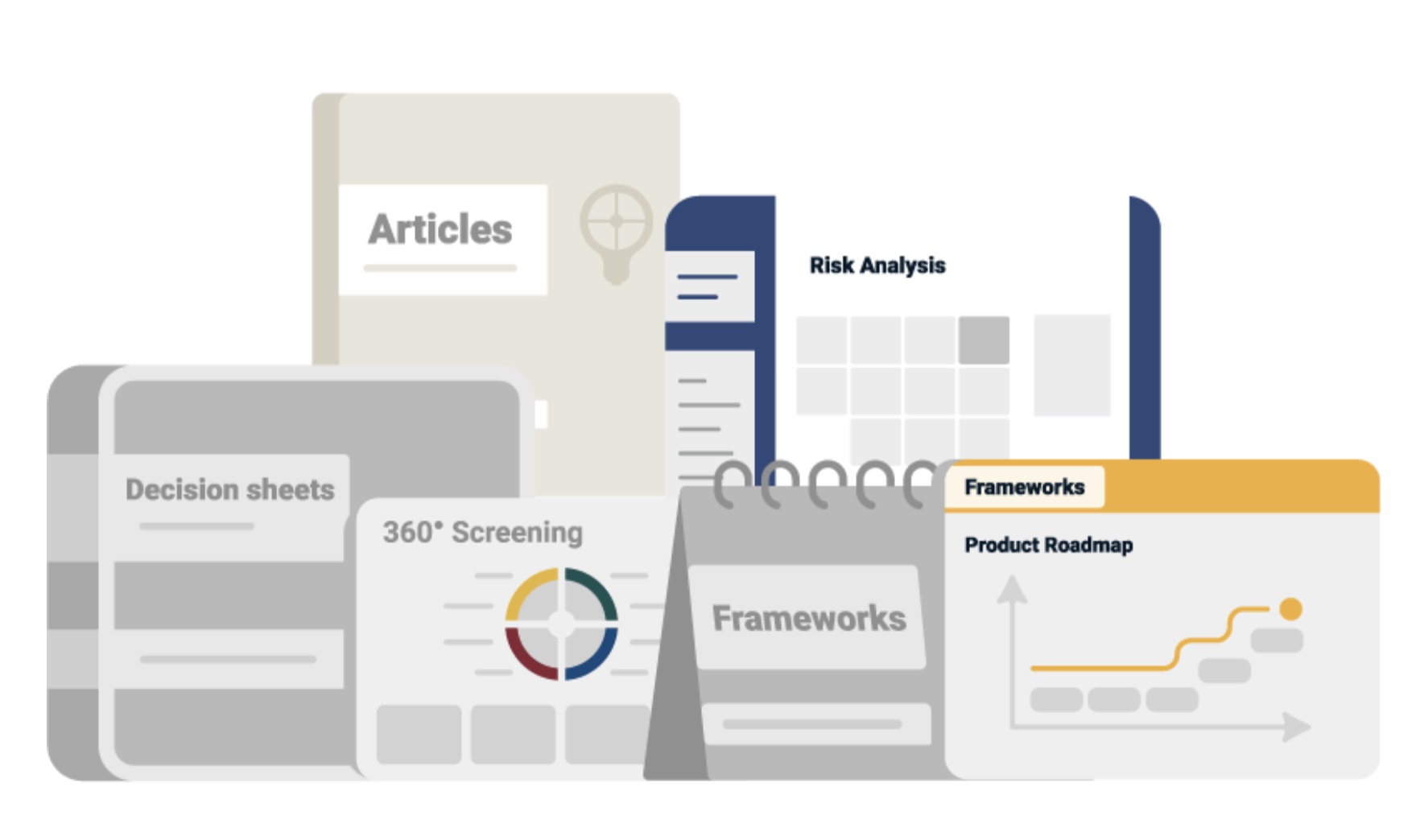
The toolbox then narrows the discussion. GrowthWheel lists more than 100 basic tools, including one-page decision sheets, frameworks, assessments, and action plans, with advanced collections for specialized topics. A decision sheet gives the conversation an object: something two people can inspect, mark up, and return to. The point is to leave with decisions.
Consider a hypothetical bakery deciding whether to sell wholesale. The framework invites questions about customer segments, pricing, production, and funding. An advisor can select the relevant sheets, record choices, and turn them into a 30-60-90-day plan. This is an illustration of the method, rather than a reported customer result. Its usefulness depends on somebody doing the agreed work.
Selling the method, year after year
GrowthWheel charges for certification and ongoing access. Its live online certification runs across three days, four hours a day. The package includes printed materials, an onboarding call, a peer community, and continued education. The commitment is therefore both money and time: someone has to learn the system before making it useful to clients.
The public educator page offers a concrete price example: $2,000 for certification and $2,000 a year for a full educator license. Together, those listed components make a $4,000 first year before any other charges. Separate per-student options also exist. These are educator terms; an advisory organization needs its own current quote.
$2,000Certification
+$2,000Annual full license
$4,000 combined first-year components
Software brought its own bill in effort. Development supplier IntelliSoft describes a troubled early SaaS build in 2014: weak performance and basic functions that did not work as expected. It says it stabilized the MVP and then supplied a dedicated development team. That supplier account suggests a practical constraint: a coherent advisory method still needs dependable software.
GrowthWheel’s own history reports more than 4,700 advisors trained and certified across 70 countries and 49 US states. Those are cumulative reach figures, rather than a count of current subscriptions. The distinction matters for understanding the business: the network describes how far the method has traveled, without telling us how much revenue it produces.
The handoff is the product
Maryland Women’s Business Center makes the offering concrete. In its account of adopting GrowthWheel, the center describes two portals: GrowthWheel Online for advising and GrowthWheel Academy for training and events. Counseling engagements are documented in the advising portal. Training registration and on-demand learning run through Academy. The product reaches into administration as well as the counseling conversation.
Reporting helps explain the institutional buyer. GrowthWheel’s Impact Analytics offers tailored views of clients served, business starts, demographics, and outcomes. A support organization needs to explain its work to stakeholders. Those records can show activity and changes over time; demonstrating that the advice caused the change requires a different level of evidence.
“Just Add Your Expertise”GrowthWheel’s invitation to educators
The 2026 releases extend the same working pattern. April’s update generates suggested actions from meeting notes, which advisors review and edit before sharing. July’s Resource Partners feature records referral organizations and client connections in a shared CRM. Both tackle what gets lost between people: an agreement after a meeting, or a useful contact inside one person’s spreadsheet.
There is a useful tension here. GrowthWheel began as an alternative to the conventional business plan, yet its investor-information guidance explicitly allows its tools to feed one. Decisions, operational priorities, and financial projections can become material for a lender’s required document. The working process and the final presentation can coexist. A founder can make choices first, then put them into the format the bank needs.
The part you can borrow
The portable lesson is a sequence: map the business, choose what matters, define the destination, and agree on the next step. Keep a record that survives the meeting. Return to it. A reader can copy that discipline before buying anything; GrowthWheel’s downloadable 360° Business Canvas offers a starting point.
It fits situations where an advisor and entrepreneur will meet repeatedly and follow through. It is less suited to someone seeking a finished answer without participating. A specialist legal or accounting question still needs qualified expertise. A lender may still require a conventional plan. The framework gives judgment a place to work. The advisor and the entrepreneur still have to bring it.