Christine Telyan had a problem with success. Her company was sending potential customers to small businesses, and some of those businesses were not answering the phone. From the supplier’s side, this looked absurd. More enquiries were supposed to be the point. From the owner’s side, the picture was less tidy: another ringing phone, another interruption, another person to get back to when the day was already full.
The founders had mistaken a desirable outcome for an immediately usable one. An owner could want more business and lack the means to absorb it. Telyan’s recollection has the pleasing inconvenience of a real lesson. The customer had answered the strategic question and then quietly declined to cooperate with the strategy.
“Understand your customer’s needs beyond the surface level,” she says. That instruction has become a useful way to read her career. She began in an industry concerned with moving oil between markets. At UENI, she has spent years working out how to move a much smaller enterprise from being difficult to find to being ready for the person who finds it.
A CV with a change of direction
On paper, Telyan had assembled a fairly orderly route into professional life. Harvard College came first, followed by a master’s at the London School of Economics and an MBA at Harvard Business School. Her undergraduate subject was social studies. The postgraduate move took her into international relations, then business administration. There was ample preparation for understanding organisations. Starting one would supply some additional homework.
At Chevron, she worked in oil trading. Her earlier career included developing business in European and Asian markets. The scale, vocabulary and counterparties were a considerable distance from the independent owners she would later serve. In February 2015, she left oil trading to work on UENI full time, joining a venture she had founded with her husband, Anh Pham Vu.
The new company required capabilities its founders needed to recruit. Telyan has described going to meet-ups and university fairs to find people with technical and coding skills. Early employees helped recruit others. It is an unglamorous part of founding that deserves its place in the story: persuading skilled people to join a company before joining it looks like an obvious decision.
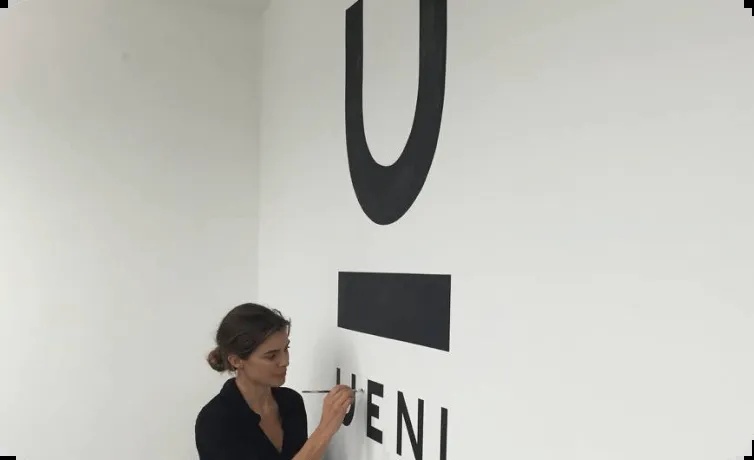
She credits Anh with encouraging her to use her position as someone without an engineering background to concentrate on customer needs and simpler solutions. That is a practical division of attention. Technical possibilities multiply quickly. A person responsible for asking whether an owner can actually use the result has plenty to do.
Free websites, expensive lessons
UENI’s initial proposition was a consumer search service. People would find local businesses and compare their options. The difficulty was familiar to anyone building a marketplace: both sides needed reasons to show up. A useful directory needed businesses; businesses wanted an audience. The founders gradually moved toward selling the businesses help with their own online presence.
In a discussion of women starting companies, Telyan recalled that she and Anh had considered other ideas before UENI. The breadth of this particular problem, and the possible impact of solving it, persuaded them to pursue it. Her advice to founders included asking prospective customers for help. They were well placed to decide whether the idea had merit.
By November 2018, UENI was promoting a nationwide free website campaign in Britain. Its announcement described an August pilot in Manchester that had put 1,774 previously offline businesses on the web. The offer included practical infrastructure such as hosting and booking functions. Making an owner visible required doing the work that visibility depended on.
Free also created a question for the founders. Someone still had to pay the people building and supporting those sites. In February 2019, Telyan described a freemium model with about 20,000 businesses on the platform. At that moment, she was concentrating on expanding the free base, with paid plans available alongside it. These were early decisions about how to earn trust and, eventually, revenue.
Six years later, a conversation with business professor Daniel Isenberg had a different emphasis. Telyan and Anh discussed moving beyond freemium. The February 2025 episode described 45,000 subscription customers. That count measures something different from free users or the total number of websites ever built. It marks a later chapter in the founders’ search for a repeatable business.
The household was growing alongside the company. By that interview, the couple had two children. Running a business together gives the phrase “taking work home” a certain administrative redundancy. Their professional partnership had also lasted long enough to cover several versions of the product. Persistence, in this case, included repeated changes to what they were asking people to buy.
The founder steps into the frame
Telyan’s public manner allows room for a joke. UENI put her in an advertising campaign that borrowed the comic approach of Dollar Shave Club. The question it addressed was straightforward: could websites sold at such a modest price be any good? An orange sign supplied a cheerful, partly asterisked answer.

In the company’s September 2022 campaign announcement, she explained the objection behind the joke: “People assume low price means low quality.” The response rested on the process UENI had developed for making the work affordable. The comedy got attention; the operational claim had to survive a customer receiving the finished site.
Looking back on an early shoot, she recalled employees from data and operations appearing as extras. Later productions became more polished. Her interest in the comparison was revealing: she was weighing how a founder’s willingness to appear could sit alongside better production. Professional sheen has its uses. So does the slightly exposed feeling of a person asking you to believe her.
“Yeah, be even more bold than you’re inclined to be.”
Christine Telyan, on advice to her younger self, 2019
The advice fits the decision to step in front of the camera. In that same 2019 conversation, she named Michael Lewis’s Moneyball as a favourite business book and DeepL as a favourite online tool. The choices suggest an interest in analysis and practical assistance. Her business has needed both: a way to inspect its assumptions, and ways to make everyday work easier.
The budget on the other side of the screen
By August 2026, UENI had published a useful picture of some of the owners approaching it. Its onboarding data covered 7,413 recent signups asked how much they intended to spend each month on marketing. Of those respondents, 1,938 planned to spend nothing. Another 2,918 chose between one and fifty dollars.
Marketing plans, in dollars
Planned monthly spend among 7,413 recent UENI signups, counted 10 August 2026. Stated intentions, not actual expenditure; this sample does not represent every small business. Percentages rounded.
The finding has limits. These were people signing up to UENI, and the figures describe intentions. Still, the modest sums help explain the practical conditions in which Telyan’s offer must work. A service for these owners has to account for what they can pay as well as what they would like to achieve.
She has criticised software built around people who spend their working lives at laptops. A shop owner or contractor may have little spare time to learn a platform. Her complaint concerns the work transferred to the buyer: choosing, configuring and maintaining software can become another responsibility in a business that already has very few people.
In a 2024 interview, she described wanting UENI’s team to work across other website platforms as well as its own. That ambition puts experience and service at the centre of the offer. The website technology provides a foundation; someone still needs to turn it into a useful place for a particular business to send its customers.
A reply worth keeping
Telyan also has experience of being the small business customer. When she announced UENI’s partnership with accounting company Xero, she pointed out that UENI had used Xero since 2015. A company bought to help run the early business had become a partner in serving other owners. That history gave her a concrete reason for the association. She could talk about what her own company had used, alongside the offer being made to customers.
The partnership linked accounting software with UENI’s website service, bringing two separate parts of running a business into the same conversation. For a founder, such an arrangement carries a useful change of perspective. The supplier has occupied the buyer’s chair. She knows the purchase comes with an expectation that somebody’s working day will become easier. The professional language may be about partnerships, but the test arrives in ordinary tasks: getting the business represented properly, keeping its information current, and having enough attention left for the next customer.
There is a smaller story that catches Telyan’s attention to service. Her daughter Harper sent Philadelphia Cream Cheese a suggestion for a new name. A marketing director replied with a handwritten note and gifts. Telyan shared the episode because a large brand had taken a very small correspondent seriously. She remembered the care in the response.
That pleasure sits comfortably beside her longer-standing argument that founders should test their assumptions and ask customers questions. The person at the other end brings circumstances the company cannot see from a spreadsheet. Sometimes the useful discovery is an unexpected objection. Sometimes it is the reason a phone keeps ringing unanswered.
In an August 2026 message to prospective customers, Telyan returned to a practical promise: help the business look trustworthy, become findable, and make contact or booking easier. After years of changing products and pricing models, the work remains close to the owner’s day. There is someone to serve now, an enquiry to answer later, and a website that ought to make both jobs easier.