A website has a curious property: the company that sells it need not be the company that builds it. The customer sees an agency, approves a design and eventually receives a link. Somewhere between the invoice and the launch, another organization may have done the production. vSplash has made a business of occupying that space.
- Your brand, its delivery team. Agencies and digital service providers buy white-label production.
- More than a launch. The offer includes websites, migrations, marketing and ongoing care.
- Speed needs a scope. Its fast WordPress build claim describes production capability, not every project’s calendar.
Think of it as an agency’s extra set of hands, with a rather large work queue. vSplash’s recruiting page says it builds more than 1,500 websites monthly. Its buyers include the kinds of businesses that already have small-business customers: agencies, hosting companies, domain registrars and directory publishers. Those partners bring distribution. vSplash brings delivery capacity.
The builder that became the building crew
Umesh Tibrewal founded vSplash in 1999. Its first chapter involved a multimedia website builder and distribution through partners. The revealing turn came around 2003, when, according to its company history, the focus moved toward broader digital services. It also embraced working across platforms. The tool had become one part of a larger job.

That change matters because small businesses do not all arrive with the same software. Some need a new site; others need an existing one moved. A provider committed to a single builder has one answer. A provider organized around delivery can take on the migration, the store or the ongoing updates. That is the market position vSplash now presents.
Its service menu includes e-commerce, SEO, paid search and social media. Website work covers customization, payment gateways and connections to cloud tools. For a partner, the commercial attraction is straightforward: offer more services without assembling a separate specialist team for each one. The partner still has to sell the work and understand what the customer needs.
The delivery comes back through the partner’s brand.
Speed has a dependency
The eye-catching number appears in a surprisingly practical place: the job descriptions. vSplash says it can build a roughly five-page WordPress website in six to eight hours. Read that as a production claim. It does not tell an agency how long collecting photographs, settling the wording or securing customer approval will take.
Claimed build capability for a roughly five-page WordPress site.Company recruiting material. Production time is not an end-to-end delivery guarantee.
This is where the model becomes interesting. Faster assembly makes the surrounding decisions more conspicuous. Someone must define the pages, supply usable content and decide whether the result is right. An agency copying the model should start there: name the approver, establish a complete brief and agree on revisions before handing over production.
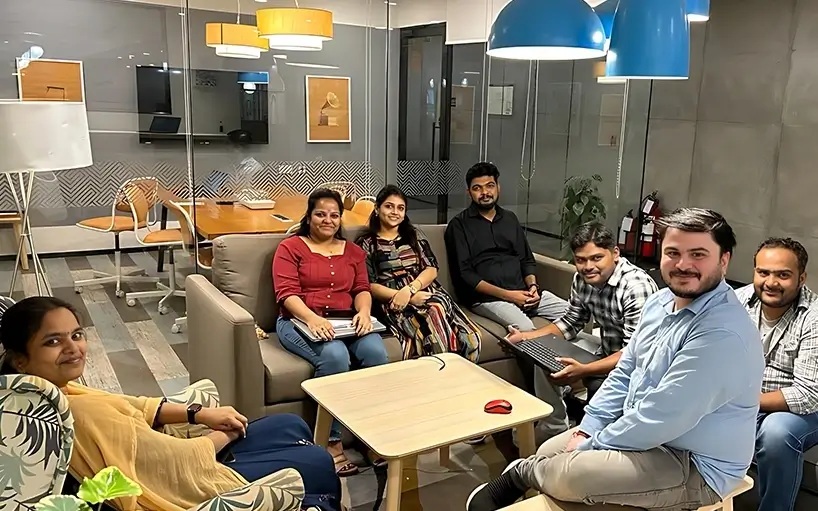
The same distinction applies to staffing. A white-label relationship can reduce the need to hire every delivery skill internally. It does not remove account management. If the customer changes direction after a build, the partner still has a conversation to conduct. Capacity is something an agency can buy. A clear decision is something it must organize.
BuzzBoard comes back into the picture
In December 2011, vSplash introduced BuzzBoard, a dashboard for understanding a small business’s digital presence. It brought together information about websites, search, social channels, reviews and listings. The intended audience included providers selling digital services to small businesses. An identified gap could become the beginning of a sales conversation.
“BuzzBoard offers a holistic view of the digital world of an SMB.”
Umesh Tibrewal · BuzzBoard launch announcement, 2011
Today, vSplash describes BuzzBoard as a group company supplying AI technology for service delivery. Its innovation page discusses content generation, digital-footprint information and personalized social marketing. The continuity is useful: information about a customer’s business can inform both what a provider recommends and what its production team creates.
There is a human job inside that proposition. A business description still needs to sound like the business. A service page still needs accurate details. vSplash markets AI-assisted, human-crafted websites; the practical question for an agency is where review happens and who is accountable for the final version. Those are reasonable questions to settle during onboarding.
Its design language also includes neuroscience. On its service page, that translates into familiar choices: contrasting colors, generous white space, clear wording and visible calls to action. These are concrete things a partner can inspect in a draft. The label itself should not substitute for checking whether visitors can understand the offer and complete the intended task.
The bill continues after launch
A finished website creates its own queue. vSplash’s monthly maintenance offer lists security updates, backups, content changes, broken-link checks, speed optimization and analytics review. These tasks explain why fulfillment extends beyond a single project. The shop changes its hours. A product changes its price. A plugin needs attention. The website keeps asking for work.
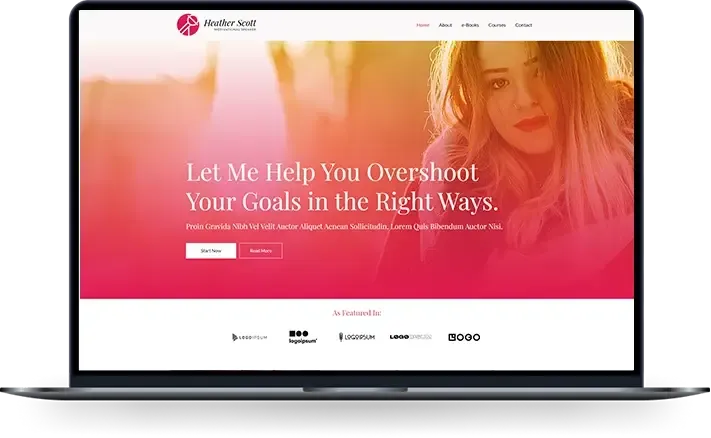
For buyers, cost belongs in the scope: the initial build, revision allowance, ongoing care and any campaign work. A useful comparison includes the time the agency retains for briefing and managing the account. Cheap production can become expensive coordination if the work arrives incomplete or the approval process keeps restarting.
What an agency can copy
The lesson is a division of labor. Keep the customer relationship close, make repeatable production explicit and decide how quality will be checked. vSplash’s own migration advice recommends inventories, page briefs, redirect mapping and staging reviews. None requires a mysterious formula. All require someone to follow through.
A sensible first engagement would test those handoffs on a defined piece of work. Agree on the inputs, acceptance criteria and support responsibilities, then review what required intervention. The exercise tests whether the agency’s sales process and the supplier’s production process can work together before a larger queue depends on them.
This arrangement fits an agency with recurring delivery needs and a workable briefing process. A highly bespoke project needs its own estimate; an unsettled brief needs more decisions. The appealing part of vSplash’s model is that a partner can expand what it offers. The demanding part is that its name remains on the promise.