At thirteen, Adam Goldberg enrolled at the University of California, Berkeley, as a full-time mathematics student. Years later, he would become an investor. Between those two events came number theory, national laboratory research, work as a mathematician for the Department of Defense, and a job as the first product hire at Rubrik. It is an unusual preparation for a profession often explained through introductions and spreadsheets.
- Standard backs founders working in intelligence, automation, and cryptography.
- Its founders combine technical research with venture and operating experience.
- Axiom and Walrus show the strategy: finance the machinery other builders need.
His co-founder, Alok Vasudev, arrived by another technical route: semiconductor work, a Stanford electrical engineering PhD, then venture investing at Benchmark. In 2019, they started the firm known as Standard Crypto. Today it calls itself Standard. The shorter name accompanies a broader public description of its interests. The revealing part is how much of the original technical temperament still makes sense.
A pair of unusually technical résumés
Venture firms sell judgment. Money becomes more useful when the person supplying it understands what might go wrong. Standard’s case for that understanding starts with its founders’ backgrounds: Goldberg’s experience moving from mathematics into product work, and Vasudev’s research in semiconductor photonics, with applications in computing, energy, and communications.
Goldberg previously invested at Lightspeed Venture Partners. Vasudev’s experience includes the Ethereum initial coin offering and formation-stage involvement with Confluent. Those belong to their personal histories; they should not be mistaken for investments made by Standard. Together, the biographies suggest a particular kind of conversation with founders: one that can move between a scientific premise and the practical work of building a company.
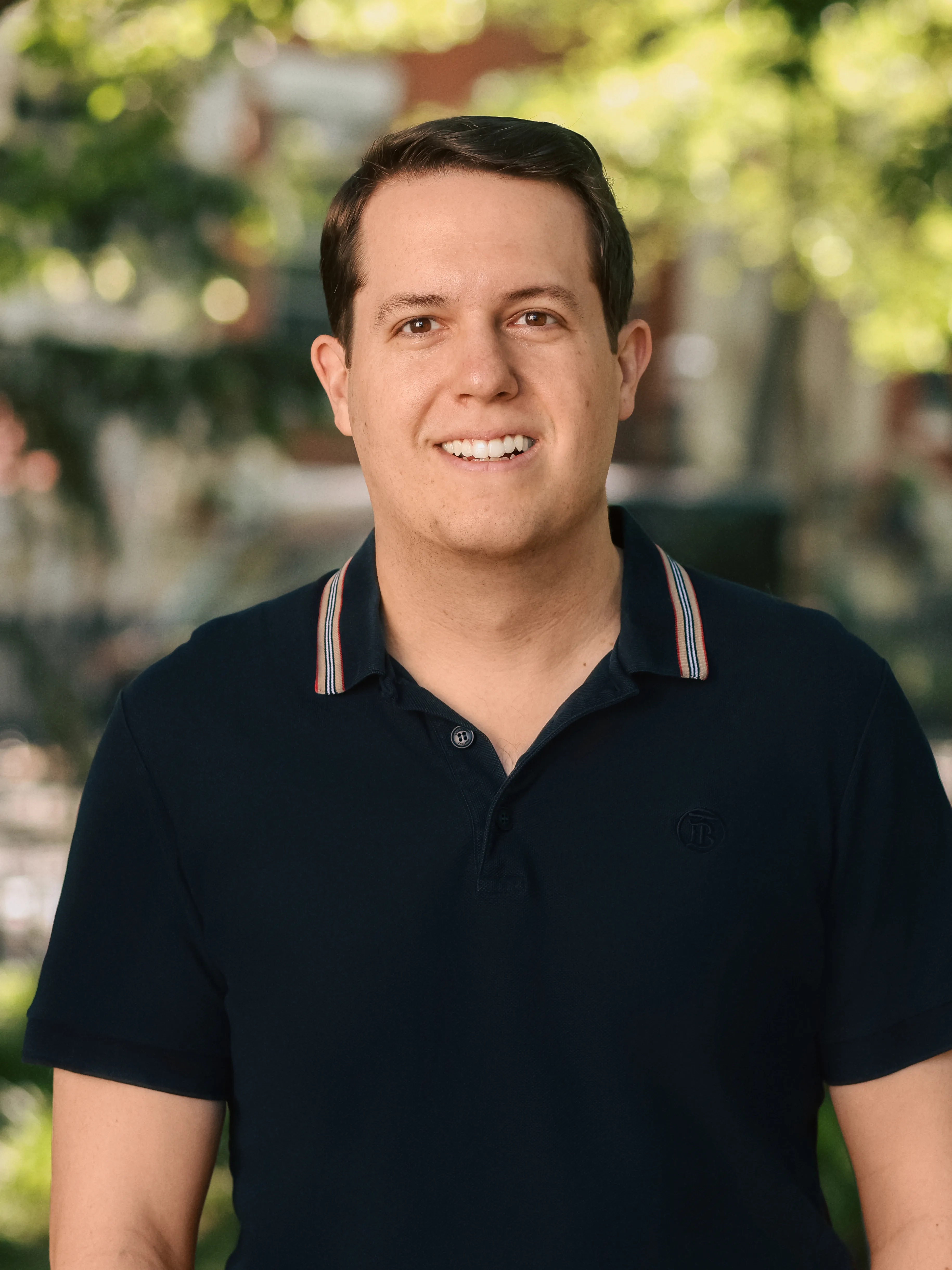

The engineering emphasis extends beyond the founders. Gavi Galloway, Standard’s head of engineering and chief information security officer, also contributes to technical diligence. For a founder proposing difficult infrastructure, that is a relevant capability. An investor who can examine the mechanism may be better equipped to distinguish an unfinished product from an impossible one.
The plumbing has a price tag
Consider Axiom. In January 2024, it announced a $20 million Series A co-led by Standard Crypto and Paradigm. Its work concerned zero-knowledge proofs: cryptographic tools that let a computation’s result be checked. The financing would support hiring and development of its platform. This was an investment in capabilities developers could use to build other things.
Standard’s own technical writing explored an Axiom-based example in which competing solvers propose ways to fulfill a user’s transaction request. A proof could help challenge a supposedly winning proposal when a better one existed. The question becomes wonderfully concrete: if someone says they found the best answer, how can another participant check?
Walrus offers another version of the same instinct. In March 2025, its foundation announced a $140 million private token sale led by Standard Crypto. The protocol, originally developed by Mysten Labs and built on Sui, makes large data files available to applications. The stated uses ranged from media and websites to AI datasets and blockchain history.
“Prior onchain storage attempts have struggled with scalability, flexibility, and security”
Adam Goldberg · Walrus financing announcement · March 2025
That diagnosis matters more than the fundraising spectacle. Goldberg identified limitations in earlier storage approaches, then explained Standard’s backing of Walrus as a continuation of its relationship with Mysten Labs. The proposition was specific: infrastructure needed to accommodate more demanding applications. The financing supported expansion, maintenance, and application development.
Managing large files.
Walrus’s storage.
Demand still has to follow.
A fund is a promise about the future
The large number associated with Standard itself is $500 million. Reporting in May 2022 described a new investment fund of that size, intended to invest in equity and crypto. It helps to keep the nouns straight. Fund capital is money assembled for investing. It does not establish the management company’s valuation, annual sales, or profits.
An investment fund’s size.
Axiom’s $20M and Walrus’s $140M were separate portfolio financings, with multiple investors.
Nor do those portfolio rounds reveal Standard’s individual checks. Axiom’s announcement describes a Series A; Walrus’s describes a private token sale. Ownership in a company and exposure to a network token have different economics. Putting both under “funding” can conceal the very question an investor needs to ask: what exactly has been purchased?
Standard serves two groups. Founders seek capital and a useful partner for building. Fund investors seek returns from the resulting investments. Its public disclosures describe privately offered vehicles for qualified investors. For a startup, the practical relationship is therefore a financing partnership, with terms and expectations that matter alongside the investor’s technical credentials.
Read the names. Then read the small print.
The current portfolio includes Cognition, Modal, Ramp, and Snorkel AI alongside Aave, Morpho, Ethereum, and other crypto investments. Standard’s stated focus is now intelligence, automation, and cryptography. The visible opportunity set reaches beyond the boundaries suggested by its former name.
In crypto, alternatives include Paradigm, a16z crypto, and Electric Capital. Sometimes those alternatives are collaborators: Paradigm co-led Axiom, while a16z crypto and Electric Capital participated in the Walrus financing. Standard’s distinction rests on the experience and judgment of its team, rather than exclusive access to a category.
There is a useful complication beneath the portfolio list. Standard says the selection excludes certain confidential positions and companies written down to zero without a corresponding asset received. The logos therefore cannot establish a complete track record. That qualification belongs in any serious reading of the firm. Technical sophistication does not eliminate losses, and a visible investment does not establish a successful outcome.
The useful question comes before the pitch
A founder can borrow a practical discipline from these examples: identify the constraint, demonstrate the mechanism that removes it, and explain who benefits enough to use it. This is an editorial reading of Standard’s investments, not a published application formula. Axiom and Walrus make the sequence tangible.
The approach depends on more than engineering. If customers can solve the problem more cheaply elsewhere, or do not care enough to change their behavior, the technical achievement may have little commercial value. Standard offers capital and an informed audience for difficult ideas. The founder still has to show why solving the hard part will make somebody’s work better.