In 2024, the number of developers working in crypto fell 7%. That sounds like a retreat. But look inside the same dataset: developers with at least two years of experience grew 27%, reaching an all-time high. They produced 70% of the code. The crowd was shrinking. The people who had stayed were doing more of the building.
This is the kind of distinction Electric Capital has made a business of noticing. The venture firm invests in early companies and protocols, with a particular history in crypto. Alongside the money, it has built a public apparatus for watching software ecosystems develop. Its research asks a deceptively ordinary question: who is showing up to work?
- For founders: early capital, plus engineering and operating help.
- For researchers: public developer data and tools to explore it.
- The wager: persistent builders can reveal something a price chart misses.
A census with a venture fund attached
Electric’s 2024 Developer Report examined 902 million commits across 1.7 million repositories. A commit is a recorded change to software. Individually, it can be trivial. In aggregate, and carefully cleaned, these traces help describe where developers are spending their time. The resulting picture can be inconvenient for anyone hoping for a simple verdict on crypto.
established developers
The measurement has boundaries. Electric filters copied code, identifies bots and tries to merge multiple accounts belonging to one developer. Closed-source projects remain outside its main view. A routine edit and a difficult technical breakthrough are both changes to code; counting them does not make them equivalent. The figures are evidence of activity, requiring judgment about what that activity means.
Two builders, one useful habit
Avichal Garg and Curtis Spencer founded Electric in 2018. Their biographies explain the emphasis on making things. Garg worked at Google and Facebook; at Facebook, he led product management for the Local group, which included 400 engineers. Spencer had been chief technology officer at semantic-search company Cruxlux and mobile-infrastructure startup Spool, then an engineering lead at Facebook.
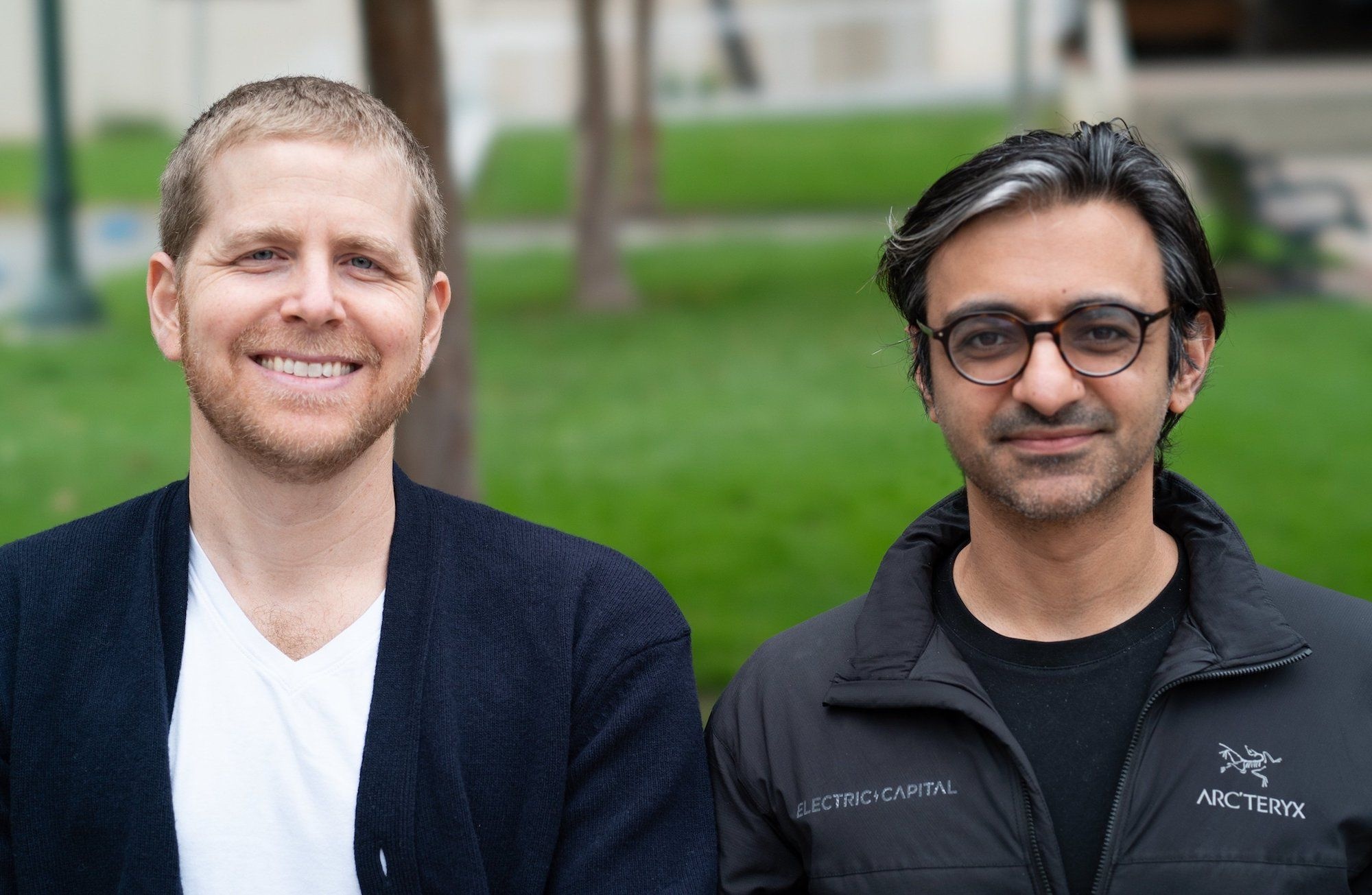
The firm says all its investors are engineers who regularly ship code. That matters most after an investment. Its published support model includes reviewing code, interviewing candidates, conducting user studies and helping teams think through governance and token economics. These are concrete tasks a young company might otherwise struggle to staff.
The technical help has a particular fit with crypto. A protocol team may need to make decisions about community governance, token incentives and liquidity while it is still developing the product itself. Electric describes participating in protocol governance, staking tokens and providing liquidity. For a founder, the question is whether an investor can help with those specific demands alongside the familiar work of recruiting and product design.
The culture also has an outward-facing purpose. In a 2022 essay, Electric described public software and research as a way to attract founders. Build a useful tool, let people use it, and demonstrate competence before asking for a relationship. A founder can inspect the work. The sales pitch has something to stand on.
The PDF was the bottleneck
Then the research itself needed a redesign. In November 2025, Spencer announced Open Dev Data and retired the standalone annual Developer Report. The explanation was refreshingly practical: the operation had grown beyond what a yearly publication could adequately represent.
“At this scale and complexity, a once a year PDF report is no longer the right format.”
Curtis Spencer / November 2025
Electric had spent six months piloting its data pipelines with leading ecosystems. The public release opened both the taxonomy, which connects projects to repositories, and the underlying datasets. More than 1,000 open-source contributors had helped source and validate that taxonomy. DeveloperReport.com became the platform’s first consumer, continuing to display ecosystem metrics.
For a foundation evaluating grants, the practical attraction is the ability to investigate its own questions. An analyst can download the data, compare ecosystems or examine language adoption. The files work with familiar analytics tools including DuckDB and Spark. Code is MIT licensed; datasets use CC BY 4.0. Other people can build products on the work, provided they meet the licensing requirements.
A cheque has a different price
These public users are only one side of Electric’s business. Limited partners supply capital to private investment vehicles. Founders receive financing and support; the funds acquire equity or tokens. Investment ownership is the economic exchange. The developer dashboard has no paid tier.
The distinction prevents a common mistake when reading venture headlines. Electric’s $1 billion announcement in March 2022 described investment capital: a $400 million venture fund and a $600 million token fund. Those pools were money to put to work. They did not measure the management company’s sales or establish its valuation.
Today, Electric’s homepage lists preseed through Series A investments, with cheques of $1 million to $15 million or more. Its portfolio includes businesses as different as Kraken, the cryptocurrency exchange; Certora, which uses formal verification to check code; and SF Compute, a compute marketplace. Founders considering Electric alongside firms such as Paradigm or a16z crypto can evaluate whether this engineering support matches the work ahead.
The next intermediary
The mandate has widened. Electric’s January 2026 opportunity list includes private AI agents, encrypted collaboration, agent payments and energy settlement. The connecting idea is user control: technology that reduces dependence on an intermediary. Its current investment language encompasses AI, cryptography and distributed systems.
There are useful limits inside that thesis. In a January essay, partner Ren noted that a blockchain can establish ownership of a token without establishing whether the physical banana it represents is rotten. Verification remains somebody’s job. Similarly, an active repository cannot establish that customers want the product.
That distinction is useful for people using the research without seeking investment. A developer comparing ecosystems can investigate where experienced contributors remain active. A foundation can examine participation around a grant program, while remembering that a change in the chart does not establish what caused it. The public taxonomy also gives a missing project a route into the analysis: contributors can propose additions for review. The map can improve when the people being mapped inspect it.
The practice worth borrowing is manageable: choose a question your intended partners care about, build something that helps answer it, and make the method inspectable. For Electric, that question began with developers. Whether a particular investment succeeds still requires a harder investigation. Who keeps building is a starting point. Who benefits from the finished thing is the next question.
Follow the work
DeFi Decoded / Garg & Ken Deeter / April 2026▶ Watch: Avichal Garg on investing
When Shift Happens / February 2026