A shopping center can count its tenants. Counting the people who might become their customers is a different problem. A busy Saturday offers an impression; a lease demands a decision. That gap between something happening and someone understanding it is a useful place to begin the story of JBV Capital.
- JBV invests in early-stage AI and infrastructure software, alongside advice for founders.
- It led Placer.ai’s $12 million Series A and co-led Genway AI’s $6 million seed.
- Its recent SimplAI investment returns to a familiar subject: making complicated technology usable inside a business.
The useful signal
In January 2020, JBV led the financing for Placer.ai, whose location analytics help businesses understand visits to physical places. Retailers and property owners could use that information when considering locations, tenants or staffing. The round included Aleph, Reciprocal Ventures and OCA Ventures. Its purpose included research, development and expansion in the United States.
The interesting difficulty came before the dashboard. Placer investor Stage Venture Partners described the challenge of making mobile-phone signals useful for commercial property decisions. Phones had not been designed to produce tidy answers for landlords. Signal processing, geolocation expertise and privacy work had to turn that unruly material into a product.
Here was a business with a recognizable buyer and a costly question. A landlord considering a lease could use better evidence about the place around it. Seen through that example, JBV’s interest in analytics becomes easier to understand: software can earn its place by improving an existing decision.
Before the agents, the plumbing

JBV’s founder, Jeffrey Bazar, arrived with experience in the less visible machinery of technology. His earlier roles included Cariden, which made network-planning and traffic-management software, and Deepfield, which worked on network analytics. Cisco completed its Cariden acquisition in December 2012, paying approximately $141 million in cash and retention-based incentives. Nokia acquired Deepfield in January 2017.
The dates matter. JBV was founded in 2017. Cariden belongs to Bazar’s earlier career, and its purchase price describes Cisco’s transaction. It cannot be read as a JBV investment return. The useful credential is the experience of working with software businesses whose customers need complex systems to behave predictably.
Today, JBV describes its work as investment and advice through a startup’s life cycle. Bazar’s disclosed board roles at Placer.ai and Leela AI give that description a concrete form. For a founder, this means evaluating an investor as a potential participant in consequential decisions, alongside the capital that investor brings.
That places JBV among specialist software investors. A founder weighing it against another early-stage fund should consider the relevance of that operating history and the working relationship. A board seat establishes involvement; its value still depends on what happens in the room.
Sinefa, another company in Bazar’s history, supplies a useful complication. Palo Alto Networks acquired the digital-experience monitoring business in November 2020 for $27 million in total purchase consideration. On the acquisition date, it also announced the end of sales for all Sinefa products, with support extending into 2021 under specified terms. An acquisition can preserve technology while changing what customers can buy. For founders and buyers, the transaction headline is only one event in the product’s life.
First, have a hundred conversations
Genway AI offers another way into the same theme. Its founders had struggled to obtain actionable customer feedback. Their company history describes more than a hundred validation conversations with software enterprises during the first quarter of 2023, followed by a prototype in March and the onboarding of early enterprise customers that August.
The chronology makes the product less mysterious. Genway traces its beginning to a Tel Aviv hackathon in August 2022, where two founders explored customer needs over 24 hours. Its first prototype was called Lulu. The eventual interview platform followed months of conversations with potential buyers. For anyone building research software, there is a pleasing discipline in using customer research to establish what the research product should do.
Genway now offers AI-led interviews, usability testing and adaptive surveys. Research teams set learning goals; the software conducts conversations and helps analyze the results. Placer’s work concerns where people go. Genway asks them questions about what they need. Both sell ways to make business behavior more understandable.
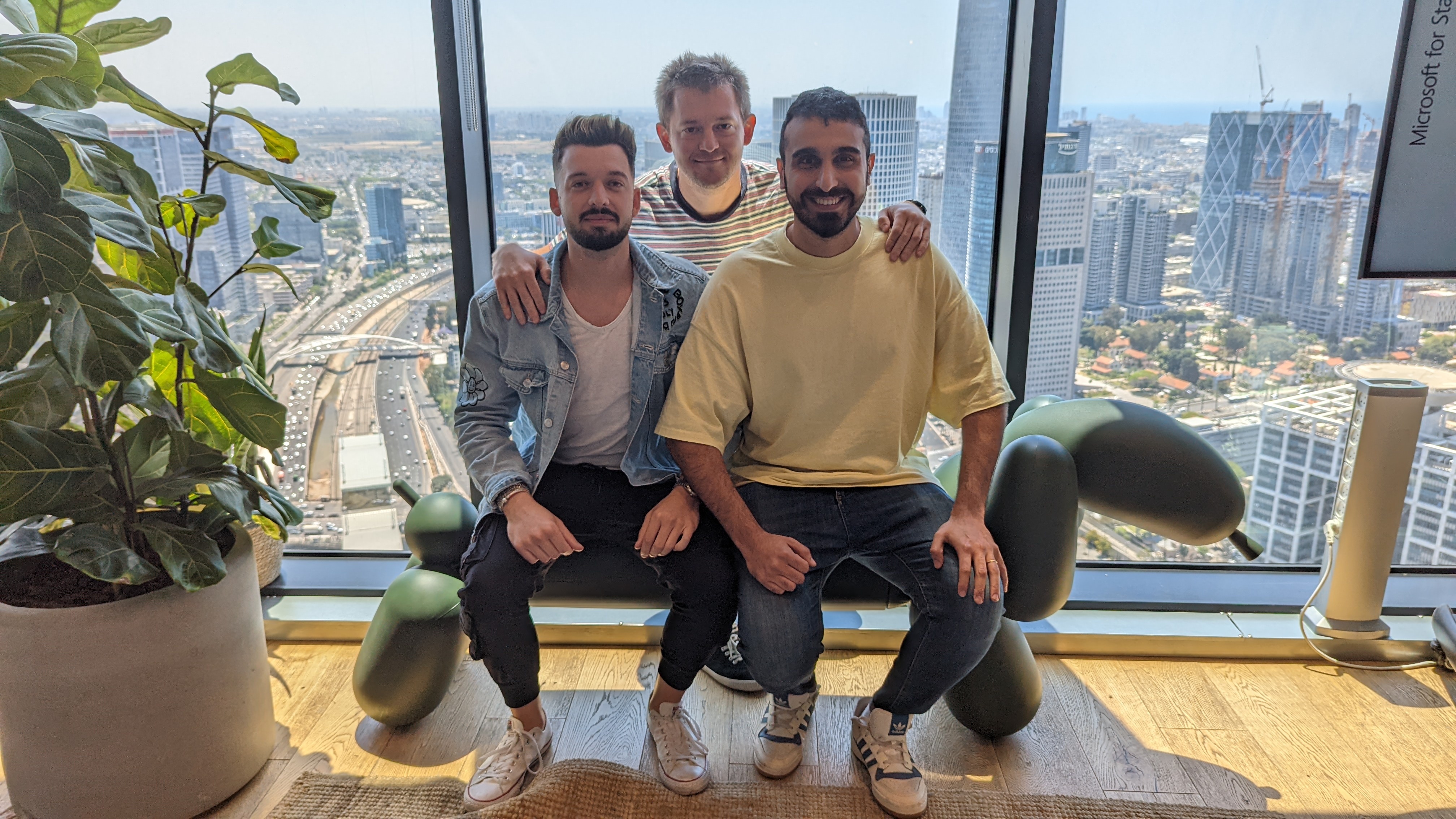
CEO Natan Voitenkov publicly identified Bazar as Genway’s first investor, dating his backing to November 2023. In May 2025, fellow investor CS Angel announced a $6 million seed round co-led by JBV and a16z speedrun. That sequence captures something a financing headline compresses: the first commitment can precede the larger announcement by a considerable stretch.
The pilot has to leave the lab
In February 2026, SimplAI announced that it had closed a $2.5 million seed round during 2025, led by JBV. Its platform addresses the work of building, deploying and governing enterprise AI agents. The problem is familiar to anyone who has watched a promising demonstration encounter a real organization.
“Enterprise AI has hit an infrastructure ceiling.”
Sandeep Dinodiya / SimplAI founder & CEO
SimplAI’s tools include orchestration, evaluation, tracing and deployment across different infrastructure environments. These are the controls around an agent: how its work is coordinated, examined and operated. The financing announcement also named former UiPath executive Manish Bharti as co-founder and chief revenue officer, pairing the technical project with experience selling enterprise software.
There is a plausible continuity here. Bazar’s earlier work involved understanding networks; SimplAI concerns operating AI systems. The technologies differ, but both require attention to what happens after something starts running. This is an interpretation of the investment pattern, rather than a published formula for JBV’s decisions.
Find the expensive question
For founders, the most useful thing to borrow is a sequence. Identify a decision someone already needs to make. Establish why the available information is inadequate. Show how the product changes that decision. Genway’s validation conversations offer one concrete example of doing this work before a larger financing announcement.
The limits follow from the same sequence. Better analysis helps only when the inputs support it and the buyer can act on it. A location estimate needs appropriate data; an interview needs useful questions; an enterprise agent needs operational controls. Capital gives a team room to work on those conditions. It does not remove them.
Read together, JBV’s investments suggest a practical preference: start where a business has trouble seeing clearly. The resulting products may count visits, conduct interviews or coordinate agents. Their commercial test remains wonderfully specific. What can the customer decide now that was difficult before?