Consider a door. From the street, it looks like a rectangle with a handle. From a dealer’s counter, it becomes a collection of decisions: dimensions, material, finish, glass, hardware, which way it swings. Somebody has to turn those decisions into a complete order. Somebody has to get it there. That is where Specialty Building Products earns its keep.
The company occupies the stretch between a manufacturer making products and a local business helping someone build a home. It distributes doors, decking, siding, moulding and engineered wood across the United States and Canada. The interesting thing about this middleman is how much work lives in the middle.
- SBP gives dealers access to specialty inventory, processing and delivery.
- Acquisitions added regional knowledge as well as physical reach.
- New supplier agreements and one dealer portal make that reach more useful.
01 The expensive business of being specific
A small lumber yard cannot stock every version of every building product. A manufacturer cannot make every delivery to every yard economical. Between those constraints sits a business opportunity: hold the assortment, understand the specifications and distribute it in quantities customers can use.
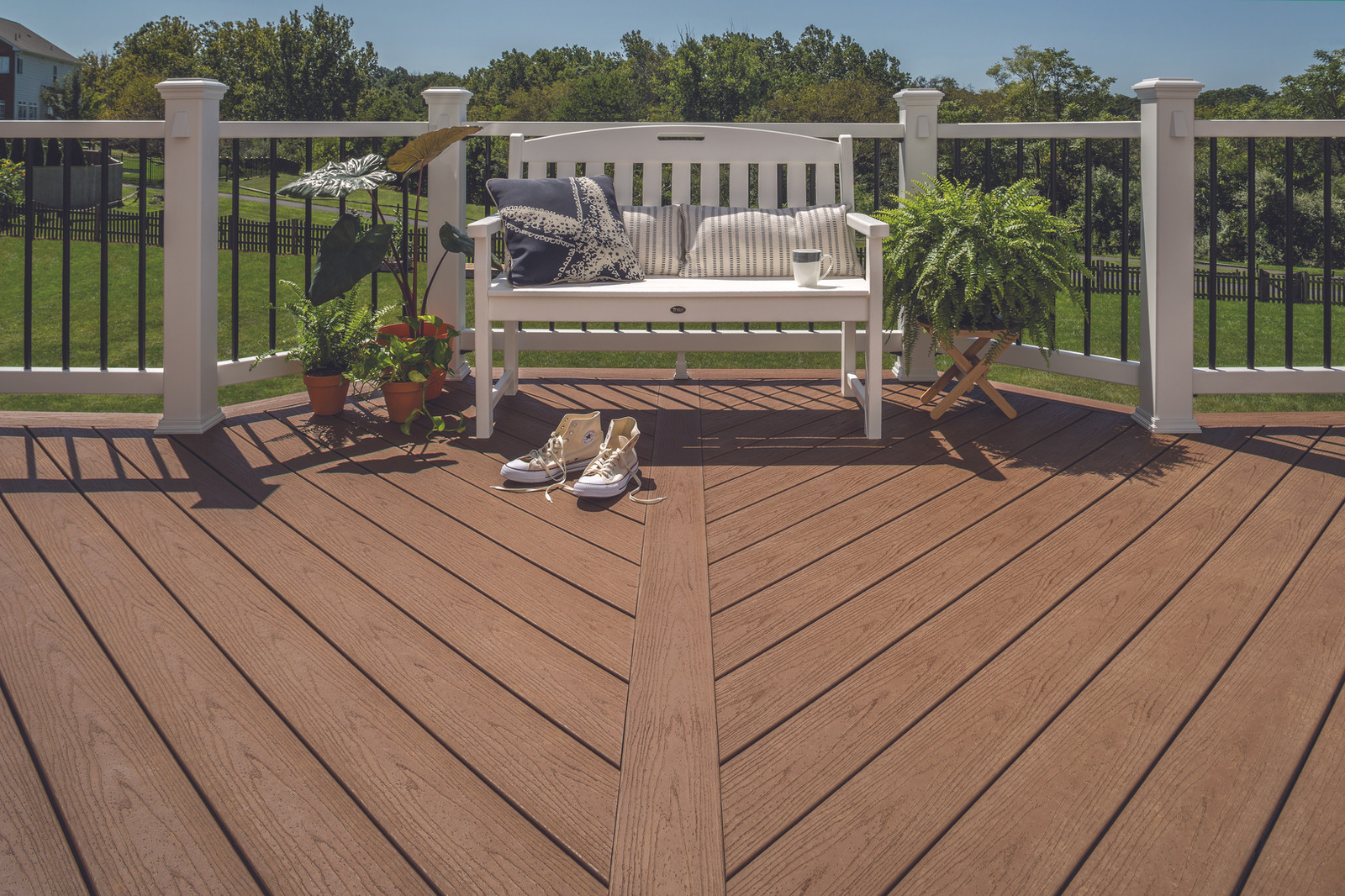
SBP’s customers include lumber yards, building supply dealers and home improvement retailers. They serve builders, remodelers, general contractors and homeowners. The distributor supplies both visible finishes and structural components: composite decking and railing, exterior trim, interior millwork, laminated beams and I-joists. Weatherization products add another layer, from house wrap to flashing and sealants.
Imagine the dealer comparing two ways of filling an order. Buying directly could mean more stock, more supplier relationships and more deliveries to coordinate. Buying through a distributor puts a margin between the factory and the yard, but can reduce the work the yard must do itself. The sensible choice depends on the order. Specialty distribution makes its case where variety and handling make the direct route cumbersome.
The business model is wholesale resale, with manufacturing, assembly, customization and finishing among its services. Its expertise concerns how products fit an order and a delivery system. That is why comparing distributors on a price list alone misses part of what a dealer is buying.
02 A map built by buying expertise
SBP traces its beginnings to Lawrence Newton’s business in Birmingham, Alabama, in 1988. Jeff McLendon joined as chief financial officer in 2003 and became president the following year. Expansion eventually carried the business well beyond its U.S. Lumber identity.
Reeb brought door fabrication into the group in 2021. The Amerhart deal, announced in January 2023, added a Midwest business with ten locations at the time. OrePac, acquired in 2025, extended the Western footprint. Each purchase brought people who already knew their products, suppliers and local dealers.
The current network reports 63 locations, more than 5,500 employees and over 23.5 million square feet of warehouse and storage capacity. A fleet exceeding 780 trucks serves more than 15,000 dealer locations. Those are company-reported measures of infrastructure. The practical test happens when a particular branch can fill a particular order.
Scale required capital. The January 2021 transaction that put TJC in control carried a $1.1 billion base purchase price, including assumed debt. A proposed public offering followed in 2022, then was withdrawn in February 2023. The stock-market plan stopped; the acquisition strategy continued.
03 First, earn the right to change things
In a 2022 interview, McLendon described an acquisition rule: “trust comes before change.” Buying a business does not automatically make its people receptive to instructions. His account puts getting to know them ahead of introducing new practices.
“trust comes before change”
Jeff McLendon · 2022 interview
That helps explain the earlier emphasis on retaining acquired names. Now six businesses - Alexandria Moulding, Amerhart, Reeb, DW Distribution, Millwork Sales and U.S. LUMBER - are moving to SBP. The announcement promises continuity of customer relationships while making the group’s broader capabilities easier to recognize.
The company’s people-first language also has measurable programs behind it. Its employee hardship fund reported 52 grants totaling about $159,000 in 2024. Employees can receive up to 16 hours of paid volunteer time annually. These commitments give an otherwise abstract culture statement something concrete to examine.

04 Two manufacturers make their choice
In July 2026, Trex announced a new national agreement with SBP for decking and railing. The sole national appointment takes effect January 1, 2027. In September, LP named SBP its sole national distribution partner for SmartSide trim and siding.
The word “national” matters. Both arrangements retain regional distributors. BlueLinx, for example, participates in LP’s regional network. A manufacturer can want one partner with broad coverage while keeping others close to specific markets. SBP’s position is valuable without requiring every competing truck to disappear.
For the manufacturer, there is a related calculation. A product line only reaches its market if someone can stock it, explain it and keep replenishing it. Adding another collection of finishes or profiles makes that task harder. A distributor with existing dealer relationships offers a route through the complexity. SBP’s acquisitions have assembled precisely the branches and product capabilities that make a wider supplier relationship possible. The network becomes a way to introduce more products through relationships already in place.
The agreements also reveal a tradeoff. LP’s participating distributors commit to its full SmartSide portfolio and transition away from competing siding products. Depth with a supplier can narrow the alternatives on the shelf. For a dealer, the relevant question remains whether the local branch carries the needed product and can deliver it.
05 The dealer’s next click
Physical reach needs an intelligible front door. SBP describes mySBP as a platform built from customer feedback, bringing ordering, door configuration, inventory visibility, pricing and branded quotes into one place. Delivery status, invoices, proof of delivery, returns and training extend it beyond checkout.
For a dealer, the useful first steps are straightforward: find the serving branch, check its line card and confirm availability. The catalogue varies by location. The portal’s attraction is fewer routine tasks scattered across separate conversations.
There is a lesson here for other businesses: combine capabilities customers need together, then make them easy to reach. The economics still depend on products moving through warehouses and trucks efficiently. Simple full-load orders may need less intermediation; a broad assortment needs enough demand to justify holding it. SBP’s bet is that specialty building materials contain enough choices, handling and coordination to keep an experienced distributor busy.