In May 2026, a company founded in 2009 bought a company that had been serving its market since 1908. Builders Supply Company, in Lancaster, South Carolina, joined US LBM. Its president, Greg Gregory, would keep running day-to-day operations. Four generations of family ownership had produced something the buyer wanted to preserve: a business that knew its customers.
The arrangement captures US LBM’s central idea. A national distributor can buy inventory at scale, share technology and add manufacturing capacity. The local supplier knows the builder. Making those advantages work together is the job. The acquisition announcement is the easy part.
THE STORY IN THREE CUTS
- US LBM joins regional suppliers under a national operating platform.
- Builders buy materials plus help with design, estimating and delivery.
- Scale brings resources; a sales decline shows its limits.
A century of local knowledge
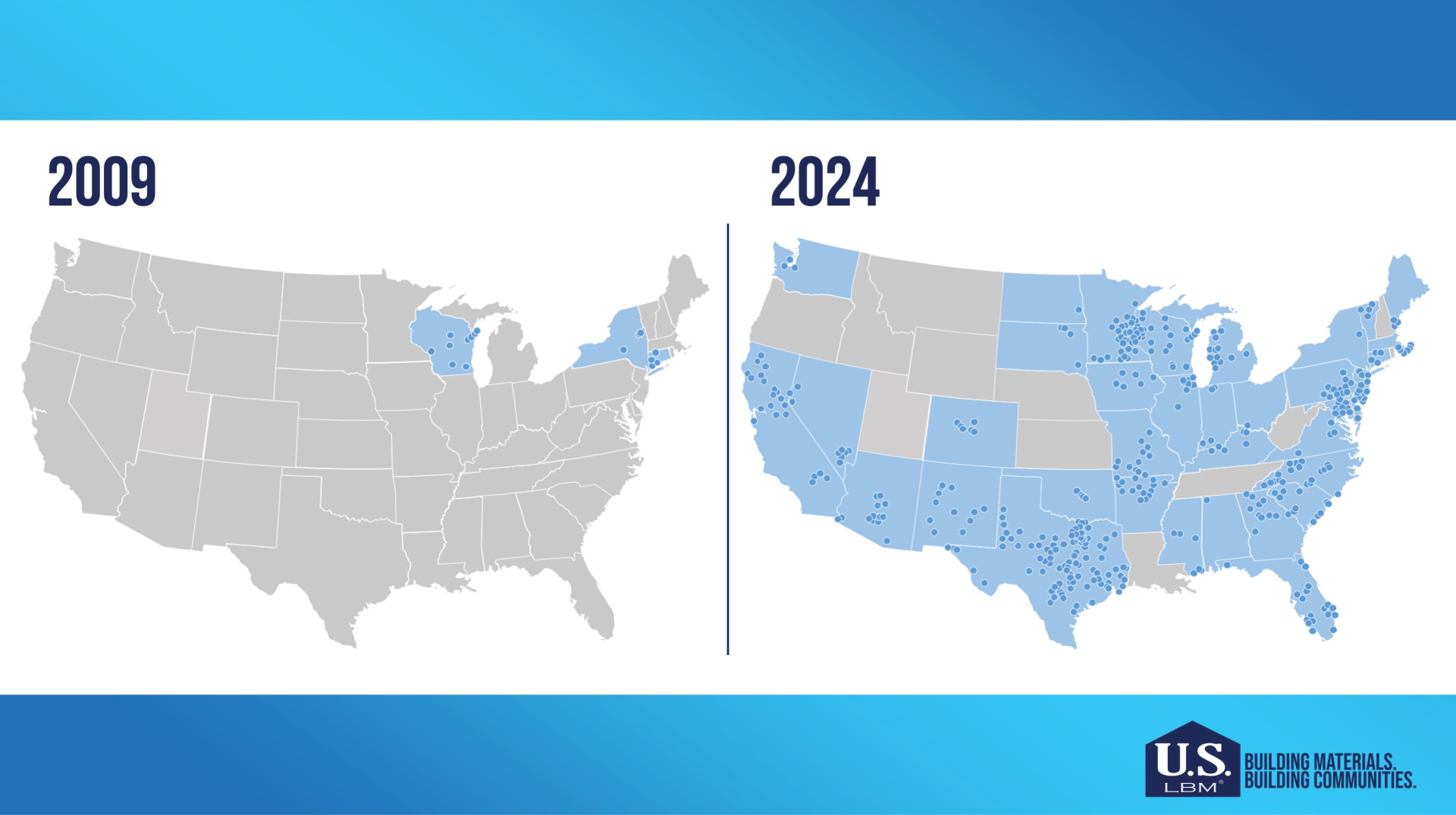
L.T. Gibson founded US LBM in 2009 with 16 locations in three states. By its tenth anniversary, the company counted 256 locations in 32 states. Its acquisition page now reports more than 100 deals. That is a lot of different customer lists, loading yards and ways of answering the telephone.
The company’s preferred acquisition candidates already have strong local market positions and management teams. Shared procurement, pricing programs and technology are meant to help those businesses grow. The logic is straightforward: keep the people who understand demand, then give them resources they would struggle to assemble alone.
In Lancaster, the rationale was specific. Builders Supply served greater Charlotte and offered lumber, millwork, engineered wood, windows, doors and installation. US LBM saw an opportunity to serve production builders around Charlotte and extend toward Columbia. This was a purchase of capabilities and geography, with an experienced operator remaining at the controls.
A bigger order than lumber
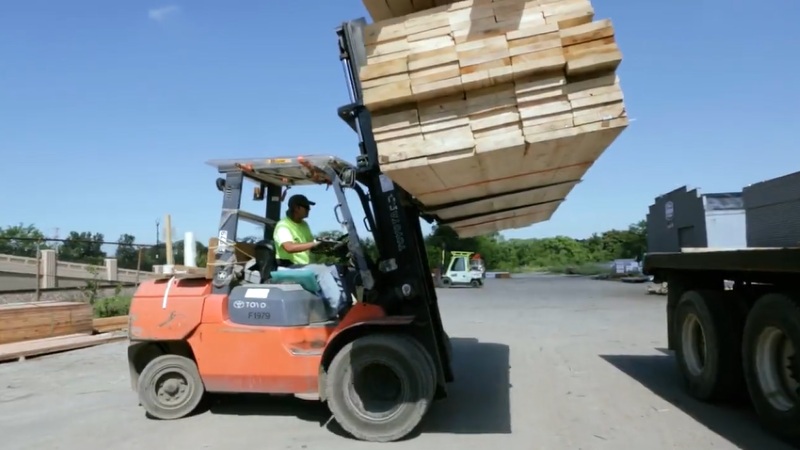
A builder needs more than a stack of boards. A house also consumes windows, doors, roofing, siding, cabinetry and structural components. US LBM supplies those categories through its divisions, alongside services including engineering, job estimating, millwork design and product customization. Availability depends on the local business.
Its customers include custom home builders, national builders and specialty contractors. Commercial construction and remodeling also feature in its operations. The business earns money from products, manufactured components and related services. The useful unit of analysis is the project: how many of its material and coordination needs can the supplier handle?
Manufacturing gives that question another dimension. In December 2023, US LBM acquired ZyTech’s Dallas-Fort Worth operation, which designed and manufactured floor and roof trusses and associated engineered wood products. Plant leader Todd Monroe stayed in charge. The same preference for continuity appeared inside a factory.
Builders FirstSource, 84 Lumber and regional independents offer alternatives. Product breadth and service needs shape the comparison. US LBM’s pitch is the combination of national resources and local brands. It cannot rest on the existence of either one; builders can already find large distributors and knowledgeable local dealers.
The paper schedule had to go
The most revealing operational problem was ordinary. A historical Descartes customer case study describes paper-based scheduling and difficult communication among field operations, inside sales and salespeople working on the road. Customers needed delivery information while moving between construction sites. A schedule in the office could not keep everybody informed.
US LBM connected route planning, scheduling and mobile technology with its customer application. Customers could see delivery locations, expected arrival times and proof of delivery, including pictures and signatures. Drivers received schedules on mobile devices. Dispatch and sales could work from information that changed with the truck’s progress.
A DELIVERY HANDOFF, REBUILT
Descartes reported truck turnaround more than 30% faster, with many locations improving on-time delivery from 70% to 95% while reducing transportation costs by over 10%. Those are vendor-reported historical results. They illustrate the mechanism: fewer calls for status, better routing and clearer evidence when a delivery is disputed.
The lesson is available to smaller operators, too. Identify where information gets stranded. Give the people on both sides of the handoff access to it. Then measure whether the work improves. The technology matters because it changes an everyday decision, such as when a dispatcher can send a truck out again.
The billion-dollar reality check
Expansion has required outside capital. Kelso invested in 2015. Bain Capital acquired a majority stake in 2020; Platinum Equity joined as a co-controlling owner in December 2023. A documented $550 million senior-note offering helped finance the 2020 acquisition. That figure is one financing component, rather than the purchase price.
GROSS SALES / USD BILLIONS
The sales chart supplies a necessary interruption. LBM Journal reported $6.8 billion in 2025 gross sales, down from $7.8 billion in 2024. A network can become more capable while its revenue contracts. Acquisition count alone cannot tell a reader whether a distributor is getting healthier.
Local autonomy also demands capable local managers. Shared systems need accurate information and people willing to use it. These are practical limits inferred from the model: purchasing power will accomplish less if service deteriorates, and a sophisticated delivery platform cannot create orders that customers have not placed.
The company’s July 2026 CFO appointment put that operating discipline in familiar hands. Enrico Batelli, a nine-year US LBM veteran who had served as interim CFO, took the permanent role. His background included field operations finance and chief accounting officer responsibilities. The announcement emphasized cash flow discipline alongside financial performance.
Keep the customer close

US LBM describes its culture in unusually practical terms: empowerment, accountability and continuous improvement. By October 2024, its US 1 Lean Six Sigma program had trained more than 5,600 associates. A shared operating language gives local teams a way to compare and improve their work.
There is a community side to the relationships, too. The US LBM Foundation reported raising more than $3 million at its October 2025 golf tournament. Beneficiaries included adapted housing for wounded veterans and disaster response. Since its establishment in 2013, the foundation said it had donated more than $9 million to charities.
“This is a people and relationship business”US LBM’s published culture statement
For a builder, the practical entry point is a local division: check its products, estimating help, component capabilities and delivery coverage against the project. For someone studying the company, watch what happens after the deal. The national platform earns its place when the person behind the counter can solve the next local problem.
FOLLOW THE MATERIALS