Consider the humble label on a bundle of lumber. It tells a framing crew where a piece belongs. That sounds almost too ordinary to matter. But somebody has already read the plans, calculated the dimensions, cut the wood and decided how to group it. By the time the truck arrives, several opportunities for confusion have been removed. A small label carries a surprising amount of completed work.
- Builders FirstSource combines building supplies, component manufacturing and delivery.
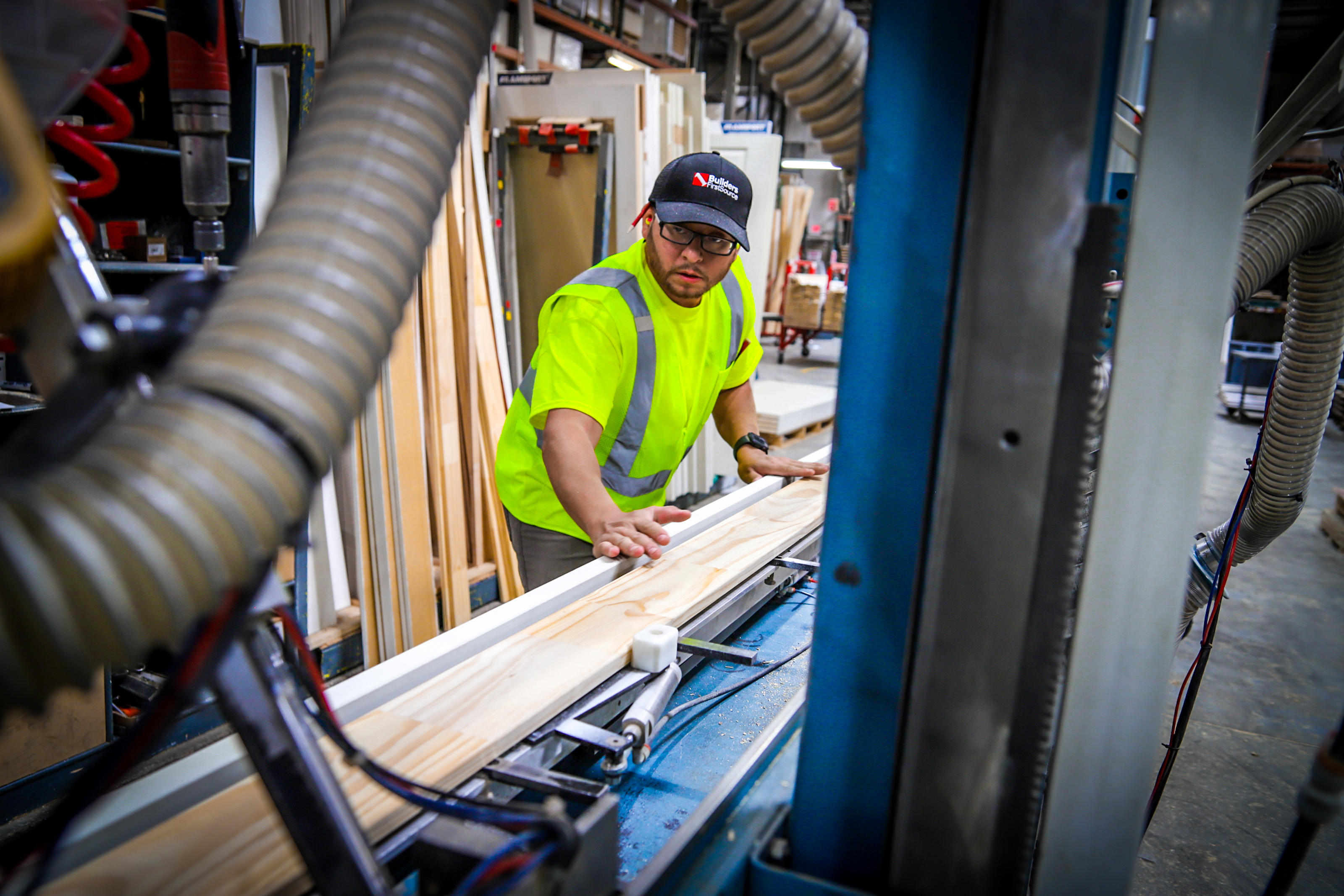
- Precut framing moves measuring and cutting away from the jobsite.
- Software extends the same idea to plans, purchasing and project coordination.
Builders FirstSource has built a business around that transfer. Its READY-FRAME packages arrive precut, labeled and bundled for assembly. The proposition is easy to understand: give a crew fewer things to figure out while standing in front of an unfinished house. The interesting question is how much of homebuilding can be organized this way.
The label does some of the work
For professional builders, a material purchase is also a scheduling decision. A missing component can interrupt the next task. An ambiguous drawing can produce a phone call, a delay or a correction. Builders FirstSource operates where these problems meet: it distributes building products, makes components and helps coordinate their arrival.
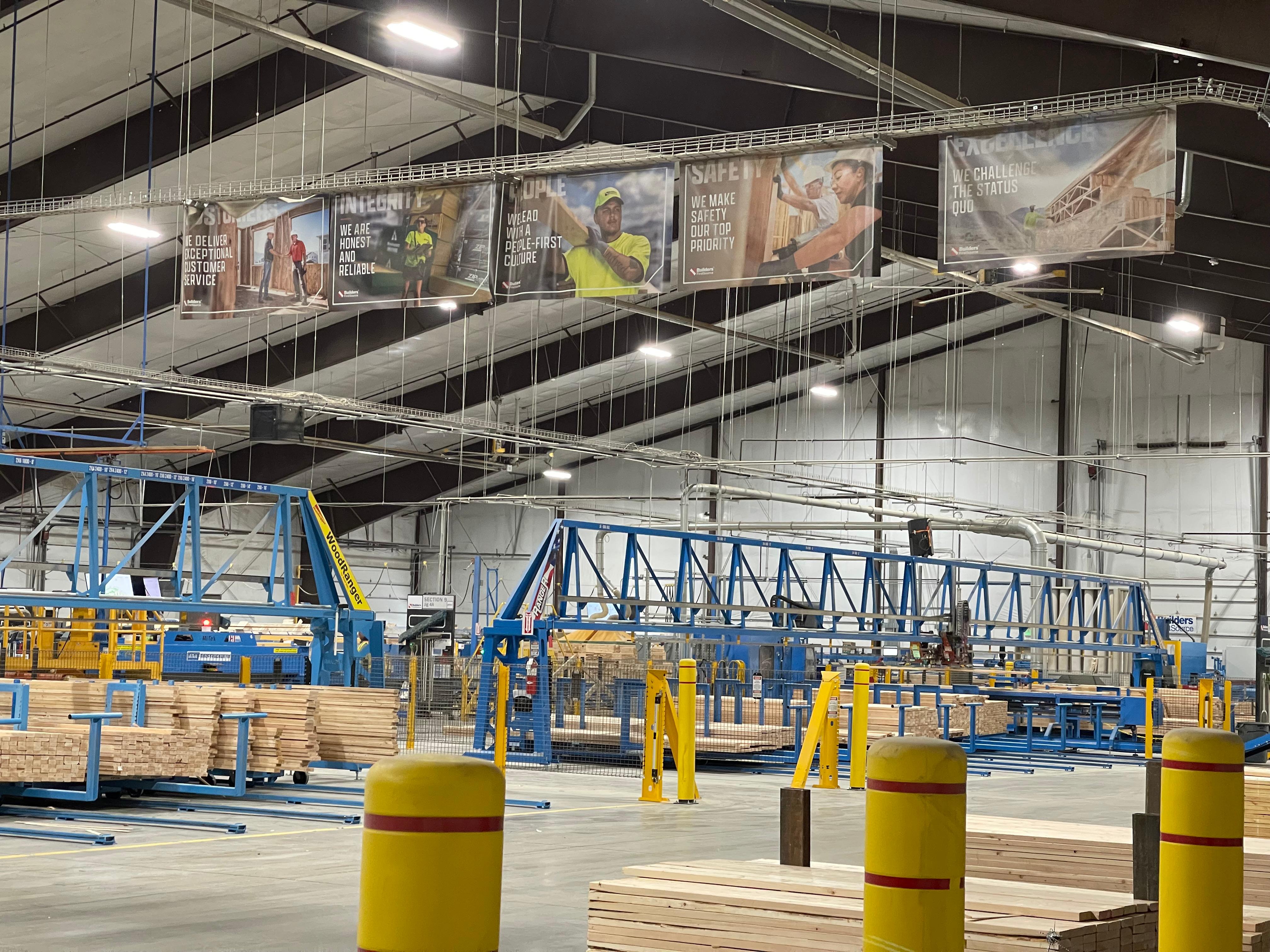
Its customers include production homebuilders, custom builders, multifamily developers and remodeling contractors. They can buy lumber and sheathing, windows and doors, cabinets, roofing and siding. They can also buy roof trusses, floor systems and wall panels made for a particular job. Depending on the market, design, estimating and installation support accompany the materials.
That breadth matters because a house contains dependencies. An engineered floor system has to accommodate the systems running through it. A roof truss has to match its loads and geometry. The company’s manufacturing approach uses design work to settle those relationships earlier. The commercial opportunity lies in making the builder’s next step more predictable.
There is a people problem inside that proposition, too. A drawing, a quotation and a delivery schedule can each be correct in isolation and still fail to describe the same job. Bringing them into one workflow gives the builder fewer handoffs to reconcile. That is the operational bet behind the company’s combination of technical expertise and physical products.
Twelve houses, one useful clue
How much difference does precutting make? Builders FirstSource publishes a comparison involving KB Home: twelve houses averaging 2,237 square feet, six using READY-FRAME and six using conventional framing. The reported result was 39% more square feet framed per hour for the READY-FRAME group.
The denominator deserves attention. Square feet per hour measures framing productivity; it does not mean the entire house costs 39% less or finishes 39% sooner. Twelve homes are a bounded comparison. The result is a reason to investigate the workflow, with the plans, crew and local economics of the next project firmly in view.
Square feet framed per hour. Six homes in each group. Company-published KB Home comparison; conventional framing = 100.
Another company case study compared two jobsites using the same floor plan. It reported five days for a four-person READY-FRAME crew and eleven for a six-person conventional crew. The conventional job failed its first inspection. These are specific project outcomes, rather than promises about every crew. They make the hidden costs of rework worth counting.
Buying the missing pieces
The network behind that label took substantial money to assemble. In 1998, a management team backed by JLL Partners bought Builders’ Supply & Lumber Company from Pulte. Public ownership followed in 2005. The housing crash then tested the model; the company’s own history describes hard choices and survival without bankruptcy.
In 2015, Builders FirstSource acquired ProBuild for approximately $1.63 billion in cash. The BMC combination followed in January 2021. These transactions brought distribution and manufacturing operations together across more markets. Scale helps only if the materials remain close enough to the customer to arrive when the crew needs them.
Then came a different purchase: WTS Paradigm, a building-products software business, acquired in 2021 after a roughly $450 million deal announcement. The logic connected to the same problem as precut lumber. Better information could remove work before the next person encountered it.
The useful unit of comparison is the finished task: material, labor, waste and time.
The business still earns its money principally by selling building products and components. Its distinction is the combination of manufacturing, local service and distribution. Regional lumberyards, component specialists and other professional dealers compete for the same work. A builder comparing offers has to judge the complete package, including freight, lead times and support.
The next delivery is information
myBLDR extends the relationship onto a screen. The platform brings together plans, selections, schedules, material quotes, orders and delivery information. Shared drawings and notifications aim to keep participants working from the current plan. A free account is offered; a construction package still needs its own quote.
In August 2026, Builders FirstSource announced a five-year commercial agreement with Digs and became the solo lead on Digs’ $25.3 million Series A. That figure describes the financing round, not a disclosed check from Builders FirstSource alone. Planned integrations reach from project documents and approvals to warranties and homeowner aftercare.
CEO Peter Jackson described customers seeking “seamless technology.” The ambition is understandable: information should survive the handoff between designer, supplier, builder and homeowner. The announced features remain a development agenda. Their value will depend on whether teams actually keep project information current.
The house still has to sell
Efficiency has an awkward boundary. Builders FirstSource reported approximately $15.19 billion in 2025 sales, down 7.4%. In the second quarter of 2026, sales fell 8.8% to $3.9 billion and the company recorded a $3.9 million net loss. A factory can improve its process while fewer customers need its output.
For a builder, the practical lesson is to price the whole task. Compare crew hours, disposal, delivery and corrections alongside the material quote. Check local READY-FRAME availability and settle plans before cutting starts. A useful trial would compare similar floor plans, record actual labor hours and include the cost of revisions. The question is whether the next crew gets a repeatable benefit under its own working conditions. Late changes can undermine the advantage of deciding early. The label earns its keep when the decisions behind it are right.