Imagine a remodeling crew with everything except one window. The siding is there. The tools are there. The customer would rather like the house finished. This is a hypothetical job, but it explains a real measurement at Associated Materials: on time, in full. A delivery that arrives punctually with something missing still fails the test. In the building-products business, the last missing piece can determine the value of everything already delivered.
- Associated Materials makes and distributes the outside of a building: windows, siding, cladding and trim.
- A 2025 reset gave manufacturing, U.S. distribution and the Canadian business distinct operating leadership.
- Its modernization puts factory equipment and delivery performance in the same conversation.
That makes this company worth a second look. Its products belong to the familiar landscape of American and Canadian houses. Its recent decisions concern something less visible: how to get those products from a specification to a factory to a customer without losing the thread.
The idea came from an airplane
The company traces its operating roots to Alside in 1947. In its telling, founder Jerome Kaufman noticed how paint bonded to the aluminum fuselages of wartime aircraft. He brought baked-enamel aluminum siding to houses. The interesting move was the transfer: an existing industrial technique found a different customer and a different job.
Distribution followed. Company-owned supply centers opened in Indianapolis, Pittsburgh and Chicago in the 1950s. By the 1980s, the business had moved into vinyl siding and windows. William Winspear assembled the Associated Materials group through a 1984 purchase of Alside and two other U.S. Steel businesses. The operating heritage is older than the parent-company name.
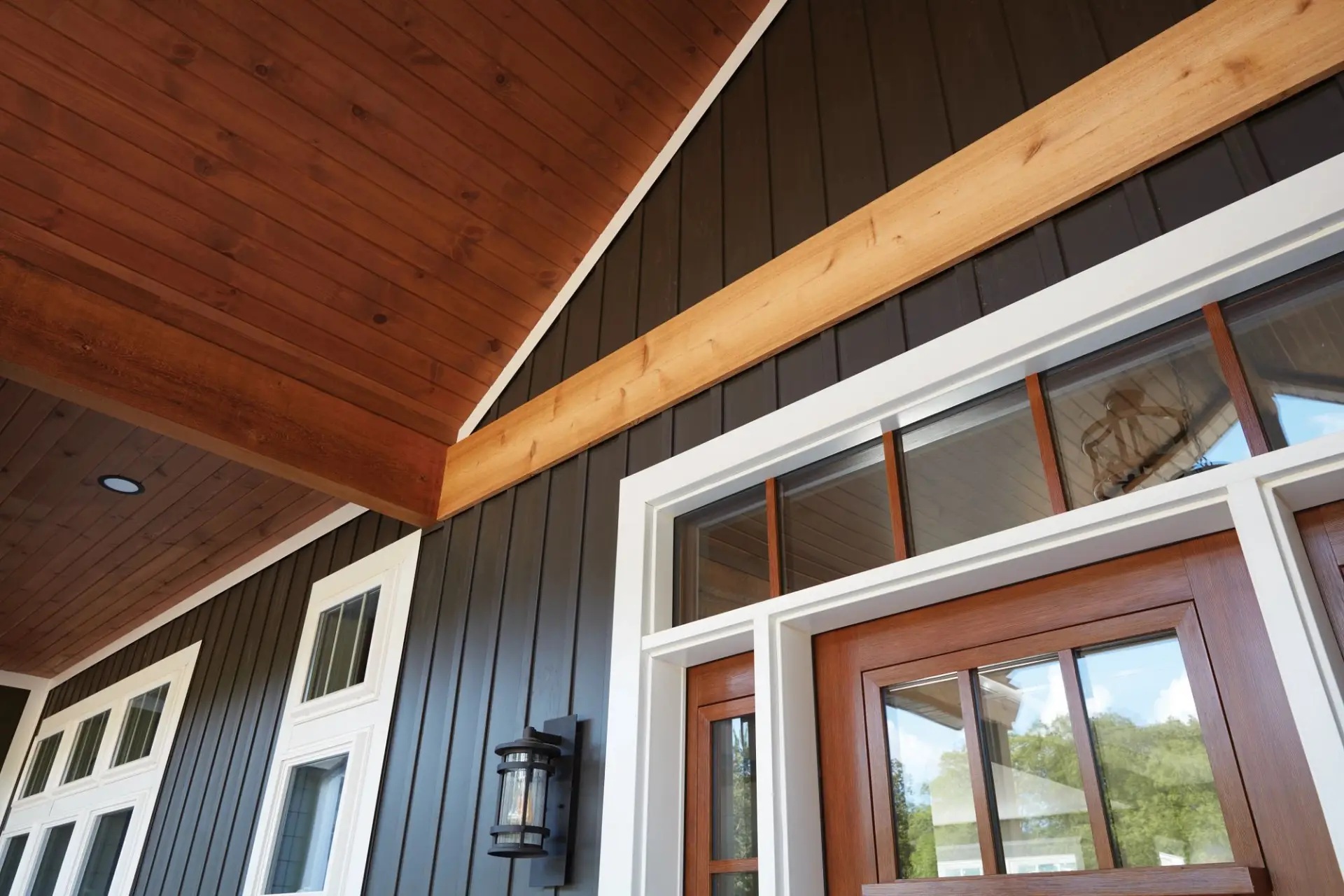
One parent. Three different jobs.
In January 2025, Associated Materials announced three distinct businesses. Associated Materials Innovations, or AMI, became the manufacturing arm. Alside took the U.S. distribution role, with more than 100 supply centers. Gentek Building Products continued manufacturing and distribution in Canada.
There is commercial logic here. AMI can pursue additional distributors. Alside can widen its supplier list and product range. Each has a different customer conversation: one about making products, another about assembling the right assortment. Dedicated leadership makes those responsibilities more explicit.
The business earns money selling physical products through trade channels and supply centers. Contractors, remodelers, builders and dealers buy the materials; homeowners live with the result. Architects and specifiers influence the choice. The company competes wherever those buyers compare exterior systems, installation work, price and availability.
Its position spans two parts of that market: production and the local trade counter. A manufacturer thinks about throughput and consistency. A distributor thinks about the assortment a contractor needs for the next job. Keeping both perspectives inside one parent is useful only if the handoff works. The reorganization gives that handoff a clearer shape.
The money went into the machinery
Funds managed by Strategic Value Partners acquired the company in March 2022. In April 2024, Associated Materials announced a commitment exceeding $100 million across people, equipment, digital technology and working methods. Management pointed to an anticipated increase in remodeling demand. The investment list included automated insulating-glass assembly, welding technology and in-process siding color checks.
A more tangible example arrived in November 2025: AMI announced a completed $30 million overhaul in Yuma, Arizona. It added 100,000 square feet and four automated insulating-glass lines. The company also described fewer product codes and consistent spacer technology to simplify ordering. That detail deserves attention. More capacity is useful; fewer opportunities to order the wrong thing can be useful too.
Yuma factory overhaul
100,000 sq ft added · four automated glass lines
The reset also carried a human cost. Manufacturing Dive reported that the Fife, Washington, closure affected 150 jobs in January 2025, following an Ohio restructuring notice affecting 184 workers in 2024. Factory expansion and factory contraction appear in the same account. Any assessment of the transformation has to hold both.

The number a contractor understands
Then comes the software. AMI describes Palantir-powered demand forecasting alongside Ryder delivery tracking and an upgraded ordering experience. Palantir’s Q3 2024 investor update reported that Associated Materials implemented more than ten use cases in nine months, raising on-time, in-full delivery from 40% to 90%.
The claim comes from the software vendor’s presentation of customer results. It does not isolate software from the other operational changes. Still, the metric is well chosen. It asks whether the customer received the whole promise. A dashboard can be elegant and a truck can still be missing a window.
“We are driving on-time delivery, and our customers actually like us.”
Duane Massie, EVP of IT · quoted by Palantir, 2024
Sell the work you remove
ASCEND composite cladding makes a similar argument at the product level. Launched in 2020, it offers a wood-like appearance with an installation system the company says requires fewer steps than fiber cement and engineered wood alternatives. Its appeal joins appearance to labor: what will this look like, and what will installing it involve?
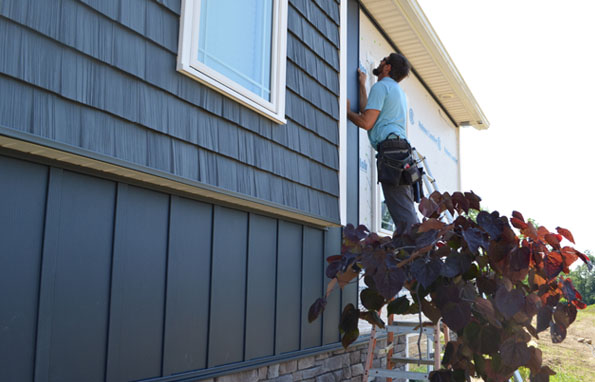
The range keeps changing. In September 2026, AMI added a 5-inch plank and a matte texture for its 7-inch plank. Gentek introduced its Canadian-assembled 3000 and 4000 Series Window Collection that April, with different frame dimensions and configuration options for replacement and new construction.
Professionals can use WindowExpress for quotes and orders, consult regional window performance data, or use Hover and Renoworks to help customers picture an exterior. Eligible builders can also explore incentives through the HomeSphere partnership announced in January 2026. These tools address separate points where a sale or project can stall.
The useful lesson is to measure a complete customer outcome, then give people the equipment and authority to improve it. That approach depends on suitable products, available capacity and usable information. Software cannot make an unsuitable specification fit a house. But asking whether an order arrived complete gives everyone a practical place to start.
Go from picture to project
Explore Associated Materials, Alside supply centers, professional tools and the latest announcements.
Follow the parent on LinkedIn, or its businesses on X, Instagram and Facebook. Watch Duane Massie at AIPCon or browse Alside’s product videos.