Nobody daydreams about a baseboard. It is the thing pushed against the wall while the kitchen island gets its marble close-up. Yet when trim is wrong - a bad joint, a thin profile, a white that is almost the right white - the whole room develops a nervous tic. Metrie has spent a century making money in that gap between invisible and unmistakably wrong.
The Vancouver company manufactures and distributes moulding, trim, panels, interior and exterior doors, and the services required to make those products arrive ready for a job. It began in 1926 as E.L. Sauder Lumber Company, stayed in the Sauder family for four generations, and changed its name to Metrie in 2014. Today, it operates seven domestic manufacturing sites and roughly 30 distribution centers across Canada and the United States, with the count shifting as recent purchases are integrated.
The obvious description is “a big millwork supplier.” The more revealing one is “a company that keeps turning annoying work into factory work.” Metrie Complete arrives already painted. Option {M} turns a wall of profiles into coordinated design styles. Door operations add pre-hanging, machining, finishing and delivery. The raw product is wood or MDF. The margin lives in decisions and steps that somebody else no longer has to manage.
Moulding is a decision problem wearing a wood costume
A homeowner sees crown moulding. A builder sees procurement, storage, cutting, painting, touch-ups, scheduling and the chance that one scuffed length will summon a trade back to the house. A dealer sees another long, damage-prone item that must be stocked in the profiles local customers actually request. Designers see proportion: casing should meet baseboard with the proper reveal, and doors should speak the same architectural language.
Metrie's assortment addresses each audience without pretending they want the same thing. Dealers get regional catalogs and distribution. Contractors get material consistency, ready-to-install products and matching repair accessories. Designers get coordinated collections. Homeowners get names like Modern Farmhouse, Urban Loft and New Traditional instead of a test on the taxonomy of chair rails.
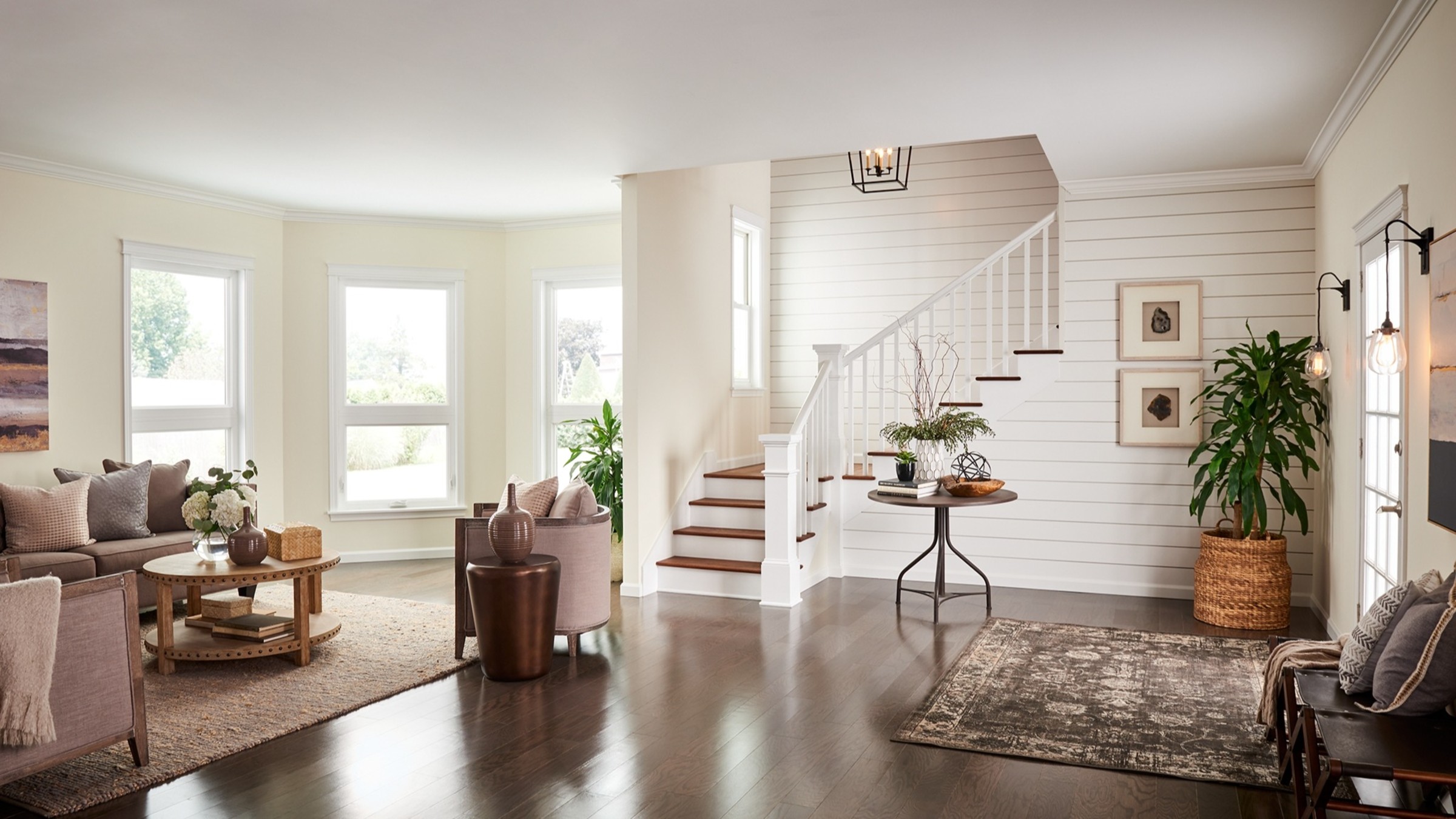
That is the useful distinction from a commodity competitor. Plenty of businesses can sell a stick of primed MDF. Metrie tries to sell a finished outcome around it: the profile, the proportion, the paint, the nail-hole fix, the dealer support and the delivery. Its scale matters because trim is regional. A profile popular in Ontario may not be the one a contractor expects in Arizona, and a gorgeous catalog is useless if the matching casing sits 1,800 miles away.
“The smartest part of Metrie's catalog is how hard it works to feel smaller.”YesPress analysis
The paint booth became a product manager
The first thing to break in the conventional workflow is rarely the moulding itself. It is the handoff. Primed trim arrives. A carpenter cuts and nails it. A painter fills, sands, masks and coats it. Someone discovers a scuff or a mismatch. The schedule stretches near the end of the build, when financing costs are still ticking and every return visit feels personal.
Choose profiles, sizes, materials and matching doors.
Cut, fit and protect long pieces on a busy site.
Fill, sand, mask, prime and paint around other trades.
Repair scuffs, missed holes and mismatched details.
Metrie Complete moves much of step three into a controlled factory. The moulding comes painted, with a proprietary topcoat and color-matched wax, caulk, putty and spray enamel for the small wounds of installation. In a time trial conducted by Home Innovation Research Labs and cited by Metrie, the system reduced painting hours by 50 percent and cut almost two full days from cycle time. It is a company claim with a defined test behind it, not a promise that every house will behave identically.
What did it cost? Metrie does not publish one universal premium, and that is sensible: prices change by region, profile, length, dealer and project volume. The honest comparison is not stick against stick. It is installed outcome against installed outcome - material, painting labor, carrying time, protection and callbacks. The calculation fails when local painting is unusually cheap, the color must be custom, the product will be repainted anyway, or the project is so small that another trade visit does not matter.
Customers asked for doors. Metrie bought the hallway.
The company’s recent dealmaking makes the next chapter unusually clear. In 2020 it acquired Pacific MDF Products and Canadian MDF Products Company. In 2022 came Tinder Wholesale and EL & EL Wood Products, the latter its largest acquisition at the time. Anderco followed in 2023, Eden in 2024, then BWI Distribution, Louisiana Millwork and Florida Made Door from Owens Corning in February 2026. Metrie called that package its eighth acquisition since 2020.
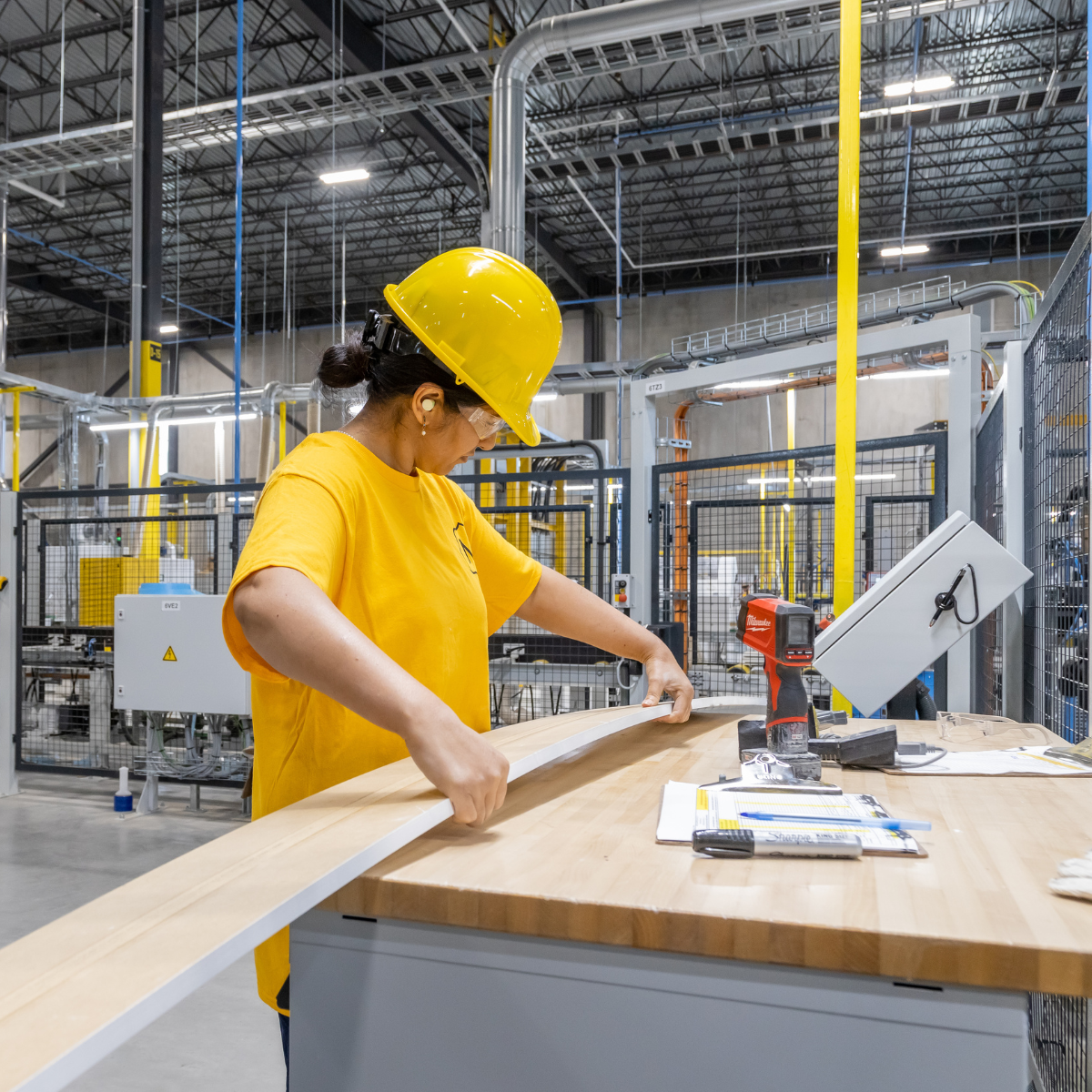
Two months later, it purchased door-fabrication, hanging and finishing assets in Eastern Canada from Northstar/TruBilt Doors and added capabilities in Western Canada. The disclosed purchase prices were not made public. What changed Metrie's mind about going deeper into doors was not a boardroom epiphany offered to the press. Chief executive Kent Bowie said customers had repeatedly asked the company to go farther along the supply chain - into pre-hanging, fabrication, painting and large-project coordination.
More complete orders
Moulding and doors can travel through one relationship instead of several specialty vendors.
More factory labor
Pre-hanging, CNC work and finishing move variation away from crowded job sites.
More local density
Regional branches can stock the combinations their markets use instead of a theoretical national average.
More integration risk
Acquired systems, teams and service promises must work together before scale becomes an advantage.
The bet is that a dealer or builder values one accountable millwork partner more than the lowest price on each isolated component. That will not always work. Large national retailers can pressure price. Local mills can win on unusual custom work and intimate service. A downturn in housing and remodeling can leave distribution capacity underused. Acquisitions can also turn a clean regional culture into a patchwork of software, inventory rules and customer expectations.
But the logic is coherent. Metrie is moving from “we have the profile” toward “we have the opening finished.” That puts it in competition not only with moulding makers such as Woodgrain, Alexandria Moulding and WindsorONE, but also with regional distributors, door shops and the familiar contractor workaround: buy unfinished material locally and assemble the solution yourself.
Do not sell the ingredient. Sell the missing afternoon.
Metrie's century of family ownership is appealing, but “wait 100 years” is poor tactical advice. The parts worth stealing are available now. Start with the customer's ugly spreadsheet of handoffs, not your product sheet. Identify which decision creates anxiety, which trade creates delay and which tiny defect creates a return visit. Then move one of those burdens into a repeatable system.
Five things an operator can copy Monday morning
- Name the completed job. “Ready to install” is clearer than a list of coatings.
- Curate the catalog. Group products by the outcome customers recognize, not only by factory taxonomy.
- Bundle the boring accessories. The wax stick may create more trust than the hero product.
- Measure time saved. Translate features into labor hours, cycle time and avoided callbacks.
- Build density before breadth. A dependable regional assortment beats a giant catalog that is never nearby.
There is a cultural version of the same idea. Metrie describes itself as family-owned but professionally operated. CEO Kent Bowie, who joined the old Sauder Industries decades ago, has repeatedly emphasized people first, internal growth and long-term relationships. The company’s community program had directed close to $1 million to local charities by late 2024. For its centennial, it highlighted 100 long-serving employees rather than staging the anniversary entirely around machinery.
That patience does not make Metrie immune to commodity cycles or integration mistakes. It does explain why the company can treat a distribution center, a paint line or a supplier relationship as a multi-decade asset. Fashion changes quickly. The infrastructure that delivers Modern Farmhouse today can deliver New Traditional tomorrow.
The trim is decorative. The strategy is operational.The one-line takeaway
Metrie’s purpose is to help people transform houses into homes. The phrase is soft. The mechanism is satisfyingly hard-edged: fewer choices that can go wrong, more work completed before delivery and more control over the trip from mill to wall. A century after E.L. Sauder opened a lumber business in Vancouver, the company’s cleverest product is not a profile. It is momentum.