A plank of siding has an oddly demanding job. It must look like something a homeowner chose for its beauty while behaving like something an engineer chose for the weather. James Hardie built its business inside that contradiction. The woodgrain is optional. Keeping the elements outside is the assignment.
- Climate-specific fiber cement made the core business.
- AZEK expanded the offer from siding to outdoor living.
- Installation and distribution decide whether the pieces fit.
01The board has a postcode
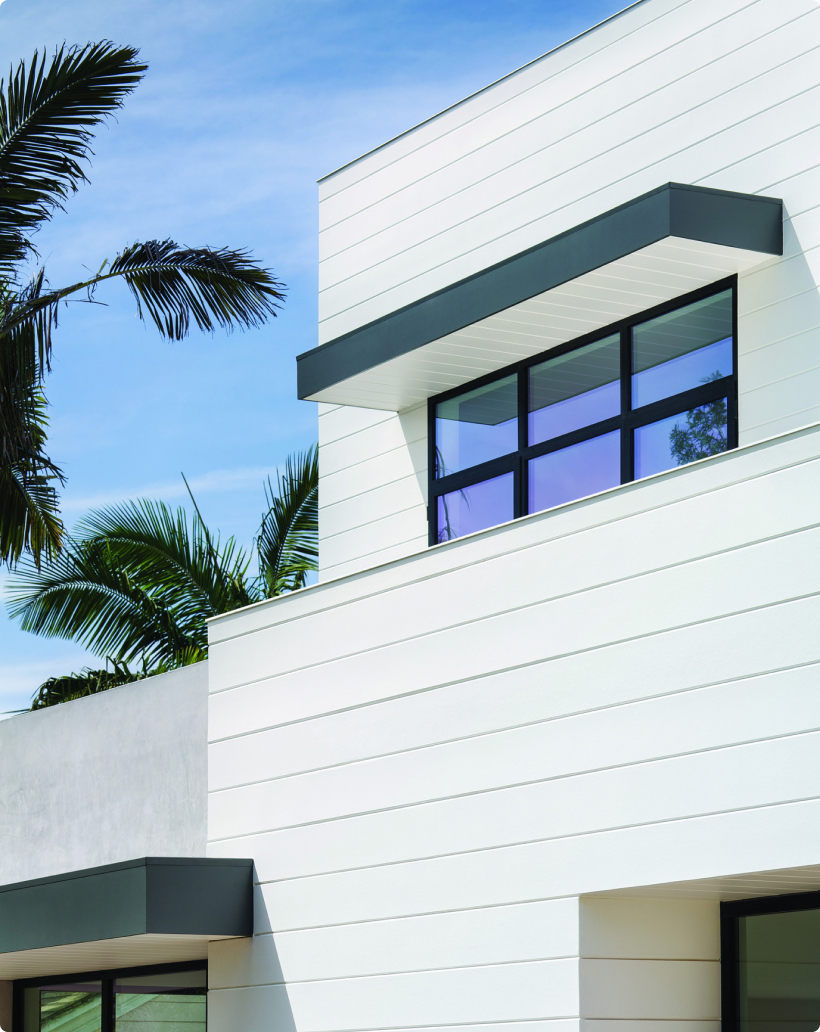
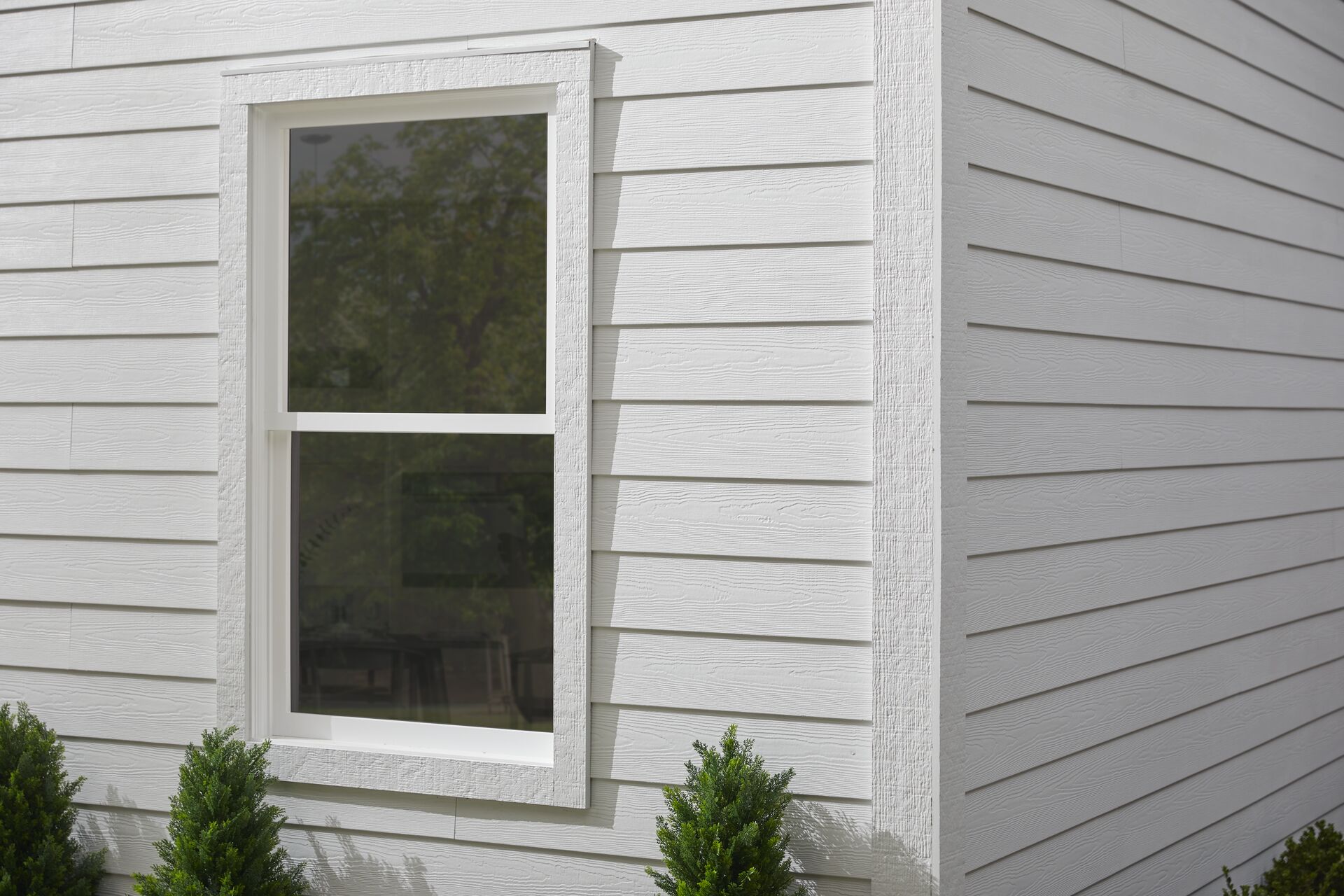
The ingredients sound unglamorous: Portland cement, sand, water and cellulose fibers, plus proprietary additives. But the useful trick is making that mixture serve different houses and climates. Hardie Plank supplies horizontal lap siding; Panel and Shingle change the silhouette; Trim and Soffit finish the edges. Hardie Backer moves indoors, beneath tile. The company sells the parts people notice and some they never see.
Even the board has a postcode. Hardie’s HZ5 formulation addresses freezing temperatures and seasonal swings, with a drip edge for water management. HZ10 targets hot, humid and coastal conditions. This is a useful piece of product thinking: a national brand can retain local specifications. A house in a freeze-thaw climate asks a different question of its walls.
02The customer holding the hammer
There are several customers in this transaction. Homeowners choose the appearance. Builders and remodelers specify and install it. Dealers and distributors make it available. James Hardie manufactures physical products and earns revenue selling them through those channels. Its expertise combines materials science, factory production and the less photogenic business of getting boards to a jobsite.
That explains why its marketing travels in two directions. In 2022, the Magnolia Home collaboration brought Joanna Gaines’s color choices to siding, trim and soffit. For contractors, the ALLIANCE program and installation resources address practical questions. One audience wants to picture the finished home. The other needs to finish it.
The Trim-Over method makes this especially concrete. Install siding before corner trim, then cover the cut edges. James Hardie reports a 30% higher average installation rate in its installation studies versus the butt-to method. That is a company-reported result under study conditions, rather than a promise for every crew. The lesson travels: improve the work around the product, and the product becomes easier to choose.
03An $8.4 billion trip around the house
The strategic leap arrived in 2025. James Hardie agreed to buy AZEK, adding TimberTech decking and railing, AZEK exterior trim and StruXure pergolas to its orbit. CEO Aaron Erter’s stated rationale was that siding and decking purchases can overlap. A homeowner renovating the outside might need both.
The deal was announced at $8.75 billion, including net debt. It closed on July 1, 2025 at an implied $8.4 billion, reflecting the share price and exchange rate used at completion. Shareholders received cash and James Hardie shares. These are transaction values, not a valuation of the whole combined company.
Buying adjacency is easier than making it productive. In August 2026, James Hardie and Boise Cascade expanded distribution so Boise became the sole nationwide distributor for the group’s complete exterior portfolio. That wording matters: it describes nationwide distribution, rather than every individual route to market. The commercial logic is fewer gaps between a broad catalog and a contractor’s order.
“The consumer journeys for siding and decking often overlap.”
AARON ERTER · CEO · MARCH 2025
04Two growth numbers. Two different stories.
Fiscal 2026 revenue reached $4.836 billion, up 25%, while organic sales fell 2%. Buying a business made the company bigger during a difficult market. It did not, by itself, make the existing business grow. That distinction is easy to lose in an acquisition announcement.
The next reported quarter offered a more encouraging comparison. For the three months ended June 30, 2026, sales reached $1.475 billion, up 64% year over year. On a pro forma basis, treating AZEK as part of both periods, growth was 12%. Neither number is wrong. They answer different questions. The smaller one tells a reader more about the combined operation’s progress.
On October 21, 2026, the company launched “The Home of Resilient Beauty,” uniting its exterior brands under one platform. A Habitat for Humanity documentary accompanied the launch. The announcement also described support for rebuilding the first 25 Eaton-fire-affected households in Altadena. The catalog now has a shared public identity; integration still has to earn its keep.
Same quarter. Different comparisons.
05A material change cannot erase a history
The business began as an Australian import enterprise in 1888. James Hardie founded it; Andrew Reid later joined and became a partner. The company’s own history traces its asbestos-free fiber cement development to the late 1970s and early 1980s, followed by its first American fiber cement plant in Fontana, California, in 1990.
The earlier asbestos business left a lasting human and financial obligation. In 2012, Australia’s High Court upheld findings that former directors had breached their duties in approving a misleading compensation-funding announcement. James Hardie continues funding the independent Asbestos Injuries Compensation Fund; its fiscal 2026 contribution was US$125.4 million. A profile about durable materials has to include the consequences of the materials that came before.
06Buy the installed wall
For a homeowner, the sensible comparison is an installed exterior. Alternatives include CertainTeed vinyl, LP SmartSide engineered wood, brick and other fiber cement products. James Hardie generally positions its siding above vinyl and below brick on installed price. Local labor, house height, repairs and design determine the actual bill. A board price alone is a poor budget.
Performance also depends on the assembly. Noncombustible fiber cement siding cannot make an entire house fireproof. Flashing, water management and fastening still matter. Cutting generates silica dust that requires controls. Low maintenance still includes cleaning and attention to finishes. The material’s advantages become less useful when the installer, detailing or budget cannot support the system.
The warranty also has layers. Hardie fiber cement siding carries a 30-year limited product warranty; ColorPlus finishes have separate 15-year coverage. These are different commitments. For a homeowner comparing bids, asking which product and finish are included is more useful than treating the biggest number as a guarantee for everything.
What can another business copy? Make the buyer’s next decision easier: specify for local conditions, show the finished result, train the installer and stock the complementary parts. For homeowners, the equivalent is practical: try the design tool, order samples, then seek itemized installed quotes. James Hardie’s proposition becomes convincing when the attractive board arrives with a workable plan for the wall.
From the page to the project
WATCH THE WORK
How Hardie products are made Trim-Over installation demonstration