Consider the humble pipe fitting. It sits inside a wall, beneath a sink, behind a water heater. Nobody admires it at dinner. Yet the fitting determines something surprisingly valuable: how much work must happen before a plumber can leave. Reliance Worldwide Corporation, the business behind SharkBite, has spent decades making that work easier. Its most interesting product may be the minutes left over.
- SharkBite makes pipe connections without soldering or a specialist joining tool.
- RWC sells complementary products through wholesalers, retailers and equipment makers.
- A proposed Brookfield takeover puts its next chapter in play.
Start with the awkward part
Imagine joining two pipes in a confined space. Soldering requires preparation, heat and access. A SharkBite push-to-connect fitting changes the sequence. Inside, a grab ring grips the pipe and an O-ring makes the seal. Push a properly prepared, compatible pipe to the specified depth and the connection is made. The engineering lives in the fitting; the installer gets fewer operations to perform.
That distinction matters. A component’s purchase price is only one line in a job’s economics. Preparation, joining and checking also consume paid time. RWC’s proposition is that an engineered connection can reduce that burden. For a contractor, the useful comparison is the completed job. A cheaper individual part is not automatically a cheaper installation.

The latest generation makes the point physically. SharkBite says its Max fittings require up to 50% less insertion effort than the original design. A reinforced stainless-steel collar adds strength. These are modest-looking changes aimed at hands doing repetitive work, sometimes at an inconvenient angle. Product development begins with the person holding the pipe.
Guide the pipe. Hold it. Seal it. Seat it fully.
Conceptual sequence, not an installation guide. Follow the instructions for the exact fitting.Convenience has conditions. SharkBite’s own guidance warns that poor preparation can produce connection failures. Pipes must be cut square, inspected and prepared; insertion depth matters. The product is forgiving of awkward working conditions, not an invitation to skip the instructions. Nor is a potable-water fitting permission to connect a gas line. The application decides what belongs there.
A workshop with a useful obsession
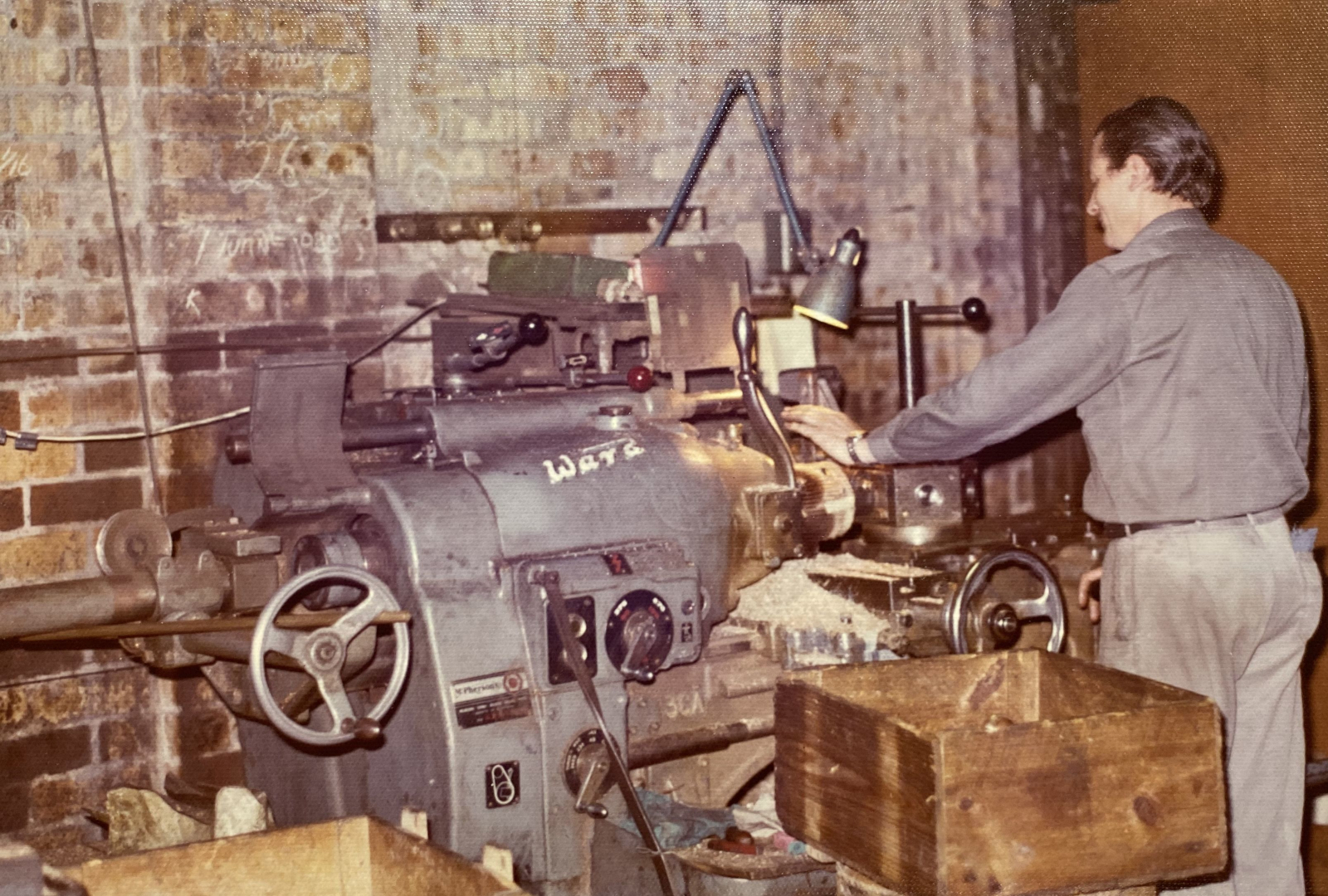
The idea predates SharkBite. RWC traces its roots to Henry George Fredline’s Brisbane engineering workshop in 1936. Reliance Manufacturing Company followed in 1949, developing water-control products. The early problem was household water-heating safety. The recurring instinct was to engineer a component that made a larger system easier to install and operate.
Today, the family resemblance is practical. Cash Acme and Reliance Valves regulate pressure and temperature. HoldRite supplies supports and installation products. Eastman handles appliance connections. JG Speedfit and John Guest bring plastic push-fit expertise. Different names appear on different parts of the job, giving RWC more chances to solve the next problem an installer encounters.
“Plumbing Matters. We Make It Better.”RWC’s corporate statement
Buy the next part of the job
Building that range required more than clever fittings. In 2018, RWC agreed to pay £687.5 million for John Guest. The attraction combined plastic connection technology with an established UK and European business. In 2024, the A$160 million Holman acquisition extended the range into plumbing, irrigation and garden watering. These were purchases of capabilities and routes to customers.
The business model remains refreshingly physical: make or source products, put them through distribution, and sell them. Wholesalers reach trade buyers; retailers reach professionals and homeowners; original equipment manufacturers incorporate components into their own products. RWC has disclosed relationships with names including Home Depot, Lowe’s and Ferguson. Shelf access gives engineering a route into somebody’s van.
There are capable alternatives. Viega’s ProPress uses press tools to join copper and stainless-steel pipe. Uponor’s ProPEX offers expansion connections. Conventional soldering and crimping remain options, too. The sensible choice depends on material, access, approvals, tools and the work involved. RWC competes on the installer’s whole task, within a market where several methods can earn their place.
For someone choosing a system, that means asking ordinary questions before opening the toolbox. Which pipes are already present? Which connections does the specification allow? Can the installer reach the joint, and is the chosen product available locally? A manufacturer’s range becomes useful when it answers those questions together. The advantage has to survive contact with the actual building.
RWC’s stated culture points in the same direction. Its SPIRIT values include safety, innovation, reliability and integrity, alongside passion and teamwork. Those words become testable at the jobsite: clear instructions, suitable components and support when a connection raises a question. In this market, making a promise is easy. The product must keep it after the wall closes.
The factory feels it, too
Making the installer’s work simpler can make the manufacturer’s decisions harder. In June 2026, RWC announced plans to close Melbourne brass casting, forging and machining operations. Falling volumes had made those operations uneconomic. Automated SharkBite Max assembly in Alabama brought production nearer North American customers; Max also used 20% less brass per fitting. Sourcing changes reduced Australian demand further.
Expected one-off net charge
That is a painful consequence of the same efficiency argument. The announcement anticipated a large accounting charge, mostly non-cash, and around 85 affected employees. Factory economics gave way before the product proposition did. A company can improve a fitting while confronting the loss of work at the place that used to make its components.
A price for the next chapter
RWC reported US$1.306 billion in FY2026 sales. In September, it signed a conditional agreement for Brookfield to acquire its shares for US$3.38 apiece. The board weighed cash certainty against future execution risk and economic uncertainty. On October 20, RWC said its search for alternative proposals had produced none. Approvals remained outstanding; this was still a proposed transaction.
The portable lesson sits closer to the toolbox. Watch someone complete a task. Find the step that demands unnecessary effort. Design it out, then make the replacement easy to obtain. RWC’s products make that approach tangible, right down to a small metal connection. The test is wonderfully blunt: when the job is finished, did the customer have less work to do?