A steel structure can be perfectly engineered and still have a problem at its surface. Rain arrives. Oxygen does its work. The expensive object begins a quiet argument with the environment. AZZ Inc. earns its living intervening in that argument, usually before the people who depend on the object have given its coating a moment’s thought.
- Two points of entry: galvanize steel after fabrication; coat metal coil before fabrication.
- The customer: businesses making infrastructure, buildings, appliances and industrial products.
- The bet: concentrate on coatings, then make the plants and customer relationships work harder.
The company occupies an easily overlooked position between the metal producer and the finished thing. It is useful precisely because somebody else wants to build the bridge, assemble the air conditioner or make the roof. AZZ handles the surface treatment those businesses need without requiring each to operate every coating process itself.
First, decide when to paint.
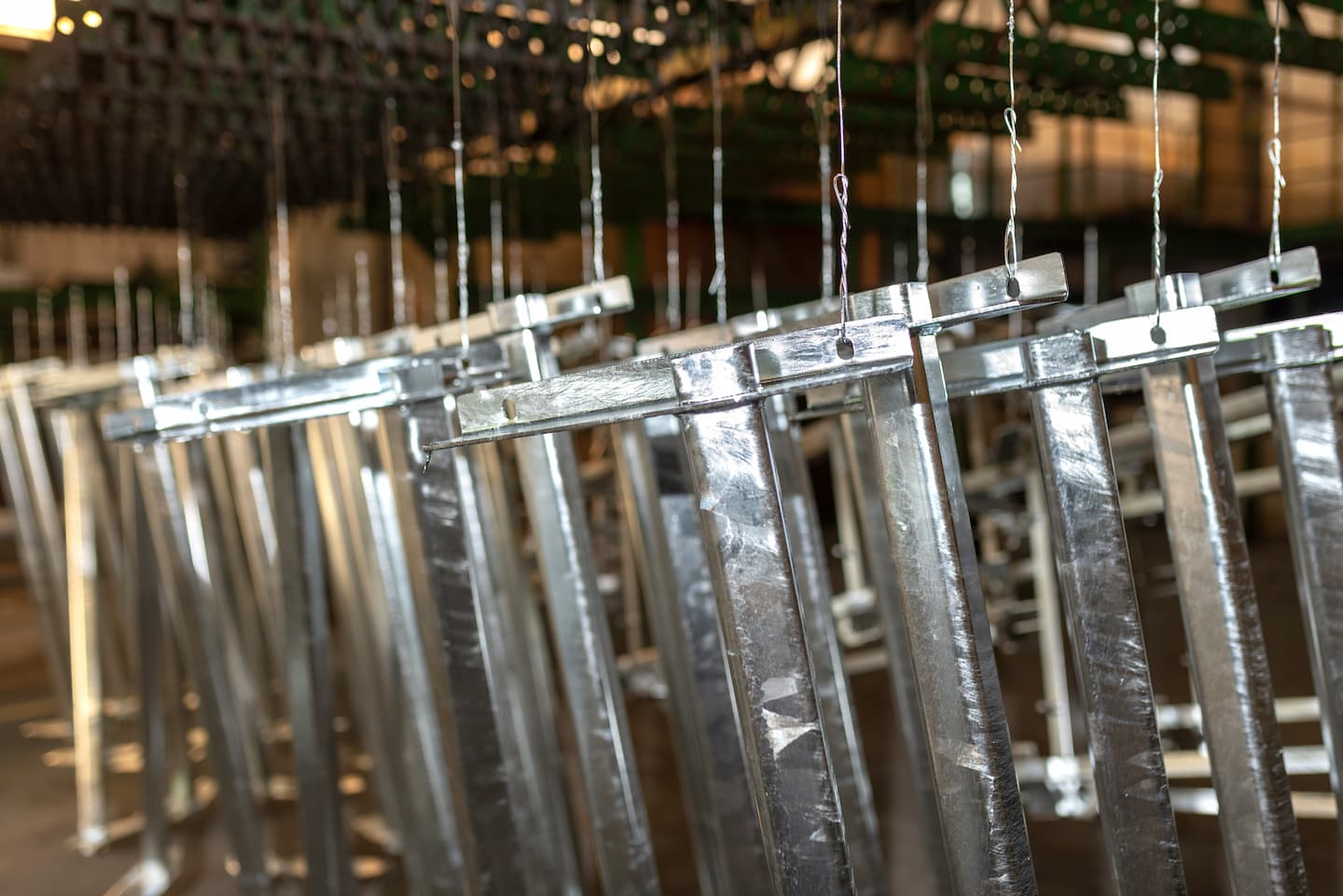
Consider two ways a piece of metal can become useful. In the first, a fabricator makes a steel assembly and AZZ immerses it in molten zinc. The zinc reacts with the steel, forming bonded alloy layers that resist corrosion. This is hot-dip galvanizing: protection applied after the object has acquired its shape.
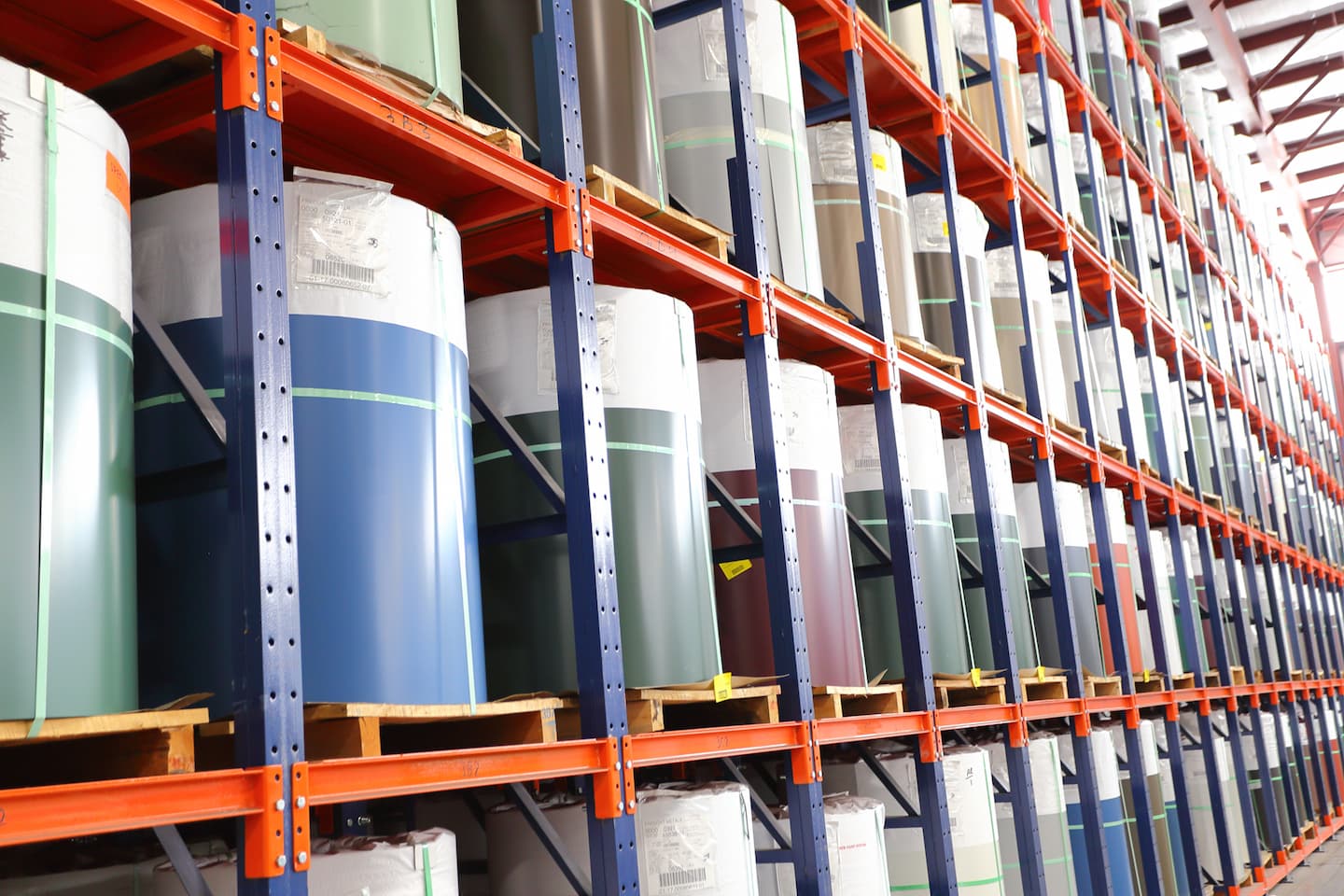
The second route reverses the timing. Precoat Metals, AZZ’s coil-coating business, takes a continuous strip of steel or aluminum, cleans and treats it, applies coatings, cures them and rewinds the strip. Customers subsequently fabricate the material into products. Painting a flat strip is a different production proposition from painting every finished shape.
The supporting machinery offers a lovely detail. Incoming coils can weigh up to 60,000 pounds. An entry accumulator can hold 750 feet of metal, feeding the process while the next coil is joined. The line’s appetite continues even when the supply operation pauses. That separation of continuous work from intermittent work is an idea plenty of smaller operations could borrow.
Fabricate → Galvanize → Install
Coil coat → Fabricate → Assemble
There are other finishes, too: powder coating, e-coating, plating and wet coating, alongside processing services such as slitting and embossing. The expertise lies in matching substrate, preparation, finish and production requirements. A buyer needs the right process for the part, rather than a coating selected simply because its name sounds reassuring.
A very expensive act of focus.
AZZ began in 1956 as Aztec Manufacturing, supplying products for oilfield use. Its first galvanizing plant opened in Crowley, Texas, in 1966. Over subsequent decades it accumulated electrical and infrastructure businesses as well as coating operations. The portfolio grew broader than the surface of a piece of steel.
Then came 2022. AZZ bought Precoat Metals for $1.28 billion. The financing package included a $1.3 billion term loan and $240 million of Blackstone convertible notes. Later that year, it sold Fernweh control of its Infrastructure Solutions joint venture, retaining a minority stake. Management had publicly identified a predominantly coatings business as its objective; these transactions made that preference concrete.
The useful lesson is in the sequence: choose the industrial problem, then reshape the portfolio around it.
AN EDITORIAL READING OF AZZ’S 2022 TRANSACTIONS
Precoat extended AZZ’s reach to metal before fabrication, adding a different set of manufacturing relationships. It also imposed a financing obligation. Readers can copy the logic of selecting adjacent customer needs; copying the acquisition requires capital, integration capability and enough cash generation to support the debt. Those are substantial conditions.
Expansion also means building. AZZ announced a $110 million investment for its Washington, Missouri coil-coating facility, which opened in 2025. Its subsequent move into profitability illustrates the less glamorous interval between installing equipment and earning money from it. Capacity must attract enough work to justify the plant.
The map does some of the selling.
AZZ’s footprint spans more than 60 locations in the United States and Canada. That is a practical advantage when the work involves moving heavy metal. A nearby plant with appropriate capacity can make a supplier useful in ways that a distant, otherwise capable plant cannot. The network is part of the service.
Alternatives remain plentiful. Valmont Coatings offers galvanizing and other protective finishes. Customers can also use regional specialists, captive facilities or integrated mills. AZZ’s proposition combines coating capabilities, geographic reach and coordination. Its CoilZone portal shows customers inventory, production and shipment information; its Digital Galvanizing System provides project-status visibility. Waiting for metal is easier to manage when its whereabouts are visible.
Precoat generally toll-coats customer-owned substrate, with paint costs passed through. This makes the customer relationship about processing and service as well as the finish itself. It does not remove exposure to factory activity: fewer products being manufactured can mean fewer coils needing coating.
Even good coatings need customers.
The financial evidence contains that tension. In fiscal 2026, Metal Coatings sales rose 14.1%, while Precoat sales fell 2.3% amid lower volumes in residential construction, HVAC and transportation. Demand was the weak point in that comparison. A broader coating portfolio could absorb uneven markets; it could not make every end market grow.
By the quarter ended August 2026, both businesses were growing and total sales reached $486.9 million. AZZ raised its annual outlook. That improvement is encouraging, but an outlook remains an estimate. Freight economics, available production capacity and the customer’s own orders still determine how much of the opportunity reaches a coating line.
For a prospective customer, the next step is concrete: identify the substrate, dimensions, exposure, appearance and delivery requirements, then ask which facility can meet them. For infrastructure, compare maintenance and service-life assumptions alongside the initial quote. AZZ links to the American Galvanizers Association’s lifecycle calculator for exactly that exercise.

There is a human operating system beneath the machinery. AZZ describes a workplace “where people can grow and TRAITS matter,” its shorthand for six values including safety and accountability. Its employee assistance foundation grew out of the response to Hurricane Harvey. That is a more specific cultural detail than a promise to value people: an emergency response became a continuing institution.
The company’s product is visible, often shiny and sometimes colorful. Its more interesting promise is less photogenic: reducing the trouble a surface causes after installation. The person buying the coating today is making a decision for whoever has to maintain the object later. That future colleague deserves a place in the calculation.