On February 10, 2026, Soumik Ukil had a perfectly serviceable excuse to talk about numbers. LightMetrics, the company he had helped start, was eleven years old. There were customers to count, markets to name, a respectable collection of milestones to arrange. He chose the employees instead.
Almost all of the very first hires, he wrote, were still there. They had grown with the business and begun mentoring others. Newer colleagues had brought different perspectives. He treated the familiar company scoreboard as an effect, then pointed to the people as a cause. For a founder working in artificial intelligence, it was a pleasantly human accounting system.
That anniversary note offers a way into Ukil’s story. He runs a company whose software interprets what cameras see inside and outside commercial vehicles. His public arguments keep asking what happens to the human beings on either side of the lens: the driver being assessed, the manager reviewing events, the installer trying to get the equipment working.
Six colleagues, one awkward first lesson
Ukil came to entrepreneurship with experience in imaging and computer vision, a Ph.D. from the University of Iowa, and a career that included TeraRecon and Nokia. At Nokia Research, the future LightMetrics founders worked on the technologies behind phone cameras. Their shared expertise covered computer vision, machine learning, camera technology and signal processing.
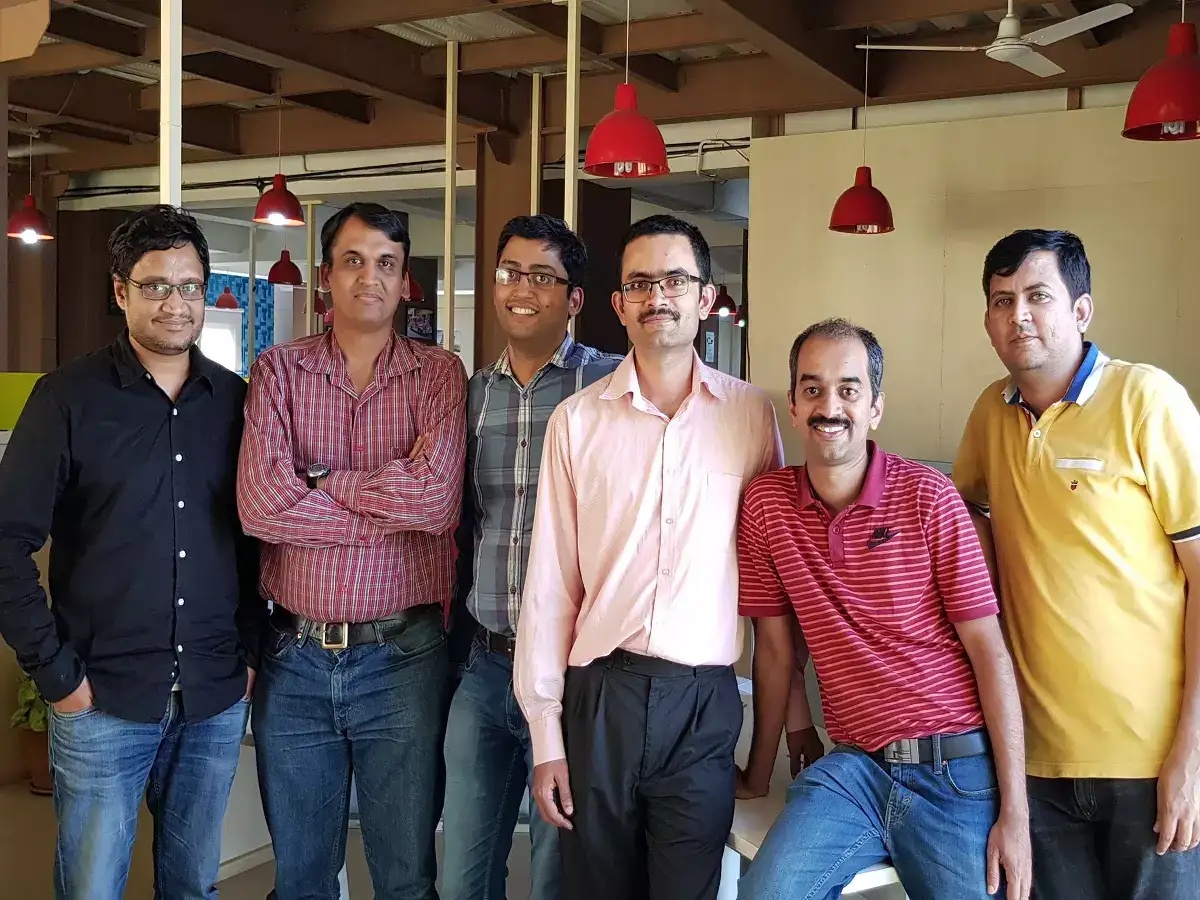
In February 2015, six colleagues started LightMetrics: Ukil, Ravi Shenoy, Mithun Uliyar, Gururaj Putraya, Pushkar Patwardhan and Krishna A. G. They had already spent years working together. The new venture gave them a different assignment: find a customer problem their technical knowledge could solve.
The early approach put smartphones on vehicle dashboards. A phone already contained much of the equipment needed to examine driving: a camera, computing power and connectivity. In principle, it was an appealingly economical arrangement. In practice, a smartphone had to become a dependable, permanent vehicle fixture.
“It worked in pilots,” Ukil recalled. Scaling that arrangement proved difficult. The team moved toward dedicated video telematics deployments. An idea could succeed in an experiment and still need substantial revision before it belonged in a truck. The pilot had demonstrated a possibility; daily use supplied the awkward questions.
Let somebody else own the camera
The business developed around two connected choices. LightMetrics would supply software capable of working across different camera hardware. It would reach fleets through telematics service providers, businesses that already supplied vehicle data and fleet-management tools.
By 2018, Ukil and Krishna were describing a company that put those providers at the centre of its sales strategy. The reasoning reflected the founders’ background in technology and research. Partners could bring an existing commercial relationship; LightMetrics could bring the video software. Customers could obtain additional capabilities through a provider they already used.
That choice also made hardware flexibility commercially useful. Fleet budgets and equipment requirements vary. A software business supporting different cameras could participate at different price points. The founders had to build for the partner integrating the technology as well as the person eventually using it.
The product milestones followed. RideCam launched in the United States in 2017 with road-facing edge AI. RideView 2.0 arrived in 2021, supporting multiple cameras and adding driver-facing AI capabilities. By 2022, deployments included Australia, Brazil, Mexico and India. Ukil’s work had travelled well beyond the laboratory, and beyond one country’s roads.
The driver might have done something right
There is a revealing detail in Ukil’s account of what the software ought to notice. In 2018, he discussed the possibility that a sudden swerve or lane change might represent a driver avoiding a collision. The movement could appear alarming while the action behind it deserved credit.
“Drivers do amazing things to avoid accidents.”
Soumik Ukil, 2018
He described work on recognizing positive manoeuvres so that good driving could be acknowledged. The point complicates the easy story of a camera catching mistakes. An event needs interpretation. A system that records movement has supplied evidence, but deciding what that evidence means requires attention to the situation.
For Ukil, this was part of the product argument early in the company’s life. The driver could be a skilled participant whose actions needed understanding. That is a consequential starting point for software a manager might use to evaluate somebody else’s working day.
A researcher with a sense of mischief
Ukil’s writing also punctures technical fashion with jokes. In February 2018, he published an essay titled Go Deep, young man. It took aim at the casual advice that an AI startup really ought to be using deep learning, regardless of the problem under discussion.
He gave the confident advice-giver an amusing resemblance to Newton receiving clarification from a falling apple. Underneath the joke sat a serious objection: recent AI methods belonged to a longer history of mathematics and engineering. Treating the latest technique as a universal answer could damage a startup’s search for a product customers actually wanted.
His proposed route involved learning from customers while improving the technology. The useful combination was technical capability informed by experience of a real problem. An impressive method still needed an assignment. Eight years later, with a different generation of AI attracting attention, the same concern would reappear in his writing.
The numbers arrive, with dates attached
In April 2023, LightMetrics announced an $8.5 million Series A led by Sequoia Capital India. Ukil described plans to strengthen the technology team and invest in marketing to telematics businesses. At that point, he reported 22 telematics partners, about 2,500 fleet operators and more than 50,000 commercial vehicles using the platform.
Those figures show what the partner model had accomplished by that date. The company charged partners a recurring monthly subscription per vehicle. It could grow as its software reached more vehicles through those relationships.
Ukil also described a geographical imbalance: North America accounted for 90 percent of revenue in 2023. The company had concentrated on that market during its first four years before expanding elsewhere. India, Latin America and Africa offered further opportunities. Building in Bengaluru had not meant selling first to the nearest fleet.
The funding announcement can look like a neat turning point. The operating choices preceded it by years: which buyers to serve, how to fit into their products, which hardware to support. Capital arrived in a business with an established route to customers.
A rainbow in a conference room
Later in 2023, the team gathered for an offsite in South Goa. The company had moved to remote work, with periodic weeks together in the office. The offsite offered more time for conversation, shared meals and the inevitably inventive games that appear when colleagues put away their laptops.
Ukil’s opening presentation used a rainbow to explain an infinite game. The mission of making roads safer would keep extending beyond any individual’s time at the company. In the photograph, he stands with a microphone beside a projected rainbow. Fleet software has acquired a surprisingly philosophical visual aid.
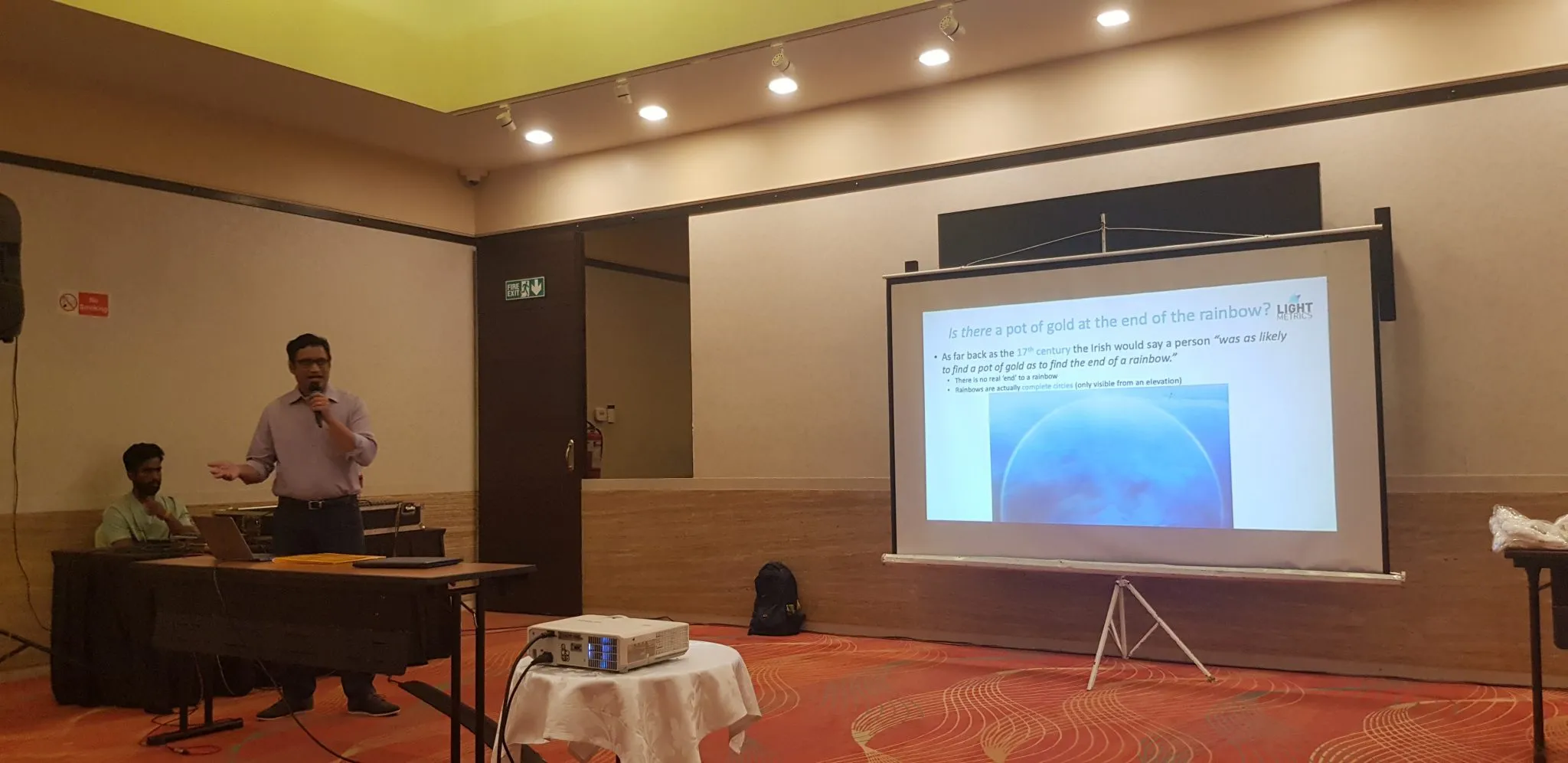
The scene gives some texture to the anniversary message that followed three years later. A company built for a long undertaking needs people who can retain knowledge, teach newcomers and keep revising the work. Ukil chose to celebrate that continuity when eleven years gave him the opportunity.
The problem after the alert
By May 2026, Ukil was writing about the distance between exciting AI demonstrations and useful fleet tools. His examples were specific: safety managers reviewing large quantities of video, demanding industries trying to reduce false alerts, installers needing to position cameras correctly. Each user brought a different working day to the same technology.
He described an earlier race to add alerts that eventually overwhelmed managers with information. The next task involved sorting events, supporting coaching and assessing whether that coaching helped. His enthusiasm for new AI came with a product question: what deserves to be built?
In a June essay, he used harsh braking to examine the importance of context. Another vehicle might have cut in. An obstacle might have appeared. The same basic event could call for very different interpretations. He argued for systems that prioritize meaningful incidents and connect them to action.
That is an operational argument with a human consequence. Somebody has to review the alert. Somebody has to speak to the driver. A pile of video can consume attention without helping either person make a better decision. The quality of the next conversation belongs in the design of the software.
In February 2026, Ukil had explored related questions onstage with FreshBus CTO Saikiran Panuganti at the Future Fleets Forum. Their case study emphasized coaching, feedback and transparency in passenger transport. The technology’s value depended on how people used it within the operation.
Back to the people who use it
A year earlier, Ukil had returned to IIT Kharagpur, his alma mater, with colleagues Krishna Sai Nunna and Pranay Velisoju. LightMetrics supported the SUPPLYMACY entrepreneurship challenge. He wrote warmly about seeing submissions from student teams across India. For once, the founder was watching other people begin.
His own undertaking continues through a familiar set of questions. Can the equipment serve the job? Can a partner deliver it? Can a manager act on the information? Has the driver been understood? Eleven years into LightMetrics, Ukil’s public story still turns on the distance between a clever idea and something another person can use.
Keep the conversation going
Watch: Soumik Ukil with Girish MirchandaniTranstopics · Episode 243 · YouTube- LightMetrics website
- Soumik on LinkedIn
- The 2018 essay on AI methods
- His 2026 essay on useful AI
- The fleet-video essay
- The Goa offsite
- The 2023 funding interview
- The 2018 driver-context conversation
- The founding team’s early story
- The smartphone pivot
- The FreshBus discussion
- The eleventh-anniversary note
- The IIT Kharagpur visit
- Education and career
- University of Iowa doctorate
- 2023 market and funding details