Company Profile / Gaming & Hardware
Sony Sells the Console at a Loss. The Real Money Starts When You Turn It On.
Inside Sony Interactive Entertainment - the PlayStation maker that turned a spurned Nintendo partnership into 93 million consoles sold, 125 million monthly players, and a $31 billion games business built on selling hardware cheap and everything after it dear.
In 1993, on a stage at a games convention, Nintendo publicly walked away from a deal to build a CD-ROM add-on with Sony. It was meant to bury a partner. Instead it handed Sony a grudge and an engineer. The engineer was Ken Kutaragi, who had already built the sound chip inside Nintendo's own console. He convinced Sony's leadership to stop asking permission and build a standalone machine. That machine, the PlayStation, became the first console of any kind to ship more than 100 million units. Thirty years later the company that grew out of that fallout - Sony Interactive Entertainment - runs one of the most profitable businesses in entertainment, and almost none of the profit comes from the box people line up to buy.
Sony Interactive Entertainment, or SIE, is the Sony subsidiary that owns everything with a PlayStation logo on it: the hardware, the online network, the subscription, and the studios that make the games. It employs around 13,000 people, and its global headquarters is not in Tokyo but in San Mateo, California, a detail that surprises people who assume PlayStation is run from Japan. It reports into Sony Group as the "Game & Network Services" segment, which pulled in roughly $31 billion in revenue in the fiscal year ending March 2026 - more than many far more famous standalone technology companies.
01 / The ModelThe console is a door, not a product
Here is the thing to understand about PlayStation, and it is the thing that explains almost every decision the company makes: the console itself is close to a break-even object, and in the early years of a generation it is often sold below cost. Sony does not get rich when you buy a PS5. It gets rich afterward - on the $70 game you buy to play on it, on the cut it takes from every third-party title sold through the PlayStation Store, on the $80-a-year PlayStation Plus subscription, and on the network that keeps you logged in.
This is the razor-and-blades model, and PlayStation runs the cleanest version of it in consumer electronics. The hardware exists to build an installed base. The installed base exists to sell software and services. And the mechanism that keeps players from wandering off to a competitor is ownership of the games themselves - franchises you cannot legally play anywhere else.
Sony does not get rich when you buy a PS5. It gets rich every time you turn it on afterward.
The proof is in the split. About 125 million people log into PlayStation Network in a given month, and the service peaked at roughly 132 million in December 2025. Some 47 million of them pay for PlayStation Plus. Those recurring relationships - not one-time hardware sales - are what pushed the segment to a record operating profit of around $3.1 billion in the last fiscal year.
02 / The ProductsHardware you feel, software you can't get elsewhere
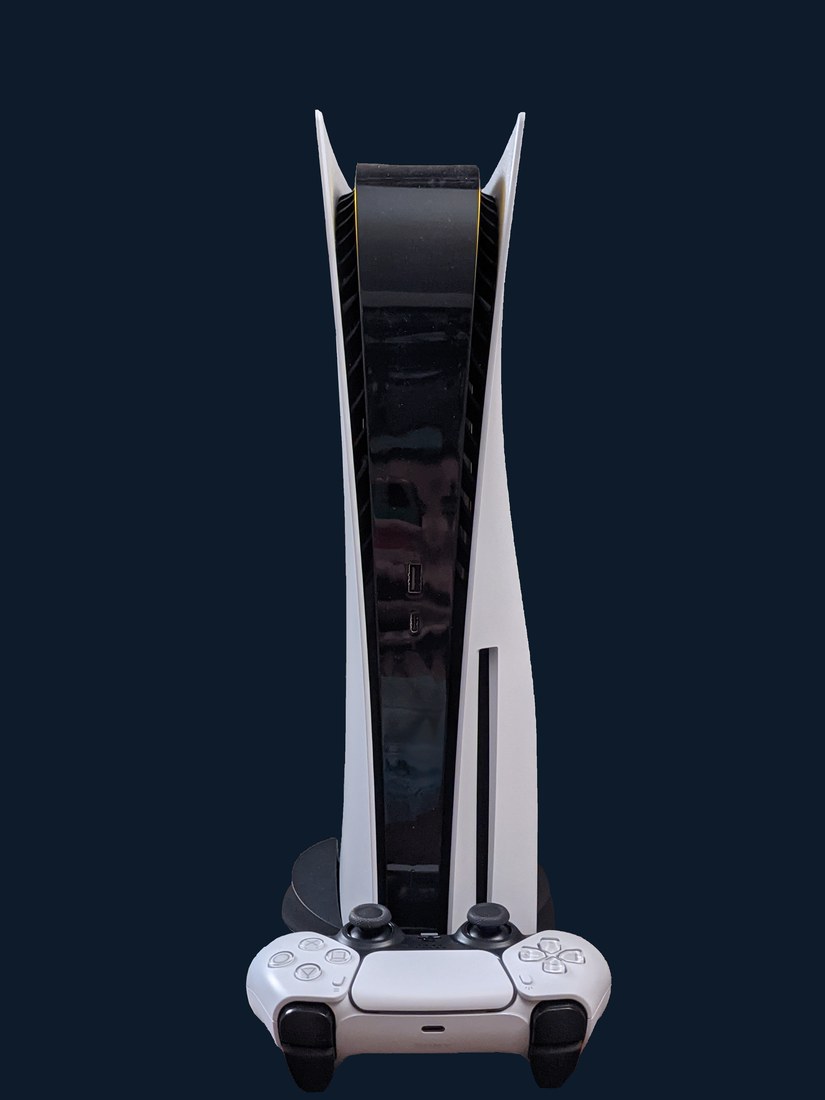
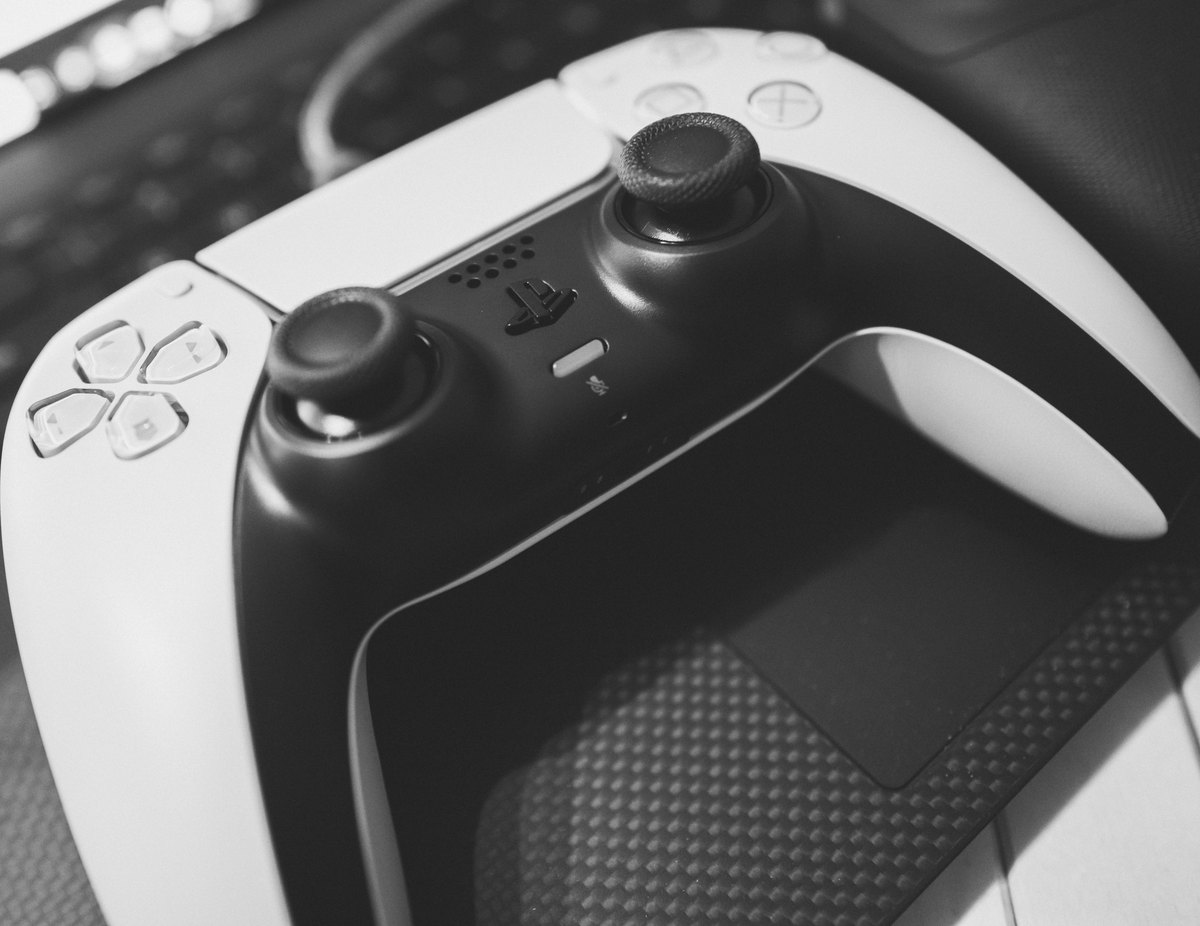
The current lineup is wider than most people notice. The PS5 ships in a standard disc model, a Digital Edition and a beefed-up Pro. The DualSense controller is the sleeper hit of the generation: its haptic motors and adaptive triggers can physically stiffen to mimic the pull of a bowstring or the give of a trigger, and make rain feel different from gravel underfoot. It sounds like a toy feature. It is actually one of the hardest things for a rival to copy, and Sony built much of its PS5 marketing around it.
Around the console sits the rest of the ecosystem: PlayStation Network for accounts and multiplayer; PlayStation Plus in three tiers that bundle online play, a catalog of downloadable games and cloud streaming; PlayStation VR2, the eye-tracking OLED headset that plugs into a PS5; and PlayStation Portal, a handheld that streams your own console's games over Wi-Fi. None of these are standalone businesses. Each one deepens the reason to stay.
But the crown jewels are the studios. PlayStation Studios is 14 development houses - Naughty Dog (The Last of Us, Uncharted), Insomniac (Marvel's Spider-Man, Ratchet & Clank), Santa Monica Studio (God of War), Guerrilla (Horizon), Sucker Punch (Ghost of Tsushima), Polyphony Digital (Gran Turismo), plus Bungie, Housemarque, Media Molecule and others. These are the games that reviewers rank among the best of their eras, and they are the reason a certain kind of player will only ever own a PlayStation.
03 / The MoneyWhere $31 billion comes from
Sony reports PlayStation as one line inside its larger group, and the number is large enough to stand on its own. In the fiscal year ending March 2026, the Game & Network Services segment generated roughly $31 billion in revenue and a record operating income near $3.1 billion. Hardware volume matters for reach, but the earnings curve bends on software and services.
That mix explains the company's biggest recent bet. In 2022 Sony paid $3.6 billion for Bungie, the studio behind Halo and Destiny. It did not buy Bungie for a single game. It bought a capability it lacked: running a live-service title for a decade, patching and monetizing it week after week. Single-player blockbusters like God of War sell tens of millions of copies and then stop. A live-service game, done right, never stops earning. The Bungie era has been rocky, but the logic - own your recurring revenue - is the defining idea in modern gaming.
04 / The TensionBlockbusters cost more every year
The flywheel has a weak point. The exclusives that sell the hardware now cost hundreds of millions of dollars and half a decade to make, and every miss is expensive. That pressure showed in February 2024, when Sony cut about 900 jobs - roughly 8% of SIE's staff - and closed its London Studio, with reductions hitting even celebrated teams like Naughty Dog, Insomniac and Guerrilla. It was a reminder that the same craft-first culture that produces the games also produces the risk.
Leadership has been in motion too. After Jim Ryan's retirement, Sony tried a two-CEO structure in 2024 - one chief for the platform business, one for the studios. Inside a year it collapsed the experiment back to a single boss: Hideaki Nishino became sole President and CEO of SIE in April 2025, with Hermen Hulst continuing to run the Studio Business Group under him. Running a hardware company and a games studio out of the same building, it turns out, is hard to split down the middle.
The exclusives sell the hardware. The hardware funds the studios. The studios make the exclusives. When it works, it is a flywheel. When a game misses, it is a bill.The PlayStation flywheel
05 / The CompetitionThe real rival isn't Xbox
The old console-war framing - Sony versus Microsoft - is a decade out of date. Microsoft's Xbox and its Game Pass subscription are real competitors, and so are Nintendo, Valve's Steam and its Steam Deck, Epic Games and Tencent. But the more honest way to see it is that PlayStation competes for a finite resource: the hours in your week. Its rivals are your phone, a free-to-play game your friends already play, and the pull of a streaming service. That is the fight Sony is repositioning around, pushing its games to PC, experimenting with cloud streaming, and trying to make PlayStation a place you play rather than a box you own.
What sets SIE apart in that fight is not raw hardware specs - rivals can match teraflops. It is the depth of its owned franchises and the craft reputation of its studios. Few companies can put out a God of War, a Spider-Man and a Ghost of Tsushima in the same generation. That library is the moat, and it is the one thing a competitor cannot simply outspend.
06 / What You Can Take From It
The PlayStation playbook is stealable, and not just by hardware makers. Sell the entry point cheap to win the customer. Make the money on what happens after the sale, not the sale itself. Own the thing your customers actually come for - in Sony's case, the games - so leaving costs them something. And turn one-time buyers into recurring relationships, because a subscriber is worth more than a sale. It works when you own genuinely irreplaceable content and can subsidize the hardware. It works far less well if your product is easily substituted or you can't absorb a loss up front - which is why very few companies can run the model as cleanly as the one behind the controller in your hands.