Consider the problem of selling an apartment when your name is Diesel. People know your jeans. They may have opinions about your jeans. They are less accustomed to asking you about square footage. In 2019, the fashion brand’s new Miami development needed an introduction. SMALL, a newly launched creative agency, answered with a clothing collection.
There were 143 T-shirts, each printed with an apartment’s floor plan. Advertised prices ran from $370,000 to $5.5 million. Buy the shirt, the joke went, and the condo came free. The legal clarification admitted the obvious: you were paying for the apartment. A real estate transaction had acquired a fashion label’s sense of mischief.
- SMALL sells campaign ideas, strategy and creative execution.
- Teams form around projects, with the founders close to the work.
- Its useful habit: turn a difficult brief into something people can picture.
The campaign supplies a useful introduction to SMALL itself. The agency makes ideas that can leave the presentation room and become objects, films or conversations. Its name also describes an operating choice: keep the permanent structure compact, then bring in the people a particular assignment requires.
A company without the furniture
Luca Lorenzini and Luca Pannese had spent years inside large advertising networks, including Saatchi & Saatchi and Publicis. Their launch interview described a growing frustration with financial pressures and the caution those pressures encouraged. Independence gave them room to choose projects and speak frankly to clients. They founded SMALL in New York in 2019.
Their backgrounds were hardly identical. Lorenzini grew up in Tuscany and tried writing novels as a child. Pannese grew up in Rome, absorbed skateboarding culture and competed in taekwondo. By the time they started their own agency, they had a long creative partnership and experience making work for international brands.
They also had a decision that seemed peculiar before the pandemic: everyone would work remotely. In a 2023 interview, Pannese recalled the objections to starting without an office. Then clients were forced onto conference calls themselves. SMALL’s existing arrangement suddenly looked practical. The thing that changed was the buyer’s understanding of how an agency could work.
“We started small in 2019 without a headquarters or an office; everything and everyone was remote.”
Luca Pannese · 2023
The brief chooses the team
SMALL’s founders have compared their approach to a production company. Win a project, assemble its collaborators. That arrangement addresses a familiar purchasing irritation: paying for a permanent structure whose relevance to the assignment is difficult to see. Project work gives the client a defined reason to hire the agency.
The services include advertising concepts, communication strategy, activation ideas and campaign creative. Clients range from fashion and retail businesses to financial services and advocacy organizations. Diesel, TradeStation, Amplifon and CoorDown each need a different kind of public attention. The agency’s portfolio also includes Uber, Amazon Prime Video and Timberland.
- 01Client brief
- 02Creative idea
- 03Specialist team
- 04Campaign
The implication for a buyer is straightforward. SMALL fits a brief that needs a distinct creative intervention. A business seeking a permanently staffed operation across every marketing function would need to examine the wider delivery arrangements. The founders have explicitly described larger agencies as possible collaborators, too. Independence leaves that door open.
Give the assumption a face
In CoorDown’s 2024 film “Assume That I Can,” actress Madison Tevlin confronts low expectations of people with Down syndrome. The campaign drew on Marta Sodano’s account of how assumptions can limit what someone is taught or allowed to attempt. A difficult argument becomes visible through everyday situations: studying, exercising, drinking a cocktail, living independently.
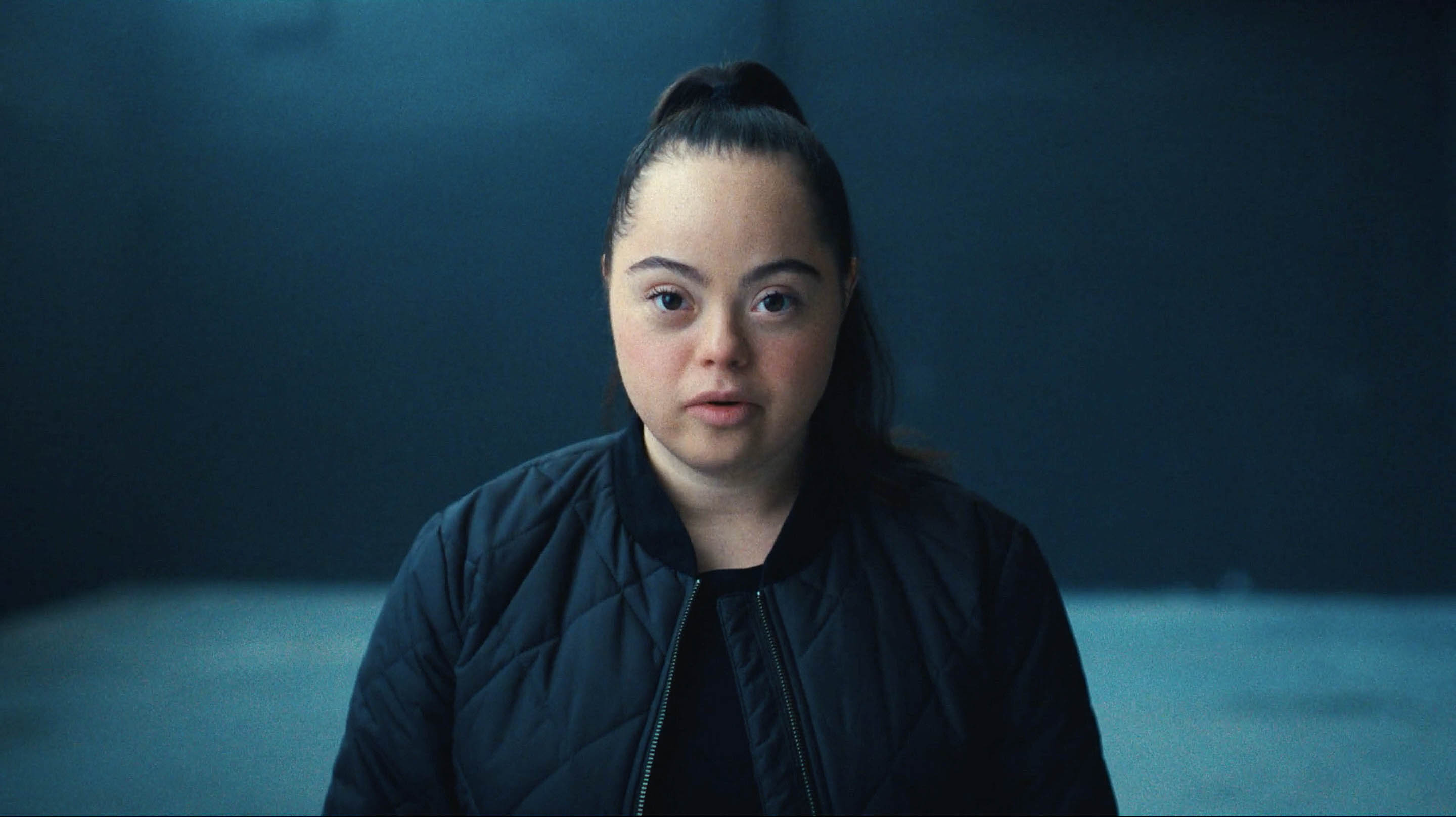
SMALL developed the creative; Indiana Production produced the film, with Rich Lee directing. This matters to the business story. A compact agency can commission elaborate work because the necessary skills sit across a network of collaborators. The credits show how many people help an apparently simple message reach the screen.
In a behind-the-scenes interview, Lorenzini described filming in Barcelona on a limited budget and bringing Tevlin over for the shoot. Her audition helped settle the casting. The execution also accommodated social viewing: vertical versions, subtitles and a direct address at the opening. Craft and distribution were decisions inside the idea.
The little word doing serious work
The campaign’s invitation contains a qualification: assume capability, and maybe it will follow. That “maybe” makes room for different abilities, circumstances and support needs. CoorDown’s Martina Fuga explained that the campaign was asking for opportunity without suggesting that everyone could do everything. Precision helped hold the argument together.
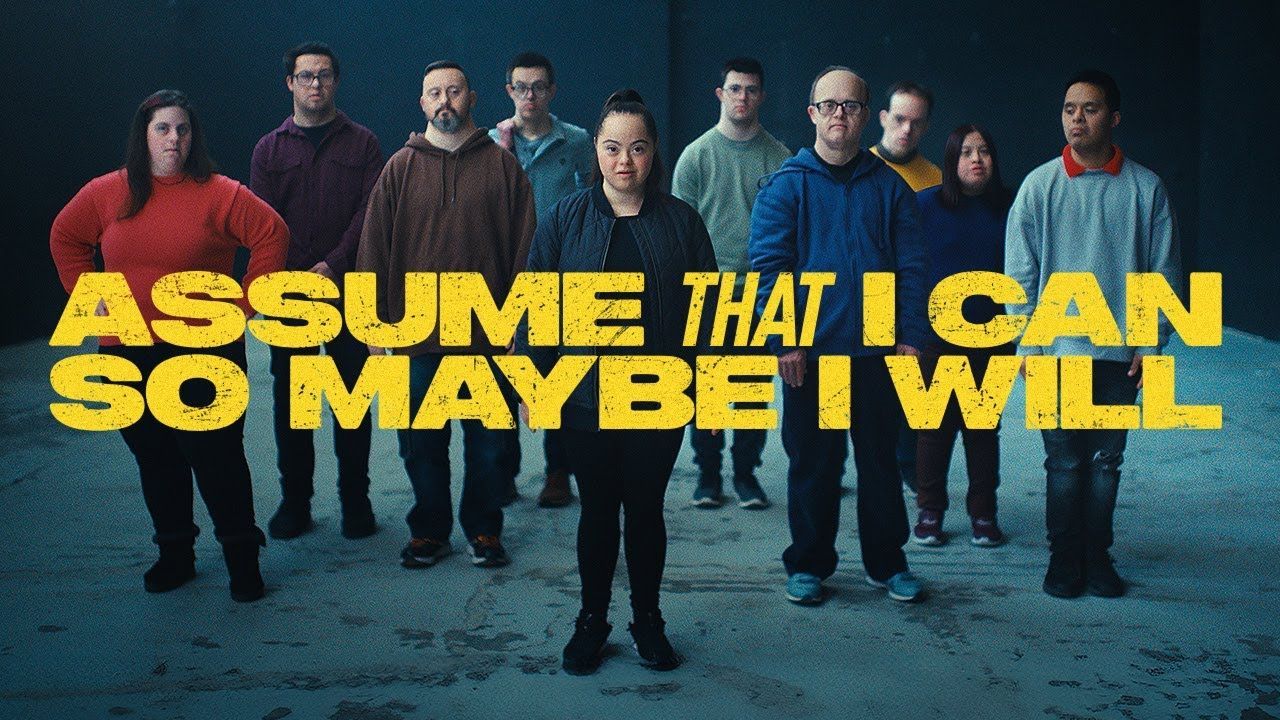
Recognition followed. The One Show’s 2025 record lists two Gold Pencils for the work in Health & Wellness. The ACT Good Report 2025 placed the campaign first and SMALL second among agencies. These establish a substantial creative reception. They do not measure the number of employers, teachers or parents who subsequently changed a decision.
For a client, the useful distinction is between attracting attention and designing a route from attention to action. The earlier Hiring Chain work included a dedicated employment platform. The film could open the conversation; a separate destination could help employers pursue it. A memorable piece of creative work still needs somewhere for that interest to go.
Make it easy to retell
The pattern extends beyond one film. CoorDown’s 2021 “The Hiring Chain,” performed by Sting, turned visible employment into a musical chain reaction. TradeStation’s Miami Bull gave a financial message a physical form. In each case, someone can describe the central device in a sentence. That makes the work portable.
In March 2026, CoorDown and SMALL returned with “Just Evolve.” Directed by Martin Holzman through Indiana Production, the film places harmful disability language beside absurd historical practices. The comparison gives the audience something to grasp before the argument becomes a lecture. A familiar defense of an old habit starts looking rather old itself.
The model also puts pressure on the brief. If the assignment is vague, a smaller team has no automatic advantage. The buyer still needs to name the audience, clarify the problem and make decisions. My reading of SMALL’s work is that its recurring strength lies in choosing a device that makes those decisions visible: a shirt, a chain, a historical comparison.
There is a practical lesson here for anyone commissioning creative work. Start with the assumption blocking the audience. Find a concrete way to expose it. Bring in the specialists needed to execute that idea, and decide what the audience should do afterward. SMALL’s contribution is making those choices feel connected. With Diesel, you remember the shirt. With CoorDown, the question is what you will let another person try.