Mo Said invited people over to watch the Super Bowl. He had a reason beyond the football: a Sprint commercial he had worked on at Droga5 was going to air during the 2018 game. When it came on, he went to the bathroom. The career milestone had arrived. Its author preferred another room.
There is an entire professional fantasy built around that moment before the bathroom: the big client, the expensive slot, friends gathered to see your work. Said had reached it and discovered that the location of an advertisement could not make him want to watch it. That is a peculiar problem for a copywriter. You can change the copy. Changing the conditions under which it gets made requires considerably more paperwork.
Later that year, he founded Mojo Supermarket. The distance between those two events is the interesting part of his story. A company would let him choose projects and colleagues. It would also require him to become the sort of businessperson a creative might once have hoped to avoid.
The respectable way to make things
Growing up in Pakistan, Said liked writing, music and movies. An advertising agency offered an appealing arrangement: people were paid to make the things he already wanted to make. A visit to a friend of his brother introduced him to that possibility. Marketing also sounded like a profession he could explain at home. Artistic appetite had found a job title with sensible shoes.
He moved to the United States in 2008, studied advertising at Michigan State University and worked at BBDO and Droga5. From outside, that route has an orderly shape: education, agency experience, recognizable clients. For Said, it also involved learning how much of himself to bring into the room.
He has described changing his accent and interests to fit an industry whose center of gravity felt far from his own background. That experience gives ownership a particular meaning in his career. Building a workplace offered a chance to decide who belonged there. The question of what the agency would make was bound up with the question of who could comfortably make it.
A wedding, a client, a supermarket
The early business had a suitably social beginning. Camilo De Galofre, Said’s former work partner and a founding Mojo colleague, recalls him meeting an Adidas marketer at a wedding. Said suggested Mojo Supermarket as an agency to work with. The inconvenient detail was that the agency did not yet exist. He had introduced the solution slightly ahead of the company.
Adidas became the first client. Mojo was founded in October 2018, in New York’s Chinatown. Its name came from a client who wanted the brand’s mojo back. It is a useful name for a creative business: informal enough to start a conversation, specific enough to imply that something has gone missing.
An early Adidas project let shoppers virtually try on Ultraboost 19 sneakers, with the experience distributed through AirDrop to people around competitors’ stores. A shoe launch could happen on a customer’s own feet, inside somebody else’s retail territory. The placement and the product demonstration were doing the same mischievous job.
Three rules with financial consequences
Mojo’s operating rules fit into three short lines. Work for brands you love. Work with people you love. Do not work for free. The language is friendly. Its consequences can be awkward. A prospective client may want unpaid ideas before making a commitment. A founder who declines has made a commercial choice before the creative work begins.
Said has argued that running both the business and the creative side helps the agency reach decisions. There is a practical attraction in that arrangement: the person defending an idea also has to understand the cost of delivering it. Enthusiasm still has to survive a budget. Even a supermarket with this name must keep its lights on.
“My project is the people here.”
Mo Said · 2021
The results supplied some external recognition. Forbes included Said in its 2020 Marketing & Advertising 30 Under 30 class. In 2022, Mojo won Gold as Ad Age’s Small Agency of the Year. These are different kinds of acknowledgment, one attached to a founder and one to the company. Both leave the more demanding daily question intact: what are people actually going to make tomorrow?
Putting people inside the idea
For the 2020 Oscars, Mojo helped create GiveHerABreak. The Best Director nominees were all men. The project offered viewers a way to watch the ceremony through a portal that substituted trailers for films directed by women during commercial breaks. The broadcast returned when the show resumed. An industry accustomed to selling interruptions had found another use for one.
The mechanics mattered. Viewers used their existing broadcast credentials; the service switched what they saw rather than claiming to own the ceremony. Said had a creative director credit, alongside writers, art directors and a creative technologist. The idea required the combined skills of a team, and a specific place in the evening where it could work.
DojaCode approached participation from a different direction. For Girls Who Code, Mojo collaborated on an interactive version of Doja Cat’s “Woman” video. Visitors could alter the experience using introductory code. Music provided a reason to arrive. A visible change provided a reason to try.
- WatchA music video you already want to see.
- TryA small piece of code changes the experience.
- MakeThe viewer gets a hand in the result.
Mojo’s production team had four weeks to execute the project. That detail pulls it out of the realm of an attractive presentation slide. Someone had to reconcile the objectives of the different partners, build the interaction and keep the invitation understandable. Camilo De Galofre described creative directing the project from beginning to end. Said’s ambition for a home full of inventive people becomes more concrete when those people have names and responsibilities.
Across the two projects, an audience receives something to do: choose another use for an ad break, or make a change inside a video. The work asks for a small decision. That is a more interesting relationship than assuming that an available pair of eyes amounts to an interested person.
The guest who became president
Said’s curiosity also shows up away from client assignments. Public Beach, his interview series in Cannes, puts marketing and creative figures under an umbrella on a stretch of beach open to the public. Guests have included Gary Vaynerchuk, Shannon Washington, Sir Martin Sorrell and Yadira Harrison. The setting makes conversation look agreeably less like a panel convened beneath a corporate slogan.
One interview produced a more permanent relationship. Said admired Oatly and approached Armando Turco, who had led brand creative there, about appearing on his podcast. As they talked, the intended episode became a recruiting opportunity. Said began trying to persuade him to become Mojo’s president.
When he announced the appointment in February 2025, Said pointed out that the interview included Turco saying he would never return to agency life. There are gentler ways to introduce a president than publicly revisiting his prediction. There are few that better convey the founder’s pleasure in having changed his mind.
A different wardrobe, a different job
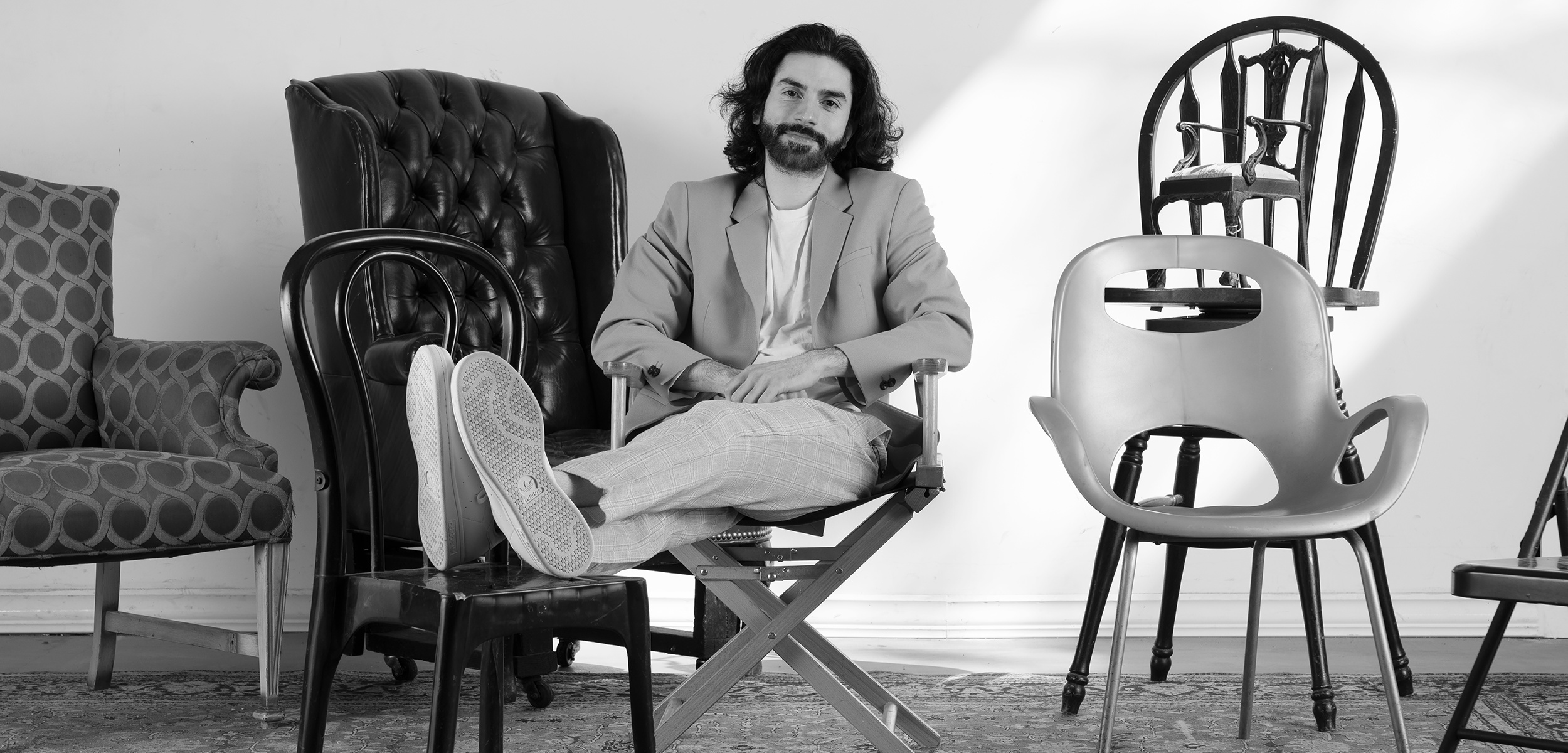
The more consequential change involved Said himself. He described formally committing to the founder and CEO title, leaving the creative department and concentrating on the responsibilities he knew less well. He even changed his clothes. The wardrobe was an unusually literal way of acknowledging that arriving at the same company could mean going to a different job.
He spent time on finance, operations, HR and legal work. His question to himself was brisk: “What education do you need?” It is a less glamorous founder scene than the wedding introduction. Nobody is discovering an agency. A person is discovering how much he still has to learn about the agency he owns.
There is creative consequence in these supposedly administrative decisions. Staffing determines who has time to think. Finance determines which promises a company can keep. Authority determines whether an idea can move without waiting for the founder. A business structure leaves its fingerprints on the work, even when they never appear in the credits.
The next seat at the table
By his December 2025 conversation with Chris Do, Said described a company of roughly 80 to 90 people. He spoke about keeping life interesting and remaining open to departures from an established path. That number belongs to that conversation. The more revealing point is how far his responsibilities had traveled from a senior copywriter’s desk.
In June 2026, Mojo appointed Brad Filice head of strategy after a nine-month search involving almost 100 interviews. Said had been leading the department himself during the search. Finding a successor meant deciding what the company needed to learn next, and who could help it do so.
The copywriter who once left the room has acquired a different assignment: making a place where other people can stay, think and produce work worth their time. That assignment includes invoices, interviews, awkward decisions and, occasionally, a new jacket. An agency called Mojo Supermarket turns out to require a good deal of ordinary shopkeeping. Said has been learning to take that part seriously, too.