Consider the candy heart with nothing useful to say. Its pink surface should carry a tiny declaration of affection. Instead, the lettering is blurred. In a factory, that is a printing problem. In the hands of Tombras, it became a Valentine for people whose romantic arrangements were similarly difficult to read.
- Turn something the brand already owns into the idea.
- Keep creative, media and measurement close enough to talk.
- Judge attention by what customers do next.
The agency helped package Sweethearts’ misprinted candies as Situationships: mixed messages for mixed feelings. Two online releases sold out, according to its campaign account. The appealing detail is how little distance there was between the product’s flaw and the customer’s joke. The candy supplied the premise.
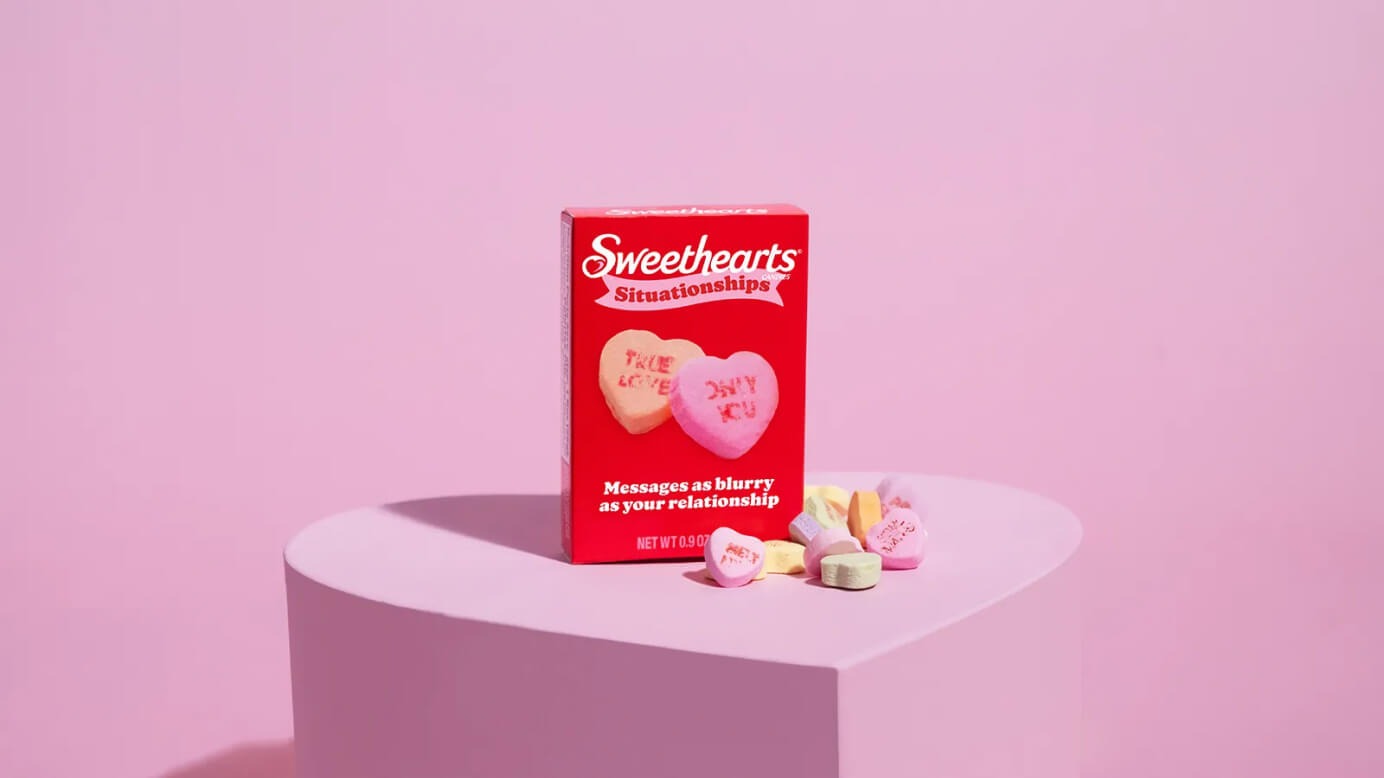
A factory reject gets a second reading
Advertising usually promises to make a product look better. Here, the defect did the persuasive work. Tombras reports more than three billion earned impressions for the campaign. That is an agency-reported exposure figure, rather than a count of buyers. The sellouts are a different, more tangible kind of signal.
For a marketer, the useful lesson is to examine the awkward detail before smoothing it away. A strange shape, an old ritual, an overlooked use: each can contain an idea competitors cannot simply attach to their own packaging. The qualification matters. A harmless printing imperfection can carry a joke. A dangerous product cannot.
This habit of looking again helps explain Tombras, a family-owned advertising business founded in Knoxville in 1946 by Charles Tombras Sr. It offers the full agency assortment, from strategy and creative to media, technology and data science. Its more interesting promise is that the people making the idea and the people counting the response belong in the same conversation.
The moving truck joins the conversation
PODS offered another ordinary object worth a second look. Its containers already carried the company’s name around town. In 2024, Tombras and Google gave a truck-mounted container digital copy that changed with its surroundings. A moving service had a billboard that could move, and now a reason for people to read it again.
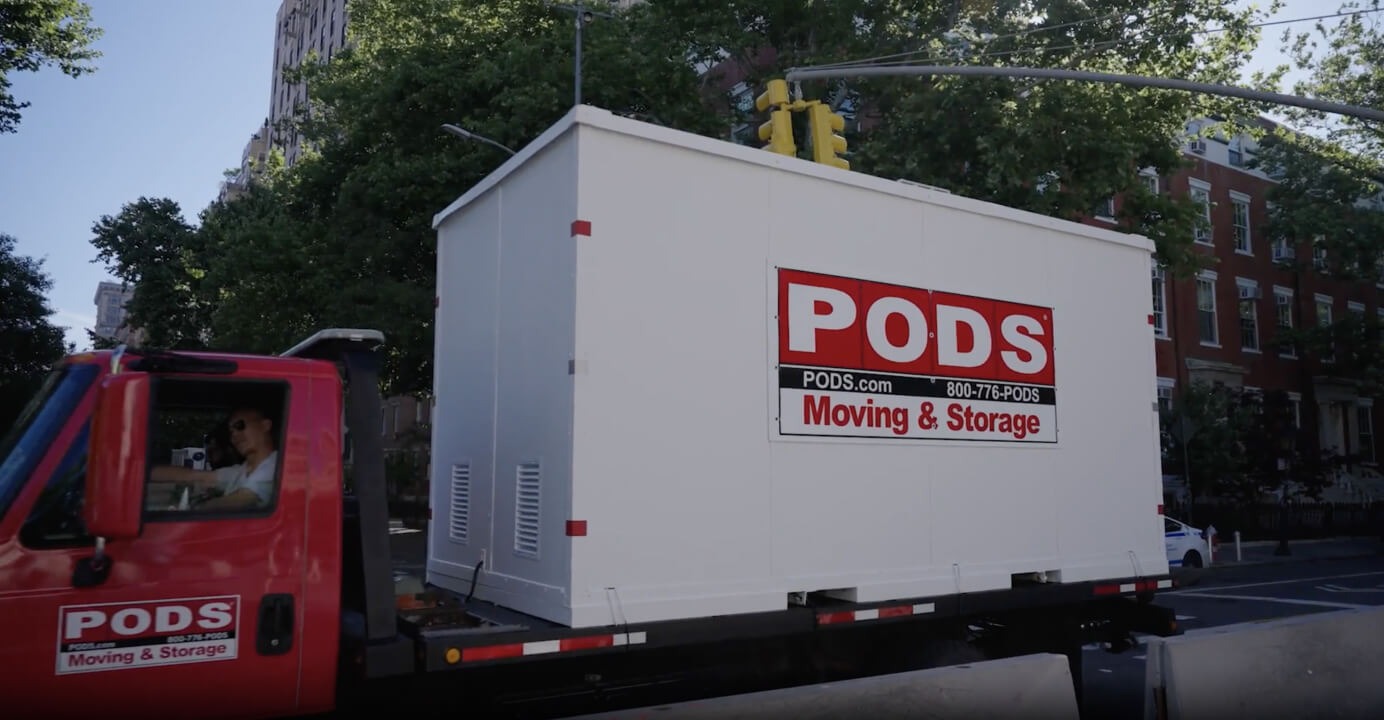
Google’s account describes a 12-day development process. Gemini generated thousands of candidate lines; people selected the copy. An API connected headlines with real-time information. The division of labor matters: software expanded the possibilities, while humans decided what deserved to appear on the truck.
“I would personally never agree to writing 6,000 lines.”Avinash Baliga, on the PODS campaign
The activation visited 299 New York neighborhoods in 29 hours. The published results put website sessions up roughly 60% and quote requests up 33% in the city. Those are campaign-reported movements, rather than proof that the billboard alone caused every additional inquiry. They still connect a creative experiment to something a moving company can use.
The invoice behind the idea
Tombras sells services to brand marketing teams. Its published client roster ranges from Bush’s and MoonPie to e.l.f. and Regions. A client can ask for an agency-of-record relationship or particular expertise. The work extends beyond conspicuous campaigns into paid search, SEO, customer relationship marketing, public relations and content production.
The integration has a practical purpose. An entertaining idea needs distribution. Distribution needs a budget. A budget needs a reason to survive the next meeting. Keeping those decisions together can reduce the distance between the original insight and the eventual customer action. That is the commercial logic behind the agency’s data-and-creativity language.
There is one useful public price marker. The agency’s impact.com listing puts its affiliate-services monthly retainer at $10,000 or more, with performance incentives also listed. That describes a particular practice. A brand buying a broader engagement would need a scope and a separate proposal.
Tombras now reports $1 billion in annual media billings. Read that carefully: billings measure the scale of client media investment. They do not mean the agency earns a billion dollars in revenue. For buyers comparing agencies, confusing those two numbers is an expensive way to misunderstand the market.
Independence gets a passport
The family history has continued through three generations. Charlie Tombras II joined in 1966 and became president in 1980. His son Dooley took the presidency in 2018. The agency’s careers page puts family first among its stated values, alongside independence, creativity and equality.
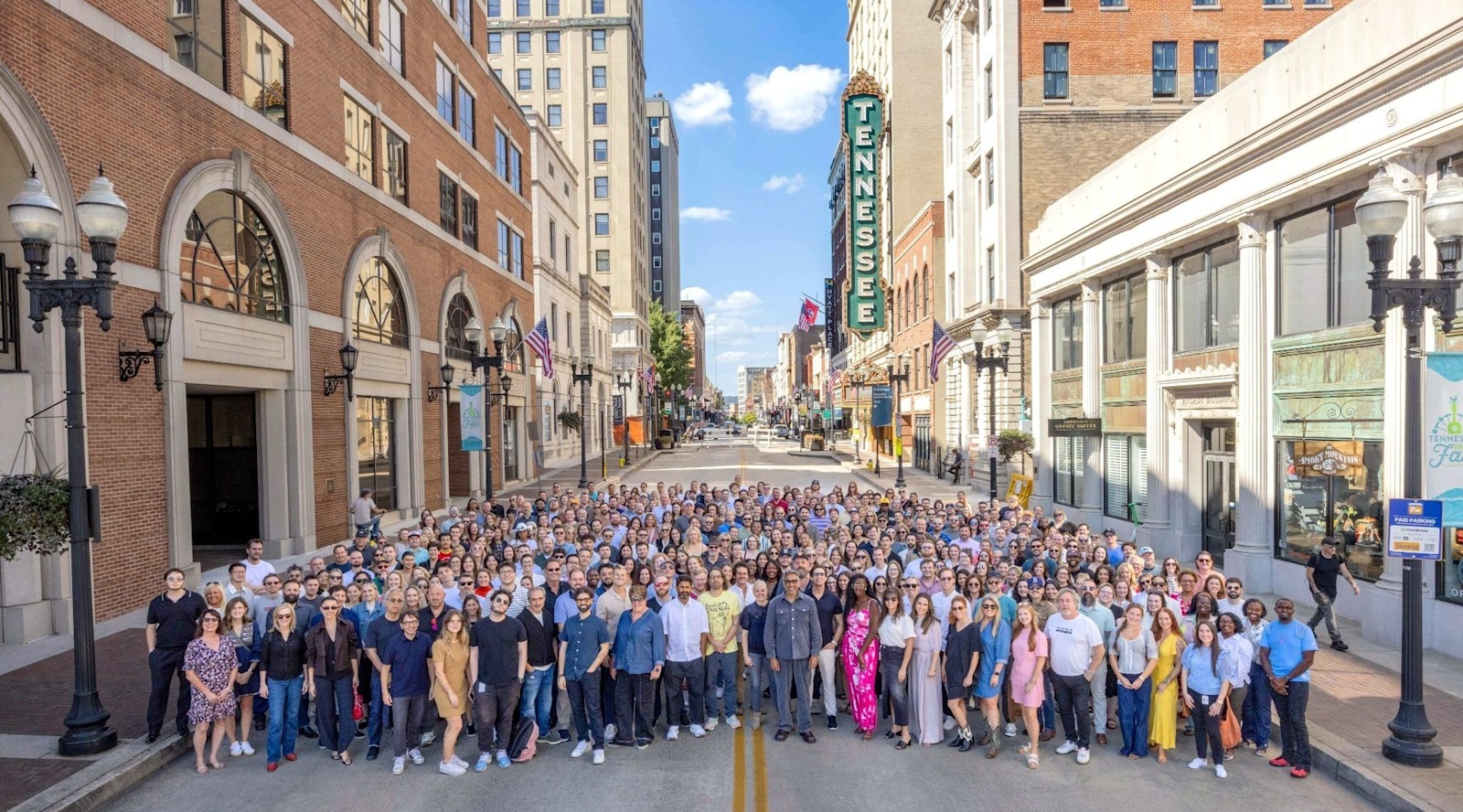
In August 2024, Tombras acquired Buenos Aires agency Niña, its first expansion beyond the United States. In January 2026, it bought Portland’s Opinionated, adding a 40-person team. The announcement scheduled a transition to the Tombras West name in 2027 and described growth without outside investment.
Independence can accommodate acquisitions. The harder question is whether expanding teams can keep making specific, surprising work. Tombras competes for attention in a market containing holding-company agencies and independent creative shops. Its pitch combines the breadth of a full-service business with continued family ownership.
The recent record includes Ad Age’s 2025 Agency of the Year award, followed by 2026 recognition from Fast Company for Sweethearts work. StarKist and Dollar Tree became announced agency-of-record wins in July and August 2026. Familiar products keep arriving with the same assignment: give people a fresh reason to notice.
The next useful thing to notice
The agency also helped establish the named Tombras School of Advertising & Public Relations at the University of Tennessee in 2022. Its announced goals include expanding representation in the profession. A business dependent on judgment has reason to care about who gets the chance to develop it.
For anyone borrowing the approach, start with an inventory: what do customers already encounter, what have they stopped seeing, and what action should follow renewed attention? The approach needs a believable connection to the product, people willing to edit, and a way to observe demand. A blurred candy heart works because somebody recognizes the feeling. The recognition comes first.