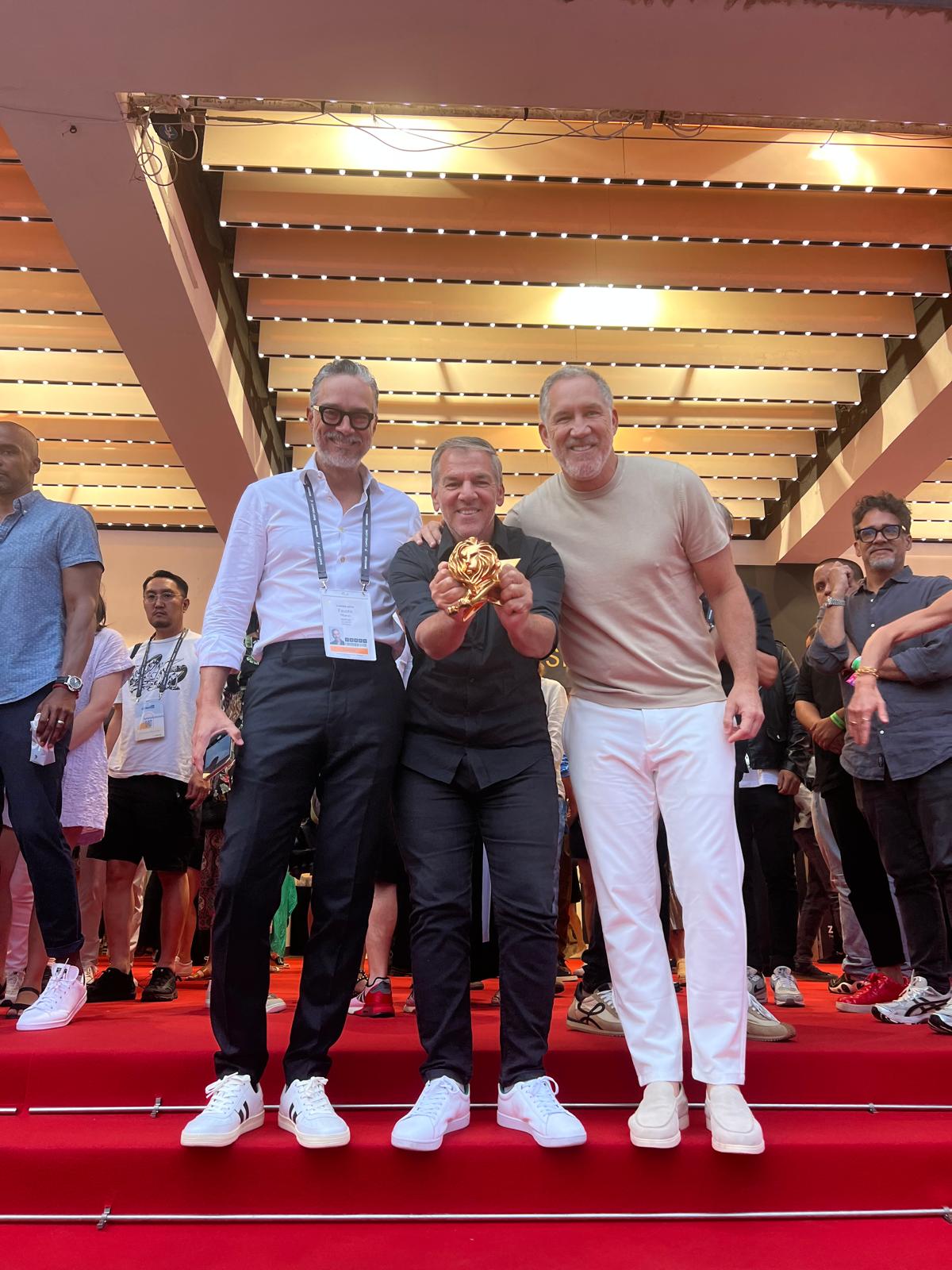
In June 2024, Eduardo Maruri had a Gold Lion to collect and a name to recover. He and his brother Fausto had taken back control of the advertising agency their family built. At Cannes, Rice of Glory won Gold in Brand Experience & Activation. After eight years of ownership by Grey, the agency was independent again. The prize made a rather agreeable leaving present.
The campaign asked Ecuadorian shoppers to look closely at something they usually tipped straight into a saucepan. Tiny drawings on selected grains of Super Extra rice represented prizes. Somewhere in the bag might be a flight, a laptop or a holiday. Dinner suddenly required the attention normally reserved for jewellery.
Maruri called the award both a beginning and a farewell. By that June, the agency counted 44 Cannes Lions, including nine Golds. Those were the company’s accumulated awards, a collective record. For its founder, the moment also completed a circuit: from a family business into an international network, then back to a family business with international experience.
Before the trophies, a telephone book
Maruri’s advertising life began with a much less glamorous object. In the early days, he and his father Jimmy recruited clients by sitting on the floor with a telephone book and calling businesses. The agency was founded in Guayaquil in 1991. Eduardo was 25. He had worked at Gillette and wanted more room for his own ideas.
Jimmy brought an established advertising reputation. Eduardo had to develop one of his own. Looking back, he described a young boss who worked 15-hour days and expected colleagues to match him. He later came to see leadership as a balance between demanding work and understanding the people doing it. A surname might open a conversation; it could hardly finish the assignment.
His education crossed the business and creative worlds: economics at Eastern Michigan University, marketing studies at Harvard, communications study at Berkeley, and an MBA at the Berlin School of Creative Leadership. That last experience gave him a particularly useful test. With classmates from different countries, he could see which ideas travelled and which depended on local knowledge.
In 2014, he described Berlin as a period of intellectual growth that coincided with better agency results. He valued introspection as much as technique: knowing his own weaknesses, earning colleagues’ trust, recognising work worth developing. The ambitious founder was learning how to make other people ambitious without requiring them to become copies of himself.
A stadium is a severe performance review
The agency was only one of his public commitments. Maruri became president of the Guayaquil Chamber of Commerce in 2004, entered national politics, and served in Ecuador’s Constituent Assembly. The assembly work gave an advertising executive an unusually consequential relationship with words. Constitutional language has a considerably longer shelf life than a seasonal campaign.
Then came Barcelona Sporting Club, the Guayaquil football institution. He was elected president in 2007. The team’s results during his tenure disappointed supporters; its troubled 2009 season brought it close to relegation. The constituency was passionate, visible and very difficult to reassure. A promising plan offered little consolation when the scoreboard disagreed.
“Football is more passionate than politics,” he said later. The experience mattered beyond the club. He returned to the agency in 2010 carrying a sense of public failure, and talked openly about wanting his children to see him achieve something again. Advertising offered a place to rebuild that confidence through work.
That admission complicates the familiar executive biography, in which every job becomes another conveniently ascending step. Maruri’s route includes a role that went badly. He did not need to turn the football years into a victory to explain what followed. They remained a difficult episode, and a reason to return to the craft he knew.
“I think one of the good things is that I have zero fear of getting fired.”
Eduardo Maruri, 2019
The passport was an idea
In 2012, Maruri Grey won Ecuador’s first Cannes Lion, a Gold. The trophy went to the Presidential Palace Museum. An agency award had become an object of national recognition. For a business founded in Guayaquil, that move from office shelf to public display carried its own small argument about where creative work could originate.
By 2014, the agency was bringing home nine Lions in a single festival year. Asked what Cannes was for, Maruri offered inspiration, meeting people and learning, with winning as a welcome additional possibility. He also insisted the results demonstrated Ecuadorian talent. An international audience could recognise an idea without requiring its makers to move their origins elsewhere.
Grey acquired a majority stake in August 2016. The relationship was already more than two decades old. At the time, the agency employed about 130 people across Guayaquil and Quito and offered advertising, media, activation, digital communications, public relations and production. Eduardo and Fausto stayed in management. The sale formalised a long partnership rather than creating one from scratch.
The regional jobs followed. His appointment to lead Grey Latin America was announced in late 2016; he went on to lead Grey Europe after a 2018 announcement. Latin America received Cannes Regional Network of the Year recognition in 2017 and 2018. In Europe, he wanted a shared creative culture to help win clients and grow the business. Fausto was already running the Ecuadorian agency, making the move a family handover as well as a geographic one.
- 1991Founds the agency with Jimmy
- 2012Ecuador’s first Cannes Lion
- 2016Grey takes a majority stake
- 2018Appointed to lead Grey Europe
- 2024Family ownership returns
- 2026Family Blend begins its run
Giving nature someone to call
His political experience also returned in the agency’s work. Nature Represented, developed with environmental organisation Sambito, began with a practical gap: Ecuador’s constitution recognised rights of nature, but those rights needed people willing to act on them. The campaign recruited lawyers to represent nature. An abstract principle acquired human advocates.
In June 2018, the campaign had collected five Cannes Lions across Direct, PR and Sustainable Development Goals categories. Maruri described the idea as giving the constitution armour. The attraction was the connection between a public promise and a mechanism for carrying it out. The advertising work helped make an existing right more usable.
In 2021, he chaired the Cannes Sustainable Development Goals jury. Explaining its Grand Prix for Doconomy’s 2030 Calculator, he emphasised scalability and the ability to address several goals. The calculator helped assess products’ carbon footprints. His interest lay in a tool that could change decisions, a useful extension of the question posed by Nature Represented: what can people actually do after hearing the message?
A later project took a more intimate route. Born to Be the Last, released in 2025 for Born Free, imagined a voice for Lonesome George, the Galápagos tortoise. Maruri originated the idea; Daniele Testi directed the four-minute film, produced by Casta Diva and PopKorn Films. It invited viewers to reconsider an animal usually presented as a symbol. The voice was a storytelling device, giving audiences a different way into a familiar conservation story.
Small grain, large coordination
Rice of Glory offered a cheerfully different kind of participation. Micro-artist Dayananda painted prize images on individual grains with non-toxic vegetable ink. The promotion used black packaging, making the contents a mystery until the purchaser opened the bag. Its television, outdoor and social work extended the search into a shared joke.
The campaign’s One Show entry reports that the 200,000 participating packages sold. It also reports more than one million regular packs sold alongside the promotion. These are campaign-reported results, and they make the mechanics worth examining. The ordinary product benefited from an extraordinary reason to inspect it.
The credits span Maruri in Guayaquil, Grey in Buenos Aires and Grey Brasil in São Paulo. Independence had returned without erasing collaboration. The idea required an artist, packaging, retail distribution, production and several agency teams. The grain was tiny; the list of people who made it possible was not.
In June 2024, Maruri also joined Iris as global creative chair while continuing to run his own agency. His remit included creative talent, pitches and the network’s creative council, with the United States a priority market. By 2025, his name appeared in the credits for Iris’s Real World Captchas campaign for World, which took the familiar online test into outdoor advertising. The new appointment supplied another setting for ideas that asked people to pause and look.
The family business meets the family blend
Film has become another part of that working life. Maruri Pictures lists him as an executive producer of Miami Now, directed by Ramiro Almeida and narrated by Andy Garcia, with appearances including Gloria Estefan. It puts the agency founder in a production setting where a story can have more room than a conventional commercial.
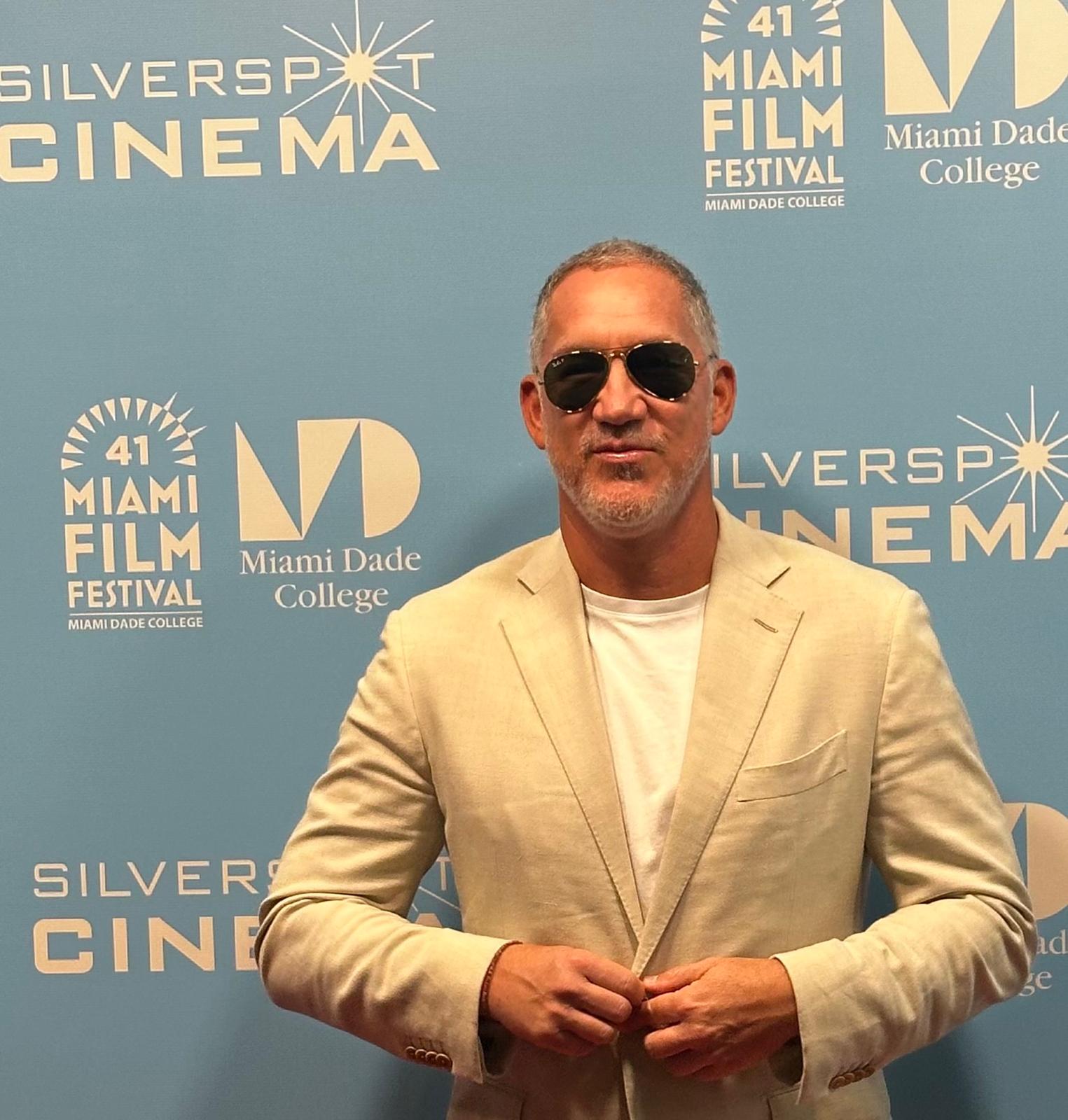
In July 2026, Lavazza began releasing Family Blend, a five-episode miniseries directed by Francesca Scorsese and starring her father Martin. Maruri Group developed the creative with support from Joey Payne; Propagate Content produced it. The short episodes combine documentary and comedy, moving through New York locations connected with Martin’s life. Coffee supplies a reason for the conversation to continue.
For Eduardo, the assignment still had a commercial purpose: help Lavazza strengthen its position in the United States. He described building situations and guiding conversations rather than insisting on exact dialogue. The agency contributed to the concept, visual construction and scripts while leaving room for the father and daughter’s natural rapport. Even a director accustomed to controlling a film could be allowed to interrupt his own advertisement.
There is a pleasing echo here. Maruri began his business beside his father. Decades later, his agency helped make a campaign about a father and daughter sharing memories, work and coffee. The resemblance is part of the story’s appeal, without requiring the families to have anything else in common.
On a 2024 podcast, his advice to his younger self included remembering to have fun. After the chamber, the assembly, the stadium and the network offices, that sounds less like an advertising slogan than a useful correction. Starting again has brought him back to the family name. It has also left room for a project whose essential preparation is wonderfully modest: before the conversation begins, make the coffee.
Follow the work, hear the voice
- Maruri: creative work
- Eduardo on LinkedIn
- Eduardo on Instagram
- Eduardo on TikTok
- Watch: Berlin commencement address
- Watch: Family Blend
- Listen: Entrepreneurs in the Wild
- Read: early agency years and creative leadership
- Read: politics, football and the return to advertising
- Read: Barcelona’s 2009 season
- Read: the 2010 football resignation
- Read: the Berlin experience
- Read: Cannes in 2014
- Read: Grey’s 2016 acquisition
- Read: Grey Latin America appointment
- Read: Grey Europe appointment
- Explore: Nature Represented
- Read: the 2021 Cannes jury
- Read: Ecuador’s first Lion
- Read: Doconomy’s Grand Prix
- Read: the 2024 return to independence
- Explore: Rice of Glory and its results
- Read: the Iris appointment
- Explore: Real World Captchas
- Watch and read: Born to Be the Last
- Explore: Maruri Pictures
- Read: Lavazza’s series announcement
- Read: the September 2026 Lavazza interview