When somebody offered to buy Tom Coyne’s company, he initially heard the proposition rather literally. The agency had about twenty employees. What, exactly, was the visitor proposing to purchase? “Buy us; what do you mean? You want to buy people?” he recalled asking. The discussion became an acquisition offer of roughly a million dollars. Coyne turned it down. In 2021, he said he had declined dozens of subsequent approaches, too.
There is something revealing about that first question. A buyer can put a price on a business. Coyne was thinking about the people inside it. The exchange offers an unusually plain introduction to a founder whose public philosophy puts the workplace at the beginning of the commercial argument. Thirty-five years after he founded Coyne PR, the agency remains independent. The question about people still fits.
A company before a first job
Coyne started in 1991, at twenty-two, after college. He had neither an agency job nor a field internship behind him. Textbooks, a library card and a credit card helped him get going; the card bought a computer and printer. An early literacy-program brochure contained a missing letter in “too.” Reprinting it cost him $400. The lesson in proofreading came with a bill and a particularly unkind sense of irony.
His college record gives the beginning a little more texture. At Marist, which he attended from 1987 to 1991, his activities included captaining the football team and editing the yearbook’s sports coverage. Those jobs put him on two sides of an event: taking part and helping describe it. His later career would depend on persuading people that something deserved their attention.
A university magazine recorded his inclusion in PRWeek’s 2008 40 Under 40. By then, the client names included Disney, Goodyear and Hard Rock International. In March 2009, the agency received PRWeek’s Midsize Agency of the Year award. The young founder’s small operation had become a business with recognizable clients and industry recognition. It had also become a place where other people could build careers of their own.
at age 22
CEO of the Year
Lifetime Achievement Award
Put the vacancy second
Coyne’s hiring argument reverses a familiar sequence. Rather than waiting for an account to create a position, he has said the firm will hire talented people regardless of immediate account needs. Good people, in this view, are harder to find than good business. Make the agency somewhere they want to work, and their work will help attract clients.
That is an appealing proposition with a practical complication: hiring somebody means paying them before the hoped-for business arrives. The philosophy therefore asks more of management than an encouraging speech. It makes judgment about people part of the financial decision. A founder must believe a person will contribute, then give that person enough opportunity to justify the belief.
- Make work worth coming toBuild the conditions for people to stay.
- Bring talented people inConsider the person before an account vacancy.
- Let the work attract clientsThe team’s judgment becomes the offering.
His version of workplace culture includes small decisions that would never make an awards entry. He has described sending people out of meetings so they could attend their children’s sporting events. He encourages employees to be themselves and seeks feedback about what they need. “You have to be human,” he said. The injunction sounds almost too obvious to require saying, until a meeting runs long.
He has also argued that the company must become large enough to accommodate employees’ dreams if it wants them to stay. That is a more demanding interpretation of growth than adding accounts. An employee may want responsibility, a different kind of assignment or a reason to imagine another year at the same desk. A growing business has to make room for those ambitions somewhere.
The street outside the board-game box
One example of what that workplace can produce is pleasantly difficult to mistake for a routine announcement. For Candy Land’s sixtieth birthday in 2009, Coyne PR helped transform Lombard Street in San Francisco into a version of the game’s colored path. Children played in four teams, moving according to oversized cards. A familiar object from a living-room shelf had acquired a city-sized setting.
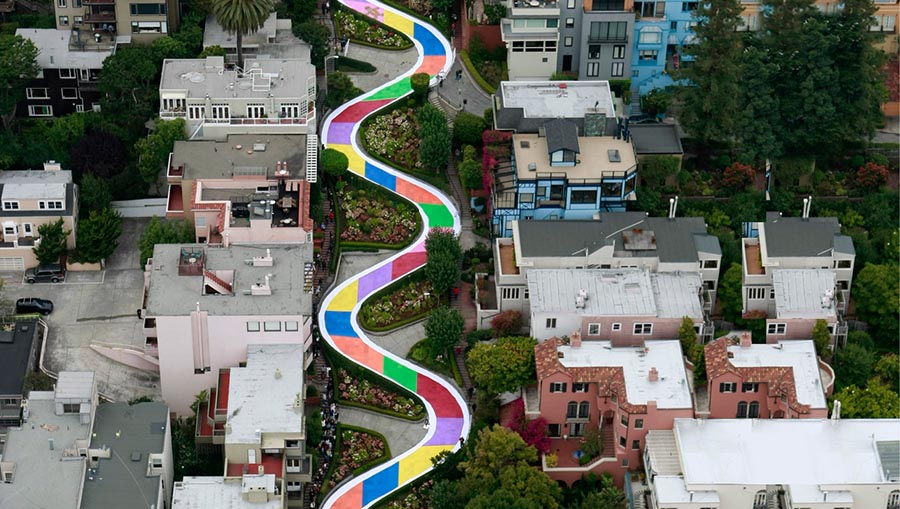
The agency’s retrospective credits Brian Murphy with noticing the resemblance between the board-game path and the winding street. That credit matters in a story about the founder. The idea belonged to a colleague. Coyne’s company provided the setting in which the observation could become work for a client.
The campaign also shows how much communication can happen before anyone reads a sentence. A colored street tells a viewer that an ordinary game has escaped its ordinary scale. Children moving along it explain the rules. The event gives photographers a picture and participants something to do. The birthday is still the reason for the gathering; the gathering gives the birthday a form people can recognize.
It is a useful example of an agency’s contribution because the underlying observation is simple enough to understand immediately. Delivering it is another matter. Somewhere between noticing the resemblance and letting the children play, an idea has to survive planning and become a real event. The photograph records the end of that journey. The colleague’s credit preserves its beginning.
Leave room for someone else’s voice
Coyne’s interest in people also appears in his approach to influencers. During a 2022 industry discussion, he emphasized examining a prospective partner’s background and making the terms of the relationship clear. He wanted partnerships that could strengthen both the client’s brand and the influencer’s. The person carrying the message should have a reason to value the arrangement.
He also allowed for a stubborn reality of communication: another person remains another person. A detailed contract does not remove the need for judgment or partnership. The influencer’s recognizable character is part of what the client has come to borrow. “Control is kind of a myth,” Coyne said.
“Control is kind of a myth.”
Tom Coyne, discussing influencer partnerships, 2022
His comments treated media choice with similar flexibility. He asked communicators to consider where attention actually goes, including a personality’s feeds as well as a television program. A prestigious placement can be valuable, but the audience’s habits deserve their own investigation. For a founder who began before today’s social platforms existed, that willingness to follow attention is a practical form of adaptation.
Learning has an operating budget
The agency has given professional development an institutional form through Coyne College. In 2022, it expanded the internal program to include a five-week boot camp for junior employees, a virtual collection of training videos and mentorship. The combination offered newer staff structured instruction and access to colleagues rather than leaving development entirely to whatever an account happened to teach them.
By 2023, the company was continuing to invest in that educational initiative and its digital learning library. The training fits the hiring philosophy: bringing people in is only the first commitment. Their next assignment may call for skills they have yet to learn. An agency promising room to grow has to find time and resources for the learning that growth requires.
Coyne brought his professional skills back to Marist as well. A 2015 alumni account credits his team with creating the Marist Million Challenge name, marketing materials and website for a football fundraising effort. It was a contribution made through agency work. The former player could help his college tell its own story and give supporters a clearer invitation to take part.
An award with more than one author
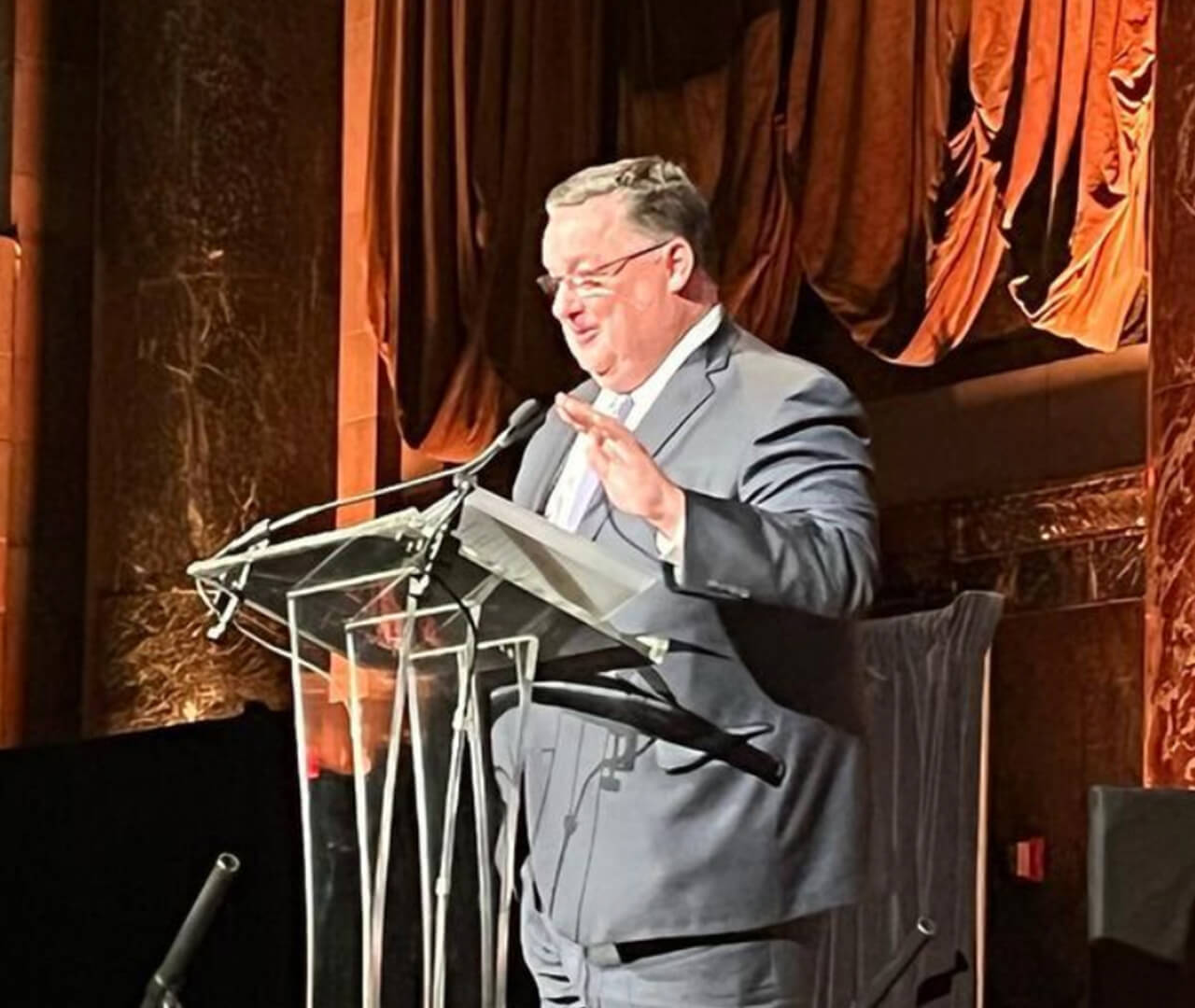
In October 2022, Coyne received PRNEWS Platinum Awards CEO of the Year. In his acceptance, he credited the leadership team working alongside him on decisions for clients and staff. The public photograph shows him at a lectern, in a suit, beneath warm curtains. It is the familiar setting for an individual award, attached to a career he describes through collective work.
The following year brought PRSA New York’s John W. Hill Lifetime Achievement Award. Presented at the November 15 Big Apple Awards, it recognizes a career in public relations. The chapter’s criteria emphasize experience, quality, integrity and judgment. For Coyne, it placed a personal milestone beside the campaign and workplace awards collected by his firm.
The agency’s current leadership includes presidents Rich Lukis and John Gogarty, chief financial officer Cathy Clarkin and chief people officer Clara Heffernan. Their presence gives the collective language a concrete shape. A founder’s name can stay on the door while responsibility spreads across a leadership group. That is one way a company becomes capable of work beyond the founder’s own reach.
Thirty-five years, and a different discovery problem
Coyne’s recent writing continues to encourage unconventional ideas. In a May 2025 essay, he argued that creativity gives brands a better chance of being remembered amid crowded communication. His practical suggestions included seeking different perspectives, making brainstorming playful and recognizing people willing to propose daring work. The founder’s task, as he described it, includes creating conditions in which colleagues will offer those ideas.
He acknowledged AI’s usefulness for efficiency and generating possibilities while keeping human creative judgment central to his argument. That distinction leaves plenty of work for management. A tool can offer alternatives; colleagues still have to decide whether an idea deserves the client’s money, whether it fits the audience and whether anyone will care when it appears.
By June 2026, Coyne PR had announced a dedicated Analytics & Intelligence practice, including audience insights, Generative Engine Optimization and AI-related reputation work. The agency’s measurement capabilities include social listening, creator analytics and analysis of earned coverage. The new questions concern how people discover information and how brands appear in answers generated by AI systems.
That year, the firm received Best Mid-Sized Agency recognition at the PRSA Anvil Awards. In September, it announced its seventh consecutive inclusion in the PRNEWS Agency Elite roster, this time for the 2027 Top 120. Its current description lists more than 150 professionals and international connections through Worldcom, alongside offices in New Jersey and New York.
The scale has changed considerably since 1991. So have the channels through which a client hopes to be found. Coyne’s first acquisition conversation survives in the story because it catches him considering the company at a more immediate scale: twenty people and somebody asking to buy it. He chose to keep building. Thirty-five years later, the people argument remains the thread connecting the choice to the work.
Keep the conversation going
Interviews, campaign films and more from Coyne’s working world.