The flour was already travelling by train. That was the detail that made the warehouse decision interesting. A Midwest food processor wanted to serve East Coast customers, but hesitated to invest in its own facility. Renting any available building would not quite do. It needed somewhere the railway could reach, somewhere the flour could be tracked, and someone to arrange the final truck journey.
- ELM combines rail-connected warehousing with local distribution.
- Its work includes retail displays, order fulfillment, and camera returns.
- The buying lesson: price the complete workflow, including exceptions.
A customer who needed a railway
ELM Global Logistics supplied that combination. In the company’s account, staff obtained pesticide licensing and hazardous-material handling training, while the operation gained ASI sanitation certification. Warehouse software tracked lots by manufacturing date. Rail brought the flour in; local trucks took it out. The customer could reach a new market without becoming a warehouse operator.
ELM reports 32% less product handling and regional delivery three days faster in that case. These are company-reported results for an unnamed client. The useful detail is the arrangement behind them: fewer separate parties between the railway and the customer. Every transfer requires coordination. Putting several steps under one roof gives a logistics provider something tangible to sell.
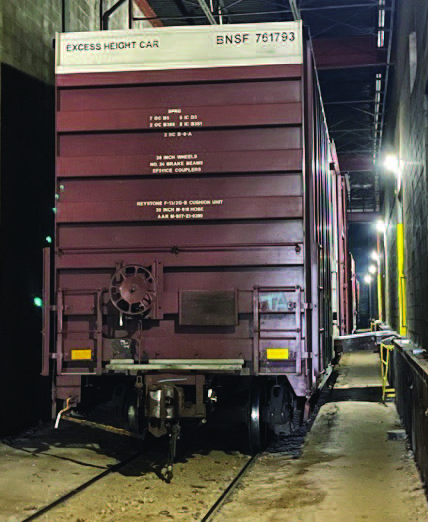
ELM calls its siding the largest in-house, full-service rail siding on Long Island. Its appeal is particularly clear for heavy, bulky goods moving long distances. A buyer with small, urgent parcel orders has a different problem. The rail connection earns its keep when freight characteristics, available routes, and delivery windows make the whole journey sensible.
The paper behind the parcel
The family business grew around practical connections. Its current history begins in 1980 with three employees, one customer, and 40,000 square feet in Brentwood. Bill Conboy is identified as founder by Inbound Logistics; Long Island Business News also credits his wife, Gale. The trade profile describes a business run with children, extended family, and employees beyond the family.
Expansion brought a Burlington, New Jersey operation in 2011 and a Central Islip warehouse in 2017. Today ELM advertises more than a million square feet across New York and New Jersey. Yet size alone does not explain the business. The railway relationship supplies a better clue.
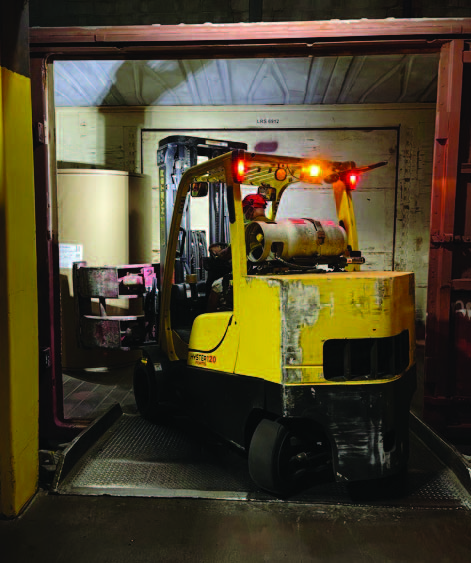
New York & Atlantic Railway dates its ELM relationship to 1997, when paper rolls arrived for a Long Island newspaper. In 2021, packaging-paper demand and newly available Brentwood space created another opportunity. Ecommerce orders needed cardboard. Paper could arrive by rail, wait in storage, or move across the dock to trucks serving nearby processors.
“Suddenly everyone wanted what they have been getting at stores to arrive on their doorstep in a cardboard box.”Bill Conboy, 2021
The railway reported capacity for 15 railcars and 75 truck bays at Brentwood then. It also described nighttime railcar movements. That detail gives the story its texture: the online shopping cart belongs to one world; the railcar positioned beside a warehouse overnight belongs to another. ELM works at their meeting point.
Perfume arrives. A retail display leaves.
A Spanish fragrance company presented a different challenge. Its US launch required displays configured for individual retail accounts. ELM unboxed products, assembled racks, prepared clamshell packaging, applied UPC and security tags, then filled and shrink-wrapped the displays. A place to store perfume had become a place to make it ready for sale.
For an overseas camera manufacturer, the direction reversed. Returned merchandise arrived labelled defective. ELM’s team tested it against factory specifications. Non-defective items were repacked for resale; defective ones went through repair before repacking. The important distinction came before the shipping label: which products needed repair, and which merely needed another route to a buyer?
These jobs explain where ELM sits in the market. It serves manufacturers, importers, distributors, and sellers whose inventory requires handling beyond a straightforward pick and pack. Competing choices include regional 3PL warehouses, fulfillment specialists, transloading operators, or an internal operation. ELM’s case rests on combining those tasks for a particular customer.
The warehouse needs a memory
ELM ACCESS gives customers online visibility into inventory, receipts, shipments, pending orders, and lot or date information. In-house IT staff build integrations, reports, and electronic data interchange connections. For a client, the point is to know what happened to an order without assembling an answer from several people’s inboxes.
Physical conditions need equally precise records. ELM publishes a controlled-climate range of 59-84°F and 35-65% relative humidity, with continuous monitoring and corrective-action procedures. Those numbers matter more than the agreeable phrase “climate controlled.” A product requiring refrigeration needs a separately confirmed specification. The company also reports SQF certification and New York alcohol warehousing licensing in 2026, extending its regulated-storage offering.
Buy the operation, price the exceptions
ELM sells customized logistics services through quotations. Shared and dedicated warehouse arrangements let customers purchase capacity and labor for their operation. The business model rewards useful execution: receiving, storage, fulfillment, special handling, and the information connecting them.
Its own pricing advice offers a method readers can copy. Give providers the same recent operating data and request modeled invoices for normal, peak, and slow months. Include receiving, storage, outbound handling, materials, freight, returns, account fees, minimums, and implementation. Then divide the total by orders shipped. A cheap pick fee can conceal an expensive minimum.
Ask who owns each exception: damaged arrivals, missing labels, rejected displays, or returned goods. ELM describes Six Sigma Black Belts and measured process improvement, but the buyer still needs service commitments tied to its actual work. The company’s slow-inventory guidance makes a sensible final point: moving overbought products to a better warehouse cannot make customers want them. The building can improve the journey. Someone still has to choose the destination.