The first clue was the roof. In 2017, Novo’s Ardmore operation moved into a warehouse with more room, but water came through the building. Lighting was inadequate. The inventory system disagreed with the location of the goods. Space, that apparently simple solution to a logistics problem, had produced problems of its own.
- The work: warehousing, supervised labor, manufacturing support, and B2B distribution.
- The niche: managing the handling and preparation between storage and the next destination.
- The lesson: inspect the real operation before buying more space or adding people.
01 / EVIDENCE ON THE FLOORThe photograph that changed the conversation
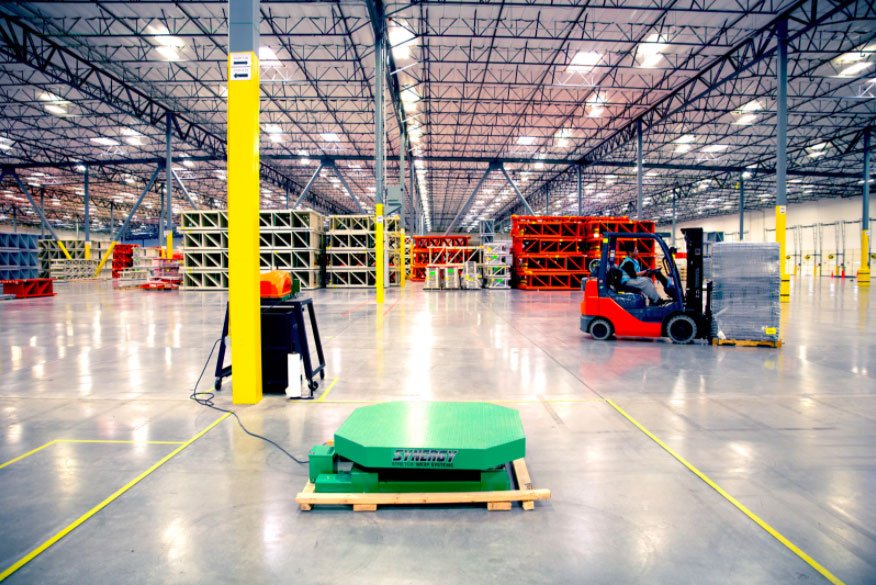
Novo’s published account describes a customer relationship becoming strained. Its team photographed and filmed the conditions. The customer sent representatives. Together, they reorganized pallets and their records. By autumn 2018, staff had offices, bathrooms, and a breakroom. The eventual result, according to Novo: a five-year contract extension.
The useful idea here is wonderfully portable. An argument about performance can conceal an argument about conditions. Show someone the conditions and the conversation acquires an object. A photograph gives everyone something to point at; a vague complaint gives everyone somewhere to hide.
02 / FROM HANDS TO OPERATIONSA labor company learns to run the whole room
Novo began with contract labor under the name Reliable Management Solutions. By the December 2020 announcement of its rebrand, the business also operated dedicated and shared warehouses, local transportation, and yard shuttles. The new name followed an expansion of the job.
Ryan Peirce joined in 2000 and bought the company in 2004. Northern Nevada Business Weekly’s December 2024 portrait reported growth from roughly 30 full-time employees at one facility in 2004 to 550 across nine states. His mother, Joanne, was a managing member. Those numbers describe a particular moment, but the family connection explains something about the company’s continuity.

Today, Novo’s offering spans the warehouse, the production floor, and the store environment. Its leadership includes experience in project management, quality, operations, and finance. The proposition is practical: give an outside operator responsibility for work that otherwise consumes a customer’s own managers.
03 / BUYING CAPACITYThe bill follows the work
A business can hire Novo to run a dedicated operation or use a shared facility. In the shared model, Novo says customers pay for the space and labor they use. Inventory remains separated physically and within the warehouse management system. Seasonal overflow, a regional expansion, or a temporary staging project can therefore use an existing operation.
This is a question about commitment as much as price. A company opening its own warehouse must arrange equipment, hire people, and accept a lease. Buying services changes who carries those obligations. It also introduces a dependency: the customer must define the work accurately enough for another organization to perform it.
Novo quotes services to the assignment. A useful buying exercise is to compare the complete operating scope: receiving, storage, handling, preparation, supervision, and dispatch. A cheap storage figure tells you little if every necessary touch creates another charge.
Geography supplies another part of the economics. When Novo added more than 180,000 square feet at Tahoe-Reno Industrial Center, it described sharing labor, leadership, and equipment between nearby operations. The attraction was using capacity across a local cluster. That logic depends on the sites being close enough for those resources to move usefully between them.
04 / THE DISTANCE THAT MATTERSThe few feet that can stop a factory
Novo’s manufacturing model puts teams inside or beside a customer’s plant. They handle incoming materials, work in progress, delivery to production lines, and finished goods. Its near-plant warehousing combines just-in-time deliveries with just-in-case stock held nearby. The buffer belongs close enough to be useful when a supplier runs late.
Stock held near the plant
Materials delivered as needed
This positions Novo among contract logistics operators with manufacturing responsibilities. A staffing agency, an internal team, and a warehouse provider each offer alternatives, depending on the task. The distinction to examine is who supervises the work and answers for the material flow. Novo’s contract model brings warehousing, handling, and labor into an agreed scope.
The scale can be quite concrete. In its Tuscaloosa announcement, Novo described supporting a tire manufacturer in a 150,000-square-foot facility with 50 on-site employees, including warehouse operations, outbound deliveries, and raw-material transportation.
05 / BACKSTAGE RETAILThe shelves have a supply chain, too
Retailers move more than merchandise. Fixtures, equipment, displays, and campaign materials also need somewhere to wait and a way to arrive together. Novo receives, stores, consolidates, and distributes these assets for openings, remodels, and seasonal changes. A customer sees a shop; the operator sees several vendors whose deliveries must agree.
Its value-added work addresses another awkward interval: goods have arrived, but are not ready for their next destination. Novo kits components, assembles sub-units, repacks products, and applies retailer-specific labels. Its stated B2B emphasis includes case and pallet distribution and compliance with retail shipping requirements.
Named customer testimonials include Dayclocks and Peep No More. Dayclocks owner Steve Olson credits Novo with freeing time for growth and helping correct supplier mistakes. It is a customer’s endorsement, and it neatly describes the appeal: fewer operational interruptions competing with the business itself.
Food customers have a further test. Novo reports that its Sparks multi-client facility earned AIB certification, covering sanitation, pest control, training, and maintenance. The certification applies to that facility. A buyer should check the site serving their goods rather than assume an award travels with the company name. In this corner of logistics, the address matters as much as the brochure. Novo says the certification requires annual reinspection, making the standard a recurring operating obligation rather than a decoration for the reception wall.
06 / A PRACTICAL BORROWINGCopy the inspection, then the contract
Ardmore’s maintenance overhaul offers another small lesson. Starting in May 2020, Novo cleaned the shop, marked working areas, and introduced eMaint with work-order and inventory tracking. Its account describes round-the-clock maintenance coverage. Ordinary procedures acquired an owner and a record.
“the team is the one that drives productivity”
BUCK ROBERTSON / ARDMORE GENERAL MANAGER
For a buyer, the sensible next step is a floor walk followed by a written scope: quantities, schedules, handling rules, and responsibility for exceptions. Nearby buffers require suitable space and replenishment discipline. Shared warehousing requires demand that fits the available capacity. Outsourcing works poorly when responsibility is ambiguous or the inventory records cannot be trusted. The copyable habit is simple: make reality visible, then decide who will manage it.