Slava Bogdan went into the kitchen at Yandex’s Yekaterinburg office and started talking to a visitor. The visitor turned out to be Ilya Segalovich, one of the company’s founders. Bogdan remembers the encounter as part of an education in how to treat people, products and service. It was an informal lesson, delivered in a room where nobody had scheduled a lesson at all.
He would eventually have a company of his own, with two co-founders, thousands of independent sellers and the usual difficulty of making a simple promise work. Someone wanted to send a gift. Someone else had to receive it. Between those two people lay a florist, a payment, a delivery and several opportunities for disappointment.
His route into that business began in a history faculty. It passed through sales and advertising, an unsuccessful travel venture and a flower marketplace called Flowwow. In April 2026 its international operation took a new name, Udora. Bogdan, now based in Dubai, leads it. The distance between those chapters is measured in more than kilometres.
A historian learns to sell
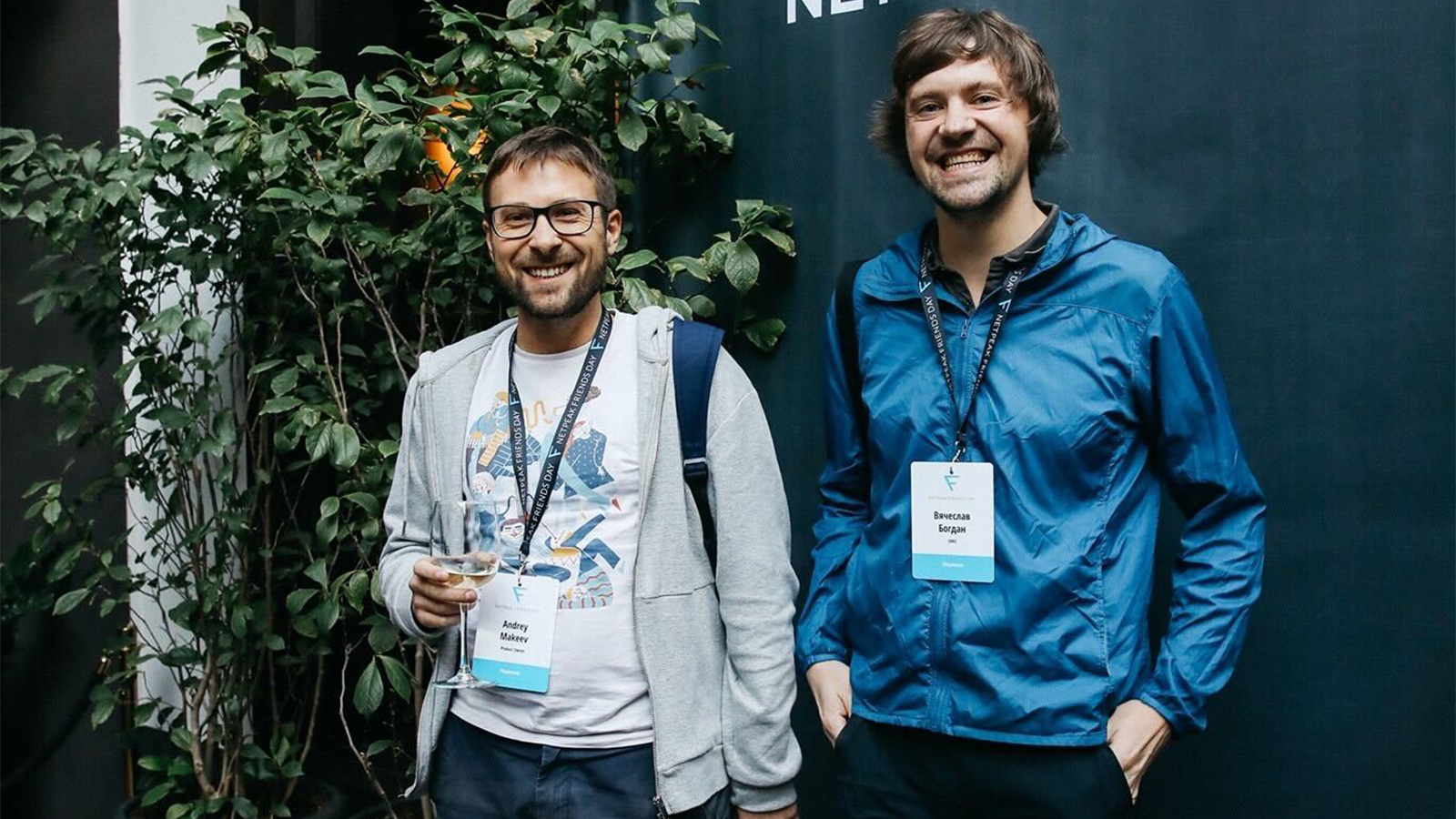
Bogdan was born in Yekaterinburg on June 13, 1987. He studied history at Ural State University, where he met Andrey Makeev, who would become his business partner. Both went into sales at 2GIS. Bogdan later moved into advertising at Yandex. Neither needed to become a historian to put a history education to use; entrepreneurship would provide quite enough arguments about cause and effect.
Working with businesses let him observe owners at close quarters. He found himself considering their decisions and imagining what he might do differently. Employment gave him proximity to entrepreneurship, while leaving the decisions in someone else’s hands. Eventually he wanted the responsibility, and the freedom, himself.
He and Makeev tried Tursale, an aggregator of package holidays. It did not work, and closed in 2013. The idea of gathering scattered offers into one useful service survived the venture. Finding the right category took longer. A travel customer’s reluctance to buy online had proved a formidable thing to argue away.
The birthday problem
Bogdan’s personal explanation for choosing gifts starts with his mother. Trying to arrange a present for her from abroad, he encountered a fragmented process: separate websites, messages, payment arrangements and uncertainty about what would arrive. A gesture that ought to have been pleasant required a small administrative department.
It was a useful frustration because it connected two parties with complementary problems. The customer needed to find and trust a shop in another place. The shop needed orders beyond the people who happened to walk past its window. A shared platform could bring them together, provided it stayed involved long enough for the transaction to work.
In 2014, Bogdan, Makeev and programmer Artem Gambitsky founded Flowwow. Bogdan took marketing; Gambitsky developed the early product; Makeev worked on its logic and recruited shops. The combination mattered. Buying attention, building software and persuading a florist to try something unfamiliar were three different jobs.
There were prototypes early that year. Bogdan counts the company’s life from June, when the three spent a summer accelerator period working together. That is an appealingly practical birthday for a business: the point at which the founders committed themselves to the same project.
- 01A sender, anywhereChooses a gift and pays online
- 02A shop, nearbyPrepares it near the destination
- 03A knock at the doorThe recipient gets the gesture
The thought can cross a border. The final delivery stays local. A simplified view of the marketplace model.
A shop is more than a listing
The early company’s difficulty was familiar to anyone who has made an introduction and then been blamed for the dinner. Bringing buyer and seller together did not guarantee good service. Shops could miss orders, cancel them or run late. Customers remembered the platform through which they had paid.
The fixes included order reminders and, in February 2017, separate mobile apps for customers and merchants. An order became something a seller could receive, confirm and manage within a system. Later, photographs before dispatch gave distant buyers a look at the actual gift. Each feature addressed a fairly ordinary worry. Together they made the promise more credible.
The relationship with merchants also defined Bogdan’s positioning. In 2024, he described inviting established gifting shops onto the platform so they could benefit from its reach. It is a distinction with consequences: the shop supplies its craft and local knowledge; the platform needs to earn its place by making selling easier.
“Rather than competing with gifting shops, we invite them to join our platform.”
Slava Bogdan, 2024
Flowers opened the door to cakes, plants, jewellery, decor and other presents. By the end of 2024, non-flower categories accounted for 20 percent of revenue. The occasion could organise a purchase across several categories. A customer arriving to remember a birthday did not necessarily care which retail department supplied the answer.
Bogdan’s December 2025 description of the seller model was specific: no monthly subscription, with commission charged on completed orders. Shops created their own catalogues and set prices. For an independent seller, the attraction was access to buyers without first having to assemble every part of an online business.
The founder cannot read every thread
As the company grew, Bogdan acquired another problem of distance. A remote team can work in many places, but understanding does not distribute itself automatically. In a public reflection on growth, he described hundreds of Slack conversations and the difficulty of keeping information moving as the team expanded.
He could not know everything happening inside the company. His response included trusting directors to manage their teams, making meetings shorter and using more written updates. The ambition was to preserve a clear direction without requiring the founder to attend every conversation. A calendar full of meetings offers an impressive imitation of control.
His leadership advice also leaves room for error without turning every error into a trial. In a 2024 interview, he argued for directing energy toward fixing what can be fixed, rather than hunting for someone to blame. That view gives employees a way forward after a mistake. It also asks the founder to give up the immediate satisfaction of being furious.
These reflections make the personal story more interesting than a list of markets. The early marketer had to bring people into the business. The executive had to make it possible for them to act without him. Both jobs involved persuasion; the second required a quieter form of it.
A new name, many local customs
April 2026 brought a visible change. Flowwow’s international business became Udora, while the Russian business continued separately as Flowwow. Bogdan described the renaming as a significant decision after more than a decade. He wrote that “this company has shaped me as much as I've shaped it.”
For sellers, the announcement emphasised continuity: accounts, products and reviews would remain. The changes ahead included deeper localisation and new technology. Keeping a shop’s accumulated work intact was a concrete way to begin a corporate reinvention. A name can change overnight. A merchant’s catalogue deserves a little more consideration.
Bogdan, Makeev and Gambitsky build a flower marketplace.
The overseas business adopts a new brand in April; Russia continues separately as Flowwow.
Spain shows what localisation looks like below the level of a slogan. Bogdan described adapting the seller app, improving catalogue content and helping shops through the move online. In a December 2025 interview, he reported operations in 58 Spanish cities and more than 230 partner shops. Those sellers needed something usable in their own working day.
The company’s April rebrand announcement described a reach of more than 50 countries and 1,500 cities. Those numbers describe breadth. Bogdan’s stated priorities included adapting the offer more closely to individual markets. The harder test of expansion sits inside each destination: whether the right products, sellers and purchasing habits fit together.
His public writing has followed the same territory from another direction. He contributes articles on commerce, leadership and technology. On October 20, 2026, he argued that convenience, flexible payments and trust influence UAE shopping decisions alongside price. The argument is consistent with a business in which the buyer may be purchasing confidence as much as an object.
The things that stay with you
There is a less commercial detail in Bogdan’s public account of his life. Visiting Palais de Tokyo in Paris, he watched footage of Into the Hairy, a performance by Sharon Eyal’s company. He was struck by what the dancers communicated through movement and music, and wrote about wanting to see them live in London.
It would be too convenient to make a dance performance explain a career. It does show what caught his attention: an experience whose meaning exceeded its visible ingredients. Six dancers, a stage, an unexpectedly lasting response. His reaction belongs alongside the spreadsheets without needing to become a management lesson.
The company’s October 2026 commentary supplied a related observation about customers. Bogdan said 40 percent of Udora orders in 2025 had been placed without a special occasion. That is a company figure, with a defined year, rather than a claim about everyone’s habits. It suggests why his business keeps looking beyond the formal holiday calendar.
A gift can be a way to resume a conversation, acknowledge someone or make an ordinary Tuesday less ordinary. Bogdan’s stated ambition is to make sending one to a loved one elsewhere as easy as sending a message. After the failed travel venture, the flower orders, the growing team and the new name, the work still comes down to a person trying to reach another person.
Follow the conversation
Writing, interviews and the businesses behind the story.
Bogdan on LinkedIn ↗Udora ↗Flowwow ↗His writing at Entrepreneur ↗His columns at Journal du Net ↗Watch: the Forbes interview (Russian) ▶Read: the tenth-anniversary interview (Russian) ↗Read: bringing small shops online (Spanish) ↗Read: Bogdan on price, trust and convenience ↗