Fifteen minutes is a peculiar thing for an internet business to offer. Enough time to try on a jacket, consider the sleeves, change your mind about the colour. Meanwhile, a courier waits. The transaction has reached the front door, yet the customer still has permission to hesitate. For Lamoda, the fashion retailer Florian Jansen helped establish in 2011, that interval was part of the service.
There is something pleasantly old-fashioned about the arrangement. A business operating through screens makes room for the awkward human business of deciding whether trousers fit. It also creates an expensive question: who organises everything required to make that small courtesy possible? Jansen’s career becomes interesting at precisely that point, where the attractive proposition acquires a warehouse, a budget and a staff rota.
A consultant meets the fitting room
Before Lamoda, Jansen worked at McKinsey & Company from 2006 to 2011. His education crossed three institutions: Witten/Herdecke University in Germany, the London School of Economics and Columbia University in New York. The qualifications included economics and business, followed by public administration. It was an international preparation for a decidedly physical trade.
He joined Niels Tonsen, Dominik Picker and Burkhard Binder in founding Lamoda, backed by Rocket Internet. The four German founders were entering Russia’s online fashion market. Jansen initially served as managing director; he became chief executive in March 2018. Those titles conceal several years spent helping an unfamiliar way of shopping become an ordinary habit.
His responsibilities were unusually revealing. In an account of how the founders divided their work, Tonsen placed Jansen on the operational side: logistics, customer interaction, regional business development, human resources and organisational development. The division was practical rather than absolute; important decisions were made together. Fashion supplied the shop window. Jansen’s work included the machinery behind it.

The courier was part of the product
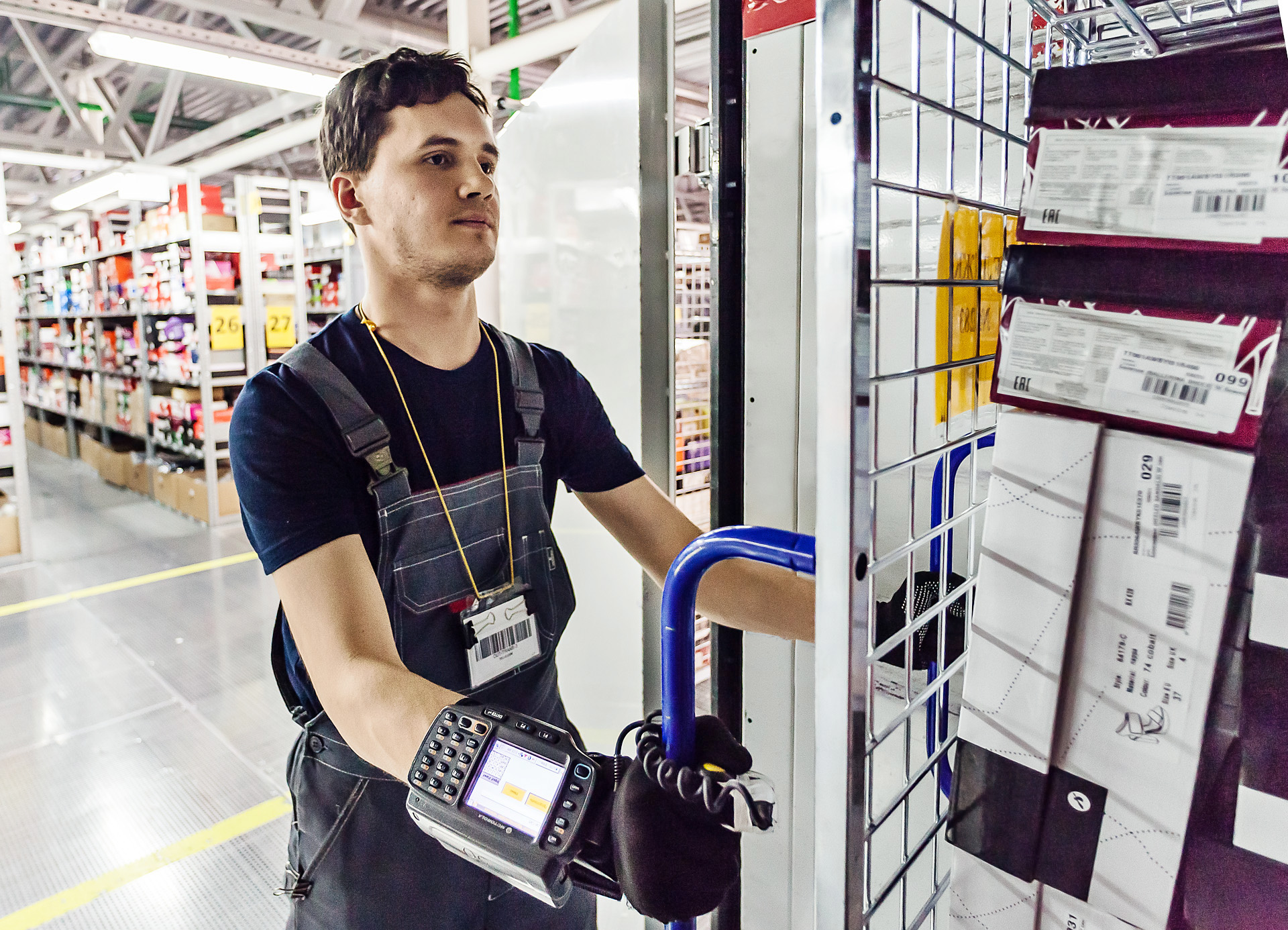
In Russia, Jansen saw an opening for a platform bringing different fashion brands together. Shopping centres often offered individual brand stores. Online, Lamoda could gather choice in one place. Yet a useful selection meant little if a delivery service made the experience unreliable. The company brought logistics in-house, taking responsibility for the encounter at the other end of the order.
By June 2019, Jansen described its own delivery service reaching 600 cities and employing more than 1,500 couriers. Recruitment and training mattered because the courier also represented the company to the shopper. A person carrying a parcel could undo a considerable amount of advertising in a few minutes. Courtesy therefore had to survive contact with recruitment, schedules and training.
The unromantic details were substantial. In an earlier discussion of the business, Jansen described an operation handling purchasing, technology, customer service and logistics itself. He stressed working capital, infrastructure spending and the cost of acquiring customers. Online retail demanded patience from its investors, too. A website was the visible entrance to a business with obligations that continued well beyond the checkout button.
The customer who sends it back
Jansen’s account of returns offers a useful glimpse of his reasoning. In November 2019, he argued that allowing customers to choose at home inevitably produced a high return rate. Russian shoppers, he thought, resembled German shoppers in that respect. They liked to compare things in their own surroundings. The business had to accommodate the consequences of the convenience it advertised.
He framed the objective around the customer’s value over time. Making the service worse might reduce returns while also weakening the reason to shop again. That is an uncomfortable proposition for anyone hoping to celebrate a single tidy number. The customer declining two items may still be behaving exactly as the service invited them to behave.
Physical locations added another way to make the relationship work. Lamoda opened its first offline store in Moscow in March 2019. In an English-language discussion that year, Jansen described more than 200 try-on and collection points. The company also retained inventory-based retail while developing its marketplace, begun in 2015. Partners’ marketplace sales represented 22.2 percent of total sales in the first quarter of 2019. A growing platform still needed places where people could collect, inspect and return actual clothes.
- 01Choose online
- 02Try at home
- 03Keep or return
An investment with familiar faces
Lamoda also became a meeting place for future businesses. In 2016, Jansen and Tonsen discussed backing Foodfox, a restaurant delivery startup. Its founders had previously worked at Lamoda. Jansen pointed out that they had seen operational processes from the inside, including the difference between procedures that looked persuasive and those that worked.
The attraction was recognisable: delivery businesses were taking more responsibility for the customer experience by operating their own logistics. Jansen described an investment preference for consumer businesses and marketplaces in areas where he had relevant experience. Foodfox eventually became part of Yandex’s food delivery business. The connection joined money to a working knowledge of the founders’ craft.
That preference for familiar experience has a human counterpart. Years later, Jansen recalled hiring Nikita Ariarskiy as a young HR manager at Lamoda. Ariarskiy rose to deputy HR director, then left after six years. At first, Jansen said, the departure felt like a loss. Five years later, FJX hired him again, with experience gained elsewhere, including Yandex and work in Germany.
Jansen’s conclusion was generous in a practical way: people will want to grow, sometimes outside the organisation that first employed them. A departure can renew a company’s management and eventually produce a more experienced returning colleague. His anecdote leaves room for professional relationships to outlast the payroll. Even an operations specialist need not insist that every valuable thing remain in the building.
From building a retailer to changing one
In 2019, Jansen joined Magnit’s board as an independent director and subsequently chaired its strategy committee. In May 2020, he left Lamoda for an executive position at the grocery retailer. He became executive director and one of chief executive Jan Dunning’s deputies, responsible for a broad digital transformation programme.
Several former Lamoda colleagues joined the effort. The remit covered technology, analytics, business processes, marketing and services linking online and physical shopping. At Lamoda, Jansen had helped construct a business around internet shopping. Magnit presented the challenge of changing systems inside an established retailer. Experience could travel; the organisation receiving it was a different proposition.
The assignment lasted a little over a year. Magnit announced his resignation in July 2021, effective on July 20, saying he wanted to build his own technology venture. Dunning credited him with assembling a team and advancing the company’s digital initiatives. Jansen expressed the hope that his contribution would provide a foundation for the work that followed. The announcement described a handover, with the relevant functions continuing under a new structure.
A weekend with no obvious off switch
Jansen’s subsequent work has spread across businesses and borders. FJX identifies him as its founder and group chief executive, leading a team of more than 50 professionals supported by outside specialists. Its services span the practical work of helping retail, consumer and technology clients. Antler lists him as a venture partner in MENAP and a board member at noon.
For a livelier account of that working world, consider his description of a September 2024 weekend in Dubai. A catch-up with a bank executive became a discussion involving a fashion client, a colleague from ROOTS Food and a potential supplier. Five people from five national backgrounds found themselves discussing retail in the UAE. The meeting had acquired its own supply chain.
Sunday began with a 7:30 racket-sport match and included a Porsche event, another match, a product meeting and a conversation with retail executives. Jansen admitted losing both matches in three sets. It is a small, useful detail in an otherwise energetic itinerary: the calendar was successful; the scoreboards were less cooperative.
His account treated Dubai as a place where meetings could expand across professional boundaries, including on a weekend. There was pleasure in those encounters as well as commercial possibility. The same person associated with warehouse systems sounded happiest describing people finding unexpected uses for one another’s experience.
The next fitting room
By August 2025, Jansen was discussing a different set of retail tools: AI, demand forecasting, personalisation and virtual try-on. FJX’s activities included support for ventures such as ROOTS and Aiuta. His stated ambition was to connect technology spending to practical outcomes, including replenishment, product availability and conversion. A new vocabulary had arrived around a familiar commercial problem.
“Consumer expectations have shifted from convenience to intelligence and relevance.”Florian Jansen, August 2025
His advice began with business economics and customer difficulties. The appeal of virtual try-on is easy to understand alongside Lamoda’s earlier service: clothing still asks shoppers to imagine a physical result before committing to a purchase. Technology offers another way to help with that decision.
In 2026, Málaga became a visible part of his public work. Jansen appeared in the Costa del Tech documentary about the city’s technology community. In July, he marked progress at FJX’s local technology hub, recalling its beginnings, its first engineers and a move from coworking space into an office. He credited managing director Natalia Fel and the team.
The photograph from his Lamoda years supplies a lighter coda. Jansen sits on an office desk in a checked jacket and conspicuously ripped jeans, with a computer nearby. Corporate polish has made a modest accommodation with personal taste. The clothes are allowed a little disagreement.
Across those changing settings, his work keeps returning to the moment a business must make itself useful to somebody else. A courier waiting at the door. A former employee returning with new experience. A team finding room to grow. Fifteen minutes can seem like an indulgence. Organising a company well enough to offer them is a substantial occupation.
Follow the work
More conversations, current roles and a film from the Costa del Sol.
- FJX · current team
- Antler · venture partner biography
- LinkedIn · Florian Jansen
- Watch · Costa del Tech documentary
- 2016 · Foodfox investment conversation
- 2019 · fashion, couriers and collection points
- 2019 · returns and customer value
- 2021 · Magnit departure announcement
- 2025 · retail technology interview