Fifteen minutes is a generous amount of time for a stranger to wait while you decide whether you like a pair of trousers. At Lamoda, it was part of the proposition. The delivery representative brought the order, the customer tried things on, and the unwanted items went back. Niels Tonsen, the company’s co-founder and then CEO, was selling clothes with a small but consequential concession: people could change their minds before paying.
By September 2013, Lamoda had 1,500 employees. Two-thirds worked in logistics and delivery. That ratio gives the business its proper shape. Behind the photographs and the checkout sat a substantial organization devoted to getting a parcel to the right door. The fashion shop had acquired the working habits of a transport business. A customer’s hesitation about a hemline had become an operational matter.
A business before a business degree
Tonsen had started experimenting with online commerce at sixteen. With a friend, he built something between a local business directory and a marketplace. Shops could advertise products and prices. Customers could also post requests for work and receive offers from nearby tradespeople. A house needing paint could become a small auction for the painters in the neighbourhood.
The idea demanded more money than its young founders could provide. Looking back, Tonsen described their youth and the product’s costs as the difficulty. It was an early encounter with the distance between having an idea and being able to operate it. He nevertheless continued toward business, studying at EBS in Germany and spending time at a university in Santa Barbara, California.
Before Lamoda, he worked with Rocket Internet on ventures including Groupon and Zalando. Online retail was already a practical education. He had seen a business grow in Germany; the next question was where the same opportunity might exist elsewhere.
A wardrobe needs a road
In late 2010, Tonsen went to Moscow to prepare Lamoda’s launch. He had never visited Russia. The company began trading in 2011, founded with Dominik Picker, Florian Jansen and Burkhard Binder, with Rocket Internet’s backing. Shoes were the starting point. Clothing and other categories followed.
Arriving from abroad did not mean arriving before everyone else. Sapato was already pursuing the footwear customer. Lamoda had to compete for attention while building an operation capable of handling the orders that attention might produce. The advertising could bring someone to the website. Much more had to happen before that person would return.
The founders made delivery part of their own work. Lamoda Express began in Moscow in October 2011 and reached Saint Petersburg the following April. Kazakhstan’s online store opened in March 2012. A distribution centre outside Moscow and regional transit warehouses helped turn a central stock of goods into a service that could reach customers farther away.
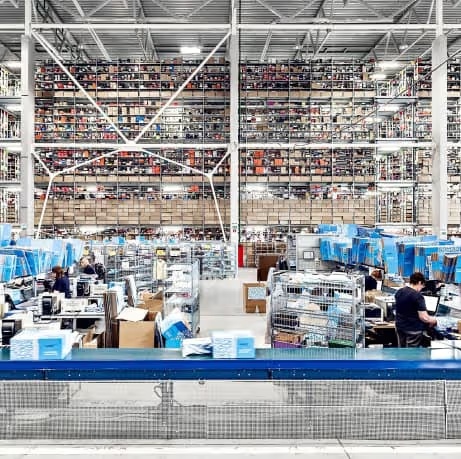
In June 2013, Access Industries, Summit Partners and Tengelmann invested $130 million. Tonsen said the money would support assortment, technology and warehousing. Those are less photogenic purchases than fashion campaigns, but each had a direct relationship with what the customer could order and when it might arrive.
The scale of the financing brought questions about spending and sustainability. Tonsen’s answer stressed customer lifetime value and the economics of individual transactions. He argued that infrastructure investment could improve the experience and eventually lower marketing costs. It was a claim about repeat custom: a satisfied buyer might save the company from having to purchase the same introduction again.
“Our focus is on building a great business, without wasting time thinking about potential exit scenarios.”
Niels Tonsen · 2013
The buying side of the business brought a different experiment. In November 2014, Lamoda opened a London office and launched Lost Ink., a clothing and footwear label. Tonsen described hiring a team with experience at established fashion retailers. Creating a brand meant making decisions about the merchandise itself, alongside decisions about how to distribute it.
He explained the commercial logic through margins and direct relationships with suppliers. Lamoda could retain money otherwise earned by a distributor. The move placed another part of the transaction within the company’s reach, extending its interests from the route to the customer into the product travelling along it.
A photograph cannot tell you everything
Tonsen’s interest in the doorstep was accompanied by close attention to the screen. Asked about product presentation, he described a combination of photographs, video and written information. Close-ups could show texture and details. Images of a model could convey movement. A complicated or expensive item needed more explanation than a straightforward one.
He was considering and testing virtual fitting solutions, but continued to favour a real fitting before purchase. The reason is familiar to anyone who has owned two apparently identical sizes that behaved like distant acquaintances. Manufacturers differ. Feet differ. People have their own ideas about how clothes should sit.
In 2013, the offer also included free shipping and a 365-day return policy. Tonsen said returns were accounted for in the model. Clothing margins could support a service that would be difficult to justify for cheaper categories, provided the operation handled the movement of goods efficiently.
Lamoda worked on standardizing size scales and making recommendations from purchase histories. Yet the customer could still put on the garment and decide. Technology reduced uncertainty; the visit completed the experiment. Keeping both parts required accepting that some carefully transported goods would make the return journey.
- 01 Choose online
- 02 Receive & try
- 03 Keep what fits
- 04 Hand back the rest
A historical Lamoda service model. The customer’s decision stays at the centre.
The people who carried the promise
There were four founders, and Tonsen was careful about dividing up the credit. In 2016, he said most decisions were ultimately made together. His own emphasis covered sales, marketing, buying, finance and legal matters. Jansen concentrated more on internal operations, including logistics and customer interaction. The delivery story belonged to a team with different responsibilities.
The relationships extended beyond Lamoda. Tonsen and Jansen invested in Foodfox, a restaurant-delivery business whose founders had worked at their company. Tonsen approached it first as a customer: existing services were not offering the combination of food and service he wanted. As an investor, he liked the business model and its logistics.
Foodfox controlled its own delivery operation. That was familiar territory. Experience accumulated inside one company could travel with people into another, and former colleagues could become backers. Yandex.Taxi acquired Foodfox in 2017. The episode connects Tonsen’s operating career with his investing, through a problem he could recognize from both sides of the transaction.
The numbers underneath the clothes
By December 2016, Tonsen was describing a business in which software reached into almost every movement of an order. A development centre in Lithuania, opened in 2013, worked alongside the Moscow team. The company’s warehouse platform tracked individual items and helped register returns. Supplier information needed to pass between systems without trapping staff in manual paperwork.
Integration had its limits. A supplier might categorize products differently, and adapting a functioning system cost money and introduced risk. Tonsen described weighing those costs against the economic benefit. The decision depended on the work saved, rather than the mere availability of another connection.
Lamoda also launched its marketplace in 2016. More sellers meant more relationships and more information to coordinate. The business had moved a considerable distance from its initial footwear proposition. The work inside it was becoming a subject in its own right.
The reader behind the retailer
For all that attention to process, Tonsen’s account of what he enjoyed was social. Asked what made him proud, he pointed to the team he had assembled. In another conversation, he described the pleasure of working toward a shared goal and getting quick feedback when an idea was put into practice. An error could be corrected; the result could be seen.
His reading interests wandered farther than the office. He recommended history books as a way to understand the world beyond one’s own occupation. In Moscow, films became another sort of study. He said he watched them in Russian to improve the language, naming Hardcore as a recent example. An action film is certainly one way to discourage a language lesson from becoming leisurely.
The move had contained a sense of adventure as well as a commercial opportunity. That personal note matters: the market was something he had assessed, but the country was somewhere he still had to learn to live.
The order has moved to the inbox
Tonsen left Lamoda effective March 1, 2018, alongside Picker. Jansen took over as CEO, with Binder continuing in leadership. After seven years, the founding group’s daily work together had changed. The next venture would eventually bring Tonsen and Picker into the same company again.
Today, Tonsen is based in Berlin and is co-founder and CEO of turian. The company lists 2022 as its founding year. Picker is co-founder and CTO; fellow founder Tilmann Roth leads revenue. Their work concerns AI assistants for sales and supply-chain administration. The founders connect that focus to the repetitive tasks they saw consuming their teams’ time during their ecommerce years.
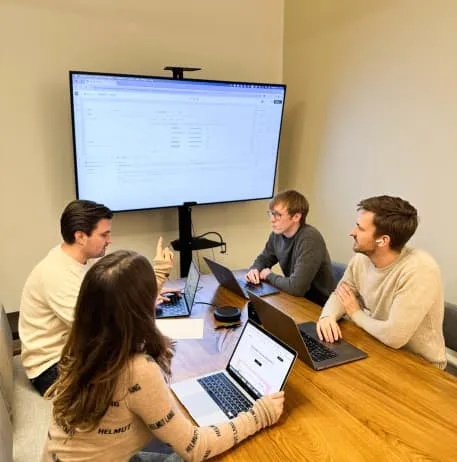
In an October 2025 article, Tonsen described conversations with midsized companies still handling orders through email and spreadsheets. He advocated systems that connect an order’s journey, then automation for the gaps that remain: reading attachments, matching information, updating business software and preparing replies. People would supervise the agents and handle the cases that needed judgment.
The connection to Lamoda is visible in the questions he keeps asking. Where does a request get stuck? Who has to re-enter it? What must happen before the customer receives what was promised? The setting has shifted from fitting a shoe to processing a document. The work still begins after someone places an order.