Christmas arrived on the same date every year. Yet Simon Ward kept seeing urgent print work turn up two days beforehand. An entirely foreseeable event had become a surprise.
Ward described that frustration in 2011, two years after founding Inspired Thinking Group. “It’s not as if Christmas changes date every year.” The calendar was innocent. The process deserved questioning.
That is a useful place to begin with Ward. His career runs through printing, retail services, marketing software, acquisitions and boardrooms. The recurring interest is in the work between the work: instructions, approvals, handovers and all the small administrative obligations that can turn an appealing idea into an expensive scramble.
A printer learns to sell something else
Before ITG there was Greystone, which designed printed advertising and commercial materials. Ward then joined SP Digital in 1999, spotting an opening in digital production. Smaller runs and designs adapted to individual locations gave retailers choices that were harder to justify with conventional printing economics.
He took charge of SP Group in 2000. The shift he described was commercial as much as technical: a printer could compete for the next order, or it could help a retailer think about what belonged in a shop. The second conversation gave him a different place at the table. Understanding the customer's job became part of his own.
SP Group was sold to St Ives in 2004. Ward stayed with the larger business until 2009, when he founded ITG. Some of the proceeds from the earlier sale went into commissioning software for retailers to store, share and track marketing material. He had moved from producing the physical object towards organising how the object came to exist.
Why does a predictable job become an emergency?
A process problem, observed from the printing end of the supply chain.The software had to survive the marketing department
At ITG's Fort Dunlop offices in Birmingham, artwork production and technology sat within the same enterprise. His ambition required familiarity with production's awkward realities, and the ability to build a system that could do something about them.
The acquisition of Total Marketing Services brought its Media Centre platform into ITG. The software offered a basis for a different approach. Usability mattered. A system could impose a beautiful order on paper and still fail if the people expected to use it found it baffling.
The proposition placed software beside services. That combination helps explain the distance between Ward's printing background and the business he eventually built. The practical problems were connected. Marketing material needed to be organised, produced and delivered; improving one step without considering the others could leave the next person with the same Christmas problem.
and approvals
and software
and channels
Growth required more people to take the reins
The financial backing arrived in stages. In 2010, Isis Equity Partners invested £3.2 million as ITG acquired Total Marketing Services. Bridgepoint Development Capital followed in 2014. By then, ITG had reported £43.2 million in sales for the year to August 2013, up 32 per cent on the previous year.
Growing a service business also meant changing Ward's working day. In March 2015, Chris Heath and Lisa Elrod became joint managing directors for customer service, taking responsibility for customer relations and commercial transactions. Their appointments freed him to concentrate on expansion, acquisitions and the developing American operation.
Ward has written about how difficult delegation can feel for a chief executive who cares about every department, person and client. His examples extended to the weight of the paper and the position of a picture in reception. It is a recognisable founder's predicament: there is always another detail available to inspect, including some that another person could inspect perfectly well.
The appointments gave that problem an organisational answer. Keeping customer relationships close did not require every one of them to pass through the founder. Ward's comment at the time stressed listening and adapting to clients. Delegation was intended to preserve that attention as the company grew.
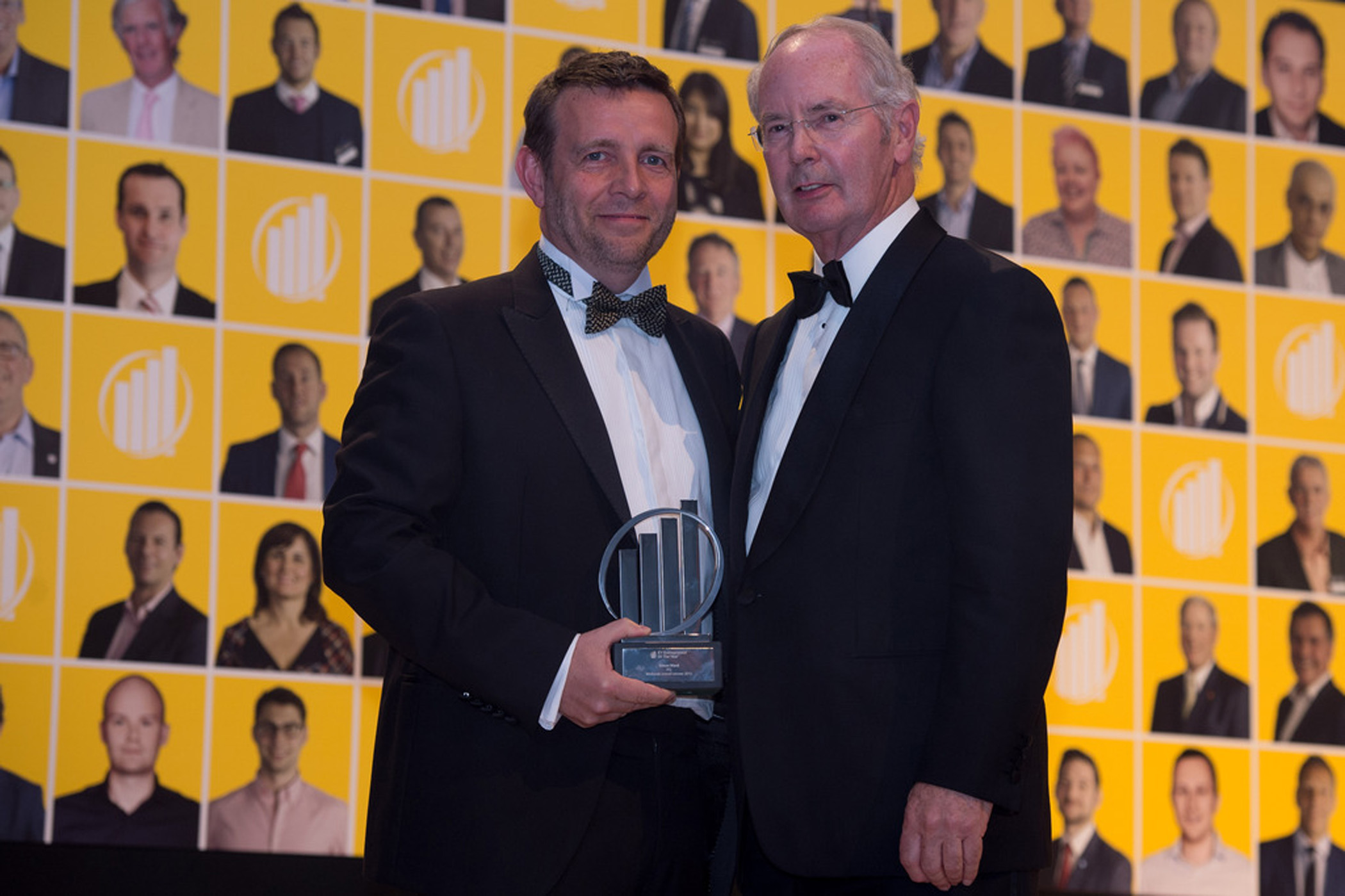
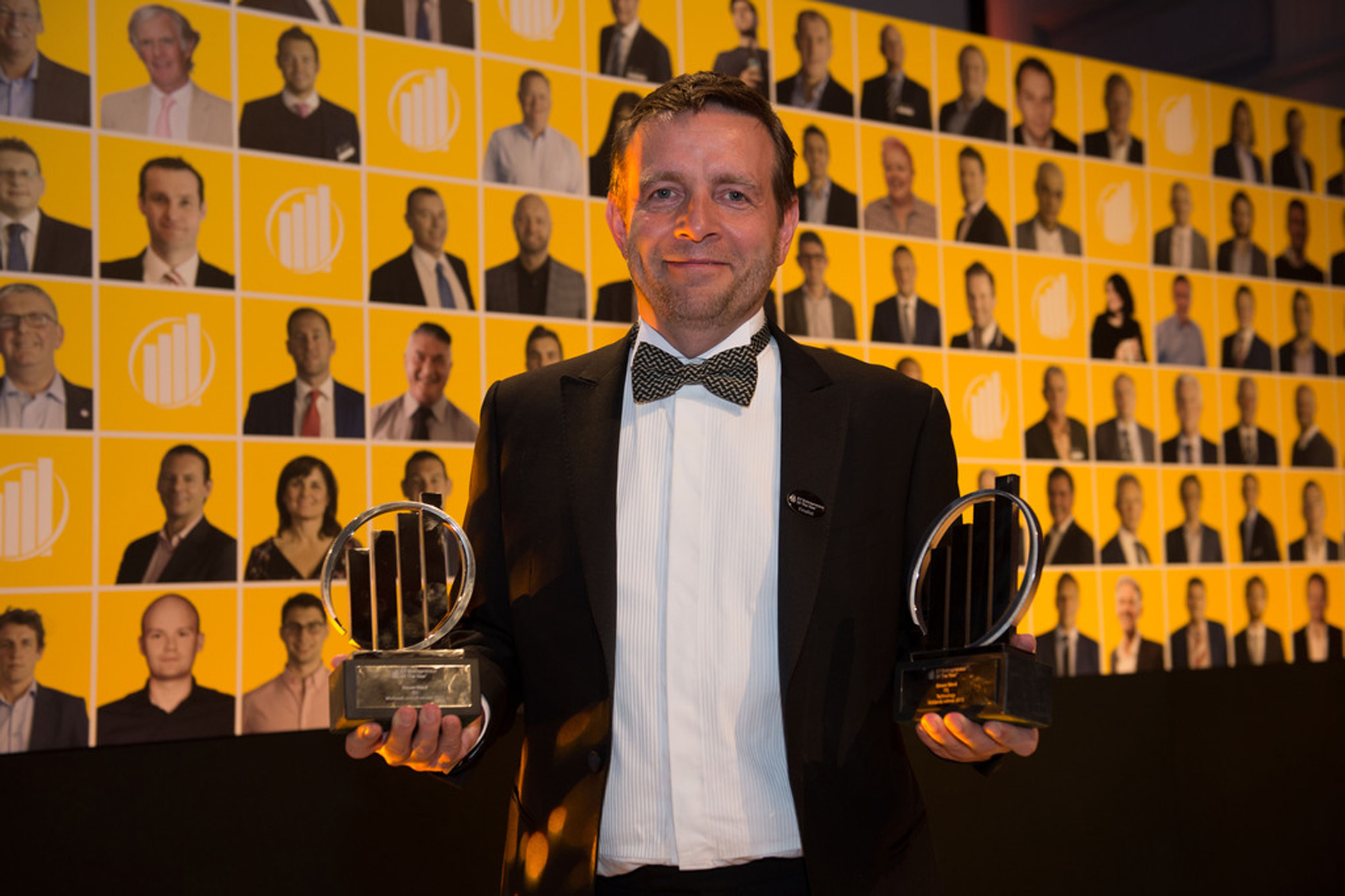
That June, Ward won EY's Midlands Region Entrepreneur of the Year and its regional Technology award. ITG then employed more than 350 people. The Media Centre platform was being used by brands including M&S, Heineken and PUMA. It was an unusually public moment for an idea concerned with making less visible work run better.
Capital followed the same argument overseas
Equistone bought the private equity stake in ITG in 2017. The announced plans included a further push into the United States and expansion in Europe. Ward framed the opportunity around automation, customer communications informed by data, and the migration from print to digital. The vocabulary had evolved; his interest in removing production friction remained familiar.
In March 2022, Bridgepoint acquired a majority stake from Equistone, which reinvested as a minority shareholder. ITG had more than 1,000 employees across the UK, Europe and America. The investment was directed towards international development, with particular attention to the US. Software and creative services were still presented together.
Bridgepoint's announcement described CanopyCloud alongside a round-the-clock creative production studio. A brand could need a technology platform and people who understood its particular demands. Building both within the same group gave Ward a way to address those needs together, rather than leaving the customer to assemble the working relationship.
June 2015
March 2022
By September 2023, ITG was describing a group with more than 1,300 staff and technology platforms including Storyteq, Deployteq and Configteq. Darren Singer joined as chief financial officer after roles across media businesses. Ward highlighted education and innovation when welcoming him, returning to the question of the people joining the organisation as well as the size of it.
The founder who worries about culture
Ward's own account gives culture a central place. He wants people to have room to question assumptions, try ideas and fail. He describes the legacy he hopes to leave as “collaborative, family-style cultures”. That ambition concerns what happens inside a business after the founder has finished explaining its strategy.
“collaborative, family-style cultures”
Simon Ward’s stated ambition for his legacy
His ITG vision makes the scaling problem explicit: treating ten people as family is relatively straightforward; doing so with more than a thousand requires deliberate work. The claim also places a demand on leadership. Warm language becomes meaningful through how people are allowed to contribute, and whether an organisation can keep listening as it adds layers.
His public conversations range beyond production software. He has discussed counter-intuitive thinking with Rory Sutherland and business finance and culture with René Carayol. The subjects fit his practical preoccupations: finding a different question, assembling the resources to pursue it, and creating a team willing to give an unfamiliar answer.
Handing over the daily job
In May 2024, Andrew Swinand succeeded Ward as group chief executive. Swinand brought experience leading Leo Burnett and Publicis Groupe Creative. Ward moved into a founder role, advising the new CEO and acting as an ambassador. Fifteen years after ITG began, responsibility for the daily business had changed hands.
Ward's explanation emphasised finding a successor who shared the company's vision and fitted its culture. He also argued that marketing needed to modernise its ways of working. The handover left him associated with the company he had founded while creating space for another executive to lead its next period.
His investment interests continued along familiar lines. In July 2024, he was named among the angel investors in Edit Cloud's £2 million funding round, led by Edge. The company, founded by Simon Green, was developing cloud-based collaboration for post-production. Different equipment, similar questions about how creative people work together.
Another chair, another production problem
In January 2025, Kester announced Ward as chairman of The Boundary. The business combines artists and software developers to create digital twins, visualisations and marketing software for real estate. Its offices spanned the UK, US and New Zealand. Ward's experience connecting creative output with technology had found another setting.
Kester also identified him as chairman of Jungle Creations and Visualsoft. At Visualsoft, he had publicly supported the move to offer Shopify services in 2024. When Chris Fletcher became CEO in January 2025, Ward spoke about innovation, team development and client success. The boardroom work remained close to commerce and creative technology.
The same skills, a different return
Ward also lends business experience to organisations with social aims. In March 2024, Birmingham's JERICHO announced work with him on strategy, reach and engagement. Its enterprises provide employment opportunities in activities including construction, cleaning and cookery. His contribution concerned helping the organisation extend what it could do.
That month, Peace One Day appointed him Senior Counsel to provide strategic and marketing advice. Founder Jeremy Gilley described a relationship stretching back years. Ward's public speaking page also offers free advice and coaching to young entrepreneurs. These commitments give his experience an application beyond the companies in his investment portfolio.
The Christmas observation remains a good introduction to his thinking because it is so ordinary. A late job, a familiar deadline, a system nobody has quite joined together. Ward saw something worth building around. Across printing, software and his later chairmanships, he has kept returning to the people and processes responsible for getting the work out of the door.