The big advertising idea has been approved. Now somebody has to make it fit a phone screen, change the price, translate the copy and send the right version to the right place. Repeat until the coffee runs out. Inspired Thinking Group has built a substantial business around this less celebrated part of marketing: the work that happens after everybody likes the idea.
ITG brings together production teams, studios and its own marketing software. Its customers include retailers and international brands with a familiar headache: every additional channel and market creates more things to make, check and deliver. The company’s proposition is practical. Give those teams a shared production system, automate the repeatable tasks and keep people close enough to catch what software misses.
The expensive part comes after the idea
Consider Heineken. In Storyteq’s account of the relationship, decentralized manual production meant delays, inconsistent branding and too little room for local personalization. The brewer adopted approved templates and shared brand guidance so markets could make variations themselves. Storyteq reports 40,000 localized assets generated from templates and a 40% reduction in production costs.
Lower production costs in Storyteq’s Heineken case study.
Indexed illustration. Supplier-reported customer result.That is a production measure, not a claim that beer sales rose by the same amount. The distinction matters. ITG is selling relief from the cost of getting marketing out the door. A more efficient workflow can earn its keep even before anyone makes a grand argument about the next creative revolution.
For a marketing director, the appeal is easy to picture. A local team needs an approved offer this afternoon. Sending another request back to a central studio introduces a queue. Giving that team a template changes who can do the work, while setting boundaries around what can change. The expensive creative judgment can stay with the people responsible for it.

A printer’s eye for wasted effort
Founder Simon Ward came to this problem through print and digital imaging. A 2012 MoneyWeek profile described how he used proceeds from the sale of SP Group to commission software that let retailers store, share and track marketing materials. He also bought another business to broaden ITG’s offering. The company had started in 2009.
“It’s all about efficiency.”
Simon Ward, speaking to MoneyWeek in 2012
That early explanation is refreshingly durable. The language around the company now includes AI, automation and content platforms, but its commercial interest in wasted effort predates the current AI boom. Ward had seen how changing the production method could change the business. Software gave him a way to apply that thinking to the movement of marketing work itself.
By 2016, an ITG announcement described a business that had grown from seven employees to more than 540. Its Birmingham artworking operation had produced more than half a million print and digital assets in the preceding year. Repetition was already a large business. Today, Bridgepoint’s portfolio profile puts the group above 2,000 employees worldwide.
One campaign, many moving parts
ITG calls its approach “Halo” content. The hero is the central creative idea; the halo is the collection of channel-specific pieces that makes the idea useful. That vocabulary draws a line around the problem the group wants to own. A campaign needs a coherent identity while accommodating different formats, places and occasions.
- 01 / CaptureFilm, photograph and build the original material.
- 02 / CreateShape the content for the brand and channel.
- 03 / AutomateAdapt assets and organize repeatable work.
- 04 / IntegrateConnect the systems used to deliver it.
There is physical infrastructure behind the terminology. Capture Studios offers virtual production, extended reality, automated photography and film, bespoke sets, and development and lifestyle kitchens. The kitchen is a useful detail: marketing technology still has to deal with products that need lighting, styling and an appetizing angle. Someone has to make the food look right.
Storyteq supplies the software layer. Its current product lineup includes Content Portal for managing content, Adaptation Studio for making variations, and Collaboration Hub for briefs, reviews and approvals. ITG also lists Deployteq among its marketing technologies. Together with its services, the group covers much of the distance between a creative brief and a campaign arriving in front of a customer.
The organizational arrangement can vary. John Lewis Partnership announced a dedicated content production operation with ITG in 2024, with 140 employees set to move into the new unit. ITG also supports in-house teams at Matalan. Bringing production closer to a brand can still involve an outside partner supplying technology, expertise and capacity.
The people still have to make it
KFC’s rebrand rollout offers a useful corrective to the idea that everything happens at the push of a button. ITG says it coordinated a new visual identity across more than 1,000 restaurants in the UK and Ireland in six weeks. The work covered digital material, print, imagery and packaging.
To meet that schedule, ITG operated a studio team around the clock for four weeks. Three additional specialist project managers joined the account team, alongside packaging and retouching specialists. The lesson is visible in the staffing: production speed came from coordination, expertise and people working shifts as well as from the systems supporting them.
That makes culture relevant to the product. A company promising rapid delivery depends on the people doing the delivering. ITG describes more than 50 trained Wellbeing Champions, paid wellbeing days and employee groups covering interests and experiences including working parents, neurodiversity and women in technology. These are specific commitments behind its preferred phrase, a “culture of kindness.”
A software licence with a production crew
The commercial model combines marketing services with software licensing. Storyteq publishes a one-off implementation charge and an annual recurring licence, using broad user tiers. Its Enterprise and Professional packages are priced on application. A buying decision therefore begins with the work, workflows and access requirements the customer wants to support.
A sensible cost comparison includes the effort of implementation as well as the licence. Templates need designing. Assets need organizing. Staff need to learn the process. These are buyer considerations, not an estimate of an ITG invoice. The relevant question is whether the recurring volume of work can justify the setup and continuing expense.
ITG occupies an overlap in the market. Hogarth offers global production, localization and technology capabilities; Adobe GenStudio connects content planning, creation, asset management and measurement. Those are plausible alternatives for different parts of a brief. ITG’s particular combination is its own software alongside teams that can run production and work with the customer’s existing operation.
Owning that combination creates a proposition a buyer can test: can the people designing the process also help deliver the work? It also creates responsibility. A purchaser should establish who maintains the templates, who approves local changes and who fixes an integration when a deadline is approaching. The contract has to describe the daily operation as clearly as the demo does.
Buying reach, then connecting the pipes
Private equity has helped shape ITG’s expansion. Bridgepoint records an initial investment in 2014, a sale to Equistone in 2017 and a return through a majority acquisition in 2022. In February 2025, ITG acquired PureRed, adding US relationships including Microsoft, Kroger and Walgreens. This was an expansion through an established American business.
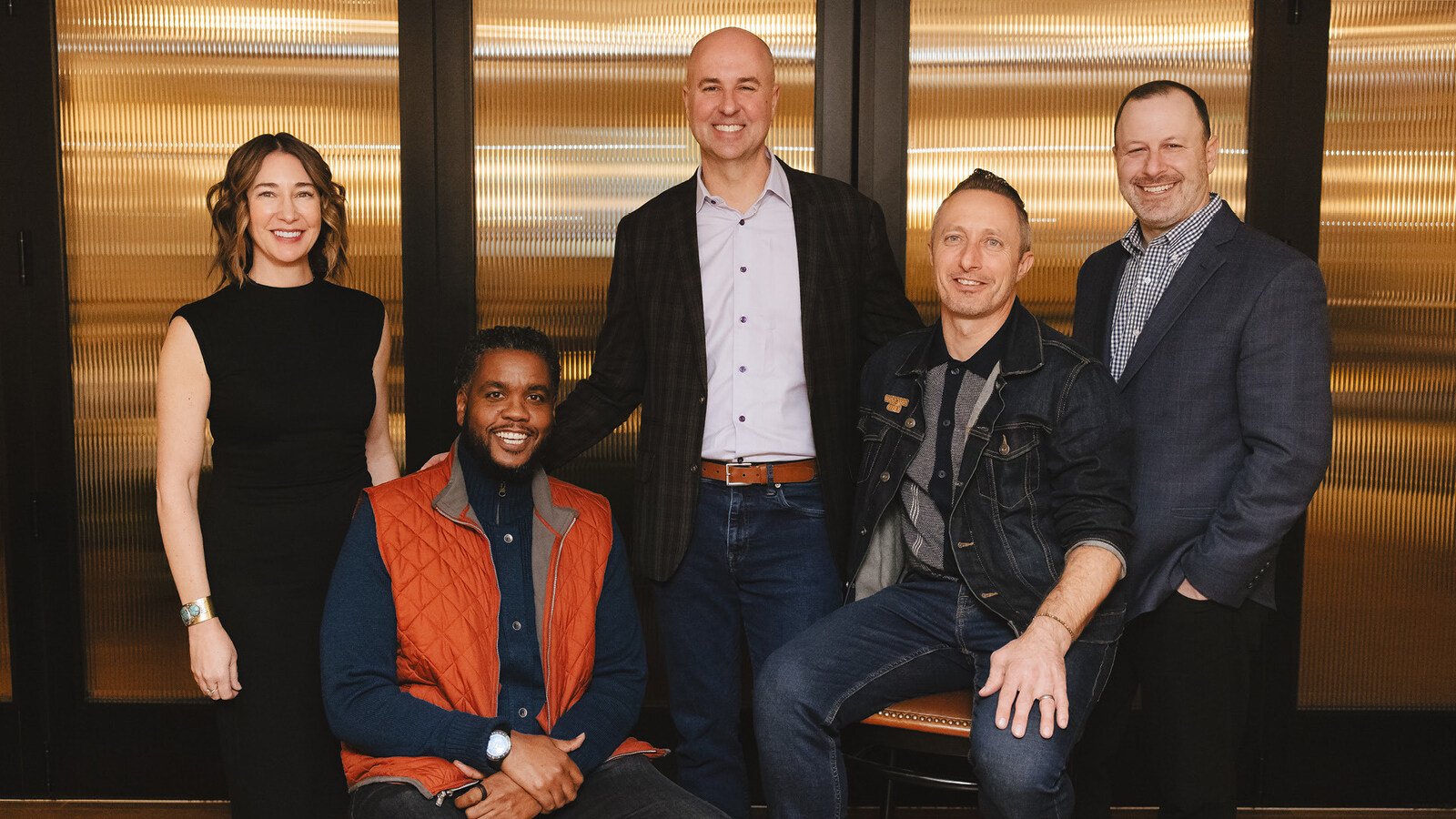
Andrew Swinand, previously CEO of Leo Burnett and Publicis Creative in the US, became ITG’s group chief executive in 2024. Ward moved into a founder role and adviser position. The leadership change put an executive with large-agency experience in charge of a group trying to sell brands a different way of organizing production.
The partnerships address specific gaps. Comcast Technology Solutions announced a 2024 integration connecting Storyteq’s creative versioning with AdFusion’s advertising management and delivery. Finally!, a VFX and post-production studio, partnered with ITG in 2025. One relationship helps assets reach their destinations; the other brings additional craft to the material being adapted.
In January 2026, Storyteq announced an Adobe Firefly Services integration. Its July release added features including AI video reframing and spreadsheet-driven bulk print adaptations. Storyteq also reported a fourth consecutive Leader placement in Gartner’s 2026 Content Marketing Platforms Magic Quadrant. The practical changes deserve attention alongside the analyst recognition: cropping video and generating print variants are recognizable jobs with recognizable time costs.
Start with the work you can count
Tractor Supply provides a recent example of a focused starting point. ITG’s April 2026 account says the retailer began working with it in late 2025, facing limits on marketing capacity. ITG supplied Storyteq and help with templates and customization. The reported result was a 32% reduction in email-marketing costs.
ITG’s account stresses that Tractor Supply already understood what was working and used that knowledge to choose an initial test case. That suggests a method readers can copy: select one recurring campaign type, record its current cost and approval time, and test whether a shared process improves both. Count usable, approved outputs rather than celebrating a folder full of newly generated files.
The economics also suggest where to be cautious. A team making a few highly bespoke pieces may have little repetitive work to recover its setup costs from. Inaccurate product data, unclear approval rights or constant changes to the underlying concept will still need human attention. Automation makes agreed rules easier to repeat; someone must first decide whether those rules are any good.
ITG’s interesting wager is that brands will pay to make that everyday work more dependable. The big idea gets the applause. Getting its hundreds of descendants out correctly, on time and within budget is a business of its own.