Imagine a supermarket offer: a product, a photograph, a price. It looks like a small piece of advertising. Then someone asks for the website version. And the store sign. And the regional variation. A new pack arrives. The photograph changes. The offer has acquired a social life, and nobody wants to be the person who introduces it with the wrong name.
This is an illustrative scene, but the underlying problem is PureRed’s territory. The Atlanta-rooted company has spent decades creating and managing marketing content for retailers and other large brands. Its interesting subject is what happens between having an idea and getting that idea, correctly, into all the places where somebody might buy something.
- The work: creative, photography, promotional content and the technology that keeps production moving.
- The buyers: enterprise brands and retailers; Microsoft, Kroger and Walgreens were named in the 2025 acquisition announcement.
- The turn: ITG acquired PureRed in February 2025. The former PureRed website now leads to ITG.
- The useful lesson: inspect the handoffs before buying more tools.
The offer has more lives than a cat
PureRed occupies an awkwardly useful position in marketing. It makes things, and it organizes the making of things. A brand might need a campaign concept, product photography, animation, a digital experience or a great deal of promotional material. PureRed’s proposition combines that work with systems for handling assets and offers.
The distinction matters because a retailer’s production problem repeats. A beautiful campaign can earn applause once; an operating process must survive the next promotion and the one after that. Customers are paying for creative judgment, certainly, but also for a way to make recurring work manageable.
PR1, PureRed’s proprietary promotional platform, put the offer at the center of that process. The company marketed it as a promotion and pricing hub supporting personalized content. Its broader pitch was to plan, create and deliver promotional offers across channels. Think of the offer as a record with a life beyond any individual advertisement.
In a published interview, then-CFO Donny Bradshaw described digital weekly ads that could be shoppable and personalized rather than static PDFs. He also described modules, real-time offer updates and a shared information record. Those are product claims, but they reveal the intended design: change the underlying promotion without treating every output as a fresh invention.
Product · image · price · dates
An editorial schematic of the operating idea, not a PR1 interface.
PureShot appears in PureRed’s public specialties as a studio workflow manager. Asset management, strategy, branding, research, data analytics and conventional advertising sit alongside it. This is a business with both camera equipment and software conversations. Either half alone would tell an incomplete story.
A photograph can be beautiful and wrong
The most revealing account of PureRed’s operations concerns a failure of connection. CI HUB’s customer story describes people downloading assets from a digital asset management system and manually inserting them into working applications. During a long catalog or brochure project, packaging could change while an older image remained in use.
The first thing to fail in this documented example was version tracking. A file had left its managed home, and a later update became harder to catch. The risk was an incorrect graphic reaching publication. This was a workflow weakness, not evidence that the company itself was failing.
PureRed initially considered building an internal connector. It chose CI HUB instead to obtain the benefit sooner and avoid development delay. The adopted connector links working applications with asset and product-information systems. CI HUB reports improved access to current assets and smoother workflows.
There is a wonderfully ordinary lesson here. Before asking a team to create more, watch how it retrieves what already exists. Count the downloads, uploads and checks. A fashionable tool can wait while somebody locates the approved photograph.
The company that moved next door
PureRed’s origins date to 1967. A 2011 account of its Pleasanton operation offers a glimpse of the older business: the creative unit sat alongside technical work in pre-media, printing and asset management. The group was already storing product photographs and copy so they could be reused for print, signage and the internet.
That year, PureRed Creative moved into a 25,000-square-foot office with an expanded photography studio. The move placed it closer to Safeway, then described as its largest client. The relationship, the company said, had begun in 1995. Customer proximity was quite literal.
“We usually open offices in the backyard of our clients.”
Gina Ellis · 2011 Hacienda interview
The old website featured a bright red biplane. It was a rather jaunty mascot for a company whose work included the sober business of finding the right product image. Yet the combination makes sense. Creative ambition and production discipline have been neighbors here for a long time.
The customer list broadened with the offering. PureRed’s 2023 announcements named Kroger, Rite Aid, New Jersey Lottery and Sanofi. The merger with Haddad & Partners brought a creative agency whose roster included Charter, Microsoft and TD Bank. Keeping those rosters distinct explains more than throwing every logo into a single triumphant collage.
PureRed said it worked with 14 of the largest 25 US retailers in its May 2023 announcement. A dated company claim, not a live customer counter.
Buying time, twice
Brian Cohen became CEO in October 2022, following Amy Reach, who remained president. PureRed said his remit included developing PR1, attracting further investment and expanding the consumer advertising and marketing business. There was already a technology product; management wanted a broader company around it.
In March 2023, PureRed and Haddad & Partners announced their merger. They initially retained separate brand identities and client rosters, with a centralized profit-and-loss structure. The stated additions included design, copy, content, animation, digital delivery and analytics. The announcement put the combined network above 600 employees.
Two months later, PureRed appointed its first chief product officer, Umesh Sripad, to oversee PR1 and product innovation. His background included digital leadership at IKEA USA and Bed Bath & Beyond. Creating the role was a concrete expression of the company’s interest in products as well as production.
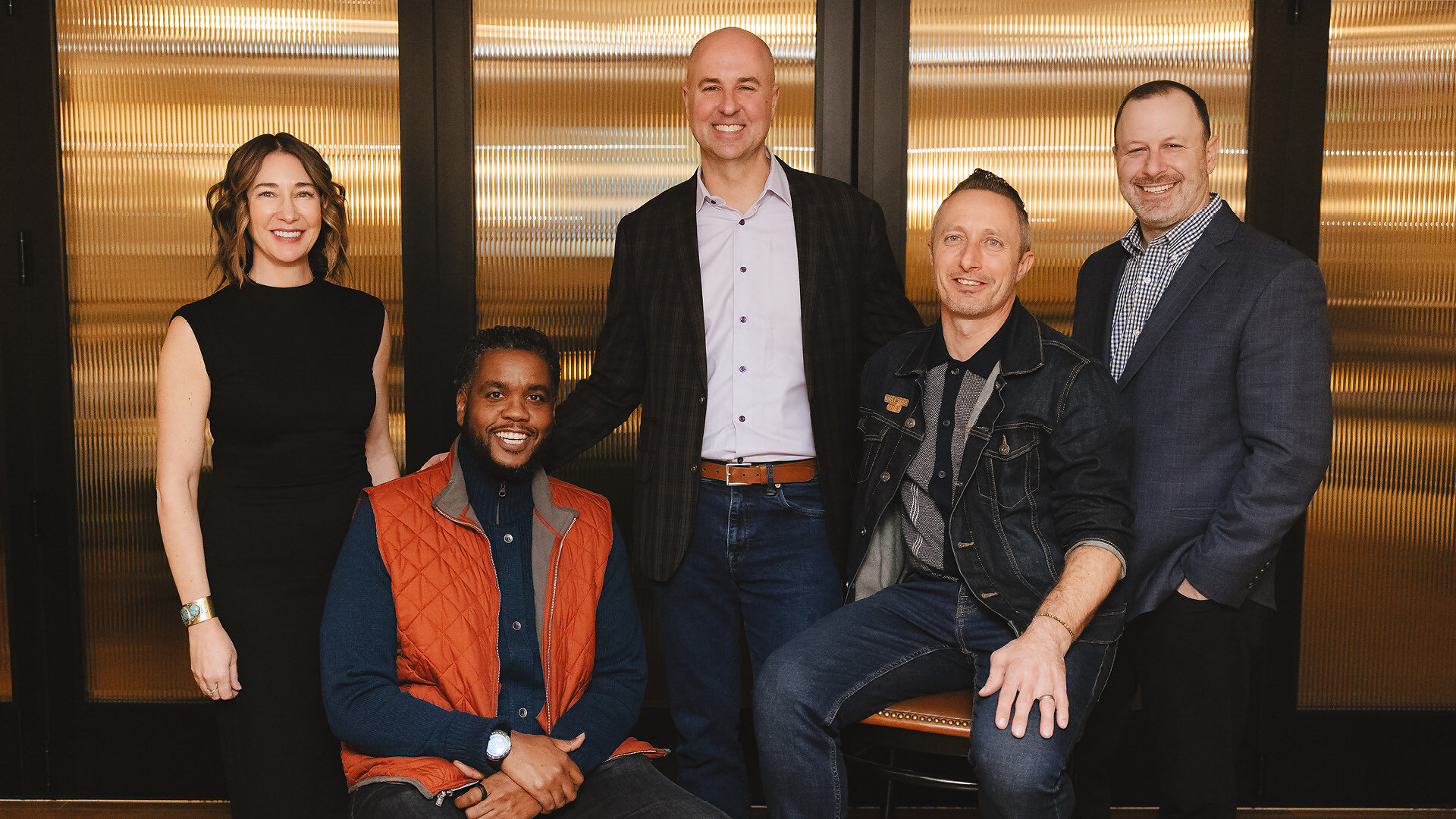
Then came the larger transaction. On February 18, 2025, Birmingham-based Inspired Thinking Group announced it had acquired PureRed. ITG, a Bridgepoint portfolio company, said the acquisition added more than 500 marketing professionals and took its global team above 2,000. Cohen became ITG’s US CEO.
In an LBB interview about the deal, Cohen explained that PureRed had been planning a transformation over three to five years, including technology in a direction similar to ITG’s Storyteq. ITG already had a more developed version of the capabilities he wanted. Joining offered a shorter route.
That echoes the connector decision, although at a very different scale. In both accounts, the company confronted the time required to build something and found a way to obtain capabilities sooner. That is an editorial reading of the two decisions, rather than a claim that management used one formal rule for both.
ITG organizes its proposition around Capture, Create, Automate and Integrate: production, channel-specific creative work, technology and connected systems. Storyteq belongs to that wider group. It should not be casually renamed PR1; the two have different histories.
Who should pay for the machinery
PureRed’s business model joins enterprise services with marketing technology. The buyer is purchasing work and the means of organizing that work. The practical comparison includes integrated providers such as Quad, SGK and Monks, as well as an internal team assembling separate creative, asset-management and promotional tools. That is a comparison of operating choices, not a ranking of results.
For a potential customer, the cost question should begin with scope. How much content repeats? How many channels require it? Which systems hold product facts? Who approves changes? Photography, creative development and integration demand different kinds of effort. A software demonstration alone cannot describe the entire engagement.
The lesson a reader can copy is modest: follow one offer from planning to publication, locate the authoritative record, and mark every manual handoff. Then compare the effort of connecting existing tools with the time required to build something new. PureRed’s history gives that exercise a concrete starting point.
The approach is most persuasive when recurring volume and coordination consume real staff time. For a small team publishing a few simple campaigns, extensive integration may create more work than it removes. Reliable product data and clear approval ownership are prerequisites. Those are practical inferences from the workflow, not promises about any particular customer’s return.
A supermarket offer asks for very little attention from its audience. The business behind it asks for quite a lot. PureRed made that imbalance its specialty: the shopper gets a simple message because somebody else has taken responsibility for the complications.