Consider the can in your cupboard. Its label has a personality. The metal underneath has a specification. Somewhere, someone had to make that container, deliver it to a filling line and help ensure that dinner would remain dinner months later. Silgan Holdings lives in that less visible part of the transaction. The interesting thing about the company is how much business can accumulate around objects people notice chiefly when they fail.
- Silgan sells cans, dispensing systems, closures and custom containers to consumer brands.
- Its repeat business rests on technical performance, factory locations and long-term supply arrangements.
- A proposed Trivium partnership would reshape its metal business. Closing is expected in mid-2027.
The geography of an empty can
R. Philip Silver and D. Greg Horrigan founded Silgan in 1987. Their opening moves included buying Nestlé’s metal container operations and Monsanto’s plastic container business. They began with industrial assets and customers who already needed packaging. Nearly four decades later, Silgan reported about $6.5 billion in annual sales.
An empty can contains a surprising expense: the cost of moving all that space. Silgan says its metal-container business generally sells within a 300-mile radius of its plants because transportation is expensive. A network of appropriately placed factories therefore has value beyond its machinery. It puts production within useful reach of a customer’s filling line.
Location is part of the product.
Relationships provide the second piece. Silgan expects approximately 90% of its 2026 metal-container sales to come through multi-year supply arrangements. Nestlé’s North American metal food container agreements run through 2032. The arrangement connects a packaging supplier’s investment decisions with a food company’s production needs. Each side has reasons to think beyond the next purchase order.

The customers include familiar names: Nestlé, Campbell and Kraft Heinz. Silgan’s containers protect shelf-stable foods and pet food; its custom polymer packaging also serves personal care and other applications. Buyers can obtain technical support, equipment assistance and training. For a manufacturer, the useful purchase is a package that fits the product and a supplier that can help keep production running.
For a packaging buyer, this suggests a practical starting point: describe what the filling line needs before choosing the container. Silgan’s offer extends from the object itself to the machinery and know-how around it. That makes a conversation about packaging a conversation about the whole production process, including what happens when equipment needs attention.
The pump changes the picture
Then there is the perfume bottle. Here, the customer needs a precisely functioning mechanism with a particular feel and spray. Silgan makes fragrance dispensers, trigger sprayers, pumps and airless systems, alongside metal and plastic closures. Its dispensing and specialty closures customers have included L’Oréal, Procter & Gamble and Estée Lauder.
Pearl 2 makes the engineering tangible. This airless dispenser uses a patented plastic spring and a material mix of 92% polypropylene and 8% polyethylene. Silgan reports a 94-99% evacuation rate: the share of the contents that can be dispensed. For a cream that clings stubbornly to its container, that is a specification consumers might appreciate.
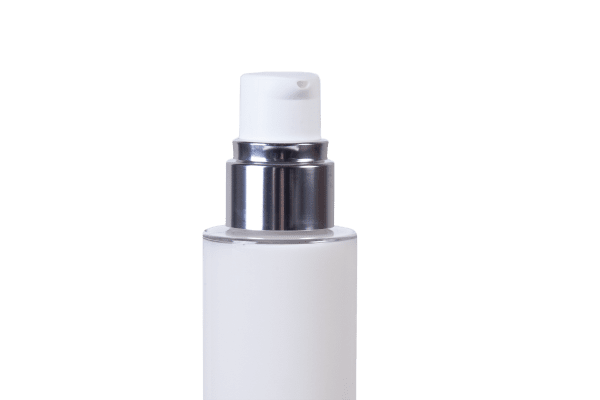
The materials story has qualifications. Color and decoration can affect recyclability, as Silgan’s own product page explains. A technically compatible package still meets a real-world collection and sorting system. For a brand choosing packaging, the sensible questions concern the formula, dispensing performance and intended recycling route together.
“compete and win in the markets we serve by being the best at what we do”Silgan’s published mission
The financial mix shows why these mechanisms matter. Dispensing and Specialty Closures contributed 55% of Silgan’s adjusted EBITDA in 2025, according to management. Its alternatives include AptarGroup and Amcor; metal containers face competitors such as Crown and Sonoco. Silgan competes through a combination of product breadth, technical service and manufacturing reach. The company’s argument must hold up in the customer’s factory.
Silgan’s published principles give this expansion a financial boundary. Management says it will grow where it has, or can develop, a sustainable competitive advantage, and refocus, restructure or withdraw where it cannot. That is the stated philosophy. Its usefulness depends on how rigorously managers apply it when an attractive acquisition becomes available.
Buying the next capability
Acquisitions have repeatedly expanded that argument. In October 2024, Silgan bought Weener Packaging, adding 19 facilities, dispensing technology and clean-room capabilities. The reported purchase price was $921.6 million, net of acquired cash. Silgan financed the acquisition and related costs through borrowings, including a €700 million incremental term loan. It targeted roughly €20 million in operational savings within 18 months.
Acquisition agreements can fail before integration begins. In 2011, Graham Packaging terminated its merger agreement with Silgan after selecting Reynolds Group’s competing proposal. Graham paid Silgan a $39.5 million termination fee. The episode supplies a useful restraint to an otherwise busy acquisition history: an agreed transaction does not guarantee the buyer will get the business.
Demand still moves unevenly across the portfolio. Metal-container volume for pet food markets grew 7% in 2025. In the second quarter of 2026, overall sales increased to $1.64 billion, while net income fell to $75.8 million from $89 million a year earlier. Selling more packaging and earning more profit are separate tests.
The factory has to earn the promise
Reliability also has to survive inspection. An October 5, 2026 FDA warning letter concerning Silgan Unicep Packaging’s Spokane drug-manufacturing operation described inadequate investigations of microbiological test failures and weaknesses in quality oversight. FDA acknowledged the firm’s commitment to suspend all drug production at that facility. The findings concern that operation; they illustrate the demands of expanding into regulated manufacturing, where acquiring equipment and customers leaves substantial obligations on the factory floor.
Two businesses, two sets of ambitions
On October 19, 2026, Silgan announced a proposed partnership with American Industrial Partners to combine its metal-container and food-and-beverage flat-cap operations with Trivium. The deal values Trivium at approximately $3.4 billion. Silgan would retain 60% of the partnership and receive approximately $2.3 billion in cash proceeds to retire certain debt. Dispensing and custom containers would form a wholly owned platform.
Silgan MCC would combine the contributed metal operations with Trivium.
Pending approvals and other conditions · Expected close: mid-2027The strategic change is visible in that proposed structure: metal packaging and dispensing would have distinct investment priorities. Management expects $225 million in annual synergies by year three. Those are targets. Regulatory approvals, consultation processes and integration still stand between the announcement and the operating result.
What can another business copy? Start with a repeat customer problem, understand the physical cost of serving it, and add capabilities that make the relationship more useful. The conditions matter. Factories require capital; customer moves can weaken location advantages; alternative materials can redirect demand. Silgan’s proposition ultimately returns to the cupboard and the bathroom shelf: the package must keep earning its place.
Open the next lid
Explore the company, its products and its current announcements.