Shawn Thomas wanted to get on MTV. He got there. He wanted to perform at Madison Square Garden. He did that, too. Then the gig ended, and the young singer had to answer a question that applause had done little to prepare him for: what happens on Monday?
The answer eventually involved hotel lobby computers. There are less glamorous career changes, although few offer quite such a sharp change of scenery. Thomas went from N/Motion, a Warner Bros. Records trio touring with Ringling Bros. and Barnum & Bailey, to building a business around the needs of travelers trying to use a public PC. One audience wanted a show. The other wanted the printer to work.
Years later, after the December 2013 sale of Uniguest, he acquired another audience through Ask A Millionaire. People brought their business questions to his social accounts. The former singer found himself performing a rather different service: making himself available. Across those careers, the interesting question is how someone who once wanted to be famous came to spend so much time answering strangers.
The choir line led to California
Thomas grew up in a military family and spent part of his childhood in Alaska. His introduction to singing was agreeably unstrategic. As he tells it, he and friends from the high school basketball team spotted a line with girls in it, asked what it was for, and signed up for choir. A career assessment could hardly have improved the result. He discovered that he loved singing.
At 18, he left Alaska for California. His ambition was specific: sing, travel, appear on MTV. He attended Fullerton College, where his education dates are listed as 1989 to 1991, and worked while pursuing music. At 21, a recording contract made the ambition tangible. N/Motion toured the country with the circus, reaching venues that included Madison Square Garden.
The circus detail deserves its place in the story. Thomas had achieved the sort of experience that sounds invented when squeezed into a networking introduction. Yet an early dream fulfilled did not supply a permanent occupation. When the engagement finished, he chose to pursue business rather than return to college. He had learned that he could get somewhere improbable. Learning how to make a living as an owner would take considerably longer.
A boarding pass is a business problem
Thomas calls the years between 23 and 32 his “decade of desperation.” Bankruptcy, a repossessed car and asking his parents for money sit inside that description. These are awkward details for someone whose later public name contains the word millionaire. They also explain why the name has a backstory worth reading.
In Memphis, he sold insurance and worked in a restaurant to supplement his income. His first hotel technology company, begun in 1999, installed WebTV in guest rooms. Broadband overtook the idea. He used remaining savings and a loan from a former shareholder to incorporate Uniguest in 2002. The industry remained familiar; the product changed.
Uniguest supplied computers and software for hotel business centers and lobbies. The need was ordinary enough to overlook: travelers required access to a machine, the internet and a printer. A hotel that put out a desktop inherited the work of keeping it usable. Guests could change settings or leave unwanted downloads behind. Someone had to take responsibility for the next guest's experience.
The Concierge Station addressed that practical mess. By April 2005, Thomas had developed more than 160 installations across more than 15 hotel brands. U.S. Hospitality, Mark Oldham's hotel guest-directory business, bought 51 percent of Uniguest that month. The partnership joined a computer product to an established hospitality network. It was a distribution decision as much as a technology decision.
Uniguest's complimentary workstation model put the service bill with the hotel.
By November 2006, a company announcement counted more than 1,000 hotel properties. Where competing systems charged guests for use and shared the receipts, Uniguest emphasized complimentary access. Hotels bought the equipment and software and contracted for ongoing technical support. In 2005, the business had also introduced support and security for computers that properties already owned. A sale no longer required a new machine.
That last detail makes the growth easier to understand. The customer could keep an existing investment and still buy relief from maintaining it. Airline check-in, boarding passes, maps and local information gave travelers reasons to return to the workstation. The service contract gave Uniguest an ongoing relationship with the hotel. Nothing about the proposition required a guest to admire the technology.
The acquisition came with colleagues
By 2008, Thomas held a controlling interest. In 2009, U.S. Hospitality and Uniguest merged and took the Uniguest name. The modern company's history therefore has two starting points: the guest-directory business established in 1986 and Thomas's computer business established in 2002. The combined enterprise carried both histories into its next chapter.
For Thomas, the combination brought a problem no software installation could resolve. His business had 23 employees at the time of the merger. A younger, growing workforce now had to operate alongside an older, established company culture. To keep people informed, leadership groups drew staff from both businesses and passed updates back into their departments. The work was personal and repetitive. People wanted to know what would happen to their jobs.
He also learned to hand responsibilities to an experienced chief operating officer. His account of the period includes a hiring decision that went wrong and his own reluctance to ask for outside expertise. Saving professional fees had looked economical. The mistakes carried costs in time, execution and his team's trust. That is a particularly useful confession from someone who would later sell advice.
“Asking for assistance doesn’t mean you’re weak.”
Shawn Thomas, writing about leadership in 2010
In June 2009, Uniguest acquired Nashville digital-signage company Dynamic Digital Designs. By 2010, Thomas was discussing financing for further acquisitions and a measured expansion of digital signage. The lobby-computer operation had become part of a broader information-delivery business. Growth required people who could run different activities, along with a founder willing to let them.
The sale left a question open
Atlantic Street Capital announced its acquisition of Uniguest in December 2013. By then, the company combined hardware, software, content and support for hospitality customers, including business centers, electronic displays and printed guest information. Thomas's later biographies put annual sales above $20 million. A product built around a shared computer had become a substantial operating company.
The exit made room for travel and time away from building it. It did not immediately provide a replacement ambition. In his later conversation with Sharon Lechter, Thomas described the uncertainty that followed financial success. This part of his career gives the familiar founder's exit a more interesting ending: he still had to decide what he wanted to do with an ordinary day.
- 2002Starts the Uniguest computer business
- 2013Uniguest is acquired by Atlantic Street Capital
- 2015Starts Ask A Millionaire
Ask A Millionaire began in 2015. Instagram gave him access to people who wanted help getting started, and he answered their questions. Livestreams turned the exchange into a public conversation. An entrepreneur could ask about a problem while other owners listened. The stage had returned, with the audience supplying much of the material.
He subsequently founded Accelerators Organization to provide mentoring and peer exchange for smaller businesses, especially owners working toward $1 million in annual sales. That threshold matters to the idea. Early business owners need access to experienced people while they are still figuring out the company, before the revenue number makes them look established.
In May 2017, Thomas and sales mentor Tom Black organized the Ask A Millionaire BusinessCon in Nashville. Workshops and discussions brought the online proposition into a room. His own 2016 writing about social networking offers a smaller, practical version of the same approach: research the person, respect their time and keep the first message brief. Connection begins with giving someone a reasonable opportunity to reply.
Another company, a different pace
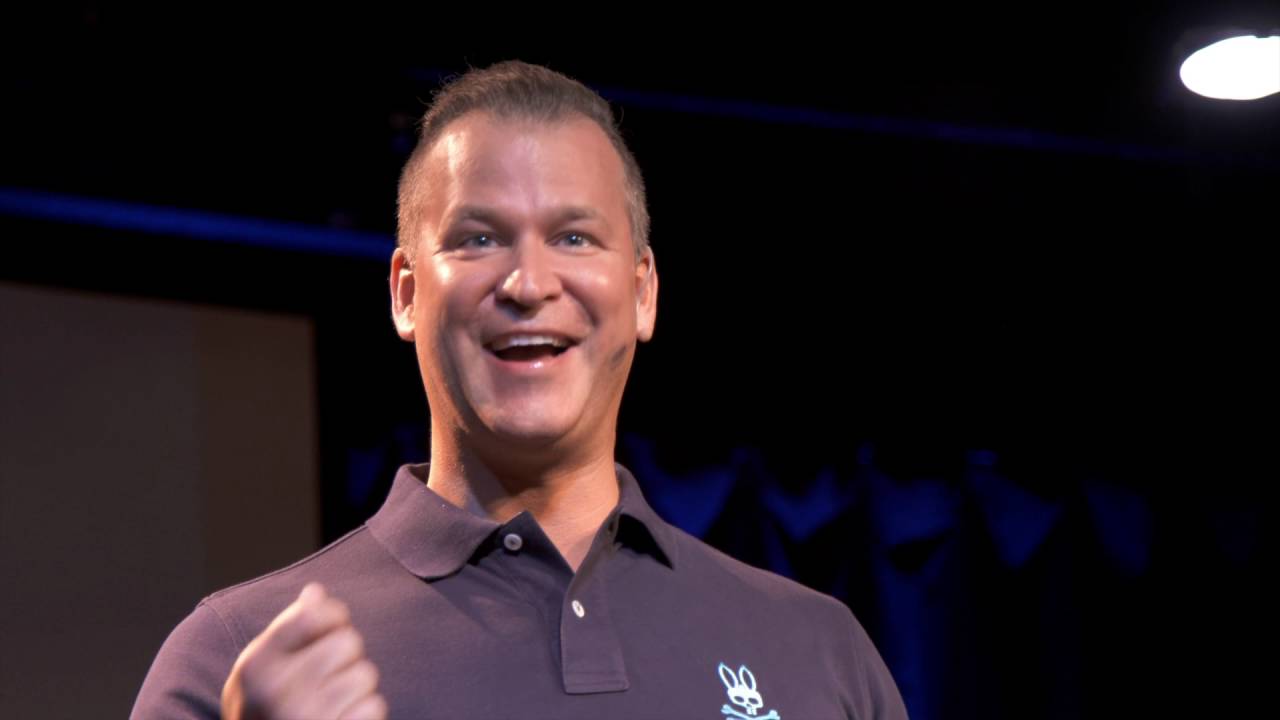
Thomas has also become an investor. His public link directory identifies him as an early angel investor in handbag company Hammitt and a minority partner in apparel business Barbell Voodoo. He has written The Power of Naivete and taken the argument for starting before certainty to a TEDx stage. Music, travel, food and wine remain part of his life outside the business conversation.
His current LinkedIn introduction lists a new role: co-founder and CEO of Inovav8, beginning in March 2026. His public link directory describes travel by Airstream alongside coaching and building another company. Franklin, Tennessee remains his listed base. The next business is being built with a degree of freedom his early experiments could not offer.
That changes the stakes of starting again. He has already made the recording contract happen, built the hotel business and lived through the sale. The questions arriving from other owners keep him connected to the unfinished, sometimes untidy part of entrepreneurship. He knows that territory. Long before anyone could ask him how to become a millionaire, he was trying to work out what to do on Monday.
Keep the conversation going
Personal website · Current projects and book · LinkedIn · Instagram · X · Facebook · TikTok
Watch: Naivety Unleashed Has Unlimited Potential
Shawn Thomas on YouTube
Listen: A conversation with Sharon Lechter
Read: Leaving Your Ego Behind
The 2013 acquisition announcement