At Nottingham College, a screen was never just a screen. It was another thing somebody had to update. Spread that responsibility across nine campuses serving more than 30,000 students and staff, and a small publishing task becomes a logistical problem. The displays were already there. The useful information was somewhere else. Getting the two together took too much work.
- Uniguest connects digital signage, television, video, and engagement apps.
- Its customers manage buildings full of people: hotels, campuses, hospitals, communities, and stadiums.
- Acquisitions built the range. Integration now has to earn its keep.
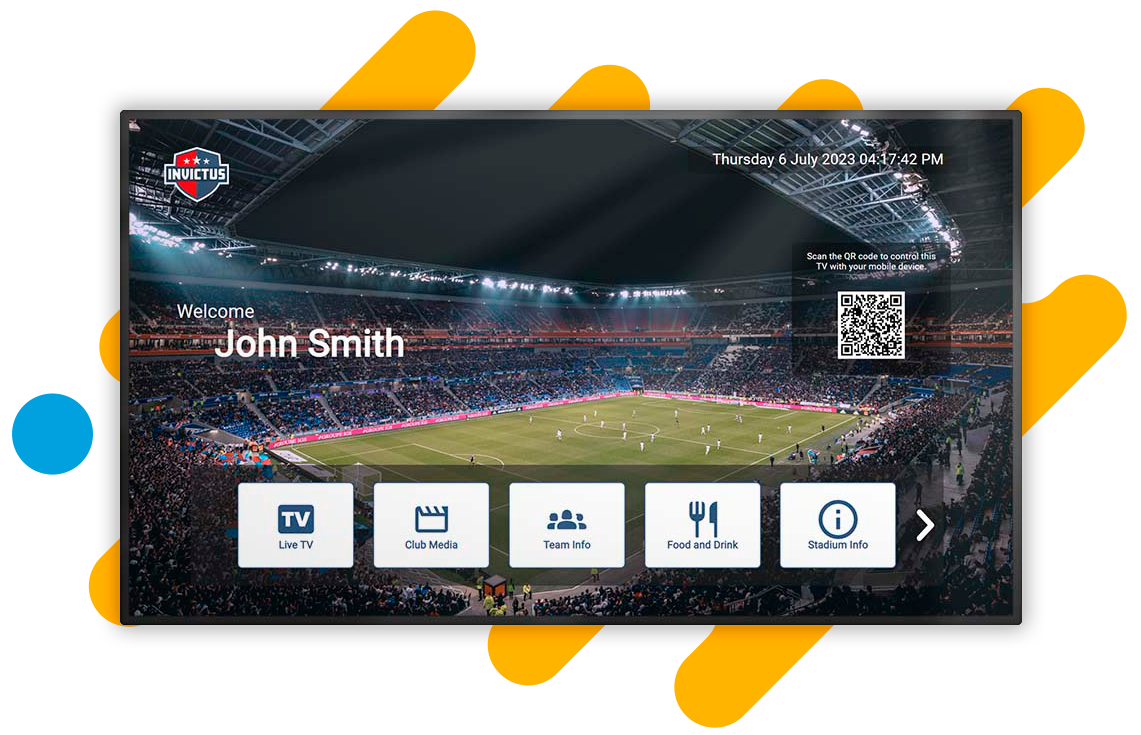
The college chose Uniguest’s Campus Hub to bring those displays under central control. IT could oversee the network; marketing and digital teams could manage what appeared on it. Information from SharePoint, student portals, and local data feeds could move into screen layouts. The attraction was wonderfully practical: fewer individual devices demanding individual attention.
“We simply don’t have the capacity to treat every screen as a standalone device”
James White, Nottingham College
That sentence explains Uniguest better than the phrase “digital engagement” ever could. The company sells the machinery for getting information to people in physical places. Its expertise sits where audiovisual equipment meets networks, content, and daily operations. The television on the wall is the visible part. The coordination behind it is the product.
The directory escaped the hotel room
Uniguest’s history begins with a much quieter information system: the hotel guest directory. Its predecessor, U.S. Hospitality, started in 1986 with advertising-based directories. Mark Oldham was a co-founder. A printed guide answered recurring questions about a place while giving businesses a surface on which to advertise. The underlying customer need has proved remarkably portable.
The business adopted the Uniguest name following a 2009 merger. Atlantic Street Capital acquired it in 2013. Then came specialist businesses: Onelan in signage, Tripleplay in IPTV, Touchtown in senior living, and later pCare in patient engagement. In August 2026, Visix added more workplace and campus capabilities. Each acquisition brought customers, engineering knowledge, and another set of products to reconcile.
There was serious financing behind the expansion. In June 2021, Comvest announced a $190 million senior secured credit facility supporting an Atlantic Street acquisition transaction. That figure describes corporate borrowing. The commercial model underneath combines software and managed services contracts with hardware and implementation. Customers buy directly or through audiovisual integrators and resellers who supply local delivery expertise.
For a buyer, the useful cost comparison is the installed system over its working life: software, players, network preparation, integration, training, support, and eventual replacement. A cheaper license can still leave employees doing repetitive work. Equally, central control only saves effort if someone owns the content and the connections keep working. Those are procurement questions to settle before counting how many displays a platform can support.
Senior secured credit facility announced in 2021. Acquisition financing, not a customer price tag.
The queue is part of the match
At Chesterfield FC, the old arrangement made every stadium television show the same broadcast channel. Updating content could mean walking to a lounge to discover that it had not appeared. A small team had inherited a large collection of tiny errands. Uniguest Sports Hub brought approximately 40 screens into a centrally managed system.
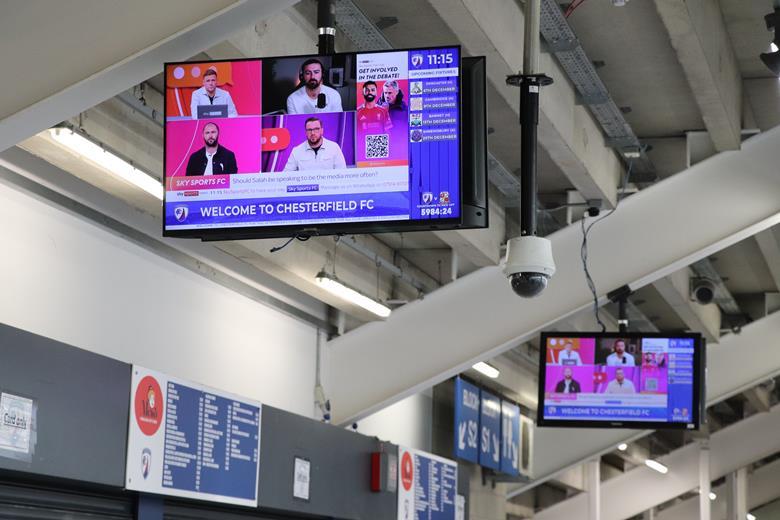
Now the club can combine broadcasts with sponsor placements, countdowns, and lounge-specific branding. Different screens can carry different channels. Event triggers push match information across the network. Off the pitch, the same infrastructure serves conferences and hospitality. The practical shift is from managing televisions individually to deciding what each space needs to communicate.
This is where Uniguest fits in a crowded market. ScreenCloud offers digital signage; Appspace combines workplace communication and management tools. Uniguest’s particular proposition stretches across signage, network television, specialist applications, and managed hardware. A buyer comparing them needs to begin with the job: a playlist in reception, or a building where live video, menus, and operational information must coexist?
A shared network needs boundaries
Central control also concentrates responsibility. In 2019, Trustwave SpiderLabs published research into a legacy Uniguest kiosk system. A publicly accessible technician site led researchers to software containing embedded credentials for a Salesforce backend. The vulnerability began behind the scenes, in the tools used to manage the machines.
The first fixes were incomplete. Researchers returned, tested again, and reported additional findings. Uniguest eventually deprecated the SystemSleuth application and removed access to embedded credentials. The advisory recorded remediation in June 2019, while noting disagreement over a separate open API. It also credited Uniguest’s cooperation and the addition of application and physical penetration testing to product development.
For buyers, that history suggests a useful question: how does the management layer get tested? A restricted public screen does not, by itself, demonstrate that the infrastructure behind it is safe. Ask about credentials, customer separation, updates, and remediation responsibilities alongside the demonstration of attractive layouts.
Keep the box. Change what it can do.
Uniguest’s September 2026 Hub OS announcement addresses another consequence of its acquisition history. Supported Onelan and MediaStar players can move to Hub AV, formerly Tripleplay, while keeping compatible hardware. Existing equipment is part of the decision. Customers and integration partners first assess the installed devices and plan the migration.
- 01Assess
existing players - 02Keep
compatible hardware - 03Move
to Hub AV
Three days before this profile’s publication, Uniguest launched Community Hub for senior living. It brings together signage, resident television, and other communication tools, with Resident and Family Apps still forthcoming. The telling detail is its support for different ways of receiving information, including printed materials. A community cannot assume that every resident wants another app.
The lesson to borrow is modest: give information a responsible owner, connect the systems that already contain it, and choose channels people actually use. That approach needs compatible equipment, maintained integrations, and staff who keep content useful. For a lone display with a simple playlist, a broad platform may be more machinery than necessary. Across a campus or stadium, those saved journeys between screens start to matter.