Before Mark Loehr was running video events, he had a telephone with 120 buttons. Each button reached someone useful. On a trading desk, that mattered: a conversation could begin without a small expedition through an address book. The machine was called a trading turret. Its attraction, as Loehr later recalled, was the ease of reaching people. Years afterward, he would find himself working on a similar problem, with cameras attached.
- OpenExchange runs virtual and hybrid financial events with software and live specialists.
- Its work covers earnings calls, investor meetings, conferences, and corporate broadcasts.
- The useful distinction is coordination: who enters, who presents, and who gets to ask a question.
- Its customers include all ten top investment banks, according to the company.
The phone with 120 buttons
Founded in 2009, OpenExchange grew out of the financial community’s need to meet through video. Founder Doug Ashton came from equity research. Loehr brought experience from trading and investment banking, including leadership at SoundView and Wit Capital. These were people acquainted with a particular inconvenience: the company executive whose time investors want is often the person least able to spend two weeks travelling.
Loehr expected capital-markets roadshows to be the first important application. In his telling, corporate access got there first: management teams meeting investors who already owned their shares. That is a useful little reversal. A founder can identify the friction accurately and still guess wrong about which customer will feel it most urgently. The customers supplied the itinerary.
The rush made the backstage visible
Then the pandemic removed the itinerary altogether. OpenExchange’s June 2021 financing announcement reported 84,957 virtual meetings and 313 conferences during that year’s first half. It also said the company connected more than 1.7 million investors, bankers, and executives. These figures describe an operation, rather than merely a popular application. Someone had to organize all those encounters.
Consider the difference between five colleagues talking and a bank staging a conference with overlapping appointments. In the first situation, a late arrival is an annoyance. In the second, lateness becomes something an organizer needs to see, route, and resolve. OpenExchange combines meeting technology with specialists who manage delivery. Its business sits in the space between a connection being available and a conversation actually happening.
The live agent is part of the proposition. An Inc. company spotlight described facilitators checking equipment before events, making sure speakers were ready, and keeping the schedule moving. The organizer received attendance and engagement analytics afterward. That sounds less like downloading software and more like hiring a production team which happens to bring its own software.
One event, several doors
The product names describe different pieces of that job. OE Central gives organizers a shared view of event logistics and participant tracking. OE Passport provides a customizable microsite with schedules, presentations, private meetings, and supporting materials. OE Stream handles live and on-demand content, while OE Podium gives presenters controls for slides and questions. The distinction is practical: the organizer, participant, and presenter need different tools.
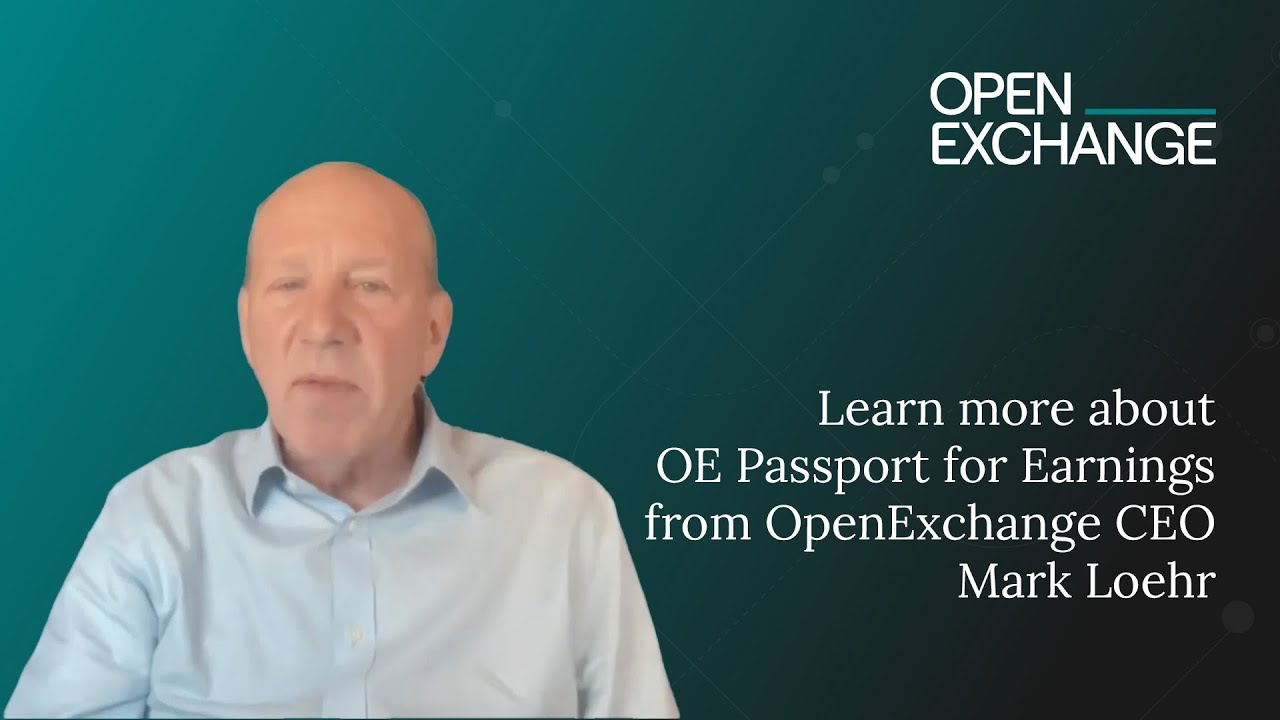
The earnings version of Passport, introduced in April 2024, makes this separation explicit. Analysts can enter an interactive session; individual investors can receive a public webcast. Management gets a private backstage space, and the question queue can be ordered. The result is a deliberately choreographed encounter. A public financial presentation has responsibilities that a casual conversation does not.
Buying more of the workflow
OpenExchange has also expanded by adding adjacent capabilities. Its nearly $23 million initial Series D closing, announced in June 2021, was led by Kingfisher Investment Advisors and Stonebridge Ventures. The stated uses included product development and complementary acquisitions. That autumn, it announced the Veracast combination, adding a webcast player, ConferenCenter technology, and a business with financial webcasting experience dating to 1998.
In March 2023, a partnership with Aiera added live transcription and search to the video experience. The appeal is easy to understand: a recording is useful, but finding the relevant passage makes it more useful. The event can become a reference object, available after the speakers have logged off. Live delivery and the archive serve different moments in an investor’s work.
Its relationship with Zoom explains its market position particularly well. OpenExchange announced an expanded collaboration in which Zoom selected it as a preferred professional services partner for the transition of its Events Services team. Meeting platforms can therefore be infrastructure and partners, even when an internal team using those same platforms is a purchasing alternative. Buyers are choosing how much coordination to outsource.
A lesson in changing habits
The business combines event technology and managed services for organizational customers. Cost depends on the production work being commissioned. One revealing economic claim accompanied the earnings launch: automating parts of the workflow could reduce the need for operators, allowing some packages to come in below a fully operator-assisted audio event. Human service and automation can be sold together, then adjusted as the customer becomes comfortable.
That is the lesson a reader can borrow. Start with the audience’s jobs. Decide who needs to speak, who needs to listen, and who needs private coordination. Introduce changes in manageable pieces. A company comfortable with familiar earnings procedures may accept a cleaner entry process before it accepts a camera on every analyst.
“The thing that nobody has quite figured out yet is networking.”Mark Loehr, June 2022
Loehr’s admission identifies the boundary. A formal presentation can be organized carefully; the accidental encounter afterward is harder to manufacture. For a small, straightforward meeting, the extra production may also be unnecessary. OpenExchange’s case becomes stronger as schedules overlap, audience roles diverge, and the consequence of confusion grows. The old trading turret offered 120 buttons. The modern problem is making sure each one opens the right door.