A sofa is a surprisingly demanding test of the imagination. It can look perfectly agreeable in a presentation and quite unreasonable in your living room. Shailesh Goswami encountered the larger version of that problem while arranging the interiors of a home. Designs arrived in PowerPoint. The process was hard to follow. He had spent years working in technology; here was an expensive, consequential purchase still asking the customer to fill in the picture.
The venture that followed became Foyr. Its founder’s continuing subject is the distance between an idea and the person trying to understand it. A homeowner needs to picture a room. A designer needs a client to approve it. A contractor needs to know what happens after approval. Goswami has spent the business’s life moving among those closely related, awkwardly different needs.
That makes his career more interesting than a straight line from corporate executive to founder. The idea stayed recognizable. The plan changed. For someone working in interiors, there is a certain professional courtesy in accepting that the first layout may need revision.
A technology career meets a very ordinary room
Originally from Rajasthan, Goswami studied for a BTech at the Indian Institute of Technology Delhi and a master’s degree in business at the Faculty of Management Studies, University of Delhi. His technology career took him through work in India and the United States. Before Foyr, he was a senior director at Microsoft India, leading a business unit within Microsoft Services’ Global Delivery operation.
Those credentials explain the tools he brought to the problem. The homebuyer’s experience explains the choice of problem. He could recognize the gap between what software might make possible and what a customer was actually being asked to tolerate. Beautiful rooms required a rather unbeautiful amount of coordination.
He dates the venture’s beginnings to 2014. The early business was called Renderlogy, connecting interior designers with customers. In July 2015, Foyr.com launched as a consumer portal. That distinction matters: the business began before the name and the public-facing service settled into their later shape.
The sofa had to exist in a shop, too
The early proposition combined design with discovery. A customer could explore a room digitally, then find products through local retailers. Partner stores would pay a subscription to digitize and list inventory; transactions were also part of the intended model. Goswami was trying to connect an attractive image with something people could actually buy nearby.
In August 2015, Foyr introduced an Android app with room designs, a product inventory and panoramic views. It also used Google Cardboard for virtual-reality viewing. A customer could photograph a room and experiment with furniture placement. This was the era when a piece of folded cardboard could arrive with a fairly ambitious job description.
The local connection was concrete. Furniture shown in the service linked back to stores, allowing people to inspect an item before buying. By December, Foyr had entered Pune, its second operating city after Hyderabad, with more than 50 local brand tie-ups. The app and portal were free for consumers.
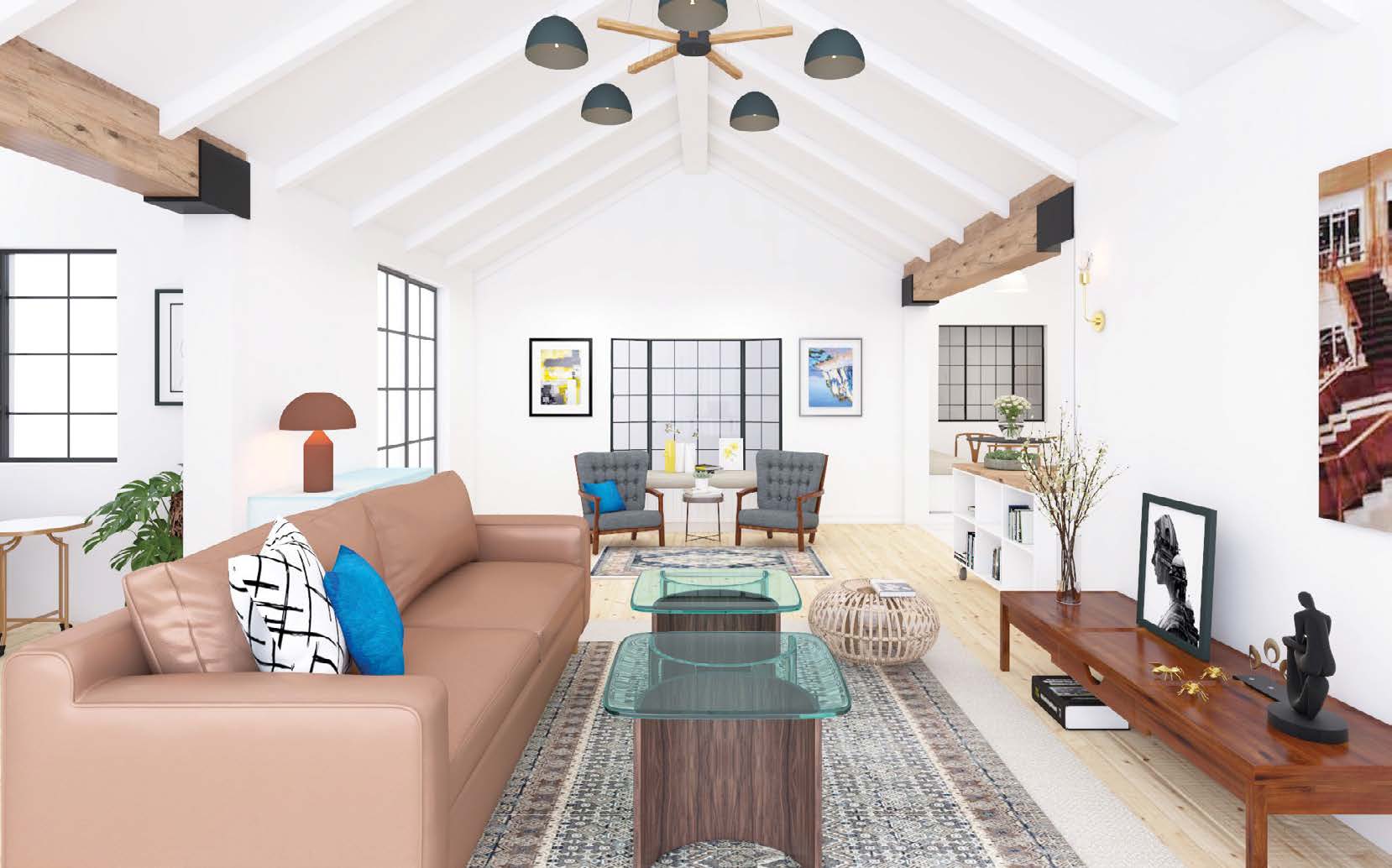
The model had an appealing loop: help people imagine, help them choose, help them locate the object. It also tied the software to the particulars of local supply. Every room might be virtual, but the sofa still needed a delivery address. The business was discovering how much of an interiors service lived outside the image.
The customer on the other side of the screen
Goswami then saw the same difficulty recurring among professionals. Interior designers needed clients to understand proposals. Developers needed buyers to see unfinished properties. Commercial brokers needed prospective tenants to picture office layouts. The audience widened because the underlying difficulty kept appearing in other people’s work.
By 2018, Foyr’s products included immersive walkthroughs and tools for visualizing larger developments and office spaces. Goswami spoke about making such experiences work on ordinary computers and mobile devices. Requiring a costly machine or a specialist operator would have left much of the original problem intact.
There was a practical shift in the question. A homeowner might furnish a place occasionally. A professional had to explain another design, and then another. Software could become part of that recurring work. The founder who had started with a consumer’s uncertainty was now paying attention to the people responsible for resolving it.
- 01Picture itHomeowners explore interiors
- 02Present itProfessionals explain designs
- 03Coordinate itStudios manage the work
A schematic of the changing product focus, not a scale of revenue or adoption.
New money, and a new map
The capital came in stages. In December 2017, Foyr announced a $3.8 million Series A involving JLL and other investors. Goswami said the funding would support expansion, technology development and new products. A property-industry investor had a direct reason to care about software that helped people understand space.
In July 2018, he announced another $2 million from Sashi Reddi’s SRI Capital, putting the amount raised by that point at $6.5 million. Astarc Ventures and Brick Eagle were also among the company’s backers. Foyr reported customers including more than 80 property developers and over 150 architecture and interior-design firms in India and Singapore.
The team had grown around him. Vikas Kaushal, another former Microsoft professional, was leading international business, while Ankur Garg led the India business. A founder’s ambition becomes an organization through such assignments: someone has to translate the map into a working week.
In March 2019, Foyr announced its North American expansion and appointed Richard Tarity president for the region. At that point, the company said its products were live in 21 countries. Entering another market meant more than offering the same screen in another time zone. It meant deciding how customers would discover, try and pay for the software.

Letting the product make the introduction
In a 2020 retrospective, Goswami described a difficult strategic turn: simplify the portfolio, reduce the India team and commit to a product-led subscription business aimed at global customers. His board presentation included a ship approaching an iceberg. Even by boardroom standards, this was a fairly direct visual aid.
Foyr Neo offered a self-service trial. Early paid sign-ups were uneven. Goswami recalled the relief of seeing five new US customers in a day, then a later morning with ten new customers overnight. He reported reaching the first $1 million in annual recurring revenue in nine months.
“Your product has to do all the talking.”
Shailesh Goswami, reflecting on the shift to self-service software
The quotation captures an uncomfortable transfer of responsibility. A sales conversation can explain a confusing feature. A person trying software alone may simply leave. The interface has to earn attention, demonstrate its usefulness and survive the moment when a customer wonders whether learning it is worth the trouble.
Goswami framed the experience through a courtship story. It was an unusually personal way to describe a subscription funnel, and a reminder that the founder waiting for a customer’s answer was also a person waiting to be chosen.
Gosu, away from the floor plan
His public profile calls him an explorer, learner, entrepreneur and drummer. The nickname is Gosu. Music sits alongside an interest in management and philosophy, a combination that allows for both keeping time and questioning what one ought to do with it.
His stated preferences offer smaller, pleasingly ordinary details. In 2018, he named San Diego as a favorite holiday destination, citing the sea, kayaking, scuba diving and the weather. He liked North Indian chaat and dal makhani, Bose audio equipment, dark sweatshirts and jeans, with room for cyan and teal.
He also singled out Arrival for its storytelling and Neale Donald Walsch’s Conversations With God for its exploration of life’s questions. None of this needs to be recruited into a theory of entrepreneurship. A person is allowed to enjoy a film without turning it into a management seminar.
He does, however, spend time talking to other builders. In 2020, FMS Delhi listed him among its entrepreneurship-summit speakers. In January 2024, he was on the program for a Hyderabad SaaS meetup. That April, he gave a talk at Manipal University Jaipur on building and launching software products. The work had become material he could take back into a classroom.
After the approval, the work continues
Today, Foyr describes a workspace spanning floor plans, design and rendering, and says more than 150,000 creators use its tools worldwide. Its current leadership page still lists Goswami as CEO and founder. The company’s stated reach now extends across more than 70 countries.
His newer product announcements follow the designer beyond the picture. In May 2026, he announced Foyr Manage for interior designers and contractors, covering tasks, quotations, invoicing and project coordination. He emphasized software that could present an appropriate interface for taking action, alongside chat-based assistance.
The current Manage offering describes a connected path from inquiry to payment. Its site lists voice mode as coming soon. The distinction is useful: Goswami’s ambition encompasses several ways to work, while the product continues to take shape. An announcement opens a chapter; the ordinary working day supplies the examination.
Foyr’s enterprise offering also addresses furniture brands and other professional customers, including the creation of product visuals and variations. A business that began with the challenge of imagining a room now serves people making the images, selling the objects and organizing the job.
Across these changes, the homebuyer’s original question remains easy to recognize. What am I agreeing to? Can I see it? How will it get done? Goswami has kept returning to those questions while revising who the software serves and how the company reaches them. The room can be rendered in advance. Building the business still requires living through the alterations.