Li Guoxing had another interview to get to. In 2021, with Moka employing roughly 500 people, its chief executive was still spending a considerable part of his week meeting candidates. At busy times, he could conduct more than a dozen interviews. The company sold recruiting software. Its co-founder kept doing the recruiting.
There is a useful symmetry here. Li had helped build a business around the proposition that hiring involved too much unnecessary work. Yet he continued to give it his own time. The distinction matters: meeting a prospective colleague can be valuable; forwarding the same résumé between several people rarely improves it. Much of his career has developed around deciding which activities deserve human attention.
Today, as Moka moves further into AI agents, that question has acquired a larger audience. Li’s path to it began with ordinary recruitment pages, an unfinished student venture, and an engineer’s appetite for seeing something he built actually used.
The opportunity hiding behind an email address
In 2015, Li and his co-founder, Zhao Oulun, also known as Orion Zhao, saw an awkward gap. Many Chinese companies had recruitment pages that offered little more than an email address. American startups, including quite small ones, were using applicant tracking systems to give candidates a structured route into the company.
Behind those bare pages sat a busy collection of workarounds. Recruiters gathered résumés from separate websites, maintained spreadsheets, sent documents through WeChat, coordinated interviews and copied the results back into their records. An application could travel a surprisingly long way without anyone learning much more about the applicant.
The founders talked to recruiters before committing to the business. The opportunity lay in connecting work that was already happening, across people who were already busy. Moka was founded in 2015; its recruiting system formally launched in September 2016.
There was a pleasing early twist. A recruiting post on a technology forum attracted an HR professional from a Shanghai company who wanted to buy the product. Moka’s team was in Beijing, and the software was still under development. A business built to improve recruiting had acquired a customer through its own recruitment.
One hiring process. Several websites. A spreadsheet. A stream of messages. Li saw a software business in the gaps between them.
A student project, then a partnership
Li came from Jilin and entered Shanghai Jiao Tong University in 2009. His undergraduate studies included the joint institute’s dual-degree program with the University of Michigan. He completed a computer science master’s degree at Stanford in 2015.
One early engineering assignment stayed with him: a team-built floor-cleaning robot. The students had to move from algorithms to components to a working object. The appeal was the whole sequence, with an actual result at the end. That preference would recur.
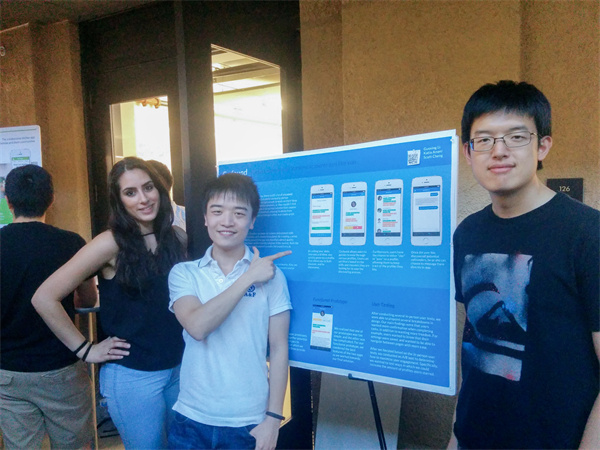
His early experience included internships at Facebook and SignalFx. Facebook offered the scale of a large technology company; he found that smaller teams gave him a more direct sense of his contribution. A career could be impressive on paper and still feel too distant from the thing being made.
Before Moka, Li and Zhao worked on LivingSimple, a secondhand marketplace for the campus market. It stopped because of constraints on time, energy and market size. The partnership survived the project. They had tried the varied jobs of starting something, from development to promotion, and wanted to continue.
That is a less tidy origin than the usual founding legend, and a more useful one. The first venture did not have to become the enduring business for the experience of building it together to matter.
The store manager has other things to do
Moka’s early customers came from technology, but Li’s interest expanded to retail. Beginning in 2018, the team studied chain-store recruiting. A company with many locations has a particular difficulty: hiring happens locally, while headquarters wants a coherent view of the whole operation.
Consider two nearby stores. One has applications it cannot use. The other needs staff. Keeping those résumés in separate piles creates work for both. Moka built location-based application and sharing functions so that nearby vacancies and candidates could be connected.
The team also simplified interview and trial-shift arrangements, letting managers choose times and places on a phone. Li described candidates browsing retail openings late in the evening, after conventional office hours. Automated responses could keep that conversation moving while the hiring team was elsewhere.
The software had to respect the store manager’s actual day. A manager running a shop has little reason to admire a complicated recruiting interface. Every extra step competes with customers, stock and the next shift. For Li, understanding those circumstances was part of building the product.
- 01Find nearby jobsMake location useful to the applicant.
- 02Share applicationsConnect demand across nearby stores.
- 03Arrange the meetingReduce the manager’s scheduling work.
A dashboard cannot rescue missing information
Li’s approach to enterprise software includes a fairly stern view of the person signing the cheque. The buyer matters, but so do all the people expected to use the purchase. In a recruiting system, that includes HR staff, interviewers, managers and candidates.
In his 2023 Yabuli conversation, he explained the practical consequence. If employees find a system awkward, they may complete only the mandatory steps. Work continues elsewhere. The resulting data describes the parts of the process that were recorded, leaving management to draw conclusions from an incomplete picture.
A polished dashboard can make that picture look reassuringly official. The underlying problem remains. Ease of use affects the quality of the information on which a company acts.
Moka’s internal response included using its own products and keeping customer feedback visible through dedicated groups. Li put satisfaction alongside commercial measures such as revenue and renewals. In another discussion, he described team members spending time doing HR work at customer companies and accompanying campus recruitment activities. The aim was to see the inconvenient details that a product demonstration could glide past.
“不给自己设限很重要”
Li Guoxing, 2021. Translation: “It is important not to set limits on yourself.”
The chatbot that caught up with its CEO
Li had studied AI, but he did not immediately recognize what ChatGPT would mean for Moka. In a 2023 conversation with GeekPark founder Zhang Peng, he admitted that colleagues had noticed it earlier. His first reaction was that another chatbot had arrived. There had been plenty of those.
The team had already built a job-description writing function in January. Li’s own deeper encounter came around February. Trying the technology changed his assessment. The significance lay in a broader capacity to handle language and tasks than the narrowly defined machine-learning problems he had known.
That admission gives the story some welcome texture. A technical education does not guarantee that someone will greet every development with instant recognition. Here, colleagues moved first, and the CEO revised his view.
Moka launched Eva in June 2023. The initial possibilities included screening assistance, interview questions, employee questions and business-information queries. Li also argued that a generated job description should reflect what a hiring manager actually needs. Producing a fluent paragraph is easy to appreciate; establishing whether it describes the right job takes more work.
He was similarly measured about conversational interfaces. In September 2023, he observed that occasional users could benefit from asking questions in ordinary language, while experienced users might still complete familiar tasks faster through a graphical interface. The useful design depended on the person and the task.
Capital, then a different kind of distance
By November 2021, Moka had secured a $100 million Series C led by Tiger Global. The financing was intended to support further product development and recruiting and training within Moka itself. The company had moved a long way from selling unfinished software to an interested recruiter.
Money also changes the practical size of the undertaking. A founder who once worked across a small project now has to build an organization capable of delivering and supporting what it sells. Li’s responsibilities encompass strategy, product development, delivery and customer success. The product’s promise extends beyond the moment a customer agrees to buy.
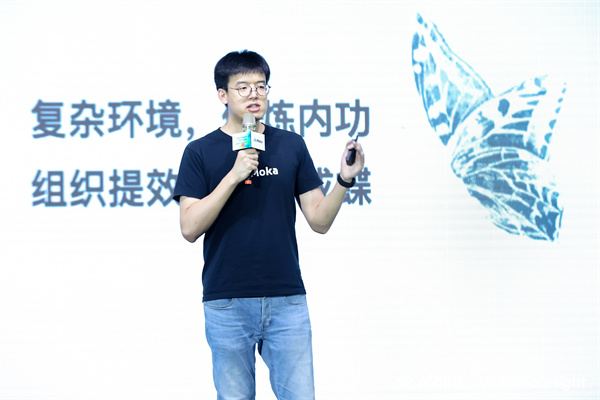
Geographic expansion brought another version of the same problem. Familiar habits do not travel automatically. In its February 2026 account of Li’s recruiting philosophy, Moka described building a recruitment agent inside WhatsApp for markets where candidates rely less on email. Applications, screening and scheduling could happen in a familiar conversation.
The change sounds small until one considers who is being asked to adapt. A candidate looking for a frontline role may have little patience for learning an employer’s portal. Putting the process where that person already communicates follows the same logic as making scheduling manageable for a store manager.
What should the new colleague do?
In May 2026, Moka’s brand became Moka AI, with an agent offering covering recruiting, personnel administration and HR business-partner work. Li described its next phase as AI combined with globalization. The company had opened its Hong Kong office in 2024 and its Singapore office in 2025.
His argument for specialized software rests on what happens after the first convincing demonstration. A recruiting agent needs to communicate with candidates, connect to channels and keep refining its understanding of a role. Li sees speed, concentrated AI capability and accumulated customer understanding as practical advantages, while acknowledging how quickly the field is changing.
There is a personal continuity beneath the changing product names. Li began by questioning why capable recruiters spent so much time transferring information. He now wants software to carry more of that process forward. The unresolved work remains recognizably human: understanding a role, assessing someone’s contribution, deciding whom to hire.
The interview on the CEO’s calendar is still a useful place to end. It contains the reason to make the machinery better. Someone has to meet the candidate, pay attention and make a judgment. Giving that conversation more room is a concrete ambition, and one that can be tested every time another application arrives.
Continue the conversation
- Moka AI · company and founder biography
- Guoxing (Jex) Li · LinkedIn
- From zero to one · the university alumni interview (Chinese)
- Technology, customers and the early business · 2021 interview (Chinese)
- Li in conversation with Zhang Peng · 2023 (Chinese)
- Listen · Startup Insider with Li and Wu Chenyao (Chinese)
- AI agents and the next five years · May 2026 conversation (Chinese)
- The $100 million Series C · transaction announcement
Chinese quotation translated into English. Company milestones describe the dates reported by Moka.