A friend needed a website. The accomplished audio engineer wanted something modest: help finding more work. In 2012, Shachar Gilad built it. Then he considered the absurdity of every engineer having to repeat the exercise, assembling a shop window, a payment system and an audience before getting back to the thing they actually knew how to do. A musician can spend years learning to hear a fraction of a decibel. Apparently, the next requirement was learning to run an internet business.
Gilad already knew musicians looking for those engineers. Each side had what the other wanted, with an inconvenient stretch of silence between them. That gap became SoundBetter. Seven years later, Spotify acquired the company. Two years after that, Gilad and his co-founder, Itamar Yunger, bought it back. It is an unusually circular route for a business devoted to helping people move a song forward.
The ears came before the marketplace
Gilad’s working vocabulary includes product, marketing, music production and audio engineering. These are useful companions. A producer listens for what a recording needs; a marketer tries to understand what another person needs. Both can ruin an afternoon by becoming too fond of their own ideas.
Before SoundBetter, he worked with Apple’s product marketing team in Cupertino on creative applications including Logic and Soundtrack Pro. At Waves Audio, he became director of product marketing, helping conceive, develop and market software for musicians and engineers. He had worked inside the machinery that made recording possible on a personal computer. SoundBetter would address what happened when the person at that computer wanted help.
His public career also includes teaching. He has made music production tutorials and lectured on entrepreneurship, growth and product marketing. There is a consistent interest here in making a specialist’s knowledge usable by somebody else. Software can carry that knowledge. So can an explanation. Eventually, so can an introduction.
His education took him through New York University from 2005 to 2007, where he studied international relations and business administration. His LinkedIn profile also records a turn as president of NYU’s International Relations Association. Years later, his work would involve a rather practical form of international relations: arranging for people in different countries to agree on what a song required, what it would cost, and when it would arrive.
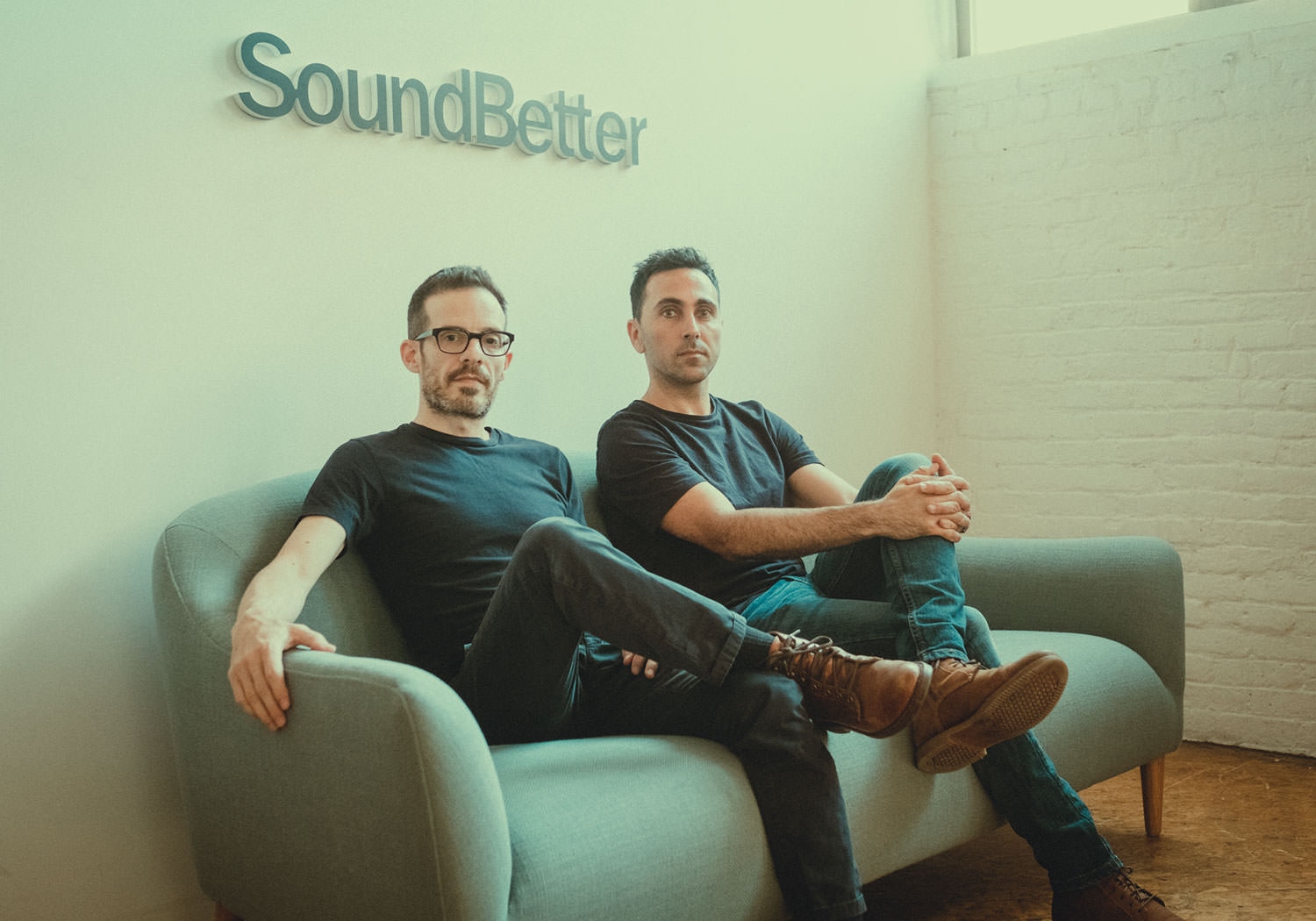
A laptop cannot do every job
Gilad’s argument for collaboration begins with an awkward truth about self-sufficiency. Owning recording software does not automatically confer the accumulated judgment of a mixing engineer. A songwriter may be excellent at writing songs and have little desire to spend the next decade learning why a vocal keeps disappearing behind the guitars.
In a 2015 essay, he argued that listeners judge a recording’s sound quickly, often before its melody or words have had time to work. Mixing, in that account, is part of giving the performance a fair hearing. He described the handoff to an experienced engineer as a sensible investment in a song that already contained considerable work. The artist had written, rehearsed and recorded it. There was no particular virtue in refusing assistance at the finish.
He also understood the appeal of doing things yourself. In 2014, he described presets and audio plugins as tools for independence and learning. A musician could compare settings at home, listen closely and work out why something sounded better. His position left room for both curiosity and expertise. You could learn from a tool and still hire a person whose experience exceeded yours.
“Getting you closer - even if not all the way - is important.”
Shachar Gilad, on music software, 2014
First, find the people
To build SoundBetter’s first version, Gilad went to Krakow and worked with a development shop. He paid for the early work himself. The initial directory concentrated on mixing and mastering engineers. For its first audience, he organized a Berlin studio event with an engineer joining over Skype, bringing in an audio school and other local participants. Events followed in New York and London.
Yunger joined roughly a year into the venture. The service grew beyond a directory to include payments and a shared workroom. Finding a name was only the opening task. A musician handing over recordings wanted confidence that the work would get done; a professional setting aside time wanted confidence that payment would follow.
That distinction gives Gilad’s product choices their human scale. Music is personal, but a commission still needs terms. Admiration for someone’s records is a delightful beginning to a conversation and a remarkably incomplete substitute for an agreement.
- 01 / DiscoverHear samples. Read reviews.
- 02 / AgreeSet the job, fee and revisions.
- 03 / CollaborateShare files. Finish the recording.
A little less ego in the studio
By 2020, Gilad was describing a working culture built around respect for both sides of a commission. Artists and professionals needed to agree on the scope, price and revisions before starting. Ownership also required discussion, particularly when a singer was contributing a new melody or lyrics. A service booking and a songwriting partnership could have different implications.
“It’s not just about the price,” he said. The aim was to make experienced professionals comfortable doing the work, while giving clients a clear sense of what they were buying. His account of the relationships extended beyond transactions: some collaborators became friends, travelled to meet, and made videos together. The files could cross borders before the people did.
There was a commercial choice behind that atmosphere. In 2018, he described SoundBetter’s selective approach to its premium provider tier, despite the additional fees a more permissive policy might have brought. His explanation put the quality of the marketplace ahead of simply admitting more paying members. For a founder selling access, declining some of the money is a consequential way of defining the product.
The geographic detail made the idea tangible. Successful singers could work from Vietnam or Lisbon. A client could be far from a recording centre and still commission a specialist. Gilad’s marketplace made the address less decisive, while leaving the craft as demanding as ever.
The business behind the chorus
In October 2018, SoundBetter reported delivering more than $12 million to musicians on the platform, most of it during the preceding 18 months. Its community then spanned more than 10,000 cities. Those figures describe payments for work, a useful measure for a founder whose pitch depended on professionals finding actual clients.
The company also began widening what could be bought. In June 2019 it introduced Tracks, a licensing service for original productions. Artists and their teams could audition existing tracks rather than rely entirely on custom commissions or whatever happened to arrive through their own contacts. Gilad was applying the discovery problem to another part of making a record: finding a production worth building a song around.
Commercial clients added another use for the network. Gilad described marketing agencies looking for jingles, backing tracks and songs for advertisements. A musician’s expertise could travel into a campaign as readily as an artist’s single. The underlying job remained familiar: find somebody who can hear what the project needs and deliver it.
SoundBetter begins
Spotify acquisition
Founders buy it back
The exit with a return ticket
On September 12, 2019, Spotify announced its acquisition of SoundBetter. At the time, the platform had more than 180,000 registered users across 176 countries and 14,000 cities. It would join Spotify for Artists, bringing a marketplace for making recordings closer to a service through which people heard them.
Gilad’s examples were appealingly concrete: a songwriter in Los Angeles working with someone in Japan, or a Hungarian string quartet recording for a client in Los Angeles. He spoke about musicians who had found enough work through SoundBetter to make music their full-time occupation. The attraction of Spotify’s reach was the possibility of more such stories.
Then, on October 8, 2021, came the announcement of the buyback. Gilad and Yunger were taking SoundBetter back into independent ownership. His explanation was that the founders and Spotify had concluded that independence best suited the platform’s next stage. He thanked Spotify for its investment and support during the two years together.
The announcement put cumulative payments to artists above $50 million. It also returned to the experiences users had shared: being able to leave other work, move somewhere they preferred, and take greater pride in their craft. Gilad promised continued investment in discovery and transparency. Selling the company had been a chapter; running it continued to be the occupation.
Back inside the tools
In May 2026, SoundBetter launched Imagine Plugins, a browser-based way to design audio plugins without writing code. For Gilad, whose earlier career involved music software, the move carries a pleasing echo. A producer with a distinctive processing chain could now attempt to turn that approach into a tool other people could use.
The launch described visual sound processing and interface design, followed by delivery in plugin formats used by recording software. Gilad’s stated ambition was to let people with plugin ideas build them without first having to translate their vision for a developer. It is another version of the problem that has occupied him since the engineer’s website: talent can exist long before the infrastructure for selling it.
There is a musician’s logic to this career. Build something, listen to what happens, revise it. Bring in another person when the work needs another set of skills. Occasionally buy the business back. The technology changes, and the collaborators may live continents apart. Gilad keeps returning to the moment when an unfinished idea needs a person, a tool, or a workable agreement before it can finally be heard.
Read, watch & explore
- SoundBetter - the marketplace
- Shachar Gilad on LinkedIn
- SoundBetter on YouTube - tutorials & product videos
- The early SoundBetter story - Tape Op interview
- Gilad’s essay on hiring a mixing engineer
- The 2019 Spotify acquisition conversation
- Gilad’s 2021 buyback announcement
- Imagine Plugins - the May 2026 launch