Wes Writer needed a whistler. Not a synthesizer pretending to whistle, but a person who could do it professionally. He went to SoundBetter and found one. Later, describing the episode to Artlist, he explained how that small transaction changed his view of the site: if he could hire someone for a skill that particular, perhaps somebody would hire him, too.
- Hire the people a recording is missing: singers, producers, players and engineers.
- Compare their sound, credits and reviews; agree on a job and pay through the platform.
- Now sell the knowledge, too: Storefront adds lessons and digital goods; Imagine Plugins adds software creation.
The episode captures SoundBetter’s appeal more neatly than a parade of famous credits. A music project can require an oddly specific person. The person may live nowhere nearby. A searchable marketplace makes that problem manageable, provided both sides can agree on what is being bought.
The directory needed a checkout
SoundBetter began in 2012 after Shachar Gilad helped an engineer friend build a website. The effort suggested a shared problem. Why should every specialist assemble the same machinery to find clients? Gilad hired developers in Krakow and started with a directory of mixing and mastering engineers.
The early constraint was demand. Engineers welcomed work; getting clients was harder. One promotion connected an engineer in Los Angeles by Skype to an event in Berlin, with a school, studio and local industry contacts helping spread the word. Itamar Yunger joined about a year into the business. Payments and a shared workroom turned introductions into jobs.

That progression matters. A directory leaves two strangers to improvise the dangerous part: sending money, sending files and deciding when the work is finished. SoundBetter made those steps part of the product. Its expertise sits in understanding how music jobs actually proceed, including the uncomfortable conversations about payment.
A receipt behind the stars
Today, an artist can post a project or approach a particular professional. Providers send proposals. The client chooses one, agrees terms and funds the work. A dedicated workroom holds the conversation and project management. The menu runs from full production to a single instrumental contribution, from songwriting to mixing and mastering.
Discovery is unusually specific to the craft. Credits tell you where a musician has worked. Samples let you hear the result. Genre and specialty narrow the search. Reviews add another kind of evidence: whether previous collaborators were happy with the experience. Those signals answer different questions. A famous credit alone cannot tell you whether someone understands your chorus.
“This is how engineers are found now”
Ed Cherney · producer and mixer
SoundBetter homepage testimonial
SoundBetter distinguishes verified reviews, written after a paid job on its platform, from reviews by clients who worked with a provider elsewhere. That distinction is useful. A verified review ties praise to a recorded transaction. It still leaves the buyer to judge whether the reviewed work resembles the job at hand.
- 01AgreeScope + price
- 02FundWork begins
- 03ReviewHear the tracks
- 04ReleaseMark complete
Under prefunded terms, payment goes to SoundBetter before work begins and is released when the client marks the job complete. Some Premium providers offer a different arrangement: half paid at the start, half at completion. The first half transfers immediately. These are meaningfully different commitments, worth discussing before anyone records a note.
Posting and hiring carry no client platform charge, according to the FAQ; the professional’s fee remains payable. SoundBetter earns a provider commission and offers a paid, application-based Premium program. AirGigs competes in music services, while Fiverr offers a broader freelance market. SoundBetter’s pitch combines music-specific discovery with the machinery for completing a commission.
Two years in the Spotify family
By September 2019, when Spotify announced its acquisition, SoundBetter had 180,000 registered users across 176 countries. The attraction was easy to see: Spotify distributed finished music; SoundBetter helped assemble it. Recording software had made creation accessible, but artists still needed collaborators to get a recording ready for release.
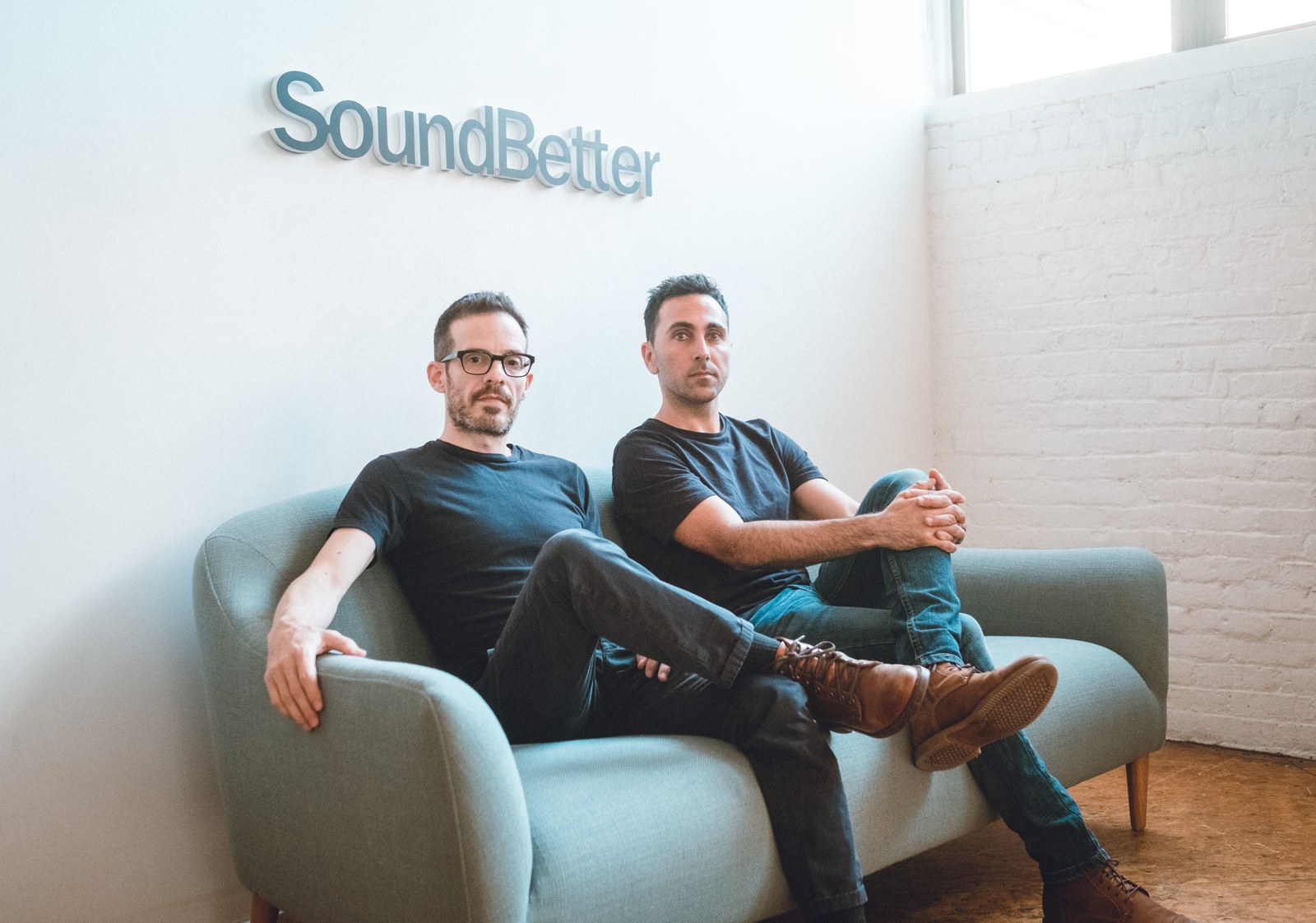
In October 2021, Gilad and Yunger bought the company back. The announcement said they and Spotify had concluded that independent founder ownership would better serve users at that stage. It also credited Spotify’s investment and expressed an intention to keep collaborating. The public explanation supports a change of direction; it does not establish a dramatic corporate rupture.
When the session becomes a product
The newer direction is visible in 2026. Storefront lets professionals sell sample packs, presets and other digital goods, alongside lessons and consultations. It lists a $9.99 monthly subscription or $99 annually, plus a 10% commission. Processing fees and applicable taxes sit outside that commission. SoundCheck sells professional feedback; Tracks offers beats and instrumentals for licensing.
Reported by SoundBetter in 2026.
Money earned by professionals, not company revenue.
Buying feedback also changes the size of the commitment. An artist who wants to keep mixing their own recording can ask for an experienced listener’s diagnosis rather than hand over the whole job. The distinction is practical: advice gives you decisions to make; a commissioned mix gives you a deliverable to assess. Neither purchase can promise an audience for the result.
Imagine Plugins, announced in May, goes further: audio professionals can arrange processing blocks, design an interface and ship their own plugin without coding. The current commercial build costs $1,000, includes 1,000 distribution licenses and takes no share of plugin sales. Additional licenses cost extra. SoundBetter is giving its users another thing to sell.
The practical lesson is to specify the missing contribution before shopping for prestige. Bring reference tracks, a budget, a deadline and an agreement about revisions and rights. Remote hiring works best when both people can recognize a finished job. For work that depends on rehearsing together in a room, the search may sensibly stay local.
For a provider, the same discipline runs in reverse. A profile needs to make the offer understandable: what you will deliver, what you need from the artist and which decisions remain theirs. A sample can demonstrate a sound; an agreement needs to describe the work. That is the copyable part for anyone building a specialist marketplace. Give buyers enough evidence to choose, and give both parties a shared definition of completion. Discovery earns the first conversation. The terms of the job determine whether that conversation can turn into something worth paying for.
SoundBetter’s useful promise is modest enough to test: find the person who can do the part you cannot, then give the collaboration a workable structure. Sometimes that person is a mastering engineer. Sometimes the song needs a whistler.