The Family That Turned Its Dad's Studio Gear Into a Billion Knobs of Software
Bill Putnam Sr. helped invent the modern recording studio. Fifty years later his sons rebuilt the company in his name - and turned his glowing tubes into code that runs on a million laptops.
There is a moment, somewhere on almost every hit record of the last sixty years, when a singer's voice hits a limiter and stops jumping around. That squeeze - warm, invisible, forgiving - usually came from one of two boxes: a Teletronix LA-2A or an 1176. Both were designed by a man named Bill Putnam Sr. Both are still sold today. And the company that sells them, Universal Audio, has built a modern business on a simple, slightly strange idea: take the best studio gear ever made, and refuse to let it die.
Universal Audio, headquartered in Scotts Valley, California, makes professional audio hardware and software. That covers a lot of ground - audio interfaces, plugins, guitar pedals, microphones, and hand-built analog compressors - but the through-line is consistent. Almost everything the company ships is chasing the sound of vintage equipment, either by recreating it in code or by literally building it again on a bench in California.
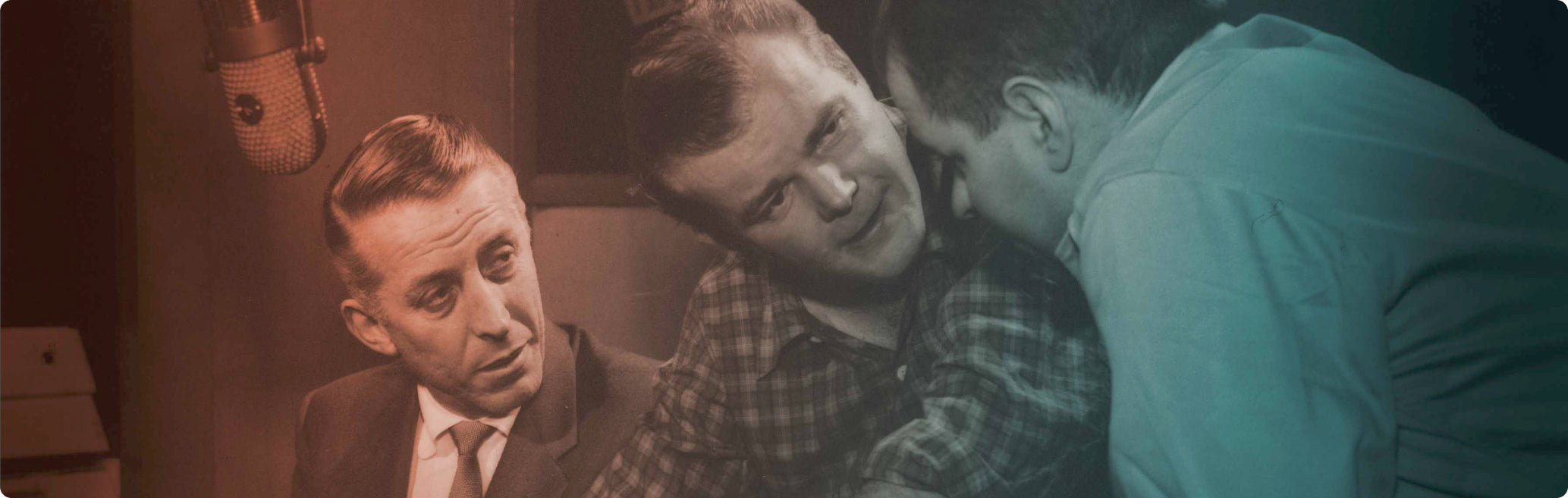
01 / THE ORIGINA bathroom, a booth, and the father of modern recording
To understand the company you have to start with Bill Putnam Sr., who is widely credited as one of the fathers of modern recording. In 1947, engineering a novelty song called "Peg o' My Heart" for The Harmonicats, he ran the sound through a bathroom to get a splash of echo - one of the first uses of artificial reverb on a commercial hit. He is also credited with inventing the vocal isolation booth, the first U.S. multiband equalizer, and the modern layout of the recording console itself.
He was, by reputation, the favorite engineer of Frank Sinatra, Nat King Cole, Ray Charles and Duke Ellington. He founded Universal Audio in 1958 as the manufacturing arm of his Hollywood studio operation, building the tube processors and consoles that other studios wanted to buy. Through a 1967 rebrand the company became UREI, and it was under that banner that the 1176 and LA-2A cemented themselves as the compressors everyone copied.
Putnam Sr. died in 1989. A decade later, his sons Bill Jr. and Jim Putnam re-established the Universal Audio name. Bill Jr. has said it began almost as a side project while he was studying digital signal processing at Stanford - the goal was sentimental as much as commercial: recreate his father's classic gear, faithfully, for a new generation. That two-track approach, reissued hardware on one side and software emulation on the other, is still the shape of the company today.
02 / THE PRODUCTSSell it as a box. Sell it as a plugin. Sell it as a subscription.
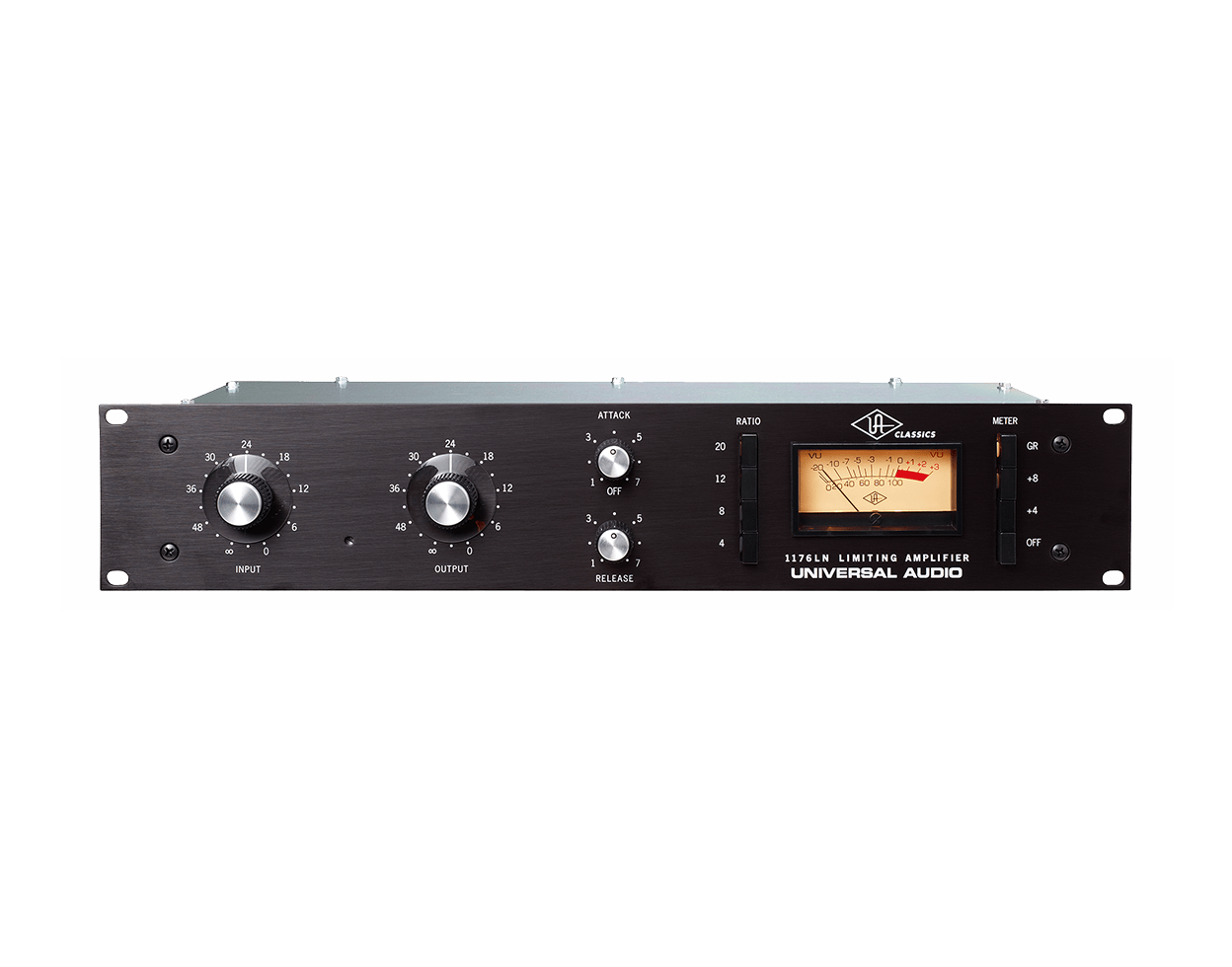
Here is the part that amuses anyone new to the company: Universal Audio will happily sell you the exact same compressor three different ways. You can buy the 1176 as hand-built analog hardware. You can buy it as a UAD plugin that models every quirk of the original. Or, since 2022, you can rent that plugin through a subscription called UAD Spark. Same sound, three price points, three kinds of customer.
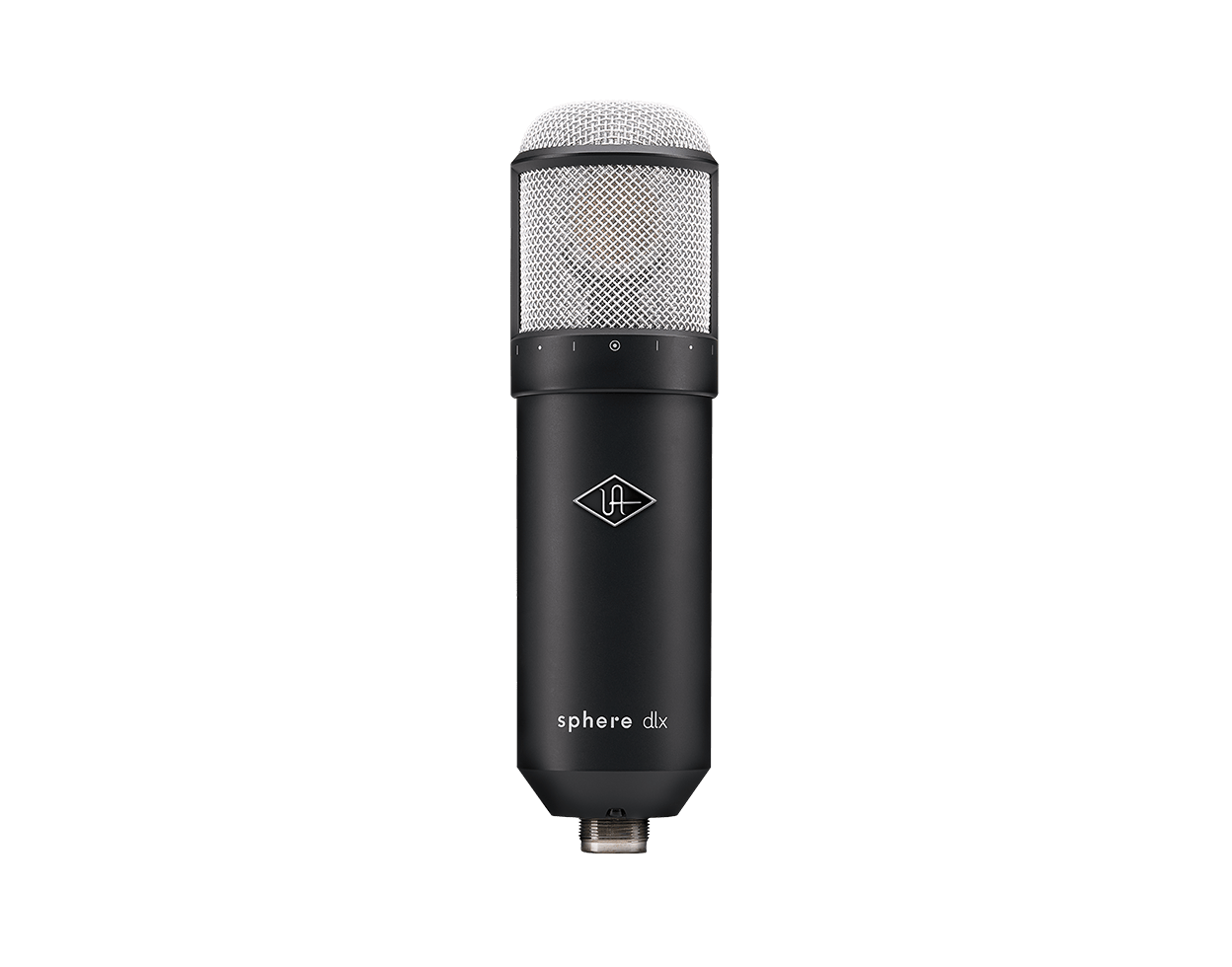
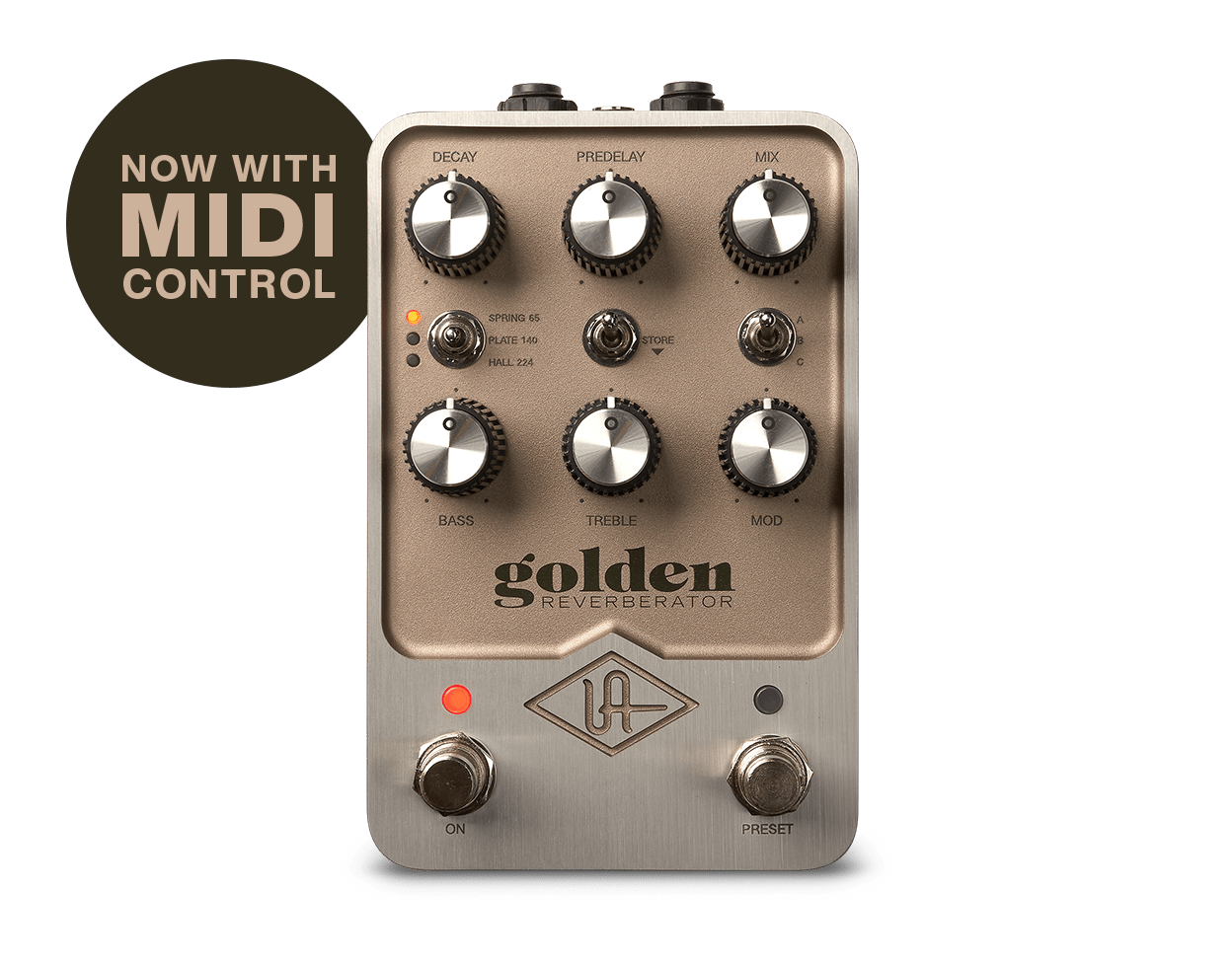
The catalog fans out from there. The Apollo line of audio interfaces, launched in 2012, was the breakthrough: it puts DSP processing chips inside the interface itself, so you can record a vocal through an emulated tube compressor in real time, with no perceptible latency. Its Unison preamp technology reshapes the input to behave like a classic Neve or API channel. For guitarists there is UAFX, a line of pedals that put UA's modeling into stompboxes. For anyone starting out there is Volt, a cheerful line of USB interfaces.
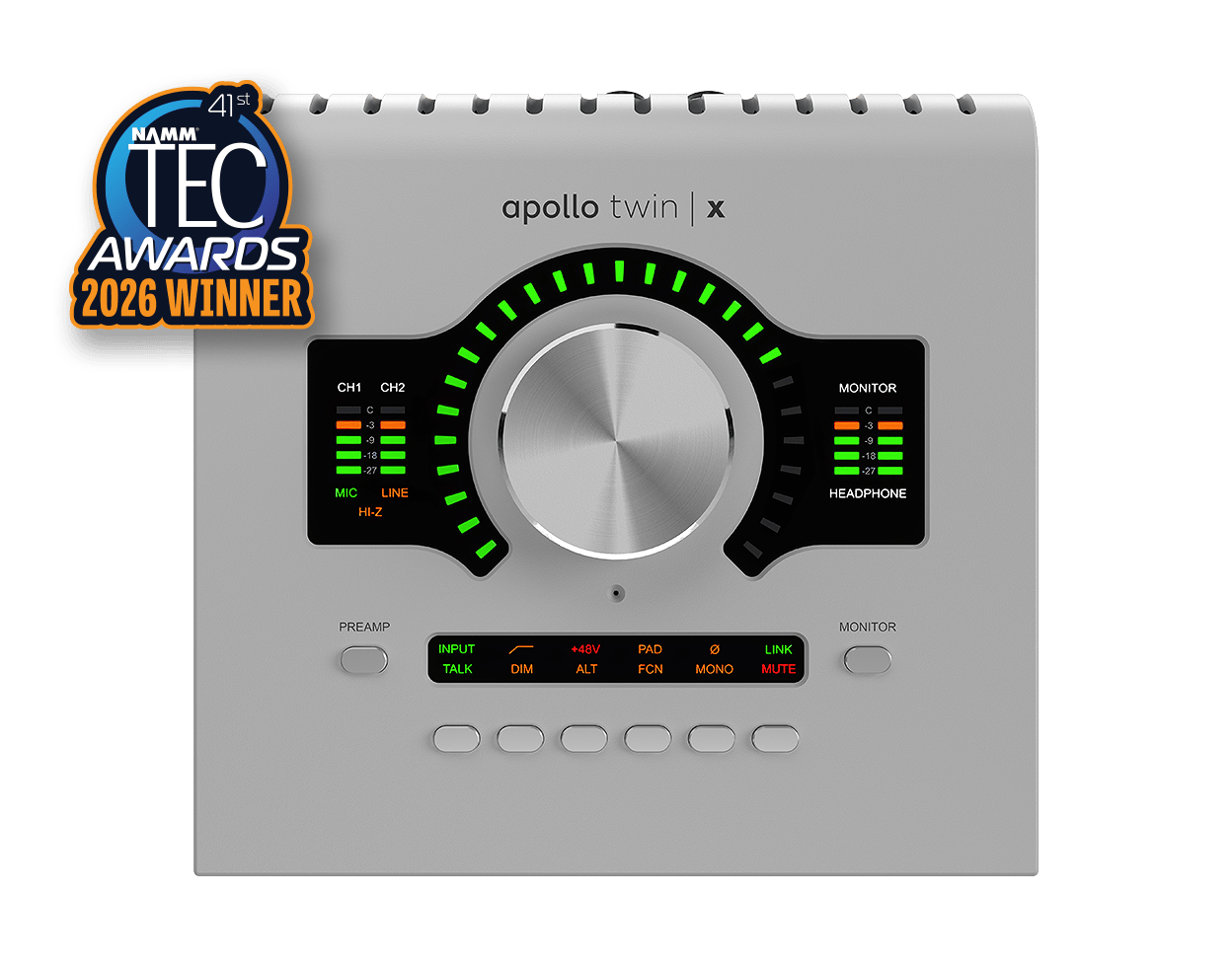
Then there are the microphones. The Sphere DLX and LX capture a sound and then let an engineer switch, in software, between emulations of a dozen classic Neumann, Telefunken and AKG mics - after the take is recorded. That technology came from Townsend Labs, which UA acquired in an asset purchase around 2021, folding the founders into its team to build future mics.
03 / THE MODELHow a heritage brand makes money
Universal Audio is privately held, so exact figures are scarce - third-party estimates put annual revenue around 35 million dollars, but that number is unverified and should be read as approximate. What is clearer is the shape of the business: it is vertically integrated in a way most of its rivals are not.
Hand-built analog compressors, preamps and interfaces - some assembled in California.
140+ UAD plugins sold outright, plus the UAD Spark subscription for native use.
Direct-to-consumer via a Shopify shop, plus a global dealer and retail network.
Most plugin companies - Waves, Native Instruments, Slate Digital, Plugin Alliance - live entirely in software. Most interface makers - Focusrite, Apogee, Antelope - live mostly in hardware. Universal Audio does both, and it owns the actual heritage of the classics it models. That last point is the real moat. A competitor can model an 1176; only Universal Audio can print the 1176 name on the hardware, work from the original design notes, and reissue it as the genuine article.
04 / THE FIELDWhere it sits, and who it's up against
The pro-audio plugin world is crowded, and Universal Audio's position is unusual because several of its competitors are also its partners. Neve, SSL and Manley all make hardware that competes with UA - and all license their names for official UAD plugin emulations. The rough shape of the competitive field looks like this:
Relative breadth of product stack, illustrative - not market share.
Its customers span the range. At the top are professional recording, mix and mastering engineers whose records you have heard. In the middle are project-studio producers and guitarists. And increasingly, thanks to Volt and Spark, there are complete beginners and content creators picking up a UA product as their first serious piece of gear. The company cites more than a million users worldwide.
05 / THE RECORDSixty-eight years, still winning awards
Longevity has not made the company quiet. At the 2026 NAMM Show, Universal Audio won a record six TEC Awards from eight nominations - recognition for products across interfaces, monitor correction, pedals and plugins. It picked up a Technical Grammy back in 2009, and Putnam Sr. himself received a posthumous Technical Grammy in 2000.
The recent roadmap shows a company still moving. In 2024 it announced UAD Verve Analog Machines, a suite of tape and saturation plugins. In 2025 it shipped the Apollo E Series, extending its sound from the studio to the live stage with Dante networking - a notable widening of the audience. In late 2025 came the Paradise Guitar Studio plugin. For a brand built on nostalgia, it keeps finding new rooms to walk into.
What Universal Audio has really figured out is emotional. It sells the feeling of a great old studio - the glow of a tube, the give of a real knob, the specific squeeze of a compressor that recorded someone famous - and it delivers that feeling in whatever form you can afford, from a 2,500-dollar box to a 99-dollar-a-year subscription. The gear changes shape. The sound the Putnams have been chasing since 1947 does not.
Explore Universal Audio
FAQQuick answers
What does Universal Audio make?
Professional audio hardware and software: Apollo interfaces, UAD plugins, UAFX guitar pedals, Sphere modeling microphones, Volt USB interfaces, and hand-built analog reissues of classics like the 1176 and LA-2A.
Who founded Universal Audio?
Recording pioneer Bill Putnam Sr. founded the original company in 1958. His sons Bill Jr. and Jim Putnam revived it in 1999; Bill Jr. is CEO.
Where is Universal Audio based?
Its headquarters is in Scotts Valley, California, with roughly 470 employees.
What is UAD Spark?
A subscription service that lets you run UA's plugins natively on Mac or Windows without owning UA hardware.
Do I need UA hardware to use its plugins?
Historically UAD plugins required UA hardware like an Apollo interface, but UAD Spark and native versions now let many plugins run directly on your computer.