A bassline is a small thing to build a company around. It arrives, repeats, and either makes you move or makes you reach for the volume. Edward Balassanian looked at electronic music and saw something useful in that repetition: the parts could remain recognizably human while their arrangement kept changing. Aimi began with an invitation to stop treating the recording as the final word. Today, its website offers a studio where an AI producer gets the music started and leaves you the controls.
- The original idea: artists supply musical ingredients; software keeps arranging them.
- The current offer: a browser studio with editable tracks and an AI producer.
- The commercial question: can useful control turn an interesting demo into a habit?
The loop that refused to leave
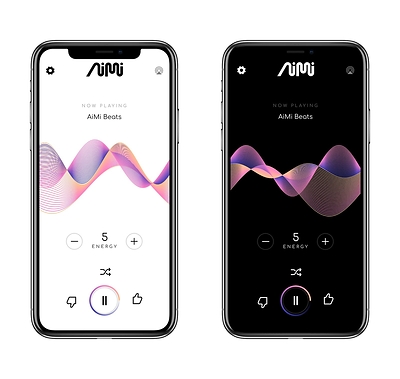
Aimi was founded in 2019. Its first public app arrived in May 2020, offering electronic music that listeners could steer by adjusting its energy. There were thirty free minutes a day; a subscription cost $5.99 a month. The pitch addressed a familiar irritation: a playlist can match your mood and still become tiresome when the same recordings return. Aimi proposed keeping the mood while changing the performance.
Balassanian had studied computer science and worked at Microsoft before building several companies. He approached music with a platform builder’s appetite for reusable parts. But reusable parts need taste. In September 2020, Carl Cox became the first member of Aimi’s artist advisory board. The board gave artists a voice in the platform’s development. There is something pleasing about asking a veteran DJ to help supervise a machine’s manners.

A hundred small musical decisions
In a 2022 MusicRadar interview, Balassanian described asking artists for about a hundred loops, typically four bars each. Software sorted them into musical roles, including beats, bass and melody, and identified qualities that could guide their combinations. Pitch and tempo adjustments helped pieces fit. Mixing, mastering and effects happened as the experience unfolded. A modest collection of musical ideas could support hours of variation.
“The AI is really an instrument that the artist uses to create the music.”
Edward Balassanian · MusicRadar, 2022
That distinction explains the early focus on electronic music. Loops, texture and changing arrangements already belong to its vocabulary. Rinzen and ATTLAS added experiences in 2021; by a 2023 interview, Balassanian reported more than two hundred artists participating. The machine had a role familiar to musicians: working with material someone else had made. Its novelty lay in doing that continuously, with the listener allowed to interfere.
A soundtrack with a job to do
Once music becomes adjustable, other jobs suggest themselves. A video needs a transition at the cut. Dialogue needs room. A game or fitness app may need its music to change with activity. These are timing problems as much as composition problems. Aimi’s historical enterprise work addressed them with adaptive streams and automated soundtracking, rather than asking every customer to commission a fresh recording.
Aimi Sync appeared publicly in 2024. In a developer showcase published the following April, Balassanian described a system that segmented video into scenes, mapped music to them and lowered the soundtrack beneath speech. Aimi Script supplied a language for arrangement and mixing instructions. The engineering challenge was making those instructions steerable while preserving musical coherence and speed. In this setting, a beautiful thirty-second demonstration would be insufficient: the music had to behave through the whole edit.
The expensive discovery: smaller can be useful
In November 2021, Aimi announced a $20 million Series B led by Great Mountain Partners, with participation from Founders Fund. That bought room to pursue a platform stretching beyond its listening app. It also placed the company between different appetites: fans seeking an experience, artists seeking expression and businesses seeking dependable audio. One engine could serve all three; one sales pitch would have a harder time.
Series B led by Great Mountain Partners
with participation from Founders Fund
In an interview recorded in July 2024 and published by Fund/Build/Scale in March 2025, Balassanian described customer discovery with DJs and a decision to downsize after reaching what he called product-market fit. He regarded the reduction as beneficial. Read as a business lesson, that is an argument for focus after discovery. Finding a use for the technology did not oblige Aimi to keep every possible organization around it.
The producer now works in turns
The current website centers on Aimi Session. Its promise is an editable multitrack project in the browser: prompt an AI producer, then change the arrangement through conversation or manual controls. MIDI and virtual instruments join the audio tracks. That makes revision the product’s central attraction. An agreeable first draft still leaves room for the awkward bridge, the crowded chorus and the bassline you have decided to sack.
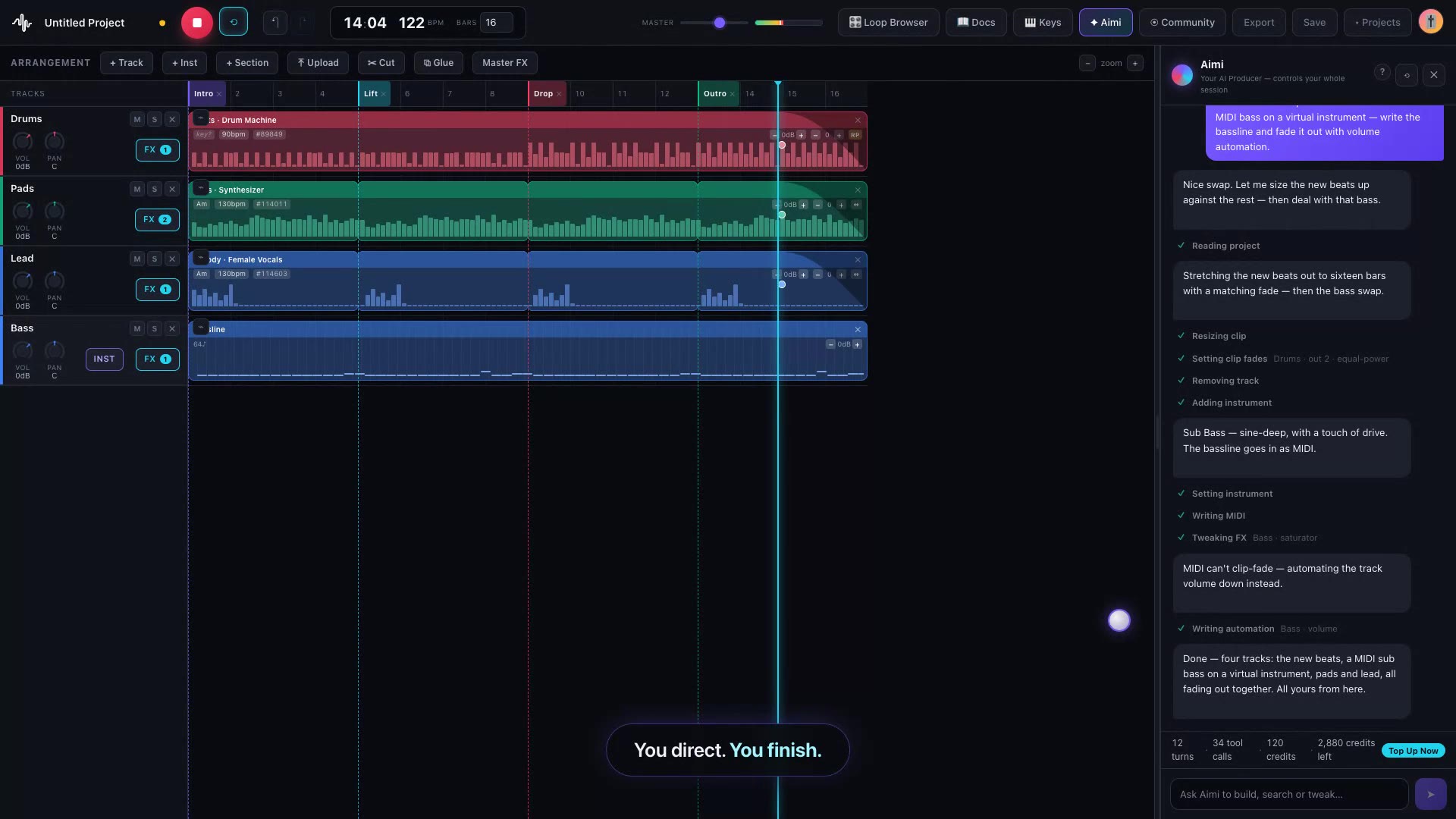
Studio operations and exports are advertised as free. AI assistance costs ten credits per turn, including replies; packs start at $6. The current signup grant is three thousand credits before November 1, 2026. The ingredients have boundaries, too. Session’s terms license library samples for use inside music, prohibit reselling them separately and exclude private projects from training. Published work can enter training, with controls to withhold it from future runs.
Leave yourself something to change
A sensible trial is small: make a short arrangement, replace one instrument, alter one transition and export it. Listen for whether those decisions improve the result. That test suits a creator who wants a starting point and intends to intervene. Someone needing a particular famous recording, exclusive ownership of a library loop or exact obedience to every instruction will find different constraints. Aimi’s terms explicitly acknowledge that its producer makes mistakes.
Across its listening app, soundtracking tools and studio, Aimi keeps returning to an unusually practical question: what should remain adjustable? For a listener, the answer was energy. For a video editor, timing. For a producer, the project itself. The lesson another builder can borrow is to identify the decision the user needs to retain, then make that decision easy. Aimi’s most persuasive demonstration will be the moment someone hears a change they chose.