At Suno's Cambridge headquarters, a research scientist and CEO Mikey Shulman sit at a studio desk and ask a computer for Afrobeat, flute, drums and 90 beats per minute. The first result has a flute line they like. The percussion wants another pass. They adjust the track. A song has begun in the ordinary way, with somebody hearing a problem and trying something else, though neither person has picked up an instrument. The office occupies a nineteenth-century building. The sound coming from the speakers belongs to a much newer argument.
Shulman has spent much of his life on the instrument side of that argument. He started piano at four, took up bass guitar at twelve and played in rock bands through high school and college. He remembers those bands fondly. A bass still hangs behind him in video interviews. His technology may let someone begin with a typed sentence, but the person running the company knows the peculiar pleasure of trying to make a group of humans land on the same beat.
That is the useful place to begin his story. Suno is often described by what it can produce: a song with vocals from a short prompt, a revision to a chorus, a new sound for a fragment of an older recording. Shulman's interest reaches past the finished file. He wants the making itself to become something more people do. He has said 90 percent of Suno's daily users make something. On a conventional music service, the ordinary gesture is pressing play. On his, it is an attempt.
“The format of the future is music you play with, not just play.”Mikey Shulman, 2026
01 / Before the first promptA musician in the laboratory
Shulman's route to a music company made several stops that look unlikely from a stage. He studied physics and quantum computing at Harvard, earning a doctorate. He has described his own physics ability with the same self-deprecation he applies to his musicianship. What he did well, he says, was work where quantum mechanics met low-temperature microwave engineering. The larger lesson he took from the lab was to look between fields that did not usually share a room.
After graduate school, he joined Kensho, a Cambridge financial technology company, as a software engineer. He became its first machine learning hire and eventually led machine learning. Kensho's work included making sense of audio from earnings calls. Shulman later taught natural language processing for finance at MIT Sloan. A listener could be forgiven for failing to hear a pop song in that résumé. He could hear a possible connection: sound was everywhere, while the machine learning industry's attention had largely gone to words and pictures.
The other connection was personal. He loved playing music while cheerfully describing himself as an “aspiring mediocre musician.” He told an interviewer that he played piano, bass and, with less confidence, guitar and drums. In the same conversation he confessed to a spray bottle and one of those little combs used by people who approach coffee beans as a delicate engineering problem. He declined to make coffee videos. Some obsessions are better kept between the grinder and its owner.
Joined Kensho and moved into machine learning leadership.
Co-founded Suno with Georg Kucsko, Martin Camacho and Keenan Freyberg.
Suno emerged from stealth with a song-making app.
Announced v6 models developed with music industry partners.
02 / The calculationA pleasant occasion to be wrong
Suno did not begin with its founders confidently promising instant songs. Shulman has described an early calculation that put convincing music generation a couple of orders of magnitude beyond what they could build. Sound is a continuous, unruly signal; a song asks for structure, voice, timing and texture at once. The founders first worked on using similar technology to understand audio. Their experiments then suggested a way to represent it more efficiently. The estimate changed.
The first songs, by Shulman's account, were terrible. The founders stayed up late making them anyway. That detail matters. Their work had crossed a threshold before it sounded ready for anyone's playlist: generating and changing a song was already enjoyable. In 2023 Suno emerged from stealth. A person could describe a piece of music and hear one come back, with original vocals as part of the result. Shulman and his team were offering an entrance to a practice that had usually required lessons, collaborators, equipment or all three.
He has argued that music resists the language of correct answers. A financial transcript can be accurate or inaccurate. A melody has more troublesome standards. The song you make for a friend may have no interest to a stranger and enormous value to the two of you. That distinction gives Suno a different kind of product problem. The company can improve sound quality and controls, but it cannot reduce the meaning of a song to a score on a chart.
The scale has still become hard to ignore. Suno announced a $125 million raise in 2024. In June 2026 it announced more than $400 million in new funding at a $5.4 billion valuation. These are company milestones, not a measure of what any one piece of music is worth. They do show how much capital has gathered around Shulman's bet that the listener will increasingly want a hand on the controls.
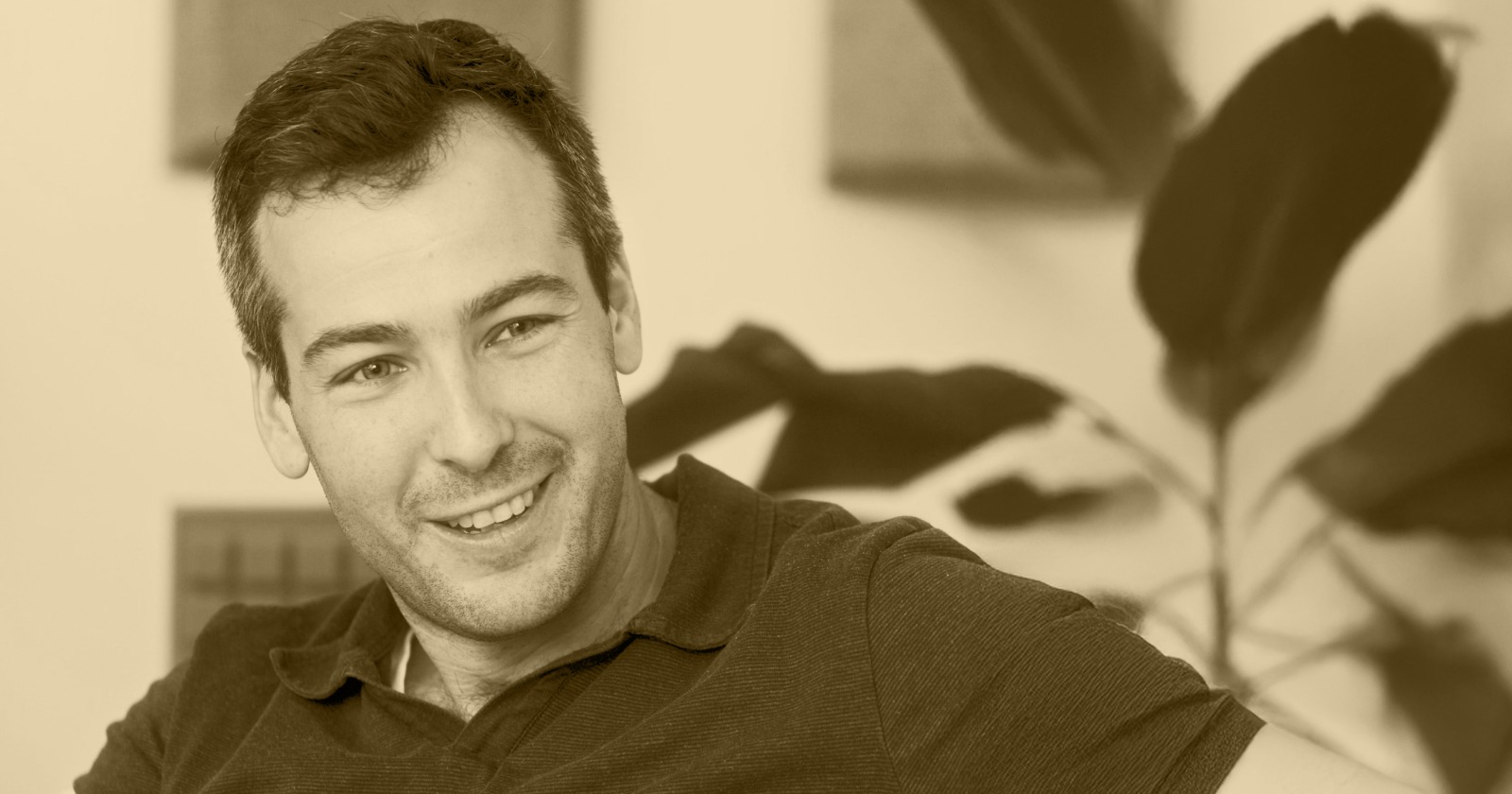
03 / The difficult conversationWho gets to touch the recording?
A tool for making new music also raises an old question about ownership. Major record companies sued Suno and rival Udio in 2024, alleging infringement in the training of their systems. Musicians and songwriters have asked how their recordings and compositions are used, whether their voices can be imitated and who gets paid when a new tool draws on a culture they built. Shulman has defended Suno's approach and said that working with the music industry is necessary. Those positions meet in courtrooms, negotiations and, now, product design.
One remark made the disagreement more personal. On a podcast, Shulman said much of the time spent making music is not enjoyable, referring to the repetitions required to master an instrument or production software. The line traveled far beyond its context. He later said he wished he had chosen different words, and said he plays music every day for fun. For someone who once lived for school bands, it was an awkward sentence to have standing in for a life's affection.
The response also exposed a real tension. A shortcut can welcome somebody who has never made a song. It can look very different to someone whose living depends on the long route. Shulman's answer has shifted toward participation with permission. Suno reached a settlement and partnership with Warner Music Group in 2025. In 2026 it announced partnerships with BMG, then Believe and TuneCore. Those agreements describe opt-in opportunities for artists and songwriters, along with work on new models and distribution. They are consequential steps; they do not make every disagreement disappear.
“Music isn’t like that. There’s not a right or a wrong answer. It’s not a problem to solve.”Mikey Shulman, on why he chose music
04 / The new instrumentThe chorus can change
In September 2026, Shulman introduced Suno's v6 family, developed with Warner, BMG and Believe. The three versions have different jobs: one aims for precision, one for surprising results, and a faster version is available to everyone. The more telling changes are smaller than a version number. A maker can ask for a chorus to change while leaving the rest of a song alone, replace a line of lyrics, or combine parts of tracks they have made. The product is moving from “make me something” toward “help me work on this.”
That change brings the founder's biography back into view. The bass player knows that a good idea often arrives before a polished performance. The physicist knows an early estimate may be wrong. The engineer knows that a tool improves when a person can say what to keep. None of those experiences settles the cultural questions around AI music. Together, they explain why Shulman keeps building inside the argument rather than waiting for it to end.
He has also talked about music becoming more social and interactive, something people do with one another rather than a finished object delivered to a silent audience. There is a playful version of that future: a family making a funny song that nobody outside the house needs to love, friends changing a beat together, a songwriter testing a chorus before a studio session. There is a serious version too, in which working artists can choose when and how their names, voices and compositions enter these experiences. The product will be judged by how well it supports both.
For now, the scene in the Cambridge studio is a fair portrait. Shulman hears the flute, hears the percussion and tries again. The prompt is only the opening move. What follows is a series of choices about sound, taste and other people's work. He has built a company on the hope that many more people will enjoy making those choices. The next test is whether the people who have always made music can recognize a place for themselves in the room.