He wrote music for Hans Zimmer's films. Then he built the tools that everyone else writes with.
Gregg Lehrman runs Output, the Los Angeles music software company whose plugins quietly sit inside an absurd number of the songs you already know. The catch is that he never set out to run a software company. He set out to write music, got stuck, and reached for an instrument that did not exist. So he made it. That instinct - build the thing you wish someone had handed you - is the whole story.
Output's products are not background utilities. They are the sound. The company's tools turn up in records by Billie Eilish, Beyonce, Coldplay, Kendrick Lamar, Skrillex, Justin Timberlake, Drake and Rihanna, and in scores for Stranger Things, Game of Thrones, Westworld and Black Panther. When a producer needs a texture that feels both modern and impossible, there is a good chance the texture came from something Lehrman's team shipped.
What makes that strange is the route he took. He did not arrive from a coding bootcamp or a venture incubator. He arrived from the scoring stage, from the unglamorous reality of pitching for film and TV work and mostly losing. He says it plainly: for every 20 projects he went up for, 19 said no. The number is not a humblebrag. It is the origin of his nerve.
Lehrman grew up in New York City and graduated cum laude from Cornell University before heading west. His first real apprenticeship was inside the machine of Hollywood film music, assisting Hans Zimmer on scores including The Last Samurai, Matchstick Men and Tears of the Sun. By 26 he was the youngest executive producer at Universal Publishing.
Then came the catalog of a working composer who could write to anything: Saturday Night Live, The Daily Show, The Colbert Report, Super Bowl XLIX, the 2014 Olympics, League of Legends, and trailers for Avatar, The Avengers, Inglourious Basterds and Tron: Legacy. He was good at the job. He just kept hitting the same wall - the software could not do what his ear wanted.
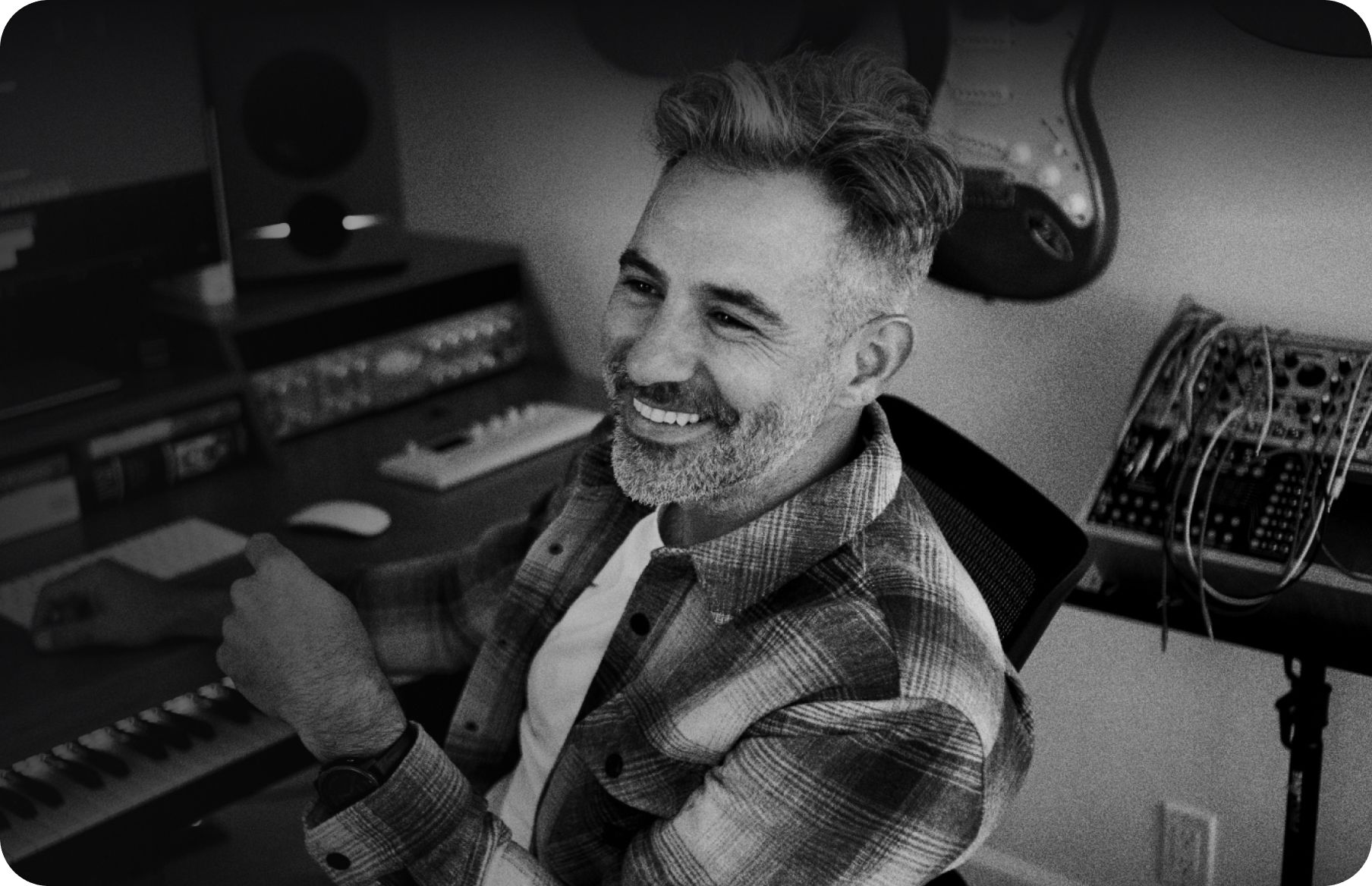
It doesn't matter if you fail. That's part of the game.
Gregg Lehrman
Output launched in 2013, and Lehrman ran it like a craftsman, not a startup. The plugins came one at a time, each one solving a specific itch.
One of the first cloud-based music plugins. An ever-growing library of loops and instruments that updates constantly, for a monthly subscription. Software as a studio.
A granular effect that shatters any sound into something new. A favorite for producers chasing textures that feel a little broken on purpose.
A modern vocal engine - chops, slices and sustains built from the human voice, the kind of instrument that ends up under a chorus you can hum.
Reverse sound design as an instrument. Everything in it is recorded, then played backward, which is exactly as cinematic as it sounds.
The through-line is the cloud. "The sounds live in the cloud and can update constantly," Lehrman has said, describing a model where the instrument keeps growing after you buy it. It was a quietly radical idea for an industry used to shipping a boxed plugin and walking away.
Most founders sand down the part of their story where they lost. Lehrman leans into it. The rejection rate of a freelance composer - missing 19 gigs out of 20 - is not the prologue to his confidence. It is the source of it.
"Having thick skin enables you to put yourself out there and not care if you fail," he told MusicTech. It is a useful thing to believe when you bootstrap a software company for seven years before taking a cent of outside money. Output was profitable and product-led long before Summit Partners showed up in October 2020 with a $45 million Series A - the company's first-ever raise.
Along the way he won the Huffington Post "Build a Business" competition in 2014, outlasting 22,000 entrants, and collected a 2016 ASCAP Award for his own compositions. He kept the composer's union card even as the CEO title took over.
Lehrman rarely says his software is "in" a hit. He doesn't have to. The names do the talking.
And on screen: Stranger Things, Game of Thrones, Westworld and Black Panther. The tools are invisible by design. The output is everywhere.
Output is never going to be in the business of writing music for people. That's not who we are.
On where Output draws the line with AI
It would be easy, in 2026, for a music software company to point its models at a melody and call it a feature. Lehrman has been pointed about not doing that. Output adds AI, he says, to expand what the tools can do - chromatic instruments, smarter sound design - not to ghost-write the song.
"We double down on those people pouring their own blood, sweat and tears into writing their music," he says. The customer he cares about is the one doing the hard part.
That stance is part conviction and part business sense. "You have to be incredibly good and unique to stand out," he argues, and "people ultimately want to support other people making music." In a flood of automated everything, he's betting that the human fingerprint is the product, not the obstacle.
He built Output for himself first. "I built for myself because I wanted a creative tool to help with my own music." The rest of the industry just happened to want the same thing.
He assisted Hans Zimmer on The Last Samurai before he ever shipped a line of software.
His own music has soundtracked Saturday Night Live, the Super Bowl and League of Legends.
Output was bootstrapped for seven years - profitable and product-led before a dollar of venture money.
The company started, in his telling, as a cure for his own writer's block.
He insists Output will never write a song for you. Only help you write it yourself.