The noise that caught Jonathan Morrison's attention was barely a noise at all: the small alert made when an iPhone 12 met its MagSafe charger. He noticed the animation first. Then he unmuted the phone, heard the sound, captured it, and opened Logic Pro. By Sunday, a passing curiosity had become a song with Julia Wolf. The whole thing took a weekend, a screen recording, an AirDropped audio file and the willingness to ask whether a charging cue might have a beat.
There is a wonderfully literal quality to the story. Morrison had spent years explaining what new phones could do. This time he made a phone do something he wanted. The chime became a rhythm; Wolf supplied the voice; producer Jackson Foote helped shape the track. The technology was neither a prop nor a verdict. It was material. For a creator known to millions for sleek reviews of gadgets, that distinction opened an unexpectedly roomy door.
The song, “MagSafe,” appeared on Jonathan & Friends, a music project Morrison launched in 2020. His own project site says it passed one million streams. That is a striking journey for a sound designed to announce that a magnet has found its place. It also makes a useful entry into Morrison's career: a reviewer with a trained eye for detail who gradually became as interested in the work a tool could help make as in the tool itself.
The review desk was already a studio
Morrison's TLD channel began in 2010, in the era when a technology video could still feel like a camera aimed at a desk and a person trying to get a new device to turn on. Over time, his work became known for careful image making: bright product photography, deliberate lighting, clean sound and a sense that the review itself was a film. The channel now draws roughly 2.5 million subscribers. The audience came for phones, Macs and the perpetual small drama of a new box being opened.
The craft behind those videos matters to this story. A phone review requires a lot more than an opinion about a phone. Someone has to light the thing, move the camera, record the voice, edit the sequence and decide what deserves a close-up. Morrison's videos made those decisions visible without turning each one into a lecture. By 2017, Forbes had included him in its business and technology influencer list. The magazine also noted a curious side job: his “crispy” voice had been used for Samsung device advertisements. A good microphone had apparently become part of the brand.
That year, and the years around it, gave him a place among the people shaping what a technology video could look like. In 2018 he helped film Marques Brownlee's interview with Elon Musk, then published a behind-the-scenes account of the production. The gear list in that video runs through cinema cameras, wireless microphones, a recorder, stabilizers and a focus system. Its length makes a point of its own. A conversation that appears effortless on screen can demand a small expedition behind it.
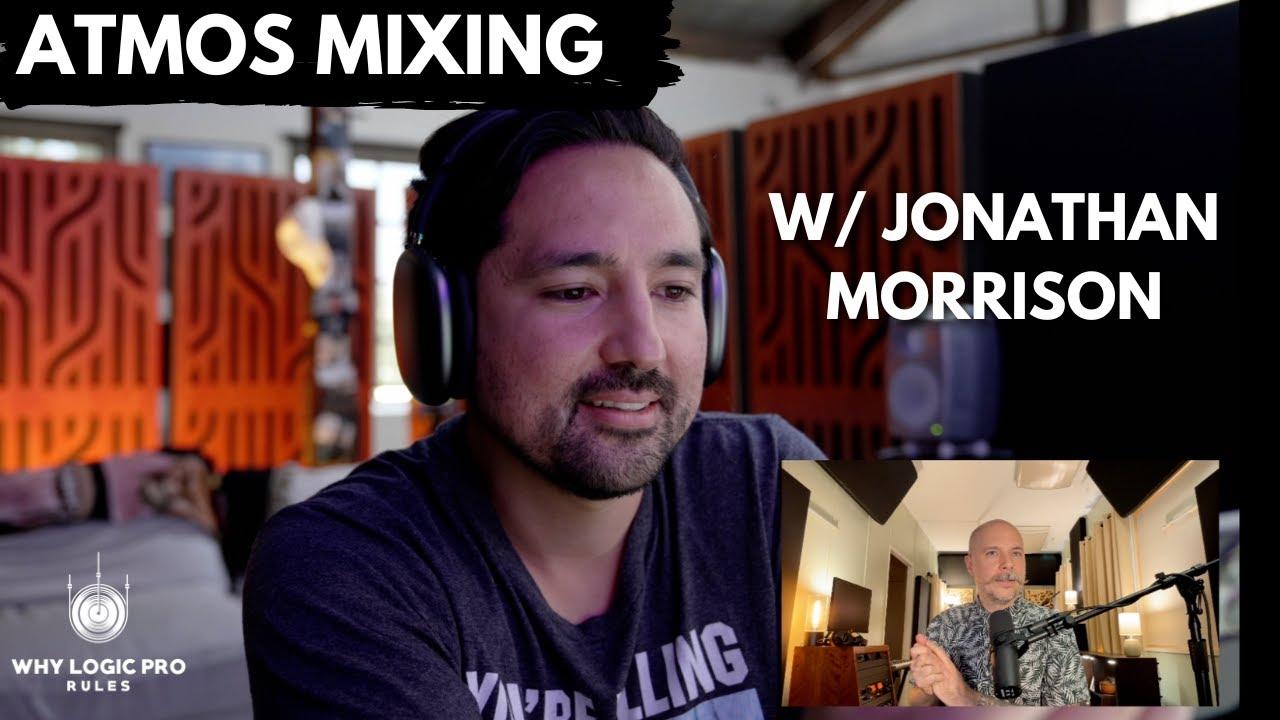
The interview also made one of Morrison's habits easier to see: he is drawn to process. His behind-the-scenes film lingers on the people and the decisions that sit outside the finished interview. That same curiosity would later lead him into music sessions where the device being tested had to earn its place by helping somebody produce something.
A computer gets a part in the song
When Apple released the 2019 Mac Pro, Morrison received early access to the machine. He could have lined up performance numbers and called it a day. Instead, he took it into a New York recording studio with Wolf, Foote and producer Andrew Dawson. They made a song, “Immortale,” while the computer did the heavy work. Morrison later called the gathering an “Avengers moment.” It is easy to hear the excitement in that phrase: people from different disciplines, sharing a room, seeing what happens.
This was a review with a cast. The music gave the computer a demanding task, but it also gave the video a reason to exist beyond the launch cycle. Wolf had already entered Morrison's orbit through Foote, a member of the pop duo Loote. Morrison had reached out because he admired the group's music. Foote introduced him to Wolf after they began working together. When Morrison tested a 16-inch MacBook Pro, Wolf tried its speakers and microphones. One experiment made the next one easier to imagine.
A year later came the MagSafe weekend. Morrison noticed the iPhone's charging animation, found the alert sound, and built a simple beat around it in Logic Pro. An idea crossed the country to Wolf. She recorded vocals; Foote joined the production; the track came together in about 48 hours. The finished work carried a romantic story of its own, but its unlikely starting material kept the playful spirit of the experiment intact. Few product notifications can claim such an afterlife.
“There's something like music that makes my brain happy in ways that no other camera or USB-C port could.”Jonathan Morrison
The line explains why Jonathan & Friends needed a separate home. Morrison could keep making TLD videos and still let the music have its own character. His project site describes it plainly as a collaboration with musicians and artists he likes. “MagSafe” led into “Start Up” with Loote and emma løv. Later credits include work with Ni/Co. The name on the channel is his, but the “& Friends” is the operating principle.
A few turns of the dial
The interesting part happens after unboxing
Morrison continued finding ways to make devices answer creative questions. In 2021 he shot music videos with Wolf using the iPhone 13 Pro's Cinematic mode. The setting was Claremont, California; the equipment was a phone rather than the usual collection of dedicated camera accessories. That kind of test is more revealing than a feature list. It asks how the image behaves when a person walks, the light changes and the singer has a song to carry.
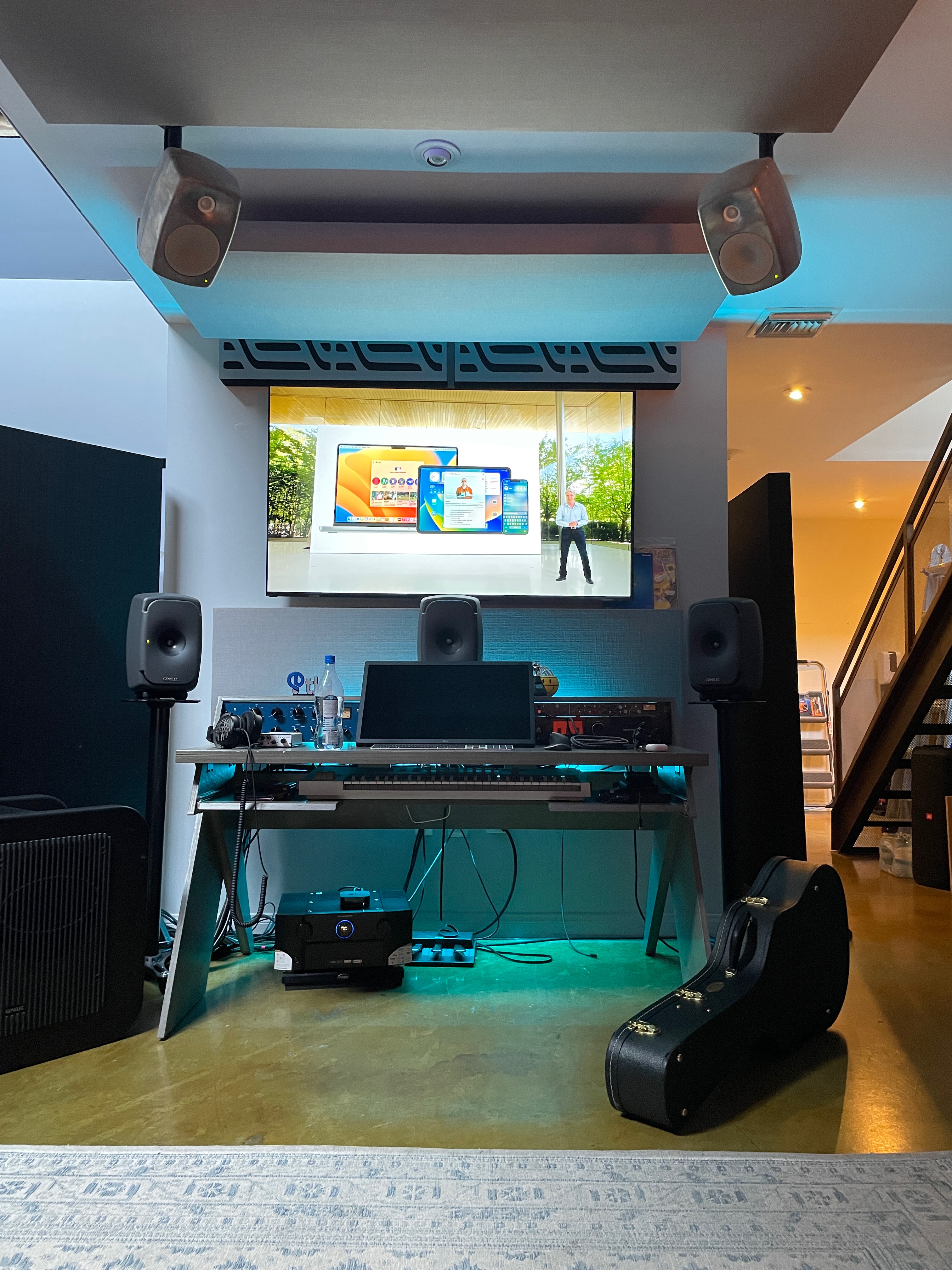
His interest in sound grew just as specific. By 2022, a visitor to his studio described a 7.1.4 Genelec speaker array, driven through an Apogee interface and Logic Pro. The arrangement is built for spatial mixing, where sound can move around and above a listener. Morrison discussed the subject on The MacRumors Show that year. The setup says something about his instincts: once a format catches his attention, he wants to hear it in the room, and he wants other people to hear it too.
There is a generous streak in the way Morrison uses his access. In 2022, Apple collaborated with him to give two creators Mac Studio setups. The packages went beyond the computer, with displays and audio gear among the tools. Morrison chose Ni/Co as one of the recipients, saying he was pleased by the progress the duo had made. The gift fit the logic of his other projects: put capable tools near people with ideas, then watch what they make.
None of this means the technology channel disappeared. TLD still holds the reviews, desk setups and experiments that made his name. It means the center of gravity shifted. A camera can be evaluated in a spec table, and it can be taken outside to make a music video. A computer can be measured, and it can sit in a studio while a singer records. Morrison's most personal work often begins when the second half of those sentences starts.
Passing the camera across the table
In 2026, Morrison put another project in motion: an in-person Los Angeles workshop called Tech But Human. The advertised subjects were practical - lighting, audio, iPhone filmmaking and his YouTube approach. But the welcome note on its page gives away the emotional center. “The best thing about creating is when the thing you make inspires someone else to make something,” he wrote. It sounds like the sentence a person arrives at after years of moving between a camera, a screen and a room full of collaborators.
The workshop also makes his unusual range coherent. He can discuss a light because he has used one on thousands of shots. He can talk about a phone camera because he has taken one into a music video. He can talk about sound because he sampled a charger and built a listening room. The lessons are technical, but the cases are human: a singer on a sidewalk, a duo at a new workstation, a visiting producer hearing a mix spread around the room.
Morrison's career began with the useful question every reviewer asks: does this thing work? As his projects multiplied, another question moved beside it: who might make something with it? The two can coexist happily. The person who worries about image quality can also be the person who sends a rough beat to a singer on a Saturday afternoon. The person who understands an expensive computer can choose to show the song it helped make.
That MagSafe alert was meant to confirm a connection. In Morrison's hands it did more than that. It connected a reviewer in Los Angeles to a vocalist across the country, turned a weekend into a track, and made room for a second channel. A very small sound carried a large idea: sometimes the most interesting feature of a device is the invitation it gives somebody else.