Long before Jeff Fluhr had a ticket marketplace to sell, he had a fabric animal to distribute. Snapazoo was a soft toy with snaps that could turn it into different creatures. He thought it deserved a wider audience. Still a child, he contacted the company and began approaching shops around New Jersey and the New York area. His mother supplied the transport. Even an ambitious distributor occasionally needs a lift.
The arrangement contained a lesson rather less cuddly than the merchandise. Customers discovered they could buy directly, and the young intermediary lost his place. It is an excellent education in business, though perhaps a severe curriculum for someone whose sales territory depends on a parent’s availability.
Years later, Fluhr would help build a business around transactions between strangers. StubHub made its place in the exchange useful enough to keep. A buyer could find a ticket, pay for it and expect somebody to take responsibility if the arrangement went wrong. Behind that ordinary expectation sat a series of quite deliberate choices.
A toy business, with mother as chauffeur
Fluhr’s childhood enterprises were small and practical. He also bought wholesale candy and resold it to classmates, an arrangement the school authorities regarded less enthusiastically than his customers. These were exercises in finding demand, locating supply and collecting the difference. The financial model could fit in a schoolbag.
There were examples of working for oneself closer to home. His grandfather ran a women’s clothing shop in Manhattan, which his mother later operated. His father worked as an engineering executive at AT&T before starting businesses himself. Commerce belonged to the family’s everyday world.
The toy episode is especially revealing in retrospect. Introducing a customer to a supplier can create value once. Remaining useful afterwards requires something more. Fluhr would eventually write about the risk of customers bypassing a marketplace in considerably more formal language. He had already met the problem while selling something that could become a stuffed animal.
A very inconvenient time to start
At the University of Pennsylvania, Fluhr studied engineering and finance. He then worked at Blackstone in New York, followed by Thomas Weisel Partners in San Francisco. Finance gave him experience examining companies before he had to operate one. Moving into a startup would make the examination rather more personal.
He entered Stanford Graduate School of Business in 1999. There, he and fellow student Eric Baker considered a ticket market that was large, fragmented and burdened by suspicion. A spare seat might be perfectly legitimate; the person selling it could still seem like a gamble. Fans had money and enthusiasm. What they lacked was reassurance.
The pair entered Stanford’s business plan competition and co-founded the company in March 2000. Fluhr left school to build it. The dot-com downturn followed almost immediately. As timing goes, it was the entrepreneurial equivalent of arriving at a party just as somebody begins collecting the glasses.
The first website launched in October 2000 with the essential tools to list and buy tickets, initially focused on the Bay Area. That concentration mattered. A marketplace needs enough relevant buyers and sellers in the same place to make visiting worthwhile. A glorious national ambition is little comfort to somebody seeking two seats for Saturday.
The work behind the guarantee
Tickets have an unforgiving characteristic: the inventory expires. A seat for yesterday’s game is a souvenir with disappointing resale prospects. Buyers need the correct ticket in time, and sellers need access to people who actually want the event. Each failed handoff threatens more than a routine online order.
StubHub took on the awkward parts. It coordinated delivery through a FedEx integration, handled customer support and guaranteed transactions. Payments passed through its accounts, allowing refunds when necessary. The company accepted responsibilities that a more detached listings service could leave to its users.
Fluhr later described the objections: extra operational work could squeeze margins and complicate expansion. Those were real tradeoffs. A guarantee requires a business willing to stand behind it, and a support promise requires people available when a transaction becomes troublesome.
A conceptual diagram of StubHub’s operating choices, rather than a measurement of today’s service.
The reasoning was straightforward. A ticket marketplace could compete on how comfortable people felt using it. Showing more listings helped; so did making a nervous customer believe there would be an answer on the other end. Respectability, in this business, had to survive the actual purchase.
The commercial results eventually attracted eBay. In January 2007, the companies announced an acquisition valued at approximately $310 million. An earlier attempt at a deal, around $20 million in 2002, had fallen apart. Five years had made for an expensive interval between conversations.
The chief executive learns to decide
For Fluhr, running StubHub also meant learning management without a gradual introduction. He had moved from finance into the chief executive’s chair. There was no long apprenticeship supervising a department before being asked to supervise the whole enterprise.
Early on, he brought difficult decisions to his board and asked what the directors thought the company should do. One board member advised him to arrive with a recommendation. The distinction sounds slight until one considers the responsibility attached to each version of the meeting. Directors could offer judgment; the CEO still had to make a choice.
“Work really hard. Find great people. Test and learn, test and learn.”
Jeff Fluhr, 2012
Hiring brought another adjustment. As the business grew, he sometimes sought candidates who had already held the exact title and performed the exact tasks. Later, he gave greater weight to curiosity, chemistry, optimism and the ability to learn. A familiar résumé could make a hiring decision feel safe without making the person right for the company.
These are fairly unglamorous lessons, which is part of their usefulness. A founder can have a persuasive view of an industry and still need help conducting a board meeting or choosing a colleague. The ticket idea did not arrive with an instruction manual for managing the people who would build it.
Another room, another conversation
After StubHub came Spreecast, launched in 2011. The product allowed people to take part in live video conversations, with an audience able to watch and engage. Fluhr wanted to bring more of the experience of speaking face to face into a social internet largely organised around text and posts.
The operating experiment extended to the team. Spreecast held hack days, then hack weeks, giving engineers time to make things outside the ordinary priority list. Colleagues who did not write code were encouraged to suggest features too. Autonomy had a place alongside the work queue.
Spreecast’s website closed in July 2016. Its ending belongs in the account as plainly as StubHub’s sale. Having built one business that people wanted did not settle the question of whether they would want the next. Each product had to find its own place in their lives.
The ticket drawer meets the clothes closet
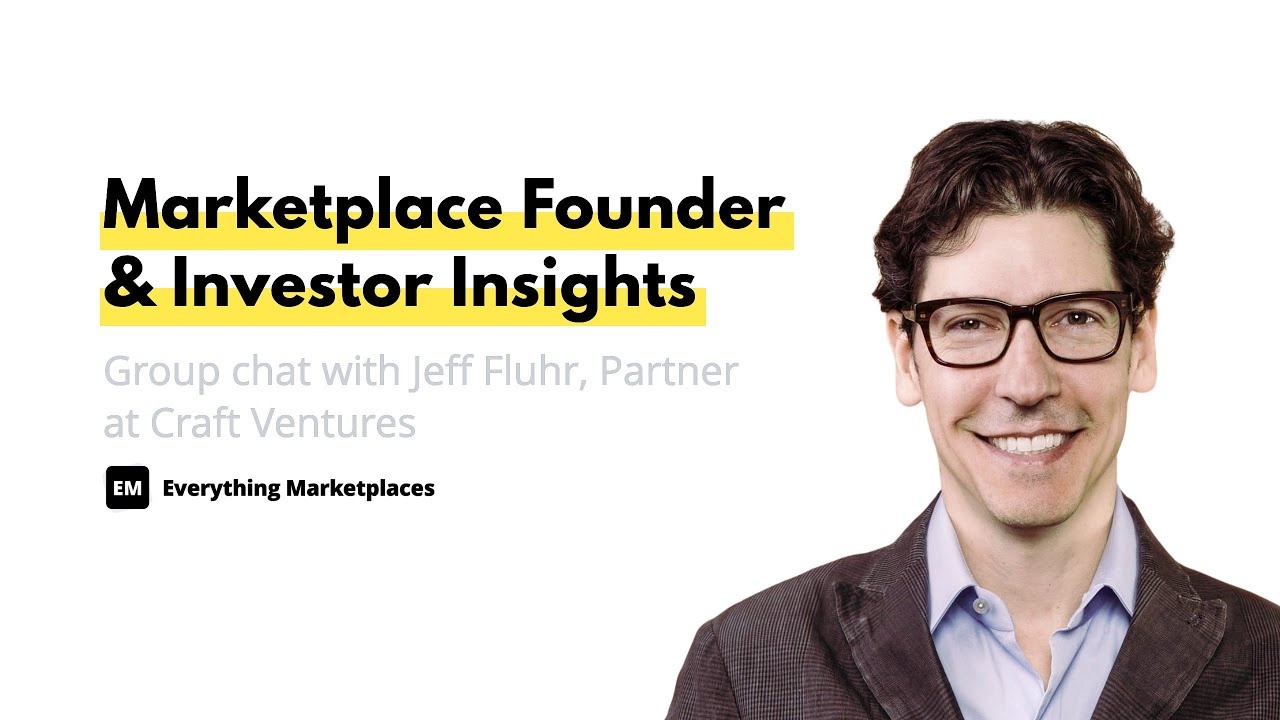
Fluhr joined Craft Ventures as a General Partner in 2018. Investing gave him a different vantage point on familiar problems: finding supply, attracting demand and giving both sides reasons to return. His investments have included Twilio, Warby Parker and Houzz, among other technology companies.
His writing developed the marketplace argument beyond tickets. In 2019, he proposed that specialist labor platforms could take parts of the market served by LinkedIn, just as focused consumer businesses had developed around categories once handled by Craigslist. Particular jobs have particular requirements; a general directory can only go so far.
That argument also returned to the old toy-distributor problem. If buyers and sellers establish a relationship, what keeps them using the platform? Scheduling, payments and other useful services can give the intermediary a continuing job. The business must keep contributing after the introduction.
In 2023, he explained Craft’s decision to co-lead Pickle’s $8 million seed round. The company lets people rent clothing and accessories from one another. Fluhr liked the opportunity to earn money from possessions sitting idle, and the connection was personal: his family had spent decades in New York’s consignment clothing business.
He also noticed the workload carried by founders Brian McMahon and Julia O’Mara. Two people had been covering product, engineering, marketing and support. From a distance, a marketplace can look like an elegant meeting of supply and demand. Up close, somebody has to do the customer support.
Back to the keyboard
In 2025, Fluhr moved from General Partner to Venture Partner at Craft. He described the change as a chance to keep supporting founders and serving on boards while making more room for family and building. His enthusiasm for early companies and marketplace models remained part of the explanation.
There was a practical detail in the announcement: AI had prompted him to start coding again after years away. The pleasure was in experimenting with ideas and making things. It is a fitting occupation for somebody whose career began by deciding a fabric toy ought to reach a few more shops.
His public description on X offers three occupations: entrepreneur, dad, student. The last leaves room for the next correction, the next product and the next lesson that arrives without an invitation. After all those years organising transactions, he still seems interested in finding out what happens when somebody tries to build something.