The resignation letter was ready. Kulveer Taggar had rather more trouble delivering it. He had graduated from Oxford, joined Deutsche Bank in London and begun enjoying the salary. His boss had sent him to New York to learn about the oil business. This was a perfectly respectable beginning. In his recollection, it took two or three attempts to bring up leaving. A comfortable job has a way of making the door look heavier than it is.
That was 2006. He had another occupation already: trying to keep a student marketplace alive with his cousin Harjeet, better known as Harj. The bank blocked outside email. Taggar was attempting to run a young internet business through his BlackBerry while doing his actual job. The arrangement was becoming an argument conducted entirely through a small keyboard.
He left after his mandatory six months. Looking back in 2009, he identified that decision, and the move from London to Silicon Valley that followed, as the turning point. The money arrived relatively quickly. A much longer education in what to do with opportunity was just beginning.
A family habit of changing the map
Taggar grew up in London, studied Philosophy, Politics and Economics at Oxford, and served as president of Oxford Entrepreneurs. His interest in moving toward opportunity had a family history. His grandfather left rural Punjab for Delhi, taught himself English and became a railway clerk. He eventually retired as chairman of the railway union. In Taggar’s telling, that decision expanded the world available to the next generation.
When Taggar moved to San Francisco in 2007, he experienced his own version of that change in geography. Running a startup remained difficult. The surrounding conditions changed: other founders were nearby, chance encounters were useful, and investors encouraged larger ambitions. A business idea could remain the same while its prospects changed with the postcode.
Years later, this would help explain why he cared about housing. Moving is often described as a personal adventure. It also involves deposits, furniture, a reliable internet connection and finding someone who will actually return your message. The unromantic details can decide whether the adventure happens at all.
The first idea did not survive the trip
The student marketplace was called Boso. Taggar and Harj had worked on it for nearly two years before the change that became Auctomatic. They noticed that people wanted a simpler way to sell things online. Rather than keep building a separate destination, they began helping sellers deal with eBay itself. Abandoning the original idea meant admitting how much conviction had been invested in the wrong approach.
“It was a difficult decision because it meant acknowledging that the first idea was wrong,” Taggar recalled. There is an awkward interval in entrepreneurship when determination and stubbornness wear the same suit. Boso supplied an early lesson in telling them apart.
Auctomatic joined Y Combinator’s Winter 2007 batch. Patrick Collison became a cofounder and chief technology officer; the company attracted investment from Gmail creator Paul Buchheit and Chris Sacca. In 2008, Live Current Media acquired it in a deal reported at $5 million. Taggar was 24. He had gone from trying to maintain a startup alongside banking to selling one at an age when many contemporaries were still figuring out their first promotion.
The speed was memorable. It also left a question that would follow him: how should a founder weigh money available today against the uncertain value of staying with something longer?
- 2007Auctomatic
Y Combinator · Winter batch - 2015Zeus housing project
Work begins that September - 2024Phosphor Capital
Launches in January - 2026Y Combinator
Returns as visiting partner
Twenty-four homes, and an inconvenient move
By 2015, Taggar was working with Joe Wong on Status, a different startup that was not growing as they wanted. Wong needed to move from San Francisco to Palo Alto. The rental process became a distraction sufficiently irritating to suggest another business. Some companies begin with a technical breakthrough. This one had a cofounder trying to move house.
Taggar remembered an early Stripe demonstration in which his former colleague Patrick Collison made accepting payments look remarkably straightforward. What would comparable simplicity look like for a landlord? Zeus would inspect and price a home, lease it, furnish it, arrange internet access and find corporate tenants. Owners would receive monthly payments; residents would arrive somewhere ready to live.
When he introduced Zeus publicly in August 2016, it had 24 properties. The idea had been under development since the previous September. It required the team to do the operational work as well as write software. A booking screen is only a small part of a housing service. Somebody still has to make the place ready.
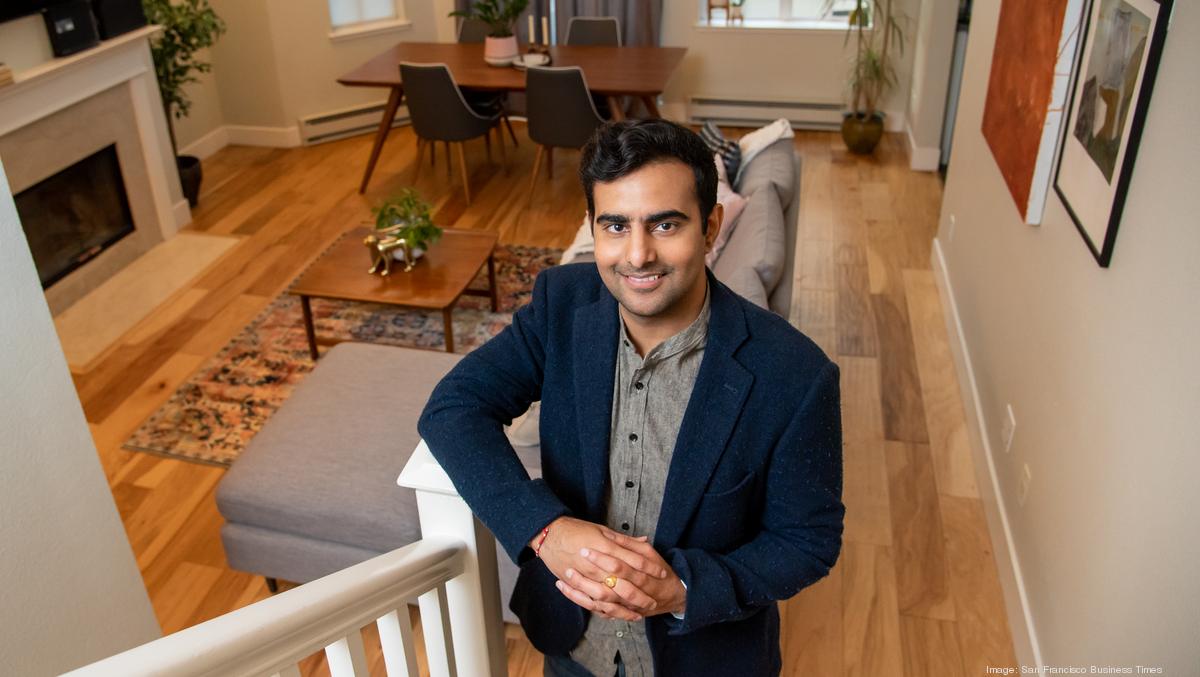
By December 2019, Zeus reported more than 2,000 homes across five US markets and announced a $55 million Series B that included Airbnb. Stays lasted at least 30 days; the average was three months. Its customers included people relocating for work and employers arranging somewhere for them to stay. Taggar said he had moved countries four times himself. The proposition had a practical intimacy: arrive in an unfamiliar city with one fewer problem.
Good values ought to cost something
At Stanford in February 2020, Taggar talked about the kind of company he wanted to build. His emphasis was on time. A founder thinking in decades could make different decisions from one measuring everything against the next few years. He had come to question his own earlier impatience, including the assumption that becoming a chief executive was necessarily the best way to learn the job.
He also wanted company values to have consequences. Zeus had chosen customer focus, humility, iteration and transparency. The interesting part was the price of those commitments. Making revenue, costs and goals visible meant that missed targets and mistaken decisions would be visible too. Customer service could mean accepting a lower profit or doing a task that fell awkwardly outside someone’s job description.
“pick the value and endure the trade off”
Kulveer Taggar · Stanford, February 2020
That is a less comfortable proposition than putting agreeable nouns on a wall. Nobody has to argue against kindness at an office meeting. The argument starts when a customer needs a remedy that costs money, or a colleague can inspect the numbers behind a decision. Taggar’s account gave culture a practical test: what inconvenience would people accept to keep it?
The cost: missed goals become visible.
The cost: service can take time and profit.
A sale with an asterisk
Zeus kept developing its flexible housing offer. In October 2021, it raised another $55 million, this time led by SIG. By then it described a platform with 5,000 curated homes in 96 cities. Its reported occupancy for the year to date was 87 percent. Customers were increasingly interested in furnished housing without a fixed departure date. The appeal extended beyond the original corporate traveller.
Those figures mark a stage in the company’s history, rather than settle its ending. In November 2023, Zeus was winding down operations and telling landlords it could no longer guarantee payments. A housing platform makes commitments to owners as well as guests. When the business struggles, the consequences reach people who never attended a fundraising presentation.
Taggar subsequently described selling Zeus to Blueground in 2023. He has also been direct about the distance between that result and what he had hoped to build: the independent company he wanted did not emerge. A sale can be part of the story without supplying a tidy happy ending. In his own account, the experience included fast growth, changes of direction, cofounder turnover and board pressure. It gave him considerably more to bring to his next job than the acquisition line on a biography.
The next company belonged to someone else
Phosphor Capital launched in January 2024. It concentrated on early-stage Y Combinator companies, making the community Taggar knew from building businesses the focus of his investing. His earlier angel investments had included Mux, Boom and Plenful. The July 2025 launch announcement reported $34 million raised and invested, and named Reducto, Circleback and Gumloop among the portfolio companies.
The work could be specific. Reducto’s Adit Abraham credited Taggar with helping win an early customer and rethink hiring. Those are useful descriptions because they can be pictured: a customer conversation, a candidate, a decision that needs another experienced pair of eyes. Founders have plenty of opportunities to receive an encouraging adjective. Finding someone who will help with a difficult hire is a narrower market.
Taggar’s interests had broadened beyond property. Investing let him spend time across emerging technologies while applying what he had learned from running a company. His preference for founders who make progress quickly now sat alongside an older belief: building something durable can take years. Fast work and a long commitment can occupy the same calendar.
Oxford, again, by way of San Francisco
In spring 2026, Taggar joined Y Combinator as a visiting partner. He would help Tom Blomfield with his group of founders. Blomfield had been an original cofounder with him at Oxford more than two decades earlier. The connection gave the return a pleasingly untidy chronology: a new role, an old collaborator, and a community that had stayed in the picture through several different ventures.
He said he would pause new investments while focusing on the Spring 2026 founders and continue working with his existing companies. By autumn, Y Combinator’s public directory listed him as primary partner for RATLOG, a Fall 2026 rocket startup. His work with founders had carried into another batch.
The younger Taggar had struggled to hand over a resignation letter. Later, he learned to hand over an idea, a company and, eventually, the founder’s chair. Today he can sit beside someone still making those decisions. The twenty-year question has become more useful with time: what would you choose if you expected to be working at it long enough to see the consequences?
Follow the next chapter
Writing, conversations and further reading.