Fast Facts
- Based InSan Francisco, CA
- NationalitySwedish-American
- YC BatchWinter 2007 (as founder)
- At YC SinceNovember 2016
- Airbnb Tenure2012-2016
- Emailgustaf@gmail.com
- Flickr Since2004 (1,273 photos)
- Vegetarian25+ years
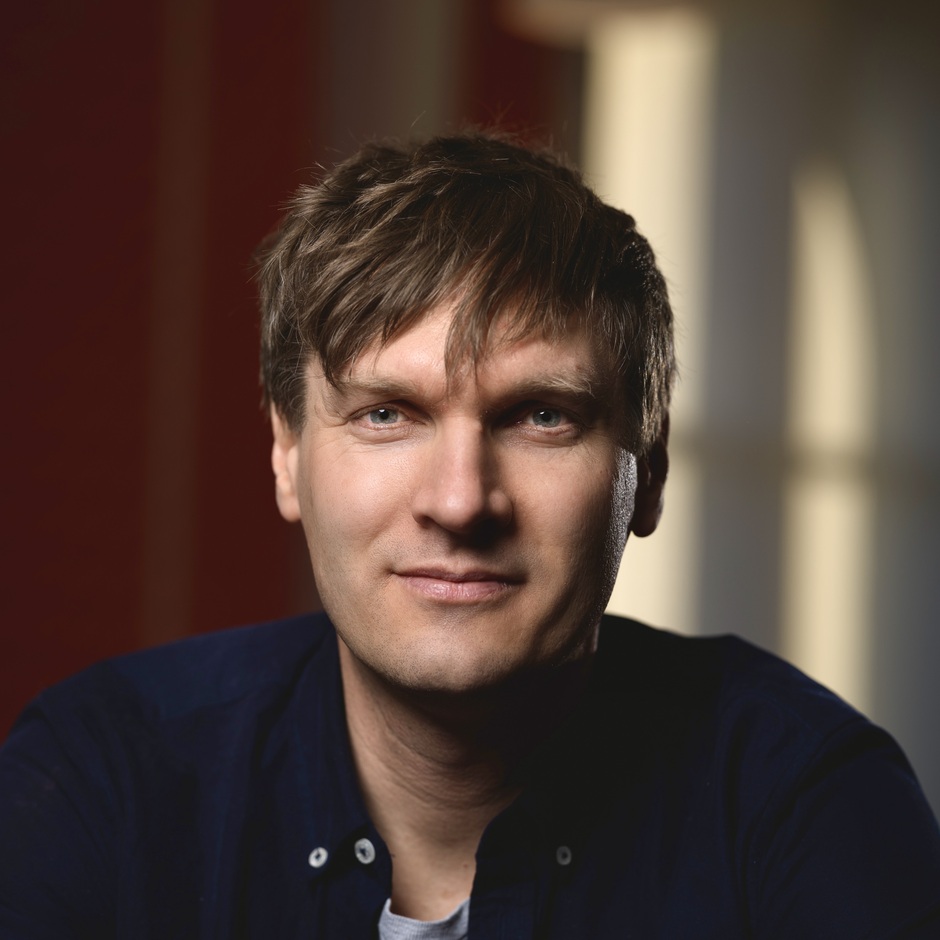
Gustaf Alstromer joined Y Combinator as a Visiting Partner in November 2016. He had already done the thing most visiting partners only advise about. In 2007, he sat on the other side of the YC application table - as a founder, running Heysan, a mobile communications startup that made it through the Winter 2007 batch. He got acquired, built growth teams at Voxer and Airbnb, became a U.S. citizen, and came back. Now he decides who gets in.
That full-circle journey is not an accident. It is a template. Gustaf spent five years at Airbnb - joining in November 2012 when the growth team was exactly three people - and left when it was over a hundred. The scale-up he orchestrated during Airbnb's defining hypergrowth years gave him a pattern library that most operators never get to build. He did not just run experiments. He built the infrastructure for running thousands of them.
If you aren't seeing counterintuitive results, you probably aren't experimenting enough.
Gustaf AlstromerThe insight that shaped everything at Airbnb was simple and inconvenient: the velocity of experimentation matters more than the quality of any individual idea. It sounds like an excuse to ship bad ideas fast. It is not. It is a recognition that the signal-to-noise ratio in any growth hypothesis is low enough that you need volume to find the signal. Every founder Gustaf mentors hears some version of this. The good ones hear it once and get it. The great ones already knew it.
At Y Combinator, Gustaf has reviewed more than 9,000 applications and worked directly with 600+ companies across batches. Those companies are now collectively valued at over $118 billion. The names read like a roll call of modern software infrastructure: Rippling, Faire, Deel, Retool, OpenSea, Mux, Groww, Clipboard Health, Solugen, Outschool. Gustaf does not just know these companies from reading decks. He sat across the table when founders were still figuring out what they were building.
You will know when you have product-market fit, and if you are asking, you most likely don't have it.
Gustaf AlstromerOn product-market fit, Gustaf is famously blunt. The question "do I have product-market fit?" is itself the answer. The feeling of pull - where users drag the product forward faster than the team can ship - is unmistakable. It is not something you debate in a metrics review. Gustaf watched Airbnb reach it. He knows what it looks like in the data and in the hallways. When founders come to him uncertain, the uncertainty is already diagnostic.
What makes Gustaf different inside YC is not the portfolio size or the years of experience. It is the specificity of his knowledge. He is not a generalist investor who parachutes in with frameworks. He built growth teams. He hired growth engineers. He ran A/B tests that moved booking rates by decimal points - and he knows exactly why each decimal point mattered. The advice he gives founders is traceable back to specific decisions he made at Airbnb and Voxer, not to whitepapers or secondhand stories.
Most great companies get really good at one specific channel. Figure out what your product suits best and double down.
Gustaf AlstromerBefore Airbnb, there was Voxer. Gustaf joined as VP of Growth in 2010 after finishing at Hyper Island in Sweden - a school known more for its culture of experimentation than its credential. Voxer launched on the App Store in spring 2011. The app let people talk to each other in a push-to-talk voice model before voice notes became standard in every messaging app. Gustaf was building growth playbooks for a product category that did not yet have a name.
Before Voxer, there was Heysan. And before Heysan, there was Sweden - and the particular frustration Gustaf carried about Swedish startups. His critique was direct: Swedish founders tended to think about the Swedish market. Not the European market. Not the global market. The Swedish market. He moved to New York, then San Francisco, and chose never to think small again. The flat hierarchies and radical ambition of Silicon Valley were not a culture shock. They were a relief.
The climate work arrived with conviction, not trend. Gustaf's investment focus on decarbonization predates the most recent wave of ESG enthusiasm. He sits on the board of Heart Aerospace, the Swedish electric aircraft company working to electrify short-haul flights. He advises Remora, which captures carbon from the exhaust of semi-trucks while they drive. His YC work produced "Request for Startups: Climate Tech" - an open call that shaped which problems the next cohort of YC founders would take on. Gustaf's framing: climate is a math problem. You look at where emissions come from, calculate replacement costs, and find the addressable market. The founders who understand this are serious. The ones who come in with vibes are not.
On AI, Gustaf does not perform skepticism or enthusiasm. The LLMs-are-different-this-time argument he makes is grounded: past hype cycles produced things that could not do much yet. LLMs are solving real problems today. The question is not whether the technology matters. It is which founders are building things users actually need, versus things that are impressive demos. Gustaf has seen enough impressive demos to know they are not the same thing.
Many YC companies pivot. The idea changes but the team stays the same.
Gustaf AlstromerThe personal details that surface in Gustaf's public presence tell a consistent story. He has been vegetarian for over 25 years - not as an identity performance, but as a decades-old decision that he lives with quietly. He joined Flickr in 2004 and has uploaded 1,273 photos - six years before Instagram launched. His personal email address is gustaf@gmail.com, which tells you something about when he got it and who gets to keep addresses like that. He displays a Ukrainian flag in his X display name. He wrote a LinkedIn post about his U.S. naturalization ceremony and the elderly man from El Salvador sitting next to him who had waited 20 years. In November 2025, he announced the birth of his son and called parenthood "really hard but also the best thing in the world."
These are not the details that appear in the TechCrunch coverage. But they are the ones that explain why 600+ founders trust the advice they get across that table. Gustaf Alstromer is not performing the role of the knowing VC. He has been the founder who did not know if his company would survive. He has been the growth lead trying to move a metric that is not moving. He has been the immigrant watching his country's flag on someone else's lapel. The portfolio is $118 billion. The credibility is personal.
Gustaf's growth philosophy, distilled from Airbnb and applied to hundreds of YC companies, circles back to one idea: the entire company eventually becomes a growth team. Not the growth pod. Not the growth VP and three PMs. The entire company. When that happens - when data is the shared language and experimentation is the shared method - the velocity compounds. Most companies never get there. The ones that do rarely have to ask whether they have product-market fit.
He has a standing rule that reads less like advice and more like basic engineering sense: don't log people out. There is no growth benefit to automatic logouts. Users who return to find themselves logged out churn at higher rates. It sounds trivial. It shows up in the data. Gustaf has a long list of things that sound trivial and show up in the data. This is the accumulated knowledge of someone who did not just read about growth - he ran thousands of experiments and lost sleep over the ones that failed.
Location mattered to Gustaf. He says it explicitly: be among ambitious people and you will become successful. He moved from Sweden to New York to San Francisco specifically because proximity to the right room changes what you think is possible. The irony is that he now controls access to one of those rooms. Every batch, he reads the applications. Every batch, he decides who gets in. The kid who showed up to YC in 2007 with a mobile messaging app now holds the door.