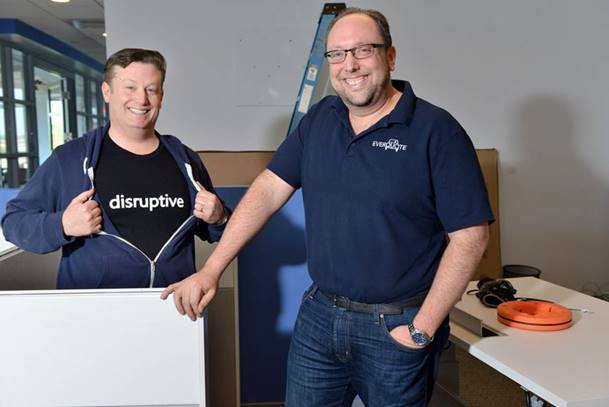
Seth Birnbaum gave his office to the engineers. So did his co-founder, Tomas Revesz. EverQuote was growing, desks were needed, and the founders moved into a glass-walled conference room at the front of their Cambridge headquarters. They stayed there. A business about making better matches had found an agreeable arrangement for its own two founders: everyone could see where they were.
By 2015, the office had about 150 employees, screens displaying the business in motion, and songs celebrating sales. Birnbaum treated visibility as useful management. The glass helped. So did the numbers. A person could understand the state of the company without first acquiring a talent for reading the chief executive’s expression.
There were goats, too. EverQuote’s fondness for the animal ran through its office culture, where persistence had acquired a mascot. Birnbaum’s explanation was admirably economical: “Goats eat everything and they keep climbing.” It is difficult to imagine a mission statement enjoying itself more.
An engineer learns to build companies
Before the insurance marketplace came the engineering ambition. As a seven-year-old, Birnbaum saw an MIT robotics competition on television and wanted to take part. He eventually attended MIT and reached the competition’s semifinals. The childhood plan had survived contact with actual machinery, a respectable outcome for any childhood plan.
His degree was in mechanical engineering. Company building followed, with Revesz becoming a continuing partner. Their careers crossed industries while preserving the habit of working together. There is a useful distinction between changing the problem and changing the people with whom one wants to solve it.
In 1996, Birnbaum co-founded NeoGenesis Pharmaceuticals, where he served as vice president of systems engineering until 2003. That year he co-founded the data security company Verdasys, later known as Digital Guardian. He served as its chief executive until October 2010. These were substantial stretches of work before EverQuote became the name attached to his public career.
He began serving as EverQuote’s president, chief executive, and a director in September 2010; the marketplace launched in 2011. The overlapping dates capture a familiar feature of starting companies: a business acquires responsibilities before it acquires a neat anniversary. Birnbaum brought both an engineer’s background and experience carrying the chief executive’s job.
Systems engineering
Co-founder & CEO
Marketplace launch
Public offering
The arithmetic behind the clicks
Insurance shopping gave the partners a problem with two sides. Consumers wanted suitable coverage; carriers and agents wanted to reach prospective customers. EverQuote built an online marketplace between them. Its revenue came from selling consumer referrals to insurance providers and distributors. Matching demand was the business, and understanding the economics of finding that demand was essential.
Early paid-search work shows the precision of the approach. The team concentrated on total profit dollars rather than worshipping a margin percentage. Spending more to acquire a customer could make sense when the additional transactions increased overall profit. A handsome ratio was allowed to lose an argument with a larger sum of money.
The company tested bids, adjusted targeting by geography, and gave its search team room to pursue profitable opportunities. The method required attention to what a customer was worth and what reaching that customer cost. Search advertising became a set of business decisions, each small enough to test and consequential enough to measure.
This helps explain the screens and visible results inside the office. A marketplace changes as shoppers arrive and providers respond. The founders wanted the people working on it to see those changes. Birnbaum’s enthusiasm for the details was part of the management job, alongside products and the less easily quantified business of making talented colleagues want to stay.
“Numbers are everything.”
Seth Birnbaum
There were limits to simply turning up the volume. In 2018, Birnbaum explained that EverQuote had deliberately moderated automotive quote requests when demand from providers constrained their value. More traffic could compress pricing. The useful target was the economics of the whole transaction, rather than a larger count arriving on a screen.
He also described work connecting the marketplace more closely to providers. One partner’s move to an interface that carried information through to a quote had nearly doubled the number of consumers receiving quotes. Avoiding repeated data entry was a small convenience with a measurable consequence. For an engineer running a marketplace, the friction between two systems was business worth attending to.
A score for the driver
EverDrive took that appetite for feedback onto the road. Developed with help from Cambridge Mobile Telematics, the app tracked driving behavior and produced a score. It offered a way to examine what people actually did behind the wheel, adding an individual record to a conversation often conducted through broad categories.
Birnbaum also understood that a score needs a reason to be checked. EverDrive used leaderboards and competitions, including opportunities to win from an annual prize pool. Friendly rivalry gave users something to do with the information. The app’s small launch team had to recruit sooner than expected as its user base grew.
His ambition was for drivers to be able to show their record to providers and have it inform their initial rates. That was an aspiration he described at the time. In 2018, EverQuote announced insurance offers for EverDrive users, connecting the measurement idea to participating carriers. A consumer could begin to do something practical with the data.
The project fits the wider pattern of his work: observe a process, build a system around it, and try to make the result useful to the person on the other side of the screen. In this instance, the screen could also tell a driver that their self-assessment deserved a second opinion.
The bell, and the business behind it
EverQuote’s public offering arrived in 2018. The shares priced at $18 on June 27, and the offering closed on July 2. The company received about $48.6 million after underwriting discounts and offering costs. The total offering also included shares sold by existing holders, a distinction that matters when describing how much money entered the business.
Birnbaum described the proceeds as support for growth: attracting consumers, broadening provider coverage, developing additional insurance categories, and deepening engagement. Going public supplied capital for work already under way. The bell provided the photograph; the plans still required execution.
Three years of revenue
Annual company revenue, rounded. Revenue measures sales, not profit.
The scale had been built with a particular discipline. Before its IPO, EverQuote had surpassed $125 million in annual revenue in 2017 with less than $10 million of equity raised to finance the business. That history gave substance to the company’s emphasis on careful capital stewardship. It gave the public-market story a longer foundation than the day’s trading price.
Revenue reached $163.3 million in 2018 and approximately $248.8 million in 2019. These figures describe expanding sales, rather than personal wealth or a claim that every year was profitable. They show the size of the operation Birnbaum and his colleagues were managing as the marketplace developed.
For Cogo Labs, EverQuote also became its first incubated company to go public. The path ran through a network of entrepreneurs, including Dave Blundin, whose shared MIT connections with Birnbaum preceded the milestone. The achievement belonged to an operating team and to relationships that had taken years to form.
Permission to be a little ridiculous
Colleagues’ memories put some life back into those figures. Nick Graham recalled Birnbaum appearing around the office in a full onesie at Halloween, happily pointing out that Graham was missing the fun by skipping a costume. Here was a chief executive prepared to demonstrate the dress code personally.
Graham also remembered the pleasure Birnbaum took in recruiting, his excitement about good analysis, and his determination that customers have a good experience. He wanted colleagues to feel ownership of their parts of the company. Advice was meant to help them act, leaving room for their own judgment.
Birnbaum was candid about having to learn management. He did not describe himself as naturally gifted at it. He welcomed younger colleagues’ expertise and was willing to be guided by people with less seniority. That is an adjustment an engineering degree cannot make on anyone’s behalf; the chief executive has to practice it in front of other people.
That combination matters. People can be urged to take responsibility and then discover that every decision still requires permission. Graham’s recollection describes an effort to give responsibility some practical meaning. Birnbaum wanted capable partners around him, and enjoyed the work of bringing them into the business.
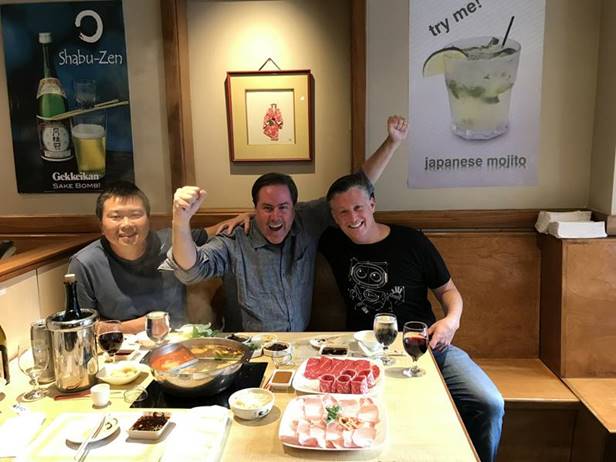
Sean Fenlon’s memories add another register: meals, friendship, shared events, and an enthusiasm for music that included Miles Davis’s Kind of Blue in a favorite-albums challenge. A business biography benefits from such details. They give a person something to enjoy besides a successful quarter.
The climb carried on
Birnbaum died on November 28, 2020. EverQuote appointed its president, Jayme Mendal, as chief executive under its succession plan. Mendal had joined the company in 2017. The organization continued with leadership already inside it, carrying forward the work of a founder who had spent so much time building the team.
The memories continued, too. Marking ten years at EverQuote in 2023, Darryl Auguste described the opportunities and changing responsibilities he had found there. He ended his reflection with a line attributed to Birnbaum: “There is only the climb.” It had remained useful well beyond the meeting in which someone first heard it.
In 2026, the podcast AI Voices of Reason, featuring EverQuote and LendingTree leaders, explicitly honored Birnbaum and LendingTree founder Doug Lebda. Birnbaum’s name still belonged in conversations about the companies their colleagues were running.
His own Thanksgiving sign-off to the EverQuote team had been “Onward, Upward, and EVER yours.” It carried the business name, a little wordplay, and an unmistakable affection for the people receiving it. The numbers were visible. So was the person.
Follow the story
Conversations, company records, and recollections.
- EverQuote
- Seth Birnbaum on LinkedIn
- A visit to the EverQuote office
- Nick Graham: Lessons from Seth
- Link Ventures remembrance
- Sean Fenlon’s remembrance and photographs
- 2018 IPO details
- Career details in the 2018 prospectus
- Birnbaum’s November 2018 earnings discussion
- 2019 annual report
- Google: the paid-search approach
- EverDrive conversation
- EverDrive insurance offers
- Darryl Auguste’s ten-year reflection
- AI Voices of Reason
- Memorial service recording on YouTube